An academic background in aerospace engineering provides a strong foundation for a wide range of career paths. This discipline focuses on the design, development, testing, and production of aircraft, spacecraft, and related systems. A graduate possesses knowledge in areas such as aerodynamics, propulsion, structures, and control systems, which are applicable to various industries beyond the immediate field.
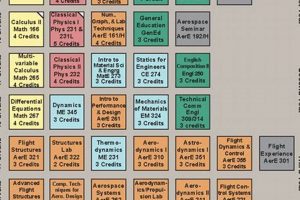
The value of this education lies in its cultivation of analytical and problem-solving skills, coupled with a deep understanding of complex physical principles. Historically, advancements in aerospace engineering have driven innovation not only in aviation and space exploration but also in fields like materials science, computing, and telecommunications. The rigor of the curriculum equips individuals to tackle challenging projects and adapt to rapidly evolving technologies.
This foundation opens doors to positions within aerospace companies, government agencies, and research institutions. However, the skills acquired are also highly transferable to sectors such as automotive engineering, energy, and finance, reflecting the breadth of possibilities available to graduates. Further details on specific roles and industries will be elaborated on in the following sections.
Career Guidance for Aerospace Engineering Graduates
Maximizing the potential of an aerospace engineering degree requires strategic planning and a proactive approach to career development. The following tips offer guidance for navigating the job market and leveraging the acquired skillset effectively.
Tip 1: Develop Specialized Expertise: Focus on a specific area within aerospace engineering, such as propulsion systems, structural analysis, or control engineering. Deep expertise increases marketability and allows for contributions to specialized projects.
Tip 2: Pursue Relevant Internships: Gain practical experience through internships at aerospace companies, government agencies, or research institutions. Internships provide valuable hands-on learning and networking opportunities.
Tip 3: Cultivate Strong Communication Skills: Effectively communicating technical concepts is crucial. Practice presenting information clearly and concisely in both written and verbal formats. Contribute to technical reports and participate in group presentations.
Tip 4: Obtain Professional Certifications: Consider pursuing certifications relevant to your area of specialization, such as a Professional Engineer (PE) license or certifications in specific software tools. Certifications demonstrate competence and commitment to professional development.
Tip 5: Network Actively: Attend industry conferences, join professional organizations like the AIAA (American Institute of Aeronautics and Astronautics), and connect with professionals on platforms like LinkedIn. Networking expands your professional circle and provides access to job opportunities and mentorship.
Tip 6: Master Relevant Software: Proficiency in industry-standard software like MATLAB, ANSYS, or SolidWorks is essential. Develop skills in these tools through coursework, independent projects, or online tutorials.
Tip 7: Consider Advanced Education: A master’s degree or Ph.D. can provide specialized knowledge and research experience, opening doors to more advanced roles in research and development. Evaluate the benefits of further education based on career aspirations.
Adopting these strategies can significantly enhance career prospects and facilitate long-term success in the aerospace engineering field. By actively developing skills, gaining practical experience, and networking effectively, graduates can unlock the full potential of their education.
The next section will provide insights into specific job roles and industries where aerospace engineering skills are highly valued.
1. Design and Development

Within the context of an aerospace engineering degree, “Design and Development” represents a crucial pathway where theoretical knowledge is applied to create tangible solutions. This area involves conceiving, planning, and executing the creation of aircraft, spacecraft, and related technologies.
- Conceptual Design and Modeling
This facet involves the initial stages of creating an aerospace vehicle or system. Engineers generate preliminary designs, perform feasibility studies, and create digital models using CAD software. For example, designing a new wing configuration for a commercial airliner to improve fuel efficiency falls under this category. The knowledge gained from the academic curriculum is directly applied to these early-stage conceptualizations, informing design choices based on aerodynamic principles and structural considerations.
- System Integration
Aerospace projects typically involve numerous interconnected systems. Engineers in this area focus on integrating these systemssuch as propulsion, avionics, and environmental controlto ensure they function cohesively. A practical example includes integrating a new satellite communication system into an existing spacecraft, ensuring compatibility with power, data, and thermal management systems. This requires a comprehensive understanding of each system’s operation and their interdependencies.
- Component Design and Analysis
This involves designing and analyzing individual components, such as turbine blades for a jet engine or heat shields for a spacecraft. Finite element analysis (FEA) is used extensively to simulate the performance of components under various stress conditions, ensuring they meet safety and performance requirements. Designing a lightweight yet durable landing gear system for an aircraft is an example, where material selection and structural design are critical for ensuring safe operation.
- Testing and Prototyping
Before a design is finalized, it undergoes rigorous testing and prototyping. This includes wind tunnel testing of aircraft models, static load testing of structural components, and flight testing of prototype vehicles. Analyzing the data collected during these tests helps engineers refine their designs and identify potential weaknesses. Constructing and testing a prototype drone to assess its flight characteristics and payload capacity represents a practical application in this phase.
These facets highlight how a degree in aerospace engineering directly contributes to the tangible creation of aerospace technologies. Graduates find themselves at the forefront of innovation, applying their knowledge to solve complex engineering challenges and advance the capabilities of air and space vehicles.
2. Research and Innovation

The domain of “Research and Innovation,” pursued with an aerospace engineering degree, involves the systematic investigation and development of novel technologies, processes, and materials relevant to the aerospace field. This undertaking extends beyond the application of established principles, focusing instead on expanding the existing body of knowledge and creating transformative advancements. The connection stems from the fundamental preparation an aerospace engineering degree provides: a rigorous understanding of aerodynamics, propulsion, materials science, and control systems. These core competencies serve as the building blocks for tackling complex research problems. The impact of such endeavors manifests in various forms, including more efficient aircraft designs, advanced propulsion systems, and novel materials with superior strength-to-weight ratios. For example, ongoing research into hypersonic flight vehicles, enabled by the knowledge gained through such a degree, aims to revolutionize long-distance travel and space access. The importance lies in the potential to enhance performance, reduce costs, and improve safety across all sectors of aerospace activity.
The practical applications of research and innovation within aerospace engineering are wide-ranging. Graduates may engage in computational fluid dynamics (CFD) modeling to optimize aircraft wing designs, or conduct experimental research to validate new propulsion concepts. Furthermore, they might contribute to the development of advanced composite materials for spacecraft structures, or devise novel control algorithms for autonomous flight systems. Another avenue of innovation involves exploring alternative energy sources, such as biofuels or electric propulsion, to reduce the environmental impact of air travel. These examples demonstrate the diversity of research activities and the potential for aerospace engineers to contribute to cutting-edge technological advancements. The ability to analyze complex systems, design experiments, and interpret data are essential skills honed during an aerospace engineering education that are directly applicable to these activities.
In summary, the pursuit of research and innovation is a significant component of the opportunities available with an aerospace engineering degree. It provides a pathway for individuals to contribute to the advancement of aerospace technology through rigorous scientific inquiry and creative problem-solving. While challenges exist, such as securing funding and navigating complex regulatory frameworks, the potential rewards of contributing to groundbreaking innovations make this career path highly desirable. The continuous pursuit of knowledge and technological breakthroughs underscores the dynamic nature of the aerospace field and the enduring relevance of aerospace engineering education.
3. Testing and Analysis

Testing and Analysis form a critical component of aerospace engineering, ensuring the reliability, safety, and performance of aircraft, spacecraft, and related systems. A foundation in aerospace engineering principles provides the necessary knowledge to conduct these activities effectively.
- Structural Testing
Structural testing assesses the integrity of aerospace components under various load conditions. This includes static load testing, fatigue testing, and vibration analysis to verify that structures can withstand the stresses encountered during flight. For example, full-scale aircraft wings are subjected to simulated flight loads to identify potential weaknesses. Aerospace engineers use their understanding of materials science and structural mechanics to interpret test data and recommend design modifications.
- Aerodynamic Testing
Aerodynamic testing evaluates the performance of aircraft and spacecraft designs in wind tunnels and flight tests. Wind tunnel testing measures lift, drag, and stability characteristics, while flight testing assesses handling qualities and overall performance. Engineers apply principles of fluid dynamics to analyze test results and optimize aerodynamic designs. An example includes testing scaled models of new aircraft designs in wind tunnels to validate aerodynamic performance predictions.
- Propulsion System Testing
Propulsion system testing verifies the performance and reliability of engines and rocket motors. This involves measuring thrust, fuel consumption, and exhaust emissions under various operating conditions. Engineers utilize thermodynamics and combustion principles to analyze test data and improve engine designs. Testing rocket engines under simulated space conditions ensures their reliable operation in the vacuum of space.
- Software and Systems Testing
Software and systems testing validates the functionality and reliability of avionics, flight control systems, and other software-intensive systems. This includes unit testing, integration testing, and system-level testing to identify potential software bugs and system integration issues. Engineers use their knowledge of computer science and control systems to develop test plans and analyze test results. Simulating flight scenarios in software to verify the stability and response of the flight control system is an example of this process.
These facets of testing and analysis illustrate the practical application of aerospace engineering principles in ensuring the safety and performance of aerospace systems. Graduates with this expertise contribute to the continuous improvement of aerospace technology and the advancement of the field.
4. Manufacturing and Production

Within the scope of career opportunities for aerospace engineering graduates, Manufacturing and Production encompasses the crucial processes of transforming designs into physical aircraft, spacecraft, and related components. This area demands a deep understanding of materials, processes, and quality control to ensure the final products meet stringent performance and safety standards. An aerospace engineering background provides the necessary foundation in these disciplines to contribute effectively to this critical aspect of the industry.
- Materials Selection and Processing
This facet involves choosing appropriate materials and defining the methods used to shape them into finished components. Aerospace engineers leverage their knowledge of material properties, such as strength, weight, and corrosion resistance, to select materials that meet specific performance requirements. Examples include selecting titanium alloys for high-stress components or composite materials for lightweight structures. Processing techniques, such as machining, casting, or additive manufacturing, are chosen based on material properties and design specifications. The aerospace engineering degree curriculum provides the theoretical framework and practical understanding needed to make informed decisions in this area.
- Assembly and Integration
Assembly and Integration refers to the process of combining individual components into larger subsystems and ultimately into a complete aerospace vehicle. This requires precise alignment, fastening, and testing to ensure proper functionality. Aerospace engineers apply their understanding of mechanical systems and tolerances to develop assembly procedures and oversee the integration process. For example, integrating a propulsion system into an aircraft fuselage involves careful alignment and secure fastening to ensure safe and efficient operation. An aerospace engineering degree imparts the knowledge of mechanical design and system integration necessary for these tasks.
- Quality Control and Assurance
Quality Control and Assurance encompasses the measures taken to ensure that manufactured components and assembled systems meet specified quality standards. This includes inspections, testing, and documentation to verify compliance with design requirements and regulatory standards. Aerospace engineers employ statistical process control techniques and non-destructive testing methods to identify and address potential defects. Implementing rigorous quality control procedures throughout the manufacturing process is critical for ensuring the safety and reliability of aerospace products. The aerospace engineering curriculum emphasizes the importance of quality control and provides the tools and techniques needed to implement effective quality assurance programs.
- Process Optimization and Efficiency
This area focuses on improving the efficiency and effectiveness of manufacturing processes. Aerospace engineers analyze production workflows, identify bottlenecks, and implement strategies to reduce costs, improve throughput, and minimize waste. Techniques such as lean manufacturing and Six Sigma are often employed to optimize manufacturing processes. For example, streamlining the production of aircraft wing panels by implementing a more efficient assembly line layout can significantly reduce manufacturing time and costs. An aerospace engineering background provides the analytical and problem-solving skills needed to identify and implement process improvements in manufacturing and production environments.
The aforementioned facets highlight the significant role aerospace engineering graduates can play in Manufacturing and Production. Possessing a strong foundation in materials, processes, and quality control, they are well-equipped to contribute to the efficient and reliable manufacturing of aircraft and spacecraft. This contribution extends from materials selection and assembly to quality control and process optimization, reinforcing the degree’s relevance in this vital sector of the aerospace industry.
5. Consulting and Management

An aerospace engineering degree provides a solid foundation for a career trajectory extending into consulting and management roles within the aerospace industry and related sectors. The analytical and problem-solving skills cultivated through rigorous engineering coursework are highly transferable to the strategic and decision-making aspects of these positions. A consultant, leveraging expertise gained through an aerospace engineering education, might advise on optimizing aircraft design for fuel efficiency or assessing the feasibility of new space exploration ventures. The ability to analyze complex systems, a hallmark of aerospace engineering curricula, allows for the identification of bottlenecks and inefficiencies in organizational structures and operational processes. Furthermore, the technical credibility conferred by an engineering degree enhances the consultant’s ability to influence decision-making at various levels.
Management roles, often requiring a blend of technical understanding and leadership acumen, benefit significantly from an aerospace engineering background. Project managers, for instance, oversee the development of new aircraft or spacecraft, requiring a comprehensive understanding of engineering principles, scheduling, and resource allocation. Engineering managers lead teams of engineers, guiding technical direction and ensuring project objectives are met. The curriculum’s emphasis on teamwork and communication skills proves invaluable in these leadership capacities. Moreover, the understanding of risk management, a recurring theme in engineering education, enables managers to proactively identify and mitigate potential challenges, ensuring projects remain on track and within budget. Examples include directing the construction of a new satellite or managing the development of advanced aviation technologies.
The movement into consulting and management represents a natural progression for many aerospace engineers. While a technical understanding remains crucial, these roles require additional skills such as financial analysis, strategic planning, and interpersonal communication. Although the technical challenges may differ, the problem-solving mindset instilled by an aerospace engineering education is adaptable and applicable to a wide array of managerial and strategic contexts. Consequently, an aerospace engineering degree serves not only as a pathway to technical careers but also as a springboard for assuming leadership positions and driving strategic initiatives within the aerospace and related industries.
6. Government and Defense

The governmental and defense sectors represent significant employers of individuals with a degree in aerospace engineering. These sectors utilize the expertise gained through this education for diverse applications related to national security, scientific research, and regulatory oversight. The skills cultivated in aerospace engineering programs are directly applicable to the design, development, testing, and maintenance of military aircraft, spacecraft, and related systems.
- Research and Development Agencies
Government agencies such as NASA and defense research laboratories employ aerospace engineers to conduct research and develop cutting-edge technologies. These engineers contribute to advancements in areas such as propulsion systems, aerodynamics, materials science, and space exploration. They might work on projects ranging from designing new launch vehicles to developing advanced sensors for surveillance applications. Their expertise is crucial for maintaining technological superiority and advancing scientific knowledge. A practical example involves developing novel satellite communication systems for military applications, requiring deep knowledge of orbital mechanics and signal processing.
- Military Aircraft Design and Maintenance
Aerospace engineers are essential for designing, developing, and maintaining military aircraft. They work on projects related to aircraft performance, structural integrity, and avionics systems. They might be involved in upgrading existing aircraft fleets or developing new aircraft platforms to meet evolving military requirements. Their contributions ensure the reliability and effectiveness of military air power. An instance of this could include working on stealth technologies for military aircraft, optimizing their radar cross-section to minimize detection.
- Missile and Space Systems Development
The development of missile and space systems relies heavily on the expertise of aerospace engineers. They work on projects related to missile guidance systems, propulsion systems, and satellite deployment mechanisms. Their knowledge of orbital mechanics, control systems, and aerodynamics is crucial for ensuring the accuracy and reliability of these systems. Developing a new generation of intercontinental ballistic missiles, demanding precise control and guidance systems, is an illustration.
- Regulatory Oversight and Safety
Government agencies responsible for aviation safety and regulatory oversight, such as the Federal Aviation Administration (FAA), employ aerospace engineers to ensure compliance with safety standards and regulations. These engineers review aircraft designs, analyze accident data, and develop safety recommendations to improve aviation safety. They play a crucial role in maintaining the safety and efficiency of the national airspace system. Examples involve the certification of new aircraft designs, verifying their compliance with safety regulations related to structural integrity and performance characteristics.
These facets illustrate the diverse ways in which an aerospace engineering education can be applied within the governmental and defense sectors. The skills and knowledge gained through this degree are highly valued for their contribution to national security, scientific advancement, and regulatory compliance. The expertise of aerospace engineers is vital for maintaining a technologically advanced and safe aerospace environment.
7. Academia and Education
A degree in aerospace engineering provides a direct pathway to academia and education, enabling individuals to contribute to the training of future engineers and the advancement of aerospace knowledge. Positions within universities and research institutions allow graduates to engage in teaching, research, and curriculum development, directly shaping the next generation of aerospace professionals. The foundational knowledge acquired during an aerospace engineering program provides a solid basis for conveying complex concepts to students and conducting original research in specialized areas. This area constitutes a vital component of the career options available, as it directly influences the quality and direction of aerospace engineering education and research.
Practical application within academia manifests in several ways. Professors teach undergraduate and graduate courses covering topics such as aerodynamics, propulsion, and structural analysis. They design and implement laboratory experiments, providing students with hands-on experience. Researchers conduct investigations into advanced aerospace technologies, publishing their findings in peer-reviewed journals and presenting them at conferences. Real-world examples include professors leading research teams to develop more efficient jet engine designs or conducting studies on the behavior of composite materials under extreme conditions. Furthermore, academics often serve as mentors to students, guiding their career paths and fostering their professional development. This mentoring aspect contributes significantly to the overall success of the aerospace engineering field by nurturing talent and promoting innovation.
In summary, an aerospace engineering degree opens doors to a rewarding career in academia and education, offering opportunities to impart knowledge, conduct groundbreaking research, and shape the future of the profession. While securing faculty positions can be competitive, the impact of contributing to the education of future aerospace engineers is significant. This pathway represents a critical link in the chain of innovation and ensures the continued advancement of the aerospace industry through the development of highly skilled and knowledgeable professionals.
Frequently Asked Questions Regarding Aerospace Engineering Career Paths
The following section addresses common inquiries concerning career opportunities available with an aerospace engineering degree. The intent is to provide clear, concise answers based on industry trends and academic preparation.
Question 1: What are the typical starting salaries for graduates with an aerospace engineering degree?
Starting salaries vary based on factors such as location, specific job role, and employer size. However, graduates can generally expect competitive salaries reflecting the specialized skills and knowledge acquired during their education. Salary surveys from professional organizations like the AIAA provide detailed data on current compensation trends.
Question 2: Is it necessary to pursue a graduate degree to advance in the aerospace engineering field?
While a graduate degree is not always mandatory for entry-level positions, it can significantly enhance career prospects and open doors to more advanced roles in research and development. A master’s degree or Ph.D. provides specialized knowledge and research experience that are highly valued by employers seeking candidates for leadership and innovation positions.
Question 3: What are the key skills that employers look for in aerospace engineering graduates?
Employers seek candidates with strong analytical and problem-solving skills, a solid understanding of aerospace engineering principles, proficiency in relevant software tools, and effective communication skills. Practical experience gained through internships or research projects is also highly valued. Adaptability and a willingness to learn are essential for success in a rapidly evolving industry.
Question 4: Are there opportunities for aerospace engineers outside of traditional aerospace companies?
Yes, the skills acquired through an aerospace engineering education are transferable to a variety of industries. Aerospace engineers can find opportunities in fields such as automotive engineering, energy, and finance, where their analytical and problem-solving abilities are highly valued. The demand for engineers with a strong technical background extends beyond the traditional aerospace sector.
Question 5: What are the long-term career prospects for aerospace engineers?
The long-term career prospects for aerospace engineers are generally positive, driven by continued advancements in aviation, space exploration, and defense technologies. Demand for skilled engineers is expected to remain strong as the industry continues to innovate and adapt to evolving global challenges. However, continuous professional development is essential for staying competitive and advancing within the field.
Question 6: How can graduates stay current with the latest advancements in aerospace engineering?
Staying current with advancements requires ongoing learning and engagement with the professional community. This includes attending industry conferences, reading technical publications, participating in professional organizations, and pursuing continuing education opportunities. A commitment to lifelong learning is essential for maintaining expertise and contributing to innovation in the aerospace field.
In conclusion, the career paths available with an aerospace engineering degree are diverse and offer significant potential for professional growth and impact. Strategic planning, continuous learning, and a commitment to excellence are crucial for maximizing opportunities in this dynamic field.
The next section will provide insights into resources for aerospace engineers.
Concluding Remarks on Career Opportunities with an Aerospace Engineering Degree
This exploration has outlined the multifaceted career possibilities stemming from an academic foundation in aerospace engineering. It detailed the application of acquired skills in design, research, manufacturing, governmental roles, and academic pursuits. The analysis emphasizes the degree’s inherent value in cultivating analytical rigor and problem-solving acumen, which are transferable across varied professional landscapes. Emphasis has been placed on the diverse roles, demonstrating potential career trajectories.
Prospective aerospace engineers are encouraged to leverage the knowledge outlined herein to inform their career decisions. Continued dedication to academic excellence and professional development remains paramount. The aerospace field is in constant evolution, so a strong understanding of current technology and a commitment to ongoing education are essential. The continued progress of the aerospace field relies upon the contributions of skilled professionals.