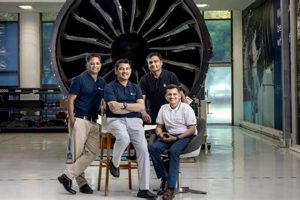
This field encompasses the design, development, testing, and production of aircraft, spacecraft, and related systems. It integrates principles from various disciplines, including aerodynamics, propulsion, materials science, structural analysis, and control systems. Professionals in this arena are involved in creating everything from commercial airliners and military jets to satellites and space exploration vehicles.
The importance of this discipline extends to national security, economic growth, and scientific advancement. It drives innovation in materials, manufacturing processes, and computational modeling. Historically, advancements in flight have revolutionized transportation, communication, and global interconnectedness, while the pursuit of space exploration has expanded humanity’s understanding of the universe.
The subsequent sections will delve into the specific areas of study within this broad discipline, exploring current research trends, career opportunities, and the challenges facing practitioners in the 21st century.
Guidance for Aspiring Practitioners
This section offers crucial guidance for those considering a career in this demanding, yet rewarding, field. These points highlight key areas of focus for academic and professional development.
Tip 1: Cultivate a Strong Foundation in Mathematics and Physics: Proficiency in calculus, differential equations, linear algebra, and fundamental physics principles is essential for understanding complex systems and solving engineering problems. Regular practice and in-depth comprehension are crucial.
Tip 2: Develop Expertise in Computational Tools: Familiarity with software packages for Computer-Aided Design (CAD), computational fluid dynamics (CFD), and structural analysis is highly valued. Gaining hands-on experience through projects and simulations is advantageous.
Tip 3: Seek Practical Experience Through Internships: Internships provide invaluable real-world experience, exposing students to industry practices and networking opportunities. Actively pursue internships at aerospace companies, research institutions, or government agencies.
Tip 4: Specialize in a Specific Area: The field encompasses various specializations, such as aerodynamics, propulsion, structures, and control systems. Identifying a specific area of interest and pursuing advanced coursework or research in that area can enhance career prospects.
Tip 5: Hone Communication and Teamwork Skills: Collaboration is essential in large-scale projects. Developing strong communication skills, both written and oral, and the ability to work effectively in teams are crucial for success.
Tip 6: Stay Informed About Industry Trends: The field is constantly evolving. Staying abreast of new technologies, materials, and design methodologies through professional journals, conferences, and online resources is vital for maintaining a competitive edge.
Tip 7: Pursue Advanced Degrees: A Master’s or Doctoral degree can open doors to research-oriented positions and leadership roles. Consider pursuing advanced studies to deepen expertise in a specific area and contribute to the advancement of knowledge.
Adhering to these guidelines can significantly enhance one’s preparedness for a successful career within this sector. A solid academic background, practical experience, and a commitment to lifelong learning are essential ingredients for navigating the complexities and challenges of this dynamic field.
The article will now transition to examining the emerging trends shaping the future.
1. Aerodynamics

Aerodynamics forms a cornerstone of this engineering discipline, directly influencing the performance, stability, and efficiency of all airborne vehicles. The principles of aerodynamics, governing how air interacts with moving objects, are fundamental to aircraft and spacecraft design. The shape of a wing, for example, is meticulously crafted based on aerodynamic principles to generate lift, enabling flight. Computational fluid dynamics (CFD) simulations are routinely employed to analyze airflow around designs, optimizing them for reduced drag and increased lift. Failure to adequately address aerodynamic considerations can lead to catastrophic consequences, such as instability, loss of control, and structural failure. The discipline’s commitment to safety and functionality is mirrored by aerodynamics.
The design of a modern airliner exemplifies the practical application of aerodynamic principles. Winglets, small vertical extensions at the wingtips, are designed to reduce induced drag, a byproduct of lift generation. This reduction in drag translates directly to improved fuel efficiency and extended range. Similarly, the streamlining of the fuselage minimizes pressure drag, further contributing to overall performance. Furthermore, the aerodynamic design of control surfaces, such as ailerons, elevators, and rudders, is crucial for maintaining stability and maneuverability throughout the flight envelope. Supersonic aircraft, like the Concorde, required specialized aerodynamic designs, including delta wings, to manage the formation of shockwaves and minimize wave drag, reflecting the complexity of aerodynamic considerations at high speeds.
In summary, aerodynamics is not merely a theoretical concept within the broader engineering field, but a critical, practical discipline that directly dictates the viability and performance of flight. Overcoming aerodynamic challenges, such as turbulence and drag, remains a central focus of ongoing research and development, with the aim of creating safer, more efficient, and environmentally friendly aircraft and spacecraft. A thorough understanding of aerodynamics is paramount for professionals within this sector, enabling them to design and engineer vehicles capable of operating reliably and efficiently within the Earth’s atmosphere and beyond.
2. Propulsion Systems

Propulsion systems are integral to the field, providing the thrust necessary for aircraft and spacecraft to overcome gravity and atmospheric resistance. The design, development, and maintenance of these systems demand expertise in thermodynamics, fluid mechanics, and materials science. Without efficient and reliable propulsion, sustained flight and space exploration would be impossible.
- Gas Turbine Engines
Gas turbine engines, commonly found in commercial airliners and military jets, operate on the Brayton cycle, compressing air, mixing it with fuel, igniting the mixture, and expanding the hot gases through a turbine to generate thrust. Improvements in turbine blade materials and aerodynamic design have led to significant gains in fuel efficiency and thrust-to-weight ratios. Failure of a turbine blade, due to material fatigue or foreign object damage, can lead to catastrophic engine failure.
- Rocket Engines
Rocket engines, essential for spaceflight, utilize the principle of expelling mass to generate thrust. Chemical rocket engines, the most common type, combine a fuel and an oxidizer, initiating a chemical reaction that produces high-temperature gases. These gases are then expelled through a nozzle, creating thrust. Liquid-propellant rocket engines offer higher performance but require complex storage and pumping systems. Solid-propellant rocket engines are simpler but offer lower specific impulse. The Space Shuttle’s solid rocket boosters, for instance, provided the majority of the thrust during the initial ascent.
- Electric Propulsion
Electric propulsion systems, while generating lower thrust levels compared to chemical rockets, offer significantly higher specific impulse, making them suitable for long-duration space missions. These systems utilize electric fields to accelerate ionized propellant, creating thrust. Ion thrusters, Hall-effect thrusters, and electrospray thrusters are examples of electric propulsion technologies. These systems have been used extensively for satellite station-keeping and interplanetary missions, such as the Dawn mission to the asteroid belt.
- Ramjets and Scramjets
Ramjets and scramjets are air-breathing engines designed for high-speed flight. Ramjets, suitable for supersonic speeds, use the forward motion of the aircraft to compress incoming air. Scramjets, designed for hypersonic speeds, maintain supersonic airflow through the engine. These engines are being developed for hypersonic aircraft and missile applications. Significant technological challenges remain in developing scramjets that can operate reliably at extremely high temperatures and pressures.
The continuous refinement and innovation in propulsion technology directly impact the capabilities and sustainability within the overall engineering field. From the efficiency improvements in commercial aircraft engines to the development of advanced propulsion systems for space exploration, this field plays a critical role in expanding the boundaries of what is possible in flight and space travel. Further examples include the development of hybrid-electric propulsion systems for regional aircraft and the investigation of alternative fuels to reduce the environmental impact of aviation.
3. Materials Science

Materials science is fundamentally intertwined with aerospace and aviation engineering. The selection, development, and characterization of materials are critical considerations in the design and performance of aircraft, spacecraft, and related systems. Material properties directly influence structural integrity, weight, heat resistance, and overall reliability, all vital for safe and efficient operation.
- High Strength-to-Weight Ratio
Aircraft and spacecraft require materials that offer exceptional strength while minimizing weight. This demand has driven the development of advanced alloys of aluminum, titanium, and magnesium, as well as composite materials like carbon fiber reinforced polymers (CFRP). CFRP, for example, is extensively used in the Boeing 787 Dreamliner’s fuselage and wings, reducing weight and improving fuel efficiency. The use of lighter materials reduces fuel consumption and increases payload capacity.
- High-Temperature Resistance
Components in jet engines and spacecraft experience extremely high temperatures. Materials used in these applications must maintain their strength and structural integrity at elevated temperatures to prevent failure. Nickel-based superalloys are commonly used in turbine blades due to their high-temperature strength and creep resistance. The space shuttle used heat-resistant ceramic tiles to protect it from the extreme heat generated during re-entry into the Earth’s atmosphere.
- Corrosion Resistance
Aircraft operating in diverse environments are susceptible to corrosion, which can degrade structural integrity and lead to failures. Aluminum alloys are prone to corrosion in saline environments, necessitating the use of protective coatings and corrosion-inhibiting compounds. Stainless steel and titanium alloys offer superior corrosion resistance and are used in critical components. Regular inspections and maintenance are essential to detect and mitigate corrosion damage.
- Fatigue Resistance
Aircraft structures are subjected to cyclic loading during flight, which can lead to fatigue failure. Materials with high fatigue resistance are crucial for ensuring long-term structural integrity. Aluminum alloys used in aircraft wings are carefully selected and treated to enhance their fatigue properties. Non-destructive testing methods, such as ultrasonic inspection, are employed to detect fatigue cracks before they reach critical size.
The continued advancement in materials science directly enables improvements in aerospace and aviation engineering. The development of new materials with enhanced properties, coupled with sophisticated manufacturing techniques, is essential for creating safer, more efficient, and more capable aircraft and spacecraft. Further research into nanomaterials and advanced composites holds the promise of even greater breakthroughs in the future, pushing the boundaries of what is possible in flight and space exploration.
4. Structural Integrity
Structural integrity is paramount within aerospace and aviation engineering, ensuring the safety and reliability of aircraft and spacecraft. It encompasses the ability of an aerospace structure to withstand applied loads and environmental conditions without failure or unacceptable deformation throughout its intended lifespan. Compromised structural integrity can lead to catastrophic consequences, underscoring the importance of rigorous design, analysis, testing, and maintenance procedures.
- Load-Bearing Capacity
This refers to the maximum load a structure can withstand before failure. Aircraft wings, for instance, must endure significant aerodynamic loads during flight, including lift, drag, and maneuver loads. Finite element analysis (FEA) is used extensively to simulate these loads and ensure that the wing structure is designed to withstand them with an adequate margin of safety. The structural design must also account for potential impact loads, such as bird strikes or runway debris.
- Fatigue Resistance
Aircraft structures are subjected to cyclic loading during each flight, which can lead to fatigue crack initiation and propagation. Fatigue resistance is the ability of a material or structure to withstand these cyclic loads without failure. Aluminum alloys used in aircraft fuselages and wings are carefully selected for their fatigue properties. Regular inspections using non-destructive testing (NDT) methods are crucial to detect fatigue cracks before they reach a critical size.
- Damage Tolerance
Damage tolerance is the ability of a structure to maintain its load-carrying capacity even in the presence of damage, such as cracks or corrosion. Aircraft structures are designed with features like crack arresters and stiffeners to limit the growth of cracks and prevent catastrophic failure. The “fail-safe” design philosophy ensures that even if one component fails, the remaining structure can still carry the load. This approach enhances safety and reduces the risk of accidents.
- Environmental Effects
Aerospace structures are exposed to a variety of environmental factors, including temperature extremes, humidity, and corrosive substances. These factors can degrade material properties and reduce structural integrity. Materials used in aircraft and spacecraft must be resistant to these environmental effects. Protective coatings and corrosion inhibitors are often used to mitigate the effects of corrosion. Spacecraft structures must also be designed to withstand the harsh environment of space, including radiation and vacuum.
In conclusion, structural integrity is a multifaceted and critical aspect of aerospace and aviation engineering. Robust design practices, thorough analysis, stringent testing, and vigilant maintenance programs are essential for ensuring the safety and reliability of aircraft and spacecraft. Continuous research and development efforts are focused on improving materials, design methods, and inspection techniques to enhance structural integrity and extend the lifespan of aerospace vehicles.
5. Control Systems

Control systems are indispensable to modern aerospace and aviation, enabling precise and stable operation of aircraft, spacecraft, and associated equipment. These systems manage and regulate various parameters, ensuring safe, efficient, and reliable performance across diverse operational conditions. They integrate sensors, actuators, and sophisticated algorithms to maintain desired flight paths, attitudes, and engine performance.
- Flight Control Systems
Flight control systems govern the movement and stability of aircraft. Modern fly-by-wire systems replace traditional mechanical linkages with electronic signals, enhancing maneuverability and reducing pilot workload. Sensors detect aircraft attitude, airspeed, and pilot inputs, while actuators adjust control surfaces such as ailerons, elevators, and rudders. Autopilot systems further automate flight control, enabling precise navigation and altitude hold. The Airbus A320 pioneered fly-by-wire technology in commercial aviation, demonstrating its effectiveness and safety.
- Engine Control Systems
Engine control systems regulate engine performance, optimizing fuel efficiency and minimizing emissions. These systems monitor engine parameters such as temperature, pressure, and speed, adjusting fuel flow, air intake, and exhaust nozzle settings. Full Authority Digital Engine Control (FADEC) systems utilize digital computers to manage engine operation, providing precise control and diagnostic capabilities. FADEC systems are now standard on most modern aircraft engines, contributing to improved performance and reduced maintenance costs.
- Attitude Control Systems (Spacecraft)
Attitude control systems maintain the orientation of spacecraft in space. These systems utilize sensors such as star trackers and gyroscopes to determine spacecraft attitude, and actuators such as reaction wheels and thrusters to adjust orientation. Precise attitude control is essential for pointing antennas, solar panels, and scientific instruments. The Hubble Space Telescope relies on its attitude control system to maintain precise pointing accuracy, enabling it to capture high-resolution images of distant galaxies.
- Guidance and Navigation Systems
Guidance and navigation systems determine the position and velocity of aircraft and spacecraft, providing guidance along desired trajectories. Inertial navigation systems (INS) use accelerometers and gyroscopes to track movement, while global positioning systems (GPS) provide precise location information. Integrated navigation systems combine INS and GPS data to provide highly accurate and reliable navigation. These systems are critical for autonomous flight, precision landing, and space exploration.
The integration of these control systems is crucial for the overall performance and safety of aerospace vehicles. Ongoing advancements in control theory, sensor technology, and computing power are continually improving the capabilities and reliability of these systems. As aerospace systems become increasingly complex and autonomous, the role of control systems will only continue to grow in importance, driving further innovation and enabling new possibilities in flight and space exploration.
6. Avionics Integration
Avionics integration represents a critical facet within the broader scope of aerospace and aviation engineering. It concerns the seamless incorporation of electronic systems into aircraft and spacecraft to enhance performance, safety, and operational capabilities. The effective integration of avionics systems is essential for achieving optimal functionality and reliability in these complex vehicles.
- Data Bus Architecture
Data bus architecture forms the backbone of avionics integration, facilitating communication between various electronic components. Standardized protocols, such as ARINC 429 and MIL-STD-1553, define the format and timing of data transmission, ensuring interoperability between different systems. Modern aircraft employ more advanced data bus architectures, like Ethernet, to handle the increasing volume of data generated by sophisticated sensors and processors. Inadequate data bus design can lead to communication bottlenecks and system failures, underscoring the importance of robust architecture.
- Sensor Fusion
Sensor fusion involves the integration of data from multiple sensors to provide a more comprehensive and accurate representation of the environment. Inertial sensors, GPS receivers, radar, and cameras are commonly used in sensor fusion systems. Algorithms process the data from these sensors to estimate aircraft position, velocity, attitude, and surrounding hazards. Sensor fusion is essential for autonomous navigation, collision avoidance, and enhanced situational awareness. Failure to properly fuse sensor data can lead to inaccurate assessments of the environment and potentially dangerous situations.
- Display Systems
Display systems present critical information to pilots and operators, enabling them to make informed decisions. Head-up displays (HUDs) project information onto the windshield, allowing pilots to keep their eyes focused outside the cockpit. Multi-function displays (MFDs) provide a flexible interface for displaying various types of data, including navigation information, engine parameters, and system status. Intuitive and well-designed display systems enhance situational awareness and reduce pilot workload. Poorly designed displays can lead to confusion and errors, negatively impacting safety.
- Software Certification
Software is an integral part of modern avionics systems, controlling flight control surfaces, managing engine performance, and processing sensor data. Airborne software must undergo rigorous certification processes to ensure its safety and reliability. Standards such as DO-178C define the requirements for developing and verifying airborne software, addressing potential hazards and mitigating risks. Software errors can have catastrophic consequences, highlighting the importance of thorough testing and validation. The Boeing 737 MAX accidents underscored the critical role of software in flight safety.
These facets of avionics integration are intrinsically linked to the overall success of aerospace and aviation endeavors. From ensuring reliable data communication to providing pilots with critical information and guaranteeing software safety, avionics integration plays a pivotal role in enabling safe, efficient, and advanced air and space travel.
7. Regulatory Compliance
Regulatory compliance is an indispensable component of aerospace and aviation engineering, directly influencing the design, production, operation, and maintenance of aircraft and spacecraft. Stringent regulations, enforced by governmental bodies such as the Federal Aviation Administration (FAA) in the United States and the European Aviation Safety Agency (EASA) in Europe, are in place to ensure safety, security, and environmental protection. These regulations dictate minimum standards for airworthiness, operational procedures, and environmental impact, shaping engineering decisions at every stage of the product lifecycle. Failure to comply can result in significant financial penalties, operational restrictions, and, most critically, jeopardize public safety. The very act of achieving flight within regulated airspace hinges upon strict adherence to standards.
Consider the process of aircraft certification. Before a new aircraft can enter commercial service, it must undergo extensive testing and evaluation to demonstrate compliance with airworthiness standards outlined in regulations like 14 CFR Part 25 (for transport category airplanes) in the US. This involves rigorous analysis of structural integrity, aerodynamic performance, and systems reliability. Design changes, even seemingly minor ones, often require re-evaluation and recertification to ensure continued compliance. Similarly, the maintenance of aircraft is heavily regulated, with specific requirements for inspections, repairs, and component replacements, all aimed at maintaining airworthiness throughout the aircraft’s operational life. Engine emissions standards, such as those established by the International Civil Aviation Organization (ICAO), necessitate the development of cleaner and more efficient engine technologies, directly driving engineering innovation.
In conclusion, regulatory compliance isn’t merely an external constraint on aerospace and aviation engineering; it’s an integral driver of design, innovation, and operational practices. The pursuit of safety, security, and environmental responsibility, as mandated by regulations, shapes the engineering landscape. While compliance introduces complexities and costs, it ultimately safeguards the public, promotes responsible innovation, and sustains the long-term viability of the aerospace industry. Future challenges will likely involve adapting to emerging technologies, such as unmanned aerial vehicles and electric propulsion systems, while maintaining robust regulatory oversight to ensure continued safety and environmental protection.
Frequently Asked Questions
The following section addresses common inquiries regarding the field. The information aims to provide clarity and a deeper understanding of the subject matter.
Question 1: What is the fundamental difference between aeronautical and astronautical engineering?
Aeronautical engineering primarily focuses on the design, development, and operation of aircraft within Earth’s atmosphere. Astronautical engineering, conversely, deals with spacecraft and related technologies operating beyond Earth’s atmosphere. While both disciplines share core engineering principles, astronautical engineering incorporates specialized knowledge of orbital mechanics, space environments, and propulsion systems tailored for space travel.
Question 2: What are the essential skills needed to succeed in this field?
A strong foundation in mathematics, physics, and computer science is essential. Problem-solving skills, analytical abilities, and attention to detail are also crucial. Furthermore, effective communication and teamwork skills are necessary, given the collaborative nature of engineering projects.
Question 3: What career paths are available after obtaining a degree in this discipline?
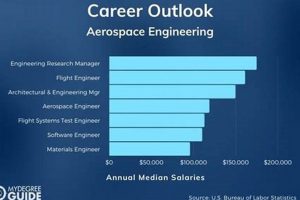
Graduates can pursue careers in aircraft design, spacecraft engineering, propulsion systems development, avionics integration, and related fields. Opportunities exist in the commercial aviation sector, space exploration agencies, defense industries, and research institutions. Specific roles may include design engineer, test engineer, systems engineer, and project manager.
Question 4: How is this field adapting to address environmental concerns?
The field is actively researching and developing technologies to reduce the environmental impact of aviation and space travel. This includes developing more fuel-efficient aircraft, exploring alternative fuels, reducing noise pollution, and minimizing the environmental footprint of space launches.
Question 5: What is the role of computer simulations in modern aircraft and spacecraft design?
Computer simulations, such as Computational Fluid Dynamics (CFD) and Finite Element Analysis (FEA), play a crucial role in the design process. These simulations allow engineers to analyze the performance of designs under various operating conditions, optimize designs for efficiency and safety, and identify potential problems before physical prototypes are built.
Question 6: What are some of the emerging trends shaping the future of this discipline?
Emerging trends include the development of unmanned aerial vehicles (UAVs), electric propulsion systems, hypersonic aircraft, and reusable spacecraft. Advancements in materials science, nanotechnology, and artificial intelligence are also expected to have a significant impact on the field.
The information provided herein represents a succinct overview of pertinent considerations within the specified domain.
The subsequent section will provide insights into the historical context that shaped the field.
Conclusion
This exploration of aerospace and aviation engineering has illuminated the breadth and depth of this critical discipline. From the foundational principles of aerodynamics and propulsion to the intricate details of avionics integration and regulatory compliance, the diverse elements that underpin the design, development, and operation of aircraft and spacecraft have been examined. The essential skills required for professionals in this field, along with the available career paths, have been outlined, and the ongoing efforts to address environmental concerns and embrace emerging technologies have been highlighted.
The continued advancement of aerospace and aviation engineering remains vital for national security, economic growth, and scientific discovery. The challenges of developing safer, more efficient, and more sustainable aircraft and spacecraft demand innovative solutions and unwavering commitment to excellence. Further exploration and investment in this domain are essential to ensure future progress and maintain leadership in this critical sector.