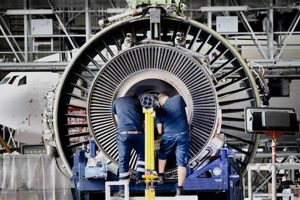
This multidisciplinary field integrates the principles of chemistry, physics, mathematics, and engineering design to address unique challenges within the aeronautics and astronautics sectors. It involves the application of chemical engineering expertise to the design, development, and production of aerospace vehicles, systems, and materials. For instance, developing advanced lightweight composite materials for aircraft structures, designing efficient and environmentally friendly propulsion systems, or creating life support systems for space exploration are all activities that fall under this area of specialization.
The development and application of solutions across this engineering spectrum contributes significantly to advancements in flight capabilities, safety, performance, and sustainability. Historically, innovations in this area have been critical for achieving milestones in aviation and space travel. The progression from early aircraft designs to modern jetliners and spacecraft has relied heavily on the contributions of engineers skilled in the manipulation and understanding of chemical processes and materials. This progress continues to drive innovation in related fields, from material science to energy production.
The subsequent sections will explore specific topics relating to materials, propulsion, and life support, further illustrating the diverse and vital roles this specialization plays in advancing the frontiers of air and space exploration.
Essential Considerations for the Field
Navigating this specialized discipline necessitates a focused approach to education, research, and practical application. The following points offer valuable guidance for those pursuing or working within this technical sphere.
Tip 1: Emphasize Interdisciplinary Knowledge: A comprehensive understanding of both chemical engineering fundamentals and aerospace engineering principles is crucial. This includes fluid dynamics, heat transfer, materials science, and propulsion systems. Develop a strong foundation in each to facilitate effective problem-solving.
Tip 2: Prioritize Materials Science Expertise: The selection and development of materials for aerospace applications are paramount. Focus on the properties, processing, and performance of advanced materials like composites, alloys, and ceramics under extreme conditions of temperature, pressure, and radiation.
Tip 3: Cultivate Simulation and Modeling Skills: Computational fluid dynamics (CFD) and finite element analysis (FEA) are indispensable tools for designing and optimizing aerospace systems. Develop proficiency in these techniques to accurately predict the behavior of materials and systems under simulated operating conditions.
Tip 4: Maintain a Focus on Safety and Reliability: Given the critical nature of aerospace applications, safety and reliability are of utmost importance. Adherence to stringent quality control measures, rigorous testing protocols, and comprehensive risk assessment procedures is non-negotiable.
Tip 5: Pursue Research and Development Opportunities: Active participation in research projects or internships within aerospace companies or research institutions provides invaluable hands-on experience. This allows for the application of theoretical knowledge to real-world challenges and fosters innovation.
Tip 6: Understand Regulatory Frameworks: Familiarize oneself with the regulatory requirements and standards governing the aerospace industry, including those related to environmental impact, safety, and certification. Compliance with these regulations is essential for successful project execution.
Tip 7: Stay Abreast of Technological Advancements: The aerospace industry is constantly evolving. Continuous learning and staying informed about emerging technologies, such as additive manufacturing, nanotechnology, and bio-inspired materials, are crucial for maintaining a competitive edge.
Adherence to these considerations will enhance competence, increase the likelihood of successful contributions, and promote responsible practices within this demanding field. Proficiency and a commitment to safety are of utmost importance.
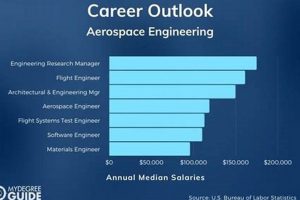
The subsequent section will delve into potential career paths.
1. Materials Innovation

Materials innovation is inextricably linked to the advancement of designs, capabilities, and performance metrics. The development of new materials with enhanced propertiessuch as increased strength-to-weight ratios, improved thermal resistance, and enhanced corrosion protectiondirectly influences the feasibility and efficiency of aerospace vehicles and systems. The discipline provides the fundamental understanding of chemical structures, reactions, and processes necessary to create and tailor these materials for specific aerospace applications. For example, the development of carbon fiber reinforced polymers (CFRPs) significantly reduced the weight of aircraft structures while maintaining structural integrity, contributing to improved fuel efficiency and payload capacity. This material innovation directly benefits from chemical engineering expertise in polymer chemistry, composite manufacturing, and materials characterization.
The role extends beyond the creation of new materials to encompass the modification and adaptation of existing materials for aerospace environments. Engineers use their understanding of chemical interactions to develop protective coatings, improve material compatibility, and mitigate the effects of radiation or extreme temperatures. The design of thermal protection systems for spacecraft re-entering the Earth’s atmosphere is a prime example. These systems rely on advanced materials with high ablation resistance, developed and optimized through chemical engineering principles, to protect the vehicle from the intense heat generated during re-entry.
In conclusion, materials innovation is not merely a supporting element but a critical driver of progress within the area of specialization. It necessitates the application of chemical engineering principles to design, synthesize, and characterize materials that meet the stringent demands of aerospace applications. Continued advancements in materials science, guided by chemical engineering expertise, will undoubtedly play a vital role in shaping the future of aerospace exploration and transportation.
2. Propulsion Efficiency

Propulsion efficiency, a cornerstone of successful aerospace endeavors, is intrinsically linked to chemical engineering. The design, development, and optimization of rocket engines and aircraft power plants fundamentally depend on the controlled chemical reactions of propellant combustion. Increased efficiency translates directly into extended range, enhanced payload capacity, and reduced fuel consumption, thereby enabling more ambitious space missions and more economical air travel. For instance, the development of high-performance rocket fuels and oxidizers, based on meticulous chemical formulations and reaction kinetics, has been crucial in achieving the velocities necessary for interplanetary travel. Similarly, advancements in jet engine design, incorporating optimized fuel injection systems and combustion chamber geometries, contribute to improved fuel efficiency in commercial aircraft.
The role within this engineering discipline extends beyond merely maximizing energy release from propellant combustion. Engineers address challenges such as minimizing undesirable emissions, managing heat transfer within engine components, and ensuring the long-term stability and compatibility of propellant mixtures. Catalytic converters in aircraft engines, designed using chemical engineering principles, reduce harmful pollutants released into the atmosphere. Furthermore, understanding and controlling the chemical processes that lead to engine corrosion or material degradation is vital for ensuring the reliability and longevity of propulsion systems. The development of advanced cooling techniques, such as regenerative cooling, depends on chemical engineers expertise in fluid dynamics and heat transfer to optimize engine performance and prevent component failure.
In conclusion, the pursuit of improved propulsion efficiency is a continuous endeavor, deeply intertwined with the advancements in chemical engineering. From the design of novel propellants to the optimization of combustion processes and the mitigation of undesirable side effects, the expertise is indispensable for achieving the ambitious goals of the aerospace industry. The continued focus on this connection is essential for enabling future innovations in space exploration, air transportation, and related technologies.
3. Environmental Impact

The environmental impact of aerospace activities presents significant challenges that necessitate the application of specialized knowledge. The intersection of chemical engineering and aerospace engineering addresses these challenges, focusing on mitigating the adverse effects of propulsion systems, material usage, and manufacturing processes.
- Emissions Reduction in Propulsion Systems
Aerospace propulsion, particularly rocket engines and jet turbines, generates substantial emissions, including greenhouse gases and particulate matter. Chemical engineers contribute to the design of cleaner-burning fuels, the development of advanced combustion techniques, and the implementation of exhaust treatment systems. Examples include research into alternative fuels like biofuels or hydrogen, and the optimization of combustion chamber designs to minimize the formation of nitrogen oxides (NOx) and soot. Reducing these emissions mitigates the contribution of aerospace activities to climate change and air pollution.
- Sustainable Materials and Manufacturing
The production and disposal of materials used in aerospace vehicles can have considerable environmental consequences. Chemical engineers work to develop sustainable materials, such as bio-based polymers and recyclable composites, and to implement environmentally friendly manufacturing processes. For example, exploring the use of plant-derived resins in composite materials reduces reliance on petroleum-based products. Implementing closed-loop manufacturing systems minimizes waste generation and resource consumption. These efforts decrease the environmental footprint associated with aerospace material life cycles.
- Contamination in Space Environments
Aerospace vehicles can introduce contaminants into space environments, affecting scientific observations and potentially endangering future missions. Engineers address this issue through the development of spacecraft materials that minimize outgassing and the implementation of cleaning procedures to remove contaminants before launch. Chemical engineers are also involved in the design of life support systems that efficiently recycle resources, reducing the need for resupply missions that contribute to launch emissions. Preventing contamination ensures the integrity of space-based research and protects the long-term viability of space exploration.
- Debris Mitigation and End-of-Life Strategies
The accumulation of space debris poses a growing threat to operational satellites and future space missions. Chemical engineers contribute to the development of technologies for removing or deorbiting defunct spacecraft and rocket stages. For example, designing spacecraft that can be safely deorbited at the end of their operational life reduces the long-term risk of collisions and the creation of more debris. Research into methods for capturing and recycling existing debris promotes a more sustainable approach to space activities.
Addressing environmental concerns is a paramount consideration within the aerospace industry. Through the application of chemical engineering principles, significant progress can be made in reducing emissions, developing sustainable materials, preventing contamination, and mitigating debris. Continued innovation in these areas is essential for ensuring the long-term sustainability of aerospace activities and safeguarding the environment.
4. Safety Regulations
The intersection of safety regulations and this engineering area is characterized by a direct and crucial link. Stringent safety protocols are not merely ancillary considerations but intrinsic components of the design, development, and operation of aerospace systems. This relationship stems from the inherent risks associated with air and space travel, including extreme environmental conditions, high velocities, and the potential for catastrophic failures. Compliance with safety standards directly impacts the reliability and integrity of aerospace vehicles, the well-being of passengers and crew, and the protection of the environment.
Consider the selection and testing of materials for aircraft construction. Regulations mandate rigorous evaluation of material properties, such as tensile strength, fatigue resistance, and flammability. Engineers apply their knowledge of chemistry and materials science to ensure that selected materials meet these requirements, mitigating the risk of structural failure due to material defects or degradation. Another example is the development and handling of rocket propellants. Safety regulations govern the storage, transportation, and combustion of these highly energetic substances to prevent explosions, fires, and environmental contamination. Proper chemical engineering practices are essential for complying with these regulations and ensuring the safe operation of rocket propulsion systems. The development of life support systems for manned spacecraft also illustrates this connection. These systems must provide breathable air, potable water, and waste management capabilities while adhering to stringent safety standards. Chemical engineers play a vital role in designing these systems to minimize the risk of toxic exposure, equipment malfunctions, and environmental hazards.
Therefore, the strict adherence to safety regulations is not optional but fundamentally important for success and ethical practice within this specialized engineering field. It is a driver for innovation, prompting the development of safer materials, more efficient processes, and more robust systems. This understanding necessitates the integration of safety considerations into every stage of the design process, from initial concept to final implementation, ensuring that the benefits of aerospace technology are realized without compromising safety or environmental integrity.
5. System Optimization

System optimization, within the context of this specialized engineering field, denotes the process of refining and enhancing the performance of integrated systems by leveraging chemical engineering principles. This optimization extends beyond individual components to encompass the entire system’s functionality, efficiency, and reliability. This approach is pivotal because aerospace systems, such as spacecraft life support or propulsion mechanisms, comprise numerous interconnected chemical and physical processes. The effective integration and coordination of these processes are paramount for achieving mission objectives.
A prominent example of system optimization is the development of closed-loop life support systems for long-duration space missions. These systems necessitate the integration of air revitalization, water recycling, and waste management processes. Chemical engineers play a crucial role in optimizing the chemical reactions and separation techniques employed in each of these processes to maximize resource recovery and minimize waste generation. Another illustration can be found in the design of hybrid propulsion systems, which combine different propulsion technologies, such as solid rocket boosters and liquid-fueled engines, to achieve optimal performance characteristics for various phases of a mission. Chemical engineers contribute to optimizing the propellant formulations, combustion processes, and nozzle designs to maximize thrust and minimize fuel consumption across the entire mission profile. The practical significance of this holistic approach lies in the ability to achieve superior performance, reduce operational costs, and enhance the sustainability of aerospace systems. Sub-optimization of individual components, without considering their interaction within the broader system, can lead to inefficiencies and suboptimal overall performance.
Achieving effective system optimization presents several challenges, including the complexity of multi-physics simulations, the uncertainty in predicting system behavior under extreme conditions, and the need for robust control algorithms. Addressing these challenges requires a multidisciplinary approach, integrating expertise from chemical engineering, aerospace engineering, control systems engineering, and materials science. Continued research and development efforts focused on advanced modeling techniques, sensor technologies, and control strategies will be essential for unlocking the full potential of system optimization in advancing the frontiers of air and space exploration.
6. Life Support
Life support systems are a critical component of manned aerospace missions, directly enabling human survival in the hostile environments of space. These systems provide and maintain breathable air, potable water, temperature control, waste management, and fire suppression, effectively replicating essential aspects of Earth’s biosphere within a spacecraft or space suit. Chemical engineering principles are intrinsically linked to the design, development, and operation of these complex systems. The efficacy of life support directly determines the duration and success of space exploration endeavors. A failure in these systems can have catastrophic consequences, underscoring the paramount importance of reliability and redundancy. For instance, the Apollo 13 mission highlighted the critical role of life support when an oxygen tank failure threatened the lives of the astronauts. This event spurred significant advancements in life support system design, focusing on enhanced safety measures and backup systems.
The application of chemical engineering extends to various aspects of life support. Air revitalization systems, for example, remove carbon dioxide and other contaminants from the spacecraft atmosphere, while generating oxygen. This typically involves chemical reactions such as the Sabatier reaction or the Bosch reaction, where carbon dioxide is converted into methane or carbon, respectively, with water as a byproduct. Water management systems purify and recycle water from various sources, including condensation, urine, and waste. This necessitates processes like distillation, reverse osmosis, and adsorption to remove impurities and pathogens. Waste management systems collect and process solid and liquid wastes, often employing chemical processes to stabilize or reduce waste volume. Thermal control systems maintain a stable temperature range within the spacecraft using heat exchangers, radiators, and insulation materials designed based on chemical engineering principles of heat transfer and fluid dynamics.
In summary, life support systems are an indispensable element of manned aerospace missions, and their functionality is fundamentally dependent on chemical engineering expertise. The design, development, and operation of these systems require a comprehensive understanding of chemical reactions, mass transfer, heat transfer, and process control. Continued innovation in this area is crucial for enabling longer duration missions, reducing resupply requirements, and enhancing the safety and well-being of astronauts in space. Challenges remain in developing more efficient, reliable, and sustainable life support systems for future space exploration endeavors.
Frequently Asked Questions
The following addresses common inquiries regarding the intersection of chemistry and aerospace. These questions and answers provide clarity on the discipline, its applications, and its relevance in the modern aerospace landscape.
Question 1: What distinguishes this engineering area from traditional chemical engineering?
This specialization applies chemical engineering principles to the unique challenges presented by the aerospace industry. While traditional chemical engineering focuses on chemical processes and product manufacturing across various industries, this area emphasizes the design, development, and optimization of materials, systems, and processes specifically for aircraft, spacecraft, and related technologies. The context and constraints are heavily influenced by the demands of flight and space travel.
Question 2: What specific roles does this type of engineer fulfill within the aerospace sector?
Professionals in this area can be involved in a wide range of activities, including the development of advanced composite materials, the design of efficient propulsion systems, the creation of life support systems for manned spacecraft, and the mitigation of environmental impacts associated with aerospace activities. Roles may include materials scientist, propulsion engineer, environmental engineer, or systems engineer, depending on the specific project and organization.
Question 3: What academic background is necessary to pursue a career in this field?
A strong foundation in chemical engineering is essential, typically requiring a bachelor’s degree in chemical engineering or a related field. Further specialization through advanced coursework or a graduate degree in aerospace engineering, materials science, or a related discipline is highly recommended. A curriculum that emphasizes thermodynamics, fluid mechanics, materials science, and process design is particularly beneficial.
Question 4: What are the primary skills required for success in this engineering field?
Key skills include a deep understanding of chemical engineering principles, strong analytical and problem-solving abilities, proficiency in computer-aided design (CAD) and simulation software, excellent communication and teamwork skills, and a commitment to safety and quality. The ability to apply theoretical knowledge to real-world engineering challenges is also crucial.
Question 5: How does this discipline contribute to the sustainability of aerospace activities?
This area plays a critical role in developing sustainable aerospace technologies by focusing on reducing emissions from propulsion systems, developing recyclable or biodegradable materials, minimizing waste generation during manufacturing, and designing systems that efficiently utilize resources. Engineers in this field strive to minimize the environmental footprint of aerospace activities while maintaining performance and safety standards.
Question 6: What are some of the emerging trends in this sector?
Emerging trends include the development of bio-based fuels, the application of nanotechnology to create advanced materials, the use of additive manufacturing (3D printing) to fabricate complex components, and the exploration of new propulsion technologies such as electric propulsion and hypersonic flight. These trends present exciting opportunities for innovation and advancement within the field.
This overview highlights the key aspects of the discipline. The convergence of chemical engineering with aerospace demands innovative solutions for flight and space travel.
The subsequent section will focus on notable achievements.
Conclusion
This exploration of aerospace chemical engineering has underscored its vital role in propelling advancements across the aerospace sector. The application of chemical engineering principles to the design, development, and optimization of materials, propulsion systems, life support, and environmental considerations is indispensable. From enhancing aircraft structural integrity to enabling deep-space exploration, the contributions of this field are fundamental.
Continued innovation within aerospace chemical engineering remains paramount for ensuring the sustainability, safety, and progress of air and space endeavors. Sustained research, interdisciplinary collaboration, and a steadfast commitment to ethical practices will be crucial for realizing the full potential of this area. Future advancements depend on the ongoing dedication to pushing the boundaries of both chemical and aerospace technologies.