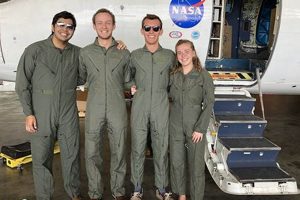
The professional path focused on designing, developing, and testing aircraft, spacecraft, satellites, and missiles requires a strong foundation in engineering principles. Individuals in this field apply scientific and mathematical knowledge to create innovative technologies for both atmospheric and space environments. This career choice blends creativity with technical expertise to solve complex challenges.
Pursuing this line of work offers the opportunity to contribute to advancements in transportation, defense, and space exploration. The skills acquired are highly sought after, leading to competitive salaries and opportunities for professional growth. Historically, those working in this sector have been at the forefront of technological breakthroughs, shaping the future of air and space travel. Their contributions have had a tangible impact on many facets of society.
The following sections will delve deeper into the specific responsibilities, required skills, educational pathways, and potential career trajectories for those entering this demanding, yet rewarding, field. These will elaborate further to help prospective individuals grasp the essentials.
Essential Guidance for an Aerospace Engineering Trajectory
The following guidance aims to provide aspiring aerospace professionals with actionable strategies to enhance their prospects and navigate the challenges of this demanding field.
Tip 1: Develop a Strong Mathematical Foundation: A robust understanding of calculus, differential equations, and linear algebra is paramount. Many concepts within the engineering practice are fundamentally based on these mathematical areas. Focus on rigorous problem-solving skills in these fields.
Tip 2: Pursue Relevant Internships: Practical experience is invaluable. Aim to secure internships at aerospace companies, government agencies, or research institutions. Participation in such opportunities enhances the understanding of real-world engineering applications and establishes key industry connections.
Tip 3: Master CAD and Simulation Software: Proficiency in Computer-Aided Design (CAD) software such as CATIA, SolidWorks, or AutoCAD is essential. Similarly, experience with simulation tools like ANSYS or MATLAB/Simulink is beneficial. The ability to model and analyze designs is crucial for efficient development processes.
Tip 4: Cultivate Strong Communication Skills: The ability to effectively communicate technical information, both verbally and in writing, is critical for collaboration and project success. Regularly practice presenting ideas, writing technical reports, and participating in team discussions to hone those capabilities.
Tip 5: Consider Graduate Studies: A master’s degree or doctorate can open doors to more specialized roles and research opportunities. Further education allows for in-depth exploration of a particular area of interest and provides a competitive edge in the job market.
Tip 6: Build a Professional Network: Actively participate in industry events, join professional organizations such as the American Institute of Aeronautics and Astronautics (AIAA), and connect with engineers in the field. Networking can provide mentorship, career advice, and access to job opportunities.
Tip 7: Stay Updated with Industry Trends: The aerospace sector is continually evolving. Remain informed about the latest technologies, materials, and regulatory changes. Regularly read industry publications, attend conferences, and engage in continuing education to stay relevant.
The points above represent just a sample of the knowledge and skills needed to stand out. However, they do highlight the core areas of focus vital for career success.
Further discussion regarding education, salary expectations, and emerging markets will ensue in the concluding section of this text.
1. Design

The design aspect of an aerospace engineering career encompasses the creation of air and spacecraft, their components, and related systems. Design is not merely aesthetic; it’s the foundational process wherein performance, safety, and efficiency are meticulously planned and executed. The design phase dictates the overall functionality and capabilities of the final product. For example, the design of an aircraft wing determines its lift, drag, and structural integrity, directly impacting its flight characteristics and fuel efficiency. Similarly, the design of a spacecraft’s heat shield is crucial for protecting it during atmospheric re-entry, influencing mission success. The ability to translate conceptual ideas into functional designs, adhering to rigorous engineering principles and safety standards, is a central pillar of the profession.
The design process involves numerous stages, from preliminary concept sketches and computational modeling to detailed engineering drawings and prototype development. Computer-Aided Design (CAD) software, such as CATIA and SolidWorks, are indispensable tools. These allow engineers to create intricate 3D models, simulate performance under various conditions, and optimize designs for manufacturing. Furthermore, design considerations must incorporate a range of factors, including material selection, aerodynamic principles, structural analysis, and regulatory compliance. The design of a satellite’s communication system, for instance, requires careful consideration of signal frequency, power requirements, and orbital mechanics to ensure reliable data transmission.
Design constitutes an essential component of this career path, representing the tangible application of theoretical knowledge. The ability to innovate and create solutions within design constraints is a hallmark of a successful professional. The design capabilities of aerospace engineers directly influence the progress and advancement of technology in the fields of aviation, space exploration, and defense. Any advancement in air or space has design to thank for its implementation. The design component of this engineering path is essential for advancement.
2. Analysis
The systematic evaluation of designs, systems, and processes forms a critical element within the professional responsibilities in this field. A meticulous and thorough analytical approach ensures safety, performance, and reliability in the often extreme operating environments of air and space vehicles.
- Structural Integrity Analysis
Assessment of an aircraft or spacecraft’s ability to withstand stress, strain, and fatigue is paramount. Finite element analysis (FEA) is frequently employed to simulate the structural behavior under various loads. This technique helps identify potential weak points and ensures that the structure can endure the forces experienced during flight or space travel. For example, FEA might be used to analyze the stress distribution in a wing during high-G maneuvers, ensuring it will not fail under pressure. The impact of ensuring such safety is critical.
- Aerodynamic Performance Analysis
Evaluation of how air flows around an aircraft or spacecraft dictates efficiency and control. Computational Fluid Dynamics (CFD) simulations play a crucial role in predicting aerodynamic forces, such as lift and drag. By analyzing airflow patterns, engineers optimize the shape of airfoils and fuselages, enhancing performance and fuel efficiency. For instance, CFD can be used to refine the design of an aircraft’s wingtips to reduce drag, lowering fuel consumption during long-haul flights.
- Thermal Analysis
Maintaining acceptable temperature ranges for equipment and passengers is vital. Thermal analysis predicts the heat transfer within a system, considering factors such as solar radiation, internal heat generation, and convective cooling. This analysis informs the design of thermal protection systems, such as heat shields for spacecraft re-entry. For example, thermal analysis is indispensable in designing the cooling system for a satellite’s electronic components, ensuring they operate within their specified temperature limits, guaranteeing reliability over long periods.
- System Reliability Analysis
Predicting the probability of system failure and identifying critical components is essential for overall operational integrity. Fault tree analysis (FTA) and failure mode and effects analysis (FMEA) are employed to assess potential failure scenarios and their consequences. These techniques help engineers design redundant systems and implement preventive maintenance strategies. For example, FMEA can be used to assess the potential failure modes of a spacecraft’s life support system, identifying critical components and implementing backup systems to mitigate risks.
These analytical disciplines are not isolated but interconnected, forming a holistic approach to verification and validation. Thorough evaluation ensures the development of reliable, efficient, and safe air and space vehicles, contributing to the continual improvement of aerospace technology and directly impacting the overall efficacy of an individuals contributions in that field. This holistic perspective ensures complete safety.
3. Innovation

Innovation is the engine driving progress within the aerospace sector, and its integration into the profession is not merely beneficial but fundamentally essential. The aerospace engineer’s role inherently demands the generation of novel solutions to overcome existing limitations and meet emerging needs. A direct correlation exists between the capacity for innovation and advancements in areas such as fuel efficiency, propulsion systems, materials science, and space exploration capabilities. For instance, the development of composite materials revolutionized aircraft design by enabling lighter, stronger structures, directly impacting fuel consumption and performance. Similarly, advancements in ion propulsion systems have extended the range and duration of deep-space missions.
The impact of fostering original thinking within the field translates into tangible improvements. New methodologies in aircraft design can lead to reduced drag, increased lift, and enhanced stability. Innovative approaches to satellite technology can facilitate more efficient communication systems, higher-resolution Earth observation, and improved navigation capabilities. Furthermore, innovative engineering principles applied to spacecraft design are essential for overcoming the challenges of space travel, including radiation exposure, extreme temperatures, and the vacuum environment. Consider, for example, the innovative thermal protection systems developed for the Space Shuttle and subsequent spacecraft, which enabled safe re-entry into the Earth’s atmosphere.
The relationship between this element and the career is symbiotic, driving progress within the field and shaping the future of air and space travel. Without continuous innovation, the sector would stagnate, failing to address emerging challenges or capitalize on new opportunities. Therefore, cultivating a culture of innovation is imperative for organizations and individual professionals. By prioritizing creativity, experimentation, and a willingness to challenge conventional approaches, the field can continue to push the boundaries of what is possible. This focus ensures the next generation of engineers will be adequately equipped to address the complex problems in the sector.
4. Collaboration
The complexities inherent in aerospace projects necessitate extensive collaboration among diverse teams. No single engineer possesses the breadth of expertise required to independently design, develop, test, and deploy modern aircraft or spacecraft. Effective teamwork, therefore, forms a cornerstone of success in this profession. The interdependence of various engineering disciplines, such as aerodynamics, structural analysis, propulsion, and avionics, demands seamless communication and knowledge sharing. For instance, the design of a new aircraft wing requires close coordination between aerodynamicists, who optimize the wing’s shape for lift and drag, and structural engineers, who ensure its structural integrity under flight loads. Failure to collaborate effectively can lead to design flaws, performance deficiencies, and safety hazards.
Successful aerospace projects often involve collaboration across organizational boundaries. Engineers may work with suppliers, manufacturers, regulatory agencies, and international partners. The development of the International Space Station (ISS), for example, involved collaboration among engineers from numerous countries, each contributing specialized expertise and resources. This global collaboration required overcoming cultural differences, language barriers, and logistical challenges. The effectiveness of these collaborations directly influences the ISSs scientific output and operational longevity. Similarly, collaborative efforts between aerospace companies and government research labs drive innovation by leveraging combined resources and expertise.
In conclusion, collaboration is not merely a desirable attribute but an essential competency for those working in this domain. The scale and complexity of aerospace endeavors mandate effective teamwork, cross-disciplinary communication, and coordination across organizational boundaries. Addressing challenges such as communication barriers and conflicting priorities requires cultivating a culture of collaboration and fostering strong interpersonal skills. The future of aerospace innovation and success hinges on the ability of engineers to work together effectively, leveraging their diverse expertise to achieve common goals.
5. Problem-solving

The discipline of aerospace engineering inherently demands a robust capability for systematic problem-solving. The design, construction, and maintenance of aircraft and spacecraft present multifaceted challenges requiring analytical rigor and innovative solutions. Problem-solving acumen is not merely an adjunct to the profession but a core competency essential for progress and safety.
- System Failure Analysis
Aerospace systems are subject to stringent reliability requirements. Identifying the root cause of system failures, whether in mechanical components or complex software, demands meticulous investigation and analytical skills. This entails employing diagnostic tools, conducting simulations, and applying engineering principles to determine the origin of the failure and implement corrective actions. For example, addressing the cause of a sudden loss of altitude in an aircraft requires a systematic investigation of potential causes, ranging from engine malfunction to control system anomalies. The consequences of mishandling failure analysis are grave.
- Optimization of Performance Parameters
Achieving optimal performance in aircraft and spacecraft often involves trade-offs between various parameters such as fuel efficiency, speed, payload capacity, and maneuverability. Engineers must employ mathematical modeling, simulation, and experimental testing to identify solutions that maximize overall performance while adhering to safety constraints. Optimizing the trajectory of a spacecraft to minimize fuel consumption while reaching a specific orbit exemplifies this challenge. Achieving this requires a careful analysis of orbital mechanics and propulsion system capabilities.
- Mitigation of Environmental Effects
Aerospace vehicles operate in extreme environments, ranging from the high-altitude atmosphere to the vacuum of space. Engineers must address the effects of temperature extremes, radiation exposure, aerodynamic forces, and structural stress. Developing solutions to mitigate these effects requires understanding the underlying physical phenomena and implementing appropriate design strategies. For instance, designing thermal protection systems for spacecraft re-entry involves managing extreme heat fluxes to prevent damage to the vehicle’s structure and internal components. These elements need careful mitigation to assure safety.
- Adaptation to Technological Advancements
The aerospace industry is characterized by rapid technological innovation. Remaining current with emerging technologies and adapting them to aerospace applications requires continuous learning and problem-solving skills. Integrating new materials, propulsion systems, or avionics into existing or new designs demands careful evaluation of their potential benefits and drawbacks. The process also entails addressing any integration challenges and ensuring compatibility with existing systems. Successfully incorporating advanced composite materials into aircraft structures, for example, requires addressing issues related to manufacturing processes, structural integrity, and maintenance procedures.
The aforementioned facets highlight the critical role of problem-solving within this domain. The capacity to identify, analyze, and resolve complex challenges is fundamental to ensuring the safety, reliability, and performance of aerospace systems. Success in this area necessitates a combination of technical expertise, analytical skills, and a commitment to continuous improvement. These traits allow one to evolve and adapt within this ever-advancing field.
6. Advancement
Continuous growth, both in knowledge and responsibility, defines the trajectory of a professional in this field. Such development is not merely a personal aspiration but a necessity driven by the dynamic nature of the industry and the ever-increasing complexity of aerospace systems.
- Pursuit of Advanced Education
Acquisition of advanced degrees, such as a Master of Science or a Ph.D., represents a pathway to specialization and enhanced expertise. Further education equips engineers with advanced analytical and research skills. This allows them to tackle complex technical challenges and contribute to innovations in areas such as propulsion systems, aerodynamics, and materials science. A doctoral degree often opens doors to research-oriented positions in academia or industry, where engineers lead cutting-edge projects and develop new technologies.
- Specialization in Emerging Technologies
The aerospace sector is characterized by rapid technological evolution. Engineers must actively seek opportunities to specialize in areas such as unmanned aerial vehicles (UAVs), hypersonics, space exploration, and advanced composite materials. Acquiring expertise in these fields enhances an engineer’s marketability and enables them to contribute to the development of next-generation aerospace systems. Specialization often involves pursuing certifications, attending specialized training courses, and engaging in research activities.
- Leadership and Management Roles
As experience accumulates, opportunities arise to transition into leadership and management positions. These roles involve overseeing engineering teams, managing projects, and making strategic decisions. Effective leadership requires strong communication skills, the ability to motivate and inspire teams, and a deep understanding of project management principles. Engineers in leadership positions are responsible for ensuring that projects are completed on time, within budget, and to the required specifications.
- Contribution to Industry Standards and Regulations
Experienced professionals contribute to the development of industry standards and regulations. Participation in standards committees and regulatory bodies allows engineers to shape the future of the aerospace sector. This work involves applying technical expertise to develop safety standards, performance requirements, and best practices. Contributing to standards and regulations enhances an engineer’s reputation and influence within the industry. This also contributes to ensuring the safety and reliability of aerospace systems.
These facets illustrate how active growth contributes to the long-term success of professionals in the aerospace domain. This continuous pursuit of skill and knowledge is indispensable for navigating the complexities of the field and for maintaining a competitive edge within the ever-evolving industry landscape.
Frequently Asked Questions
The subsequent section addresses several frequently asked questions pertaining to the trajectory and professional engagement within the field. The intent is to provide a clear and concise understanding of common inquiries.
Question 1: What level of mathematical proficiency is truly necessary to succeed?
A strong foundation in calculus, differential equations, linear algebra, and numerical methods is crucial. These mathematical disciplines form the basis for understanding aerodynamics, structural analysis, and control systems. Mastery of these concepts is essential for analyzing and solving complex engineering problems.
Question 2: Beyond a formal degree, what specific software skills are advantageous?
Proficiency in CAD software such as CATIA, SolidWorks, or AutoCAD is highly beneficial for designing and modeling components. Additionally, familiarity with simulation tools like ANSYS or MATLAB/Simulink enables analysis of system performance and optimization of designs. These tools are indispensable for modern engineering workflows.
Question 3: How important are internships or practical experience during academic pursuits?
Internships are highly valued. Practical experience gained through internships provides invaluable insights into real-world engineering challenges and allows students to apply their theoretical knowledge to practical problems. Internships also facilitate networking and potential future employment opportunities.
Question 4: What are the typical career progression paths?
Entry-level positions may involve design, analysis, or testing roles. With experience, individuals may progress to project management, team leadership, or specialized engineering roles. Some may pursue advanced degrees to specialize in a particular area of expertise, leading to research or academic positions.
Question 5: Is advanced certification or licensure necessary within this path?
Professional licensure, such as the Professional Engineer (PE) license, may be required for certain roles, particularly those involving public safety or regulatory compliance. Obtaining relevant certifications demonstrates expertise in specific areas and enhances career prospects.
Question 6: What impact does ongoing professional development have on job security and prospects?
Continuous learning is essential. The industry is characterized by rapid technological advancements. Staying abreast of new technologies, materials, and engineering techniques is crucial for maintaining job security and remaining competitive in the job market. Professional development activities such as attending conferences, taking courses, and pursuing certifications are highly recommended.
The aforementioned questions address prevalent concerns regarding the practicalities of engaging in, and thriving within, this domain. Understanding these points assists in the formulation of realistic expectations and strategic career planning.
The subsequent section will provide additional information regarding salary expectations and the potential for future growth.
Conclusion
This exploration has elucidated critical aspects of the aerospace engineer career. From the necessity of a robust mathematical foundation and proficiency in industry-standard software, to the emphasis on collaborative teamwork, innovation, problem-solving, and continuous professional advancement, the demanding nature of the profession has been thoroughly examined. The importance of practical experience gained through internships and the potential for specialization in emerging technologies has also been underscored.
The pursuit of an aerospace engineer career represents a significant undertaking, requiring dedication, intellectual rigor, and a commitment to lifelong learning. The future demands solutions to increasingly complex challenges, whether in the optimization of air travel or the continued exploration of space. Individuals drawn to this path must be prepared to meet these challenges head-on, contributing to advancements that will shape the future of aerospace technology. The rewards for those who succeed can be great; the impact on technology as a whole is undeniable.