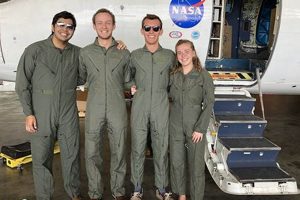
This professional designs, develops, tests, and supervises the manufacturing of aircraft, spacecraft, satellites, and missiles. Expertise encompasses aerodynamics, propulsion systems, materials science, and structural analysis. For example, an individual in this role might create a more fuel-efficient wing design for commercial airliners or develop guidance systems for unmanned aerial vehicles.
The contributions of these professionals are vital to advancements in air travel, space exploration, and national defense. Their work fosters innovation, leading to enhanced safety, performance, and capabilities in aerospace technologies. Historically, these individuals have played a crucial role in pushing the boundaries of flight, from the first powered aircraft to the development of sophisticated orbital satellites.
The information presented above will serve as the foundation for a deeper examination of the various facets of this profession, including career paths, necessary qualifications, and the impact of technological advancements on the field.
Guidance from Professionals in the Field
The following constitutes actionable advice derived from the experience of seasoned professionals involved in aircraft and spacecraft engineering, intended to inform and assist those pursuing or engaged in this demanding career.
Tip 1: Solidify Foundational Knowledge: A strong grasp of fundamental physics and mathematics is essential. Rigorous coursework in calculus, differential equations, thermodynamics, and fluid dynamics provides the bedrock for advanced aerospace concepts.
Tip 2: Cultivate Proficiency in CAD and Simulation Software: Modern aerospace engineering relies heavily on computer-aided design (CAD) and computational fluid dynamics (CFD) tools. Familiarity with software packages such as CATIA, ANSYS, or MATLAB enhances design and analysis capabilities.
Tip 3: Seek Practical Experience Through Internships: Real-world exposure through internships is invaluable. Opportunities at aerospace companies, research institutions, or government agencies provide hands-on experience and insights into industry practices.
Tip 4: Develop Effective Communication Skills: The ability to communicate technical information clearly and concisely is crucial. Effective presentations, reports, and collaborations are integral to successful project execution.
Tip 5: Specialize in a Relevant Area: The field is broad. Focusing on a specific area of interest, such as propulsion, structures, or avionics, allows for deeper expertise and increased career opportunities.
Tip 6: Stay Abreast of Technological Advancements: The aerospace sector is constantly evolving. Continuous learning and adaptation to new technologies, materials, and methodologies are imperative for professional growth.
Tip 7: Consider Advanced Education: A master’s or doctoral degree can provide specialized knowledge and research experience, opening doors to advanced research and development roles.
The application of these recommendations provides a structured approach to developing the requisite skills and knowledge for a successful career in the field, facilitating increased competency and professional achievement.
The information above provides practical guidelines for navigating a career in aerospace engineering. The following sections of this article will delve deeper into specific applications and emerging trends.
1. Vehicle Design

Vehicle design represents a core function inextricably linked to the responsibilities of these engineers. It encompasses a multidisciplinary approach to creating efficient, safe, and functional aircraft and spacecraft. The process demands rigorous application of engineering principles to optimize performance characteristics and meet stringent regulatory standards.
- Aerodynamic Performance Optimization
This facet involves shaping the vehicle to minimize drag and maximize lift. Computational Fluid Dynamics (CFD) simulations and wind tunnel testing are employed to refine designs. The selection of airfoil profiles and the integration of control surfaces directly impact fuel efficiency, stability, and maneuverability. An example includes designing a blended wing body aircraft to reduce drag and improve fuel economy.
- Structural Integrity and Weight Management
Ensuring the vehicle can withstand operational stresses is critical. Finite Element Analysis (FEA) is used to analyze structural loads and identify potential weak points. Material selection, including composites and lightweight alloys, is crucial for minimizing weight without compromising strength. An example is the design of a spacecraft’s heat shield to endure extreme thermal stresses during atmospheric reentry.
- Systems Integration and Layout
This involves the arrangement and integration of various subsystems, including propulsion, avionics, environmental control, and life support (for spacecraft). Careful consideration is given to weight distribution, accessibility for maintenance, and electromagnetic compatibility. The layout of a passenger aircraft cabin, including seating arrangements and emergency exits, exemplifies this aspect.
- Regulatory Compliance and Safety Considerations
Vehicle design must adhere to strict regulations imposed by aviation and space agencies. Safety features, such as redundant systems, fire suppression, and emergency egress, are integral components. Certification processes ensure the vehicle meets defined safety standards. Design considerations for an aircraft engine nacelle to contain debris in the event of a fan blade failure demonstrate this requirement.
The facets of vehicle design highlight the diverse skill set required of these engineers. Successfully integrating aerodynamic performance, structural integrity, systems functionality, and regulatory compliance necessitates a comprehensive understanding of engineering principles and a commitment to rigorous design processes. Such expertise facilitates the creation of safe and efficient aerospace vehicles.
2. Propulsion Systems

The design, development, and maintenance of propulsion systems are fundamental to the responsibilities of an aerospace engineer. These systems are the driving force behind aircraft, spacecraft, and missiles, dictating their performance capabilities. A deep understanding of thermodynamics, fluid mechanics, and combustion is essential for engineers specializing in this area. Deficiencies in propulsion system design directly impact fuel efficiency, payload capacity, and overall operational effectiveness. For example, the development of high-bypass turbofan engines significantly increased the range and efficiency of commercial airliners. Similarly, advancements in rocket engine technology, such as staged combustion cycles, have enabled heavier payloads to reach orbit.
The role extends beyond theoretical analysis to encompass practical implementation. Engineers are involved in the testing and validation of propulsion system components, ensuring they meet performance specifications and safety standards. Computational modeling is employed to simulate engine behavior under various operating conditions. Material selection and manufacturing processes are also critical considerations, particularly for components subjected to extreme temperatures and pressures. The implementation of ceramic matrix composites in turbine blades, for example, allows for higher operating temperatures and improved engine efficiency. Furthermore, the integration of propulsion systems with the overall vehicle architecture requires careful coordination to optimize aerodynamics and minimize drag.
In conclusion, propulsion systems are an inextricable element of the aerospace engineer’s domain. Their expertise is critical for optimizing the performance, efficiency, and reliability of these systems, which directly influence the capabilities of aerospace vehicles. The ongoing pursuit of novel propulsion technologies, such as electric propulsion and hypersonic engines, presents continued challenges and opportunities for this field.
3. Materials Expertise

Material selection is a critical competency for professionals in this field. The performance and safety of aircraft and spacecraft are directly contingent on the appropriate use of materials capable of withstanding extreme conditions. Factors influencing material selection include strength-to-weight ratio, resistance to corrosion and fatigue, thermal stability, and cost-effectiveness. For instance, the development of high-strength aluminum alloys was instrumental in enabling the construction of larger, more efficient commercial aircraft. The use of composite materials, such as carbon fiber reinforced polymers, offers significant weight savings compared to traditional metals, leading to improved fuel efficiency and increased payload capacity. This expertise necessitates a comprehensive understanding of material properties and their behavior under diverse operational stressors.
The application of this knowledge extends beyond initial material selection. It also encompasses the development of novel materials and processes tailored to specific aerospace applications. This may involve research into new alloys, the optimization of composite manufacturing techniques, or the development of protective coatings to mitigate corrosion and erosion. The use of titanium alloys in jet engine turbine blades, for example, leverages their high strength and temperature resistance to enhance engine performance. Furthermore, the ability to predict material behavior over time and under varying conditions is crucial for ensuring the long-term reliability of aerospace structures. Non-destructive testing methods are frequently employed to detect defects and assess material degradation, preventing catastrophic failures. The rise of additive manufacturing (3D printing) offers new possibilities for creating complex geometries and customized material properties, expanding the design envelope for aerospace components.
In summary, materials expertise is a core element in the skillset of professionals in this area. Competent material selection, development, and analysis are crucial for the safety, performance, and longevity of aerospace vehicles. Continuous advancements in materials science and engineering present ongoing challenges and opportunities for professionals to innovate and improve the capabilities of flight and space exploration.
4. Flight Dynamics

Flight dynamics is a critical discipline directly pertaining to the work conducted by individuals in this profession. It concerns the study of the motion and control of aircraft and spacecraft in three dimensions, encompassing stability, control, and performance characteristics. Mastery of these principles is essential for designing vehicles that are safe, efficient, and capable of meeting mission objectives.
- Stability Analysis
This involves determining the inherent tendency of an aircraft or spacecraft to return to equilibrium following a disturbance. Longitudinal stability concerns pitch oscillations, lateral stability addresses yaw and roll tendencies, and directional stability focuses on weathercocking. The analysis informs the design of control surfaces and autopilot systems to maintain desired flight paths and attitudes. A properly designed aircraft exhibits positive static stability, meaning it will naturally return to its original state after a minor disturbance. Unstable aircraft require active control systems to maintain controlled flight.
- Control System Design
Professionals in this area design and implement control systems that allow pilots or autopilots to maneuver an aircraft or spacecraft precisely. This involves selecting appropriate actuators, sensors, and control laws to achieve desired performance. Control surfaces, such as ailerons, elevators, and rudders, are used to generate aerodynamic forces that alter the vehicle’s attitude and trajectory. Feedback control systems continuously monitor the vehicle’s state and make adjustments to maintain desired flight parameters. The design of fly-by-wire systems, where pilot inputs are processed by computers before being transmitted to control surfaces, exemplifies the sophistication of modern control system design.
- Performance Prediction
Flight dynamics is used to predict the performance capabilities of an aircraft or spacecraft under various operating conditions. This includes calculating range, endurance, climb rate, and turning performance. Aerodynamic drag, engine thrust, and vehicle weight are key parameters that influence performance. Performance predictions are used to optimize flight profiles, plan mission trajectories, and assess the vehicle’s ability to meet its design requirements. Estimating the fuel consumption of an airliner over a specific route involves detailed performance analysis.
- Atmospheric Effects
These professionals must also consider the impact of atmospheric conditions on flight dynamics. Wind gusts, turbulence, and atmospheric density variations can significantly affect aircraft stability and control. Weather models and real-time sensor data are used to predict and compensate for these effects. Wind shear, a sudden change in wind speed or direction, can pose a significant hazard during takeoff and landing. Aircraft control systems are designed to mitigate the effects of atmospheric disturbances and maintain safe flight conditions. Understanding the effects of atmospheric conditions is crucial for ensuring safe and efficient air travel.
These elements of flight dynamics are fundamental to the design and operation of aerospace vehicles. A deep understanding of these principles enables the development of safe, efficient, and effective aircraft and spacecraft. It ensures vehicles can meet their operational requirements across a spectrum of flight conditions. The knowledge of atmospheric science, control systems, and propulsion systems is crucial to analyze the effects and maintain vehicle stability.
5. Regulatory Compliance
Regulatory compliance constitutes a cornerstone of the profession. Individuals in this field must adhere to a complex web of national and international regulations governing the design, manufacture, and operation of aircraft and spacecraft. These regulations, enforced by agencies such as the Federal Aviation Administration (FAA) and the European Aviation Safety Agency (EASA), are designed to ensure safety, security, and environmental protection. Failure to comply with these standards can result in significant penalties, including fines, grounding of aircraft, and even criminal charges. Therefore, a comprehensive understanding of regulatory requirements is not merely desirable, but a fundamental prerequisite for professional practice.
The influence of regulatory compliance permeates every aspect of the profession. From the selection of materials to the design of control systems, all decisions must be made in accordance with applicable standards. For example, regulations dictate specific requirements for aircraft engine emissions, mandating the use of technologies to reduce pollutants. Similarly, standards govern the design of aircraft structures to ensure they can withstand anticipated loads and stresses. Regulatory compliance also impacts operational procedures, such as pilot training and aircraft maintenance. The implementation of safety management systems (SMS) within aerospace organizations is a direct result of regulatory mandates aimed at proactively identifying and mitigating risks.
In conclusion, regulatory compliance is an inseparable element of the aerospace engineering landscape. The commitment to adhering to these standards is paramount for ensuring the safety and reliability of air and space travel, and is thus, a core responsibility of professionals in this field. Challenges arise from the ever-evolving nature of regulations and the need to adapt to new technologies and operational environments. A continuous learning approach and diligent application of compliance principles are, therefore, essential for success in this demanding profession.
Frequently Asked Questions
The following addresses common inquiries regarding the profession. The information aims to provide clarity and accurate insights.
Question 1: What is the primary responsibility?
The primary responsibility involves the design, development, testing, and supervision of the manufacturing of aircraft and spacecraft. This includes ensuring structural integrity, aerodynamic efficiency, and compliance with safety regulations.
Question 2: What educational background is required?
A bachelor’s degree in aerospace engineering or a closely related field is typically required. Advanced positions may necessitate a master’s degree or doctorate. A strong foundation in mathematics, physics, and engineering principles is essential.
Question 3: What are the typical work environments?
Professionals in the field work in a variety of settings, including aerospace companies, government agencies, research institutions, and consulting firms. Work may involve office-based design and analysis, laboratory testing, or field operations.
Question 4: What are the key skills required?
Key skills include a strong understanding of aerodynamics, propulsion, structures, and control systems. Proficiency in computer-aided design (CAD) software, computational fluid dynamics (CFD) tools, and finite element analysis (FEA) is also critical. Strong problem-solving, communication, and teamwork skills are necessary.
Question 5: What is the career outlook?
The career outlook is generally positive, driven by continued demand for air travel, space exploration, and defense technologies. Specific job growth may vary depending on economic conditions and government funding priorities.
Question 6: What are the ethical considerations?
Ethical considerations include ensuring the safety and reliability of aerospace vehicles, protecting the environment, and avoiding conflicts of interest. Adherence to professional codes of conduct and responsible engineering practices is paramount.
The FAQs above offer a brief overview of pertinent aspects. Detailed research and professional guidance is recommended for those pursuing this career.
Further exploration of specific career paths and emerging technologies within the profession will be covered in subsequent sections.
Conclusion
The preceding discussion has sought to comprehensively illuminate the multifaceted role of these professionals. From the initial design and development phases to the rigorous testing and manufacturing processes, the expertise of those in this field is crucial. Their work encompasses a diverse array of disciplines, including aerodynamics, propulsion, materials science, flight dynamics, and regulatory compliance, all of which are essential for ensuring the safety, efficiency, and performance of aerospace vehicles.
As technology continues to advance and the demand for air and space travel expands, the contributions of skilled individuals in this field will remain paramount. Continued investment in education, research, and development is vital for fostering innovation and ensuring the continued success of the aerospace industry. Future generations should diligently consider how their expertise is applied to ensure the sustainable and ethical advancement of air and space travel.