The necessary academic preparation for professionals in this field typically involves a bachelor’s degree in aerospace engineering or a closely related discipline, such as mechanical engineering with an aerospace focus. These programs provide a foundational understanding of aerodynamics, propulsion, materials science, and structural analysis, among other key areas. For instance, coursework often includes subjects like fluid dynamics, heat transfer, and control systems.
The attainment of these qualifications is fundamental for ensuring competence and safety in the design, development, and testing of aircraft and spacecraft. A robust educational background equips individuals with the analytical and problem-solving skills required to address complex engineering challenges. Historically, the formalization of these standards has contributed significantly to advancements in aviation and space exploration.
The following sections will further elaborate on the specific degree paths available, the typical curriculum covered, the relevance of advanced degrees, and the role of professional certifications in the trajectory of an aerospace engineer.
Essential Guidance for Aspiring Aerospace Engineers
The subsequent recommendations are designed to assist individuals in navigating the academic prerequisites necessary to pursue a successful career in aerospace engineering.
Tip 1: Prioritize a Strong Foundation in Mathematics and Science: A solid understanding of calculus, differential equations, physics, and chemistry is crucial. These subjects form the bedrock upon which more advanced engineering concepts are built. For example, a thorough grasp of calculus is essential for understanding fluid dynamics and aerodynamics.
Tip 2: Select an Accredited Program: Ensure that the chosen aerospace engineering program is accredited by a reputable organization, such as ABET. Accreditation signifies that the program meets established quality standards and provides a comprehensive education. Graduates from accredited programs are generally more competitive in the job market.
Tip 3: Pursue Relevant Internships or Co-op Experiences: Practical experience gained through internships or cooperative education programs is invaluable. These opportunities provide exposure to real-world engineering challenges and allow students to apply their knowledge in a professional setting. For example, an internship at a company specializing in aircraft design provides direct experience in the field.
Tip 4: Develop Strong Communication and Teamwork Skills: Aerospace engineering projects often involve collaboration with multidisciplinary teams. The ability to communicate effectively, both orally and in writing, is essential for success. Participate in group projects and seek opportunities to hone these skills.
Tip 5: Consider Specialization: As one progresses through an academic career, focus on a specific area of interest within aerospace engineering, such as propulsion, structures, or control systems. This focused approach can lead to expertise in a particular domain and enhance career prospects. For example, specializing in spacecraft propulsion might involve in-depth study of rocket engines and orbital mechanics.
Tip 6: Engage in Research Opportunities: Participating in research projects allows individuals to explore cutting-edge technologies and contribute to the advancement of the field. Research experience can also be beneficial for those considering graduate studies.
These guidelines, when carefully considered and implemented, will substantially improve preparedness for the challenges and opportunities presented by a career in aerospace engineering.
The following sections will provide further insights into related aspects of this field.
1. Accredited bachelor's degree

An accredited bachelor’s degree in aerospace engineering or a closely related field directly fulfills a core component of the educational prerequisites for becoming an aerospace engineer. Accreditation, conferred by bodies such as ABET, signifies that the program has met rigorous standards in curriculum, faculty qualifications, and educational resources. This certification provides assurance that graduates possess the fundamental knowledge and skills necessary for entry into the profession.
The absence of an accredited degree can significantly limit career opportunities in aerospace engineering. Many employers, particularly government agencies and large aerospace companies, prioritize candidates from accredited programs. For instance, engineers working on safety-critical aircraft components are almost universally required to hold degrees from accredited institutions to comply with regulatory standards. Accreditation ensures a baseline level of competence and ethical conduct, essential for public safety and the integrity of the engineering profession.
In summary, an accredited bachelor’s degree is not merely a desirable qualification but a fundamental requirement for aspiring aerospace engineers. It validates the quality of education received, enhances employability, and ensures compliance with industry standards, ultimately contributing to the advancement and safety of aerospace technology. The pursuit of an accredited program is therefore a critical decision that shapes the future trajectory of an engineer’s career.
2. Strong mathematics foundation

A strong foundation in mathematics constitutes a fundamental element of the necessary academic preparation for aerospace engineers. This mathematical proficiency is not merely theoretical; it is a practical necessity for analyzing and solving complex engineering problems. The principles of calculus, differential equations, linear algebra, and statistics are directly applied in diverse areas such as aerodynamics, structural analysis, control systems design, and orbital mechanics. Without a solid grasp of these mathematical concepts, it becomes exceedingly difficult to model and predict the behavior of aircraft and spacecraft.
Consider, for example, the design of an aircraft wing. Aerodynamic lift, drag, and stability are all governed by mathematical equations derived from fluid dynamics. Engineers must utilize computational fluid dynamics (CFD) software to simulate airflow over the wing, which requires a deep understanding of numerical methods and partial differential equations. Similarly, in structural analysis, finite element methods (FEM) are employed to assess stress and strain distributions within the wing structure, relying heavily on linear algebra and matrix operations. The design of guidance and control systems relies on sophisticated control theory, which utilizes differential equations and Laplace transforms to ensure stability and precise trajectory control.
In summary, a robust mathematical foundation is not just an advantage; it is an indispensable prerequisite for successful aerospace engineering practice. It provides the tools to analyze, model, and predict the behavior of complex systems, ensuring the safety, efficiency, and performance of aircraft and spacecraft. Deficiencies in mathematical understanding directly impede an engineer’s ability to contribute meaningfully to the design, development, and testing of aerospace vehicles. Therefore, curricula for aspiring aerospace engineers universally prioritize rigorous mathematical training to equip them with the analytical capabilities essential for their future careers.
3. Aerospace-specific coursework
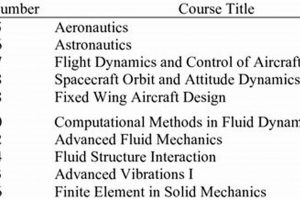
Aerospace-specific coursework directly addresses the specialized knowledge and skills necessary for successful practice in the aerospace engineering field, representing a critical component of the overall academic prerequisites. This specialized training differentiates aerospace engineers from general engineering graduates and ensures competence in the unique challenges presented by flight and space exploration.
- Aerodynamics and Fluid Dynamics
This area focuses on the study of air and other fluids in motion, with a specific emphasis on how they interact with aircraft and spacecraft. Students learn to analyze lift, drag, and stability, which are fundamental to aircraft design. For instance, understanding compressible flow is critical for designing supersonic aircraft, while boundary layer theory is essential for minimizing drag on commercial airliners.
- Aerospace Propulsion Systems
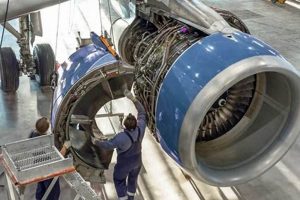
This facet delves into the theory and design of various propulsion systems, including jet engines, rocket engines, and advanced propulsion concepts. Students examine the thermodynamic cycles, combustion processes, and nozzle designs that govern engine performance. This knowledge is crucial for optimizing fuel efficiency and thrust, as seen in the development of more efficient turbofan engines for commercial aviation.
- Aerospace Structures and Materials
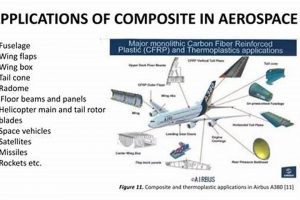
This involves the study of the mechanical behavior of aerospace structures and the properties of materials used in their construction. Students learn to analyze stress, strain, and vibration in aircraft and spacecraft components, and to select materials that can withstand extreme temperatures, pressures, and loads. Composite materials, such as carbon fiber reinforced polymers, are extensively studied due to their high strength-to-weight ratio, which is vital for reducing aircraft weight and improving performance.
- Flight Dynamics and Control
This area concentrates on the dynamic behavior of aircraft in flight and the design of control systems to ensure stability and maneuverability. Students learn to analyze aircraft responses to control inputs and to design autopilot systems that can maintain desired flight paths. This is exemplified in the development of fly-by-wire systems for modern aircraft, which rely on sophisticated control algorithms to enhance safety and performance.
- Spacecraft Design and Orbital Mechanics
This involves the study of spacecraft systems, including propulsion, power, thermal control, and communications, as well as the principles of orbital mechanics governing satellite trajectories and interplanetary missions. Students learn to calculate orbital maneuvers, design spacecraft subsystems, and analyze the space environment. For example, understanding orbital perturbations is critical for maintaining the precise positioning of communication satellites.
The integration of these aerospace-specific subjects into the curriculum ensures that graduates possess the specialized knowledge necessary to contribute effectively to the design, development, and operation of aircraft and spacecraft. This specialized training directly addresses the unique challenges of the aerospace industry and prepares engineers to tackle the complex problems associated with flight and space exploration, solidifying their significance within the requirements.
4. Hands-on practical experience
Hands-on practical experience is not merely a supplementary element but an integral component of aerospace engineering academic preparation. It bridges the gap between theoretical knowledge acquired in the classroom and the applied skills necessary for effective professional practice, forming a crucial link in the development of competent aerospace engineers.
- Internships and Co-operative Education Programs
Internships and co-operative education (co-op) programs provide structured opportunities for students to work in aerospace companies or government agencies. These experiences allow students to apply their academic knowledge to real-world engineering challenges, such as designing aircraft components, analyzing flight data, or participating in satellite testing. For example, an internship at NASA might involve working on a project related to the development of new spacecraft propulsion systems, offering invaluable practical experience that cannot be replicated in a classroom setting. The skills and connections gained during these placements significantly enhance a graduate’s employability.
- Laboratory Work and Experimental Projects
Laboratory courses and experimental projects within the academic curriculum offer opportunities for students to engage in hands-on activities, such as wind tunnel testing, materials testing, and control systems design. These activities enable students to develop practical skills in data acquisition, analysis, and interpretation, as well as problem-solving abilities. For example, a student might design and build a small-scale wind tunnel model of an aircraft wing to investigate aerodynamic characteristics, gaining practical experience in experimental design and data analysis.
- Design-Build-Fly Competitions
Participation in design-build-fly competitions, such as those organized by the American Institute of Aeronautics and Astronautics (AIAA), provides students with the opportunity to design, build, and fly an aircraft to meet specific performance requirements. These competitions require students to integrate their knowledge of aerodynamics, structures, propulsion, and control systems, and to work collaboratively as a team to overcome engineering challenges. For example, students might design an aircraft capable of carrying a specific payload over a given distance, requiring them to optimize the aircraft’s design for performance and efficiency. This allows a student to practice hands-on design and project management skills, and compete in a realistic aerospace environment.
- Research Projects and Undergraduate Research Opportunities
Engagement in research projects, particularly undergraduate research opportunities, allows students to work alongside faculty members on cutting-edge research in aerospace engineering. These experiences provide students with the opportunity to develop research skills, such as literature review, experimental design, data analysis, and technical writing. For example, a student might assist a professor in conducting research on advanced composite materials for aircraft structures, gaining experience in materials characterization and testing. Research also increases their understanding of the broader concepts of their curriculum.
In conclusion, hands-on practical experience is an indispensable element of aerospace engineering academic preparation. It complements classroom learning by providing opportunities to apply theoretical knowledge, develop practical skills, and gain real-world experience. These experiences enhance a graduate’s employability and prepare them to tackle the complex engineering challenges encountered in the aerospace industry, reinforcing the importance of practical training within the overall educational landscape.
5. Continuous Professional Development

Continuous professional development (CPD) is intrinsically linked to the educational standards demanded within the aerospace engineering field. While formal education provides the foundational knowledge, the rapid pace of technological advancement necessitates that aerospace engineers engage in lifelong learning to maintain competence and remain effective in their roles. The initial academic preparation provides the tools and frameworks for understanding engineering principles, but ongoing learning ensures these skills remain relevant and applicable to emerging technologies. Failure to engage in CPD can render an engineer’s initial education obsolete, limiting their ability to contribute to cutting-edge projects and potentially compromising safety and efficiency. For example, an engineer trained in traditional aircraft design techniques must actively pursue CPD to understand and implement advanced composite materials or computational fluid dynamics (CFD) modeling used in modern aircraft development.
CPD encompasses a wide range of activities, including attending conferences, workshops, and seminars, pursuing advanced degrees or certifications, participating in professional organizations, and engaging in self-directed study. These activities allow engineers to stay abreast of new developments in areas such as propulsion systems, avionics, materials science, and cybersecurity, all of which are critical to the aerospace industry. Furthermore, CPD often involves developing skills in areas such as project management, leadership, and communication, which are essential for collaboration and innovation within engineering teams. For instance, an aerospace engineer involved in the design of unmanned aerial vehicles (UAVs) may need to acquire expertise in artificial intelligence, machine learning, and sensor technologies through CPD to effectively contribute to the project.
In summary, continuous professional development is not merely a recommended practice but an essential component of the aerospace engineer’s ongoing educational requirements. It ensures that engineers maintain a high level of competence, adapt to technological advancements, and contribute effectively to the aerospace industry’s continuous innovation and safety enhancements. The challenges of keeping pace with rapid technological changes necessitate a commitment to lifelong learning, and the practical significance of this commitment is reflected in the ability of aerospace engineers to drive progress, ensure safety, and maintain a competitive edge in the global market.
Frequently Asked Questions
The following section addresses common inquiries regarding the academic prerequisites for pursuing a career in aerospace engineering.
Question 1: Is a master’s degree necessary to work as an aerospace engineer?
While a bachelor’s degree in aerospace engineering or a closely related field is generally sufficient for entry-level positions, a master’s degree can enhance career prospects and opportunities for specialization. Advanced degrees are often favored for research and development roles.
Question 2: Can a degree in mechanical engineering substitute for an aerospace engineering degree?
A degree in mechanical engineering with a specialization in aerospace or a strong focus on relevant coursework, such as fluid dynamics and propulsion, can provide a pathway into the field. However, employers may prefer candidates with a specific aerospace engineering background.
Question 3: What is the significance of ABET accreditation for aerospace engineering programs?
ABET accreditation signifies that a program meets established quality standards for engineering education. Graduation from an ABET-accredited program is often a requirement for professional licensure and is viewed favorably by employers.
Question 4: Are internships or co-op experiences essential during academic preparation?
Practical experience gained through internships or co-op programs is highly valuable. These experiences provide opportunities to apply theoretical knowledge, develop practical skills, and gain exposure to the aerospace industry.
Question 5: What mathematical skills are most critical for aerospace engineers?
Proficiency in calculus, differential equations, linear algebra, and statistics is essential. These mathematical tools are fundamental for analyzing complex engineering problems in areas such as aerodynamics, structural analysis, and control systems design.
Question 6: How important is continuous professional development after graduation?
Continuous professional development is critical for aerospace engineers to stay abreast of technological advancements and maintain competence throughout their careers. The field is constantly evolving, and lifelong learning is essential for remaining effective.
In summary, the academic pathway to becoming an aerospace engineer involves a combination of formal education, practical experience, and ongoing professional development. A solid understanding of fundamental engineering principles, coupled with specialized aerospace knowledge and a commitment to lifelong learning, is essential for success in this demanding field.
The following sections will explore career opportunities for aerospace engineers.
Conclusion
This exploration has underscored the multifaceted nature of the academic preparation essential for aspiring aerospace engineers. An accredited bachelor’s degree, a robust mathematical foundation, specialized aerospace coursework, practical hands-on experience, and a commitment to continuous professional development collectively constitute the core elements. Each component is indispensable, contributing to the development of competent professionals capable of addressing the complex challenges inherent in the design, development, and operation of aircraft and spacecraft.
The attainment of these qualifications is not merely an academic exercise but a fundamental prerequisite for ensuring the safety, efficiency, and technological advancement of the aerospace industry. A rigorous educational framework provides the analytical and problem-solving skills necessary to navigate the ever-evolving landscape of flight and space exploration. Continued emphasis on these vital elements within the aerospace education community will remain essential for progress in the field.