The inherent challenges within the field of aerospace engineering stem from its multidisciplinary nature, encompassing aerodynamics, propulsion, structures, control systems, and materials science. Successfully navigating this breadth of knowledge requires a strong foundation in mathematics, physics, and computer science. For instance, designing an aircraft wing that maximizes lift while minimizing drag involves complex computational fluid dynamics simulations and a deep understanding of airfoil characteristics.
Addressing the demanding aspects associated with this engineering discipline is crucial for advancing technological innovation and maintaining global competitiveness. Historically, overcoming the hurdles in areas such as hypersonic flight and satellite communication has led to significant breakthroughs in other fields, including materials science and computer modeling. The rigorous training and problem-solving skills acquired contribute to advancements beyond the aerospace sector, benefiting society as a whole.
Therefore, a comprehensive examination of the factors contributing to these complexities is essential. Subsequent sections will explore specific areas such as the intensive curriculum requirements, the advanced mathematics and physics involved, and the demands of working with cutting-edge technologies, all of which contribute to the demanding nature of this particular field of engineering.
Addressing the inherent complexities of aerospace engineering requires a strategic approach. The following guidelines are designed to assist aspiring and practicing engineers in mitigating the difficulties associated with this demanding field.
Tip 1: Establish a Strong Foundational Understanding: Prioritize a solid grasp of fundamental principles in mathematics, physics, and computer science. A deficiency in these areas will significantly impede progress in more advanced coursework and professional practice. For example, a thorough understanding of calculus is essential for comprehending fluid dynamics equations.
Tip 2: Cultivate Effective Time Management Skills: The demanding curriculum necessitates efficient allocation of time. Develop a structured schedule that incorporates sufficient study time, project work, and personal well-being. Procrastination should be avoided, as concepts build upon one another.
Tip 3: Seek Mentorship and Collaboration: Engage with experienced professionals and peers. Collaborating on projects and seeking guidance from mentors can provide valuable insights and alternative perspectives. Consider joining professional organizations and attending industry conferences.
Tip 4: Master Computational Tools and Software: Proficiency in industry-standard software is critical. Familiarize oneself with tools used for computer-aided design (CAD), computational fluid dynamics (CFD), and finite element analysis (FEA). Practical experience with these tools is highly valued by employers.
Tip 5: Develop Strong Problem-Solving Abilities: Aerospace engineering challenges often require creative and innovative solutions. Cultivate analytical and critical thinking skills to effectively diagnose problems and develop viable solutions. Focus on understanding the underlying principles rather than rote memorization.
Tip 6: Maintain a Focus on Lifelong Learning: The field of aerospace engineering is constantly evolving. Commit to continuous learning and professional development to stay abreast of new technologies and advancements. Read technical journals, attend workshops, and pursue advanced degrees as needed.
Tip 7: Prioritize Thorough Documentation and Communication: Clear and concise documentation is essential for communicating technical information effectively. Develop strong writing and presentation skills to convey complex concepts to both technical and non-technical audiences. Accurate record-keeping is crucial for traceability and accountability.
Adopting these strategies can significantly mitigate challenges, improve performance, and foster a successful career in aerospace engineering. The demanding nature of the field necessitates dedication and perseverance; however, the potential rewards are substantial.
The subsequent sections will delve into specific strategies for academic success, career development, and maintaining a healthy work-life balance while navigating the demands of this complex discipline.
1. Multidisciplinary Integration

The inherent complexity of aerospace engineering is significantly amplified by the necessity for multidisciplinary integration. Unlike fields that can be effectively compartmentalized, aerospace projects demand a cohesive understanding and application of principles from diverse engineering and scientific domains. This interconnectedness means that a deficiency in one area can have cascading effects on others, directly contributing to increased design complexities, prolonged development timelines, and heightened project costs. For example, optimizing the aerodynamic performance of an aircraft wing necessitates a simultaneous consideration of structural integrity, materials science, and propulsion system characteristics. Failure to adequately integrate these disciplines can result in suboptimal performance, structural failures, or increased fuel consumption.
The importance of seamless integration extends beyond the initial design phase. During manufacturing, testing, and operational phases, professionals from various specialties must collaborate effectively to ensure that the final product meets stringent performance and safety requirements. A real-world example illustrating this is the development of the Boeing 787 Dreamliner, where the integration of advanced composite materials required close collaboration between materials scientists, structural engineers, and manufacturing specialists. Challenges encountered during this integration phase led to significant delays and cost overruns, highlighting the practical implications of multidisciplinary complexities. Furthermore, systems engineering plays a vital role in orchestrating these multiple elements into a seamless whole, ensuring the overall design meets performance, reliability, and safety criteria.
In conclusion, the pervasive need for multidisciplinary integration is a fundamental aspect that contributes to the difficulty inherent in aerospace engineering. A deep understanding of how different engineering disciplines interact is crucial for mitigating risks, optimizing performance, and achieving project success. The ability to synthesize knowledge from diverse domains, effectively communicate across specialties, and collaboratively solve complex problems is paramount for professionals seeking to excel in this demanding field. Addressing this multifaceted challenge remains central to advancing aerospace technology and ensuring the safe and efficient operation of complex aerospace systems.
2. Advanced Mathematics

The application of advanced mathematical concepts directly impacts the inherent challenges within aerospace engineering. A strong foundation in calculus, differential equations, linear algebra, and statistics is not merely beneficial but essential for comprehending and solving the complex problems encountered in the field. These mathematical tools underpin the analysis and modeling of aerodynamic forces, structural stresses, control system dynamics, and orbital mechanics. The inability to proficiently apply these mathematical principles directly translates to an increased likelihood of errors in design, analysis, and simulation, thereby contributing to project delays, cost overruns, and potentially, safety risks.
Consider, for example, the design of a stable aircraft control system. This necessitates the application of control theory, which heavily relies on linear algebra and differential equations to model the system’s response to external disturbances. Corrective actions and feedback mechanisms, such as autopilot or flight stability augmentation systems, are designed based on precise mathematical models that predict the aircraft’s behavior. An inaccurate or incomplete understanding of these mathematical principles can result in a control system that is unstable, leading to potentially catastrophic consequences. Similarly, the calculation of stresses on an aircraft’s wing, where finite element analysis is commonly employed, is heavily reliant on sophisticated numerical methods and matrix operations. The accuracy of the stress analysis is directly proportional to the precision and appropriateness of the mathematical model used. An underestimation of stress levels could lead to structural failure during flight. The navigation of spacecraft demands high-precision calculations of orbital trajectories. These are dependent on the application of differential equations incorporating gravitational forces and celestial mechanics. An example of this would be the calculation for a trajectory towards Mars. Even a small miscalculation or error compounds to vast inaccuracies when the spacecraft is billions of miles away.
In summary, advanced mathematics constitutes an indispensable element of aerospace engineering. Proficiency in these mathematical disciplines is not merely an academic requirement but a practical necessity for ensuring the successful design, analysis, and operation of aerospace systems. Mitigating the difficulty associated with aerospace engineering requires rigorous mathematical training, coupled with the ability to apply these principles effectively to real-world problems. The integration of advanced mathematical concepts enables aerospace engineers to design safer, more efficient, and more reliable aircraft and spacecraft.
3. Stringent Safety Regulations

The rigorous safety regulations governing aerospace engineering significantly contribute to the discipline’s inherent difficulty. These regulations, mandated by national and international aviation authorities, necessitate exhaustive testing, validation, and documentation at every stage of the design, manufacturing, and operational lifecycle of aircraft and spacecraft. This extensive oversight is paramount due to the catastrophic consequences of failure in aerospace systems, where even minor defects can lead to loss of life and substantial economic damage. Therefore, strict adherence to these regulations adds considerable complexity to the engineering process, requiring a level of precision and accountability that surpasses many other engineering fields. For example, before a new aircraft design can be certified for commercial flight, it must undergo a battery of tests, including structural load tests, flutter analysis, and engine performance evaluations, all of which are meticulously documented and scrutinized by regulatory agencies. These demanding processes impose significant time and resource constraints, thereby increasing the overall engineering challenge.
Compliance with safety regulations necessitates the implementation of redundancy and fail-safe mechanisms in critical systems. This often entails incorporating multiple layers of protection and backup systems to mitigate the impact of component failures or unexpected events. The design and integration of these redundant systems introduce additional complexity, demanding a thorough understanding of potential failure modes and the ability to engineer solutions that minimize risk without compromising performance. Consider the development of an aircraft’s flight control system. Regulatory agencies require that the system be designed with multiple redundant channels, ensuring that the aircraft remains controllable even in the event of a primary system failure. This redundancy not only increases the complexity of the design but also adds to the weight and cost of the aircraft, creating a challenging engineering trade-off. The creation of a safety management system is also an important factor for aerospace engineering.
In conclusion, stringent safety regulations are a central component of the challenges inherent in aerospace engineering. While these regulations are essential for ensuring the safety and reliability of aerospace systems, they also impose significant constraints on the engineering process, demanding a high level of technical expertise, meticulous attention to detail, and adherence to rigorous standards. The ability to navigate these regulatory hurdles effectively is crucial for success in this demanding field, requiring engineers to embrace a culture of safety and continuous improvement. Meeting these regulatory demands is a key factor in determining the difficulty of aerospace engineering projects and career path.
4. Technological Complexity
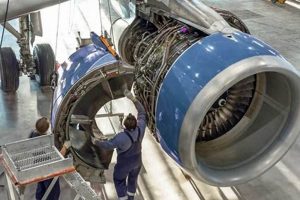
The intricate technologies inherent in aerospace engineering significantly amplify the challenges within the field. The aerospace sector operates at the forefront of technological advancement, demanding engineers to work with systems and materials that push the boundaries of existing knowledge and capabilities. The development and implementation of these advanced technologies, which often involve intricate designs, complex manufacturing processes, and stringent performance requirements, directly contribute to the increased level of difficulty in aerospace engineering projects. Consider, for example, the design of a modern jet engine. This involves integrating advanced materials, intricate turbine blade designs, and sophisticated control systems to achieve optimal performance and fuel efficiency. The complexities associated with each of these elements, coupled with the need for seamless integration, present formidable engineering challenges. Also the need to combine current tech and future ideas is difficult in aerospace engineering.
The technological complexity in aerospace extends beyond individual components to encompass entire systems. The design and integration of avionics systems, navigation systems, and communication systems in modern aircraft require a deep understanding of diverse technologies and their interactions. Ensuring that these systems function reliably and safely in harsh operating environments adds further complexity. Moreover, the rapid pace of technological innovation necessitates that aerospace engineers remain continuously updated on the latest advancements in materials science, propulsion systems, and control technologies. This constant learning curve demands a significant investment of time and resources, further contributing to the demanding nature of the field. For instance, the adoption of advanced composite materials in aircraft structures requires engineers to master new manufacturing techniques and develop sophisticated analytical tools to predict material behavior under various loading conditions.
In summary, technological complexity is an intrinsic factor that elevates the difficulty of aerospace engineering. The constant pursuit of innovation and the integration of cutting-edge technologies demand a high level of technical expertise, continuous learning, and the ability to solve complex problems. The successful navigation of these technological challenges is essential for advancing aerospace capabilities and ensuring the safety and reliability of aircraft and spacecraft. Embracing this complexity, rather than shying away from it, is critical for engineers seeking to excel in this dynamic and demanding field and it should be viewed as a difficulty to overcome in the aerospace field.
5. Computational Requirements

The extensive computational demands inherent in aerospace engineering directly correlate with the overall difficulty of the discipline. Designing, analyzing, and simulating complex aerospace systems necessitates the utilization of sophisticated computational tools and techniques. This dependence on high-performance computing arises from the intricate physical phenomena governing flight, propulsion, and structural behavior. For example, simulating the airflow around an aircraft wing requires solving computationally intensive Navier-Stokes equations, often involving billions of data points and requiring substantial processing power. Underestimation of computing needs can lead to project delays and inaccurate analyses, directly impacting performance and safety. High performance computing requirements are a major challenge.
Computational Fluid Dynamics (CFD) simulations are crucial for aerodynamic analysis, enabling engineers to predict lift, drag, and turbulence effects on aircraft surfaces. Finite Element Analysis (FEA) is employed extensively for structural analysis, assessing stresses, strains, and deformations under various loading conditions. Moreover, trajectory optimization for spacecraft missions requires solving complex orbital mechanics equations, which are computationally demanding due to the non-linear nature of gravitational forces. These simulations often require high-fidelity models and iterative solutions, necessitating advanced algorithms and high-performance computing clusters. For instance, designing a new space shuttle involves thousands of CFD and FEA simulations, requiring terabytes of data storage and hundreds of CPU cores for parallel processing. Furthermore, the increasing reliance on machine learning and artificial intelligence for autonomous flight control and predictive maintenance further escalates computational demands.
In conclusion, the substantial computational requirements are a defining characteristic of the difficulties encountered in aerospace engineering. Access to high-performance computing resources, proficiency in computational modeling techniques, and the ability to interpret and validate simulation results are essential for success in this field. Addressing these computational challenges requires ongoing investment in advanced hardware and software, as well as the development of highly skilled engineers capable of harnessing the power of computational tools to advance aerospace technology and to ensure safety. Ignoring these complex tasks creates major setbacks to the advancement of aerospace engineering.
6. Continuous Innovation

Continuous innovation in aerospace engineering is not merely a desire for advancement but an imperative driven by evolving demands for performance, efficiency, and safety. This relentless pursuit of novel technologies and methods introduces a persistent layer of complexity, directly exacerbating the inherent difficulties within the field. The need to constantly adapt, learn, and integrate emerging advancements presents significant engineering and logistical challenges.
- Rapid Technology Turnover
The accelerated pace of technological development in areas like materials science, propulsion systems, and avionics results in a constant need for engineers to update their knowledge and skills. This requires substantial investment in training and education, and it introduces the risk of obsolescence for existing expertise. For example, the transition from traditional metal alloys to advanced composite materials in aircraft structures necessitates mastering new manufacturing techniques and analytical tools. Failure to adapt to these changes leads to a skills gap and increased project risks, amplifying the difficulty of aerospace endeavors.
- Integration Challenges
The integration of new technologies into existing aerospace systems poses a significant hurdle. Ensuring compatibility, reliability, and safety when incorporating novel components or designs requires rigorous testing, validation, and modification of established processes. For instance, the integration of electric propulsion systems into aircraft requires a complete overhaul of traditional power distribution and thermal management systems. The complexity of integrating these disparate technologies increases the likelihood of unforeseen challenges and delays, contributing to the overall difficulty of aerospace engineering projects.
- Increased Regulatory Scrutiny
As new technologies emerge, regulatory agencies must adapt existing standards and develop new frameworks to ensure safety and compliance. This often involves extensive research, analysis, and collaboration with industry stakeholders. The increased scrutiny and evolving regulatory landscape introduce uncertainty and complexity into the development process. For example, the emergence of autonomous flight systems necessitates the development of new certification protocols and safety standards. Compliance with these evolving regulations adds to the time and cost associated with aerospace projects, further contributing to the difficulty of bringing innovative technologies to market.
- Balancing Innovation with Reliability
Aerospace engineering demands an unwavering commitment to reliability and safety. However, the pursuit of continuous innovation often involves the adoption of unproven technologies and designs. Striking a balance between pushing the boundaries of innovation and maintaining acceptable levels of risk is a crucial but challenging aspect of the field. For instance, the development of hypersonic flight technologies requires engineers to navigate extreme thermal and aerodynamic conditions, pushing the limits of existing materials and designs. The need to carefully manage risk while pursuing ambitious innovation goals increases the difficulty of aerospace engineering projects and necessitates a conservative approach.
In conclusion, continuous innovation is a double-edged sword in aerospace engineering. While it drives progress and enables advancements in performance, efficiency, and safety, it also introduces significant challenges that exacerbate the inherent difficulties within the field. Successfully navigating these challenges requires a strategic approach that balances innovation with risk management, fosters continuous learning, and promotes collaboration between industry, academia, and regulatory agencies. The difficulty created by a need for constant change can be lessened through proper training, resources, and strategy for the future.
Frequently Asked Questions Regarding the Challenges in Aerospace Engineering
The following questions and answers address common concerns and misconceptions surrounding the difficulties encountered within the field of aerospace engineering. These responses aim to provide clear and objective insights into the demands and complexities associated with this discipline.
Question 1: Why is aerospace engineering considered a particularly challenging field of study?
Aerospace engineering integrates multiple engineering disciplines, including aerodynamics, propulsion, structures, and control systems. This multidisciplinary nature necessitates a broad understanding of complex concepts and a capacity for integrating diverse knowledge areas. Furthermore, stringent safety regulations and the application of advanced mathematics contribute to the academic rigor.
Question 2: What role does mathematics play in increasing the difficulty of aerospace engineering?
Advanced mathematical principles form the foundation for analyzing and modeling complex phenomena in aerospace systems. Calculus, differential equations, linear algebra, and numerical methods are essential for understanding aerodynamic forces, structural stresses, and orbital mechanics. Proficiency in these areas is critical for accurate design and analysis.
Question 3: How do safety regulations contribute to the difficulties faced by aerospace engineers?
Aerospace systems operate under stringent safety regulations mandated by aviation authorities. Compliance with these regulations requires extensive testing, validation, and documentation throughout the design and manufacturing processes. The implementation of redundancy and fail-safe mechanisms further adds to the complexity and cost of aerospace projects.
Question 4: What impact does technological complexity have on the difficulty of aerospace engineering?
Aerospace engineering is at the forefront of technological innovation, requiring engineers to work with cutting-edge materials, systems, and designs. The integration of these advanced technologies, often involving intricate manufacturing processes and stringent performance requirements, presents formidable engineering challenges.
Question 5: How do computational requirements contribute to the difficulty of aerospace projects?
The design and analysis of aerospace systems necessitate the use of sophisticated computational tools and techniques. Computational Fluid Dynamics (CFD) and Finite Element Analysis (FEA) require substantial processing power and expertise in numerical modeling, contributing to the complexity and cost of aerospace projects.
Question 6: What are the challenges associated with continuous innovation in aerospace engineering?
The relentless pursuit of innovation in aerospace demands constant adaptation to emerging technologies and evolving requirements. This necessitates continuous learning, skills development, and the ability to integrate novel technologies into existing systems while maintaining safety and reliability. The need to balance innovation with established safety standards adds to the inherent difficulties.
These FAQs serve to illustrate the multifaceted challenges inherent in aerospace engineering, ranging from theoretical foundations to practical applications and regulatory compliance. A thorough understanding of these complexities is essential for aspiring and practicing professionals alike.
The following section will explore potential career paths and opportunities within aerospace engineering, while also addressing strategies for navigating the demanding aspects of this field.
Conclusion
The preceding exploration has underscored that the multifaceted nature of aerospace engineering renders it a field fraught with inherent challenges. From the necessity for multidisciplinary integration and mastery of advanced mathematics to the rigorous demands of stringent safety regulations and the complexities introduced by continuous technological innovation, these elements coalesce to define the significant “aerospace engineering difficulty.” The imperative to navigate these interwoven complexities demands not only technical proficiency but also adaptability, resilience, and a commitment to lifelong learning.
The sustained advancement of aerospace technologies necessitates a proactive and informed approach to addressing these acknowledged difficulties. Academic institutions, industry stakeholders, and regulatory bodies must collaborate to cultivate a workforce equipped to confront and overcome the challenges that lie ahead. The future of aerospace innovation hinges on a collective dedication to mitigating the “aerospace engineering difficulty” through strategic investment, targeted education, and a sustained commitment to excellence.