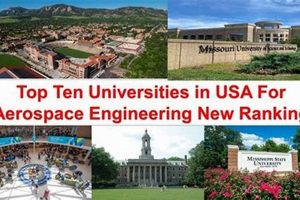
The development of skilled professionals in the field of aerospace demands a structured framework that encompasses both scholastic instruction and practical skill development. This framework dictates the specific knowledge, abilities, and experiences individuals must acquire to competently design, develop, test, and maintain aircraft, spacecraft, and related systems. For example, this can include completing a bachelor’s degree in aerospace engineering, followed by specialized courses in aerodynamics, propulsion, and structural analysis, along with hands-on experience through internships or research projects.
Adherence to these guidelines is paramount for ensuring the safety, reliability, and efficiency of aerospace endeavors. Historically, the evolution of these standards has mirrored advancements in aerospace technology, reflecting the increasing complexity of modern aircraft and spacecraft. The rigorous criteria serve not only to cultivate technical expertise but also to instill a commitment to ethical conduct and professional responsibility within the engineering workforce. The result is innovation and the continued safe progress within the industry.
Subsequent discussion will elaborate on the typical academic paths, essential technical competencies, and the types of experiential learning opportunities that contribute to the comprehensive preparation of aerospace engineers. Furthermore, attention will be given to the role of accreditation bodies and professional organizations in maintaining and evolving these standards to meet future industry challenges.
Guiding Principles for Aerospace Engineering Preparation
The following principles outline key considerations for those pursuing careers in aerospace engineering, emphasizing the importance of comprehensive academic preparation, practical experience, and ongoing professional development.
Tip 1: Prioritize a Rigorous Academic Foundation: A strong foundation in mathematics, physics, and computer science is essential. Emphasize core aerospace engineering courses such as aerodynamics, propulsion, structural analysis, and control systems. Mastery of these fundamental subjects is critical for advanced engineering tasks.
Tip 2: Seek Hands-On Experience: Engage in internships, co-op programs, or research projects within the aerospace industry. Practical experience complements theoretical knowledge and provides valuable insights into real-world engineering challenges. Participation in student engineering competitions can also provide valuable project experience.
Tip 3: Develop Proficiency in Industry-Standard Software: Familiarize oneself with computer-aided design (CAD), computational fluid dynamics (CFD), and finite element analysis (FEA) software packages. Proficiency in these tools is crucial for design, analysis, and simulation tasks in aerospace engineering.
Tip 4: Cultivate Strong Communication Skills: Effective communication, both written and oral, is paramount for conveying technical information clearly and concisely. Participate in technical writing courses, presentations, and group projects to hone these skills.
Tip 5: Stay Abreast of Technological Advancements: The aerospace industry is constantly evolving. Maintain awareness of emerging technologies, such as advanced materials, additive manufacturing, and autonomous systems, through technical publications, conferences, and continuing education.
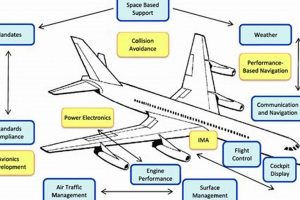
Tip 6: Emphasize Systems Thinking: Aerospace systems are highly complex and interconnected. Develop the ability to understand and analyze the interactions between different components and subsystems. A holistic approach to problem-solving is essential for successful engineering design and integration.
Tip 7: Uphold Ethical Standards: Adhere to the highest ethical principles in all engineering activities. Understand the potential consequences of engineering decisions and prioritize safety, reliability, and environmental responsibility.
These guiding principles underscore the multi-faceted preparation needed to excel in the field. A dedication to academic excellence, practical application, and continuous learning will be essential for success in a challenging and rewarding career.
The subsequent section will delve into specific academic paths and potential career trajectories within aerospace engineering, providing a more detailed overview of the industry landscape.
1. Accredited Bachelor's Degree

An accredited bachelor’s degree in aerospace engineering serves as the foundational cornerstone of comprehensive education and skill development. Its attainment signifies adherence to rigorous academic standards and the acquisition of essential knowledge necessary for competent practice within the aerospace sector.
- Foundation of Core Competencies
The curriculum of an accredited program is meticulously designed to impart fundamental principles in areas such as aerodynamics, propulsion, structural mechanics, and control systems. For instance, students are expected to master fluid dynamics equations to design efficient wing profiles or apply thermodynamic principles to analyze engine performance. The knowledge base established at this stage underpins all subsequent specialized training and practical application.
- Validation of Educational Quality
Accreditation by recognized bodies, such as ABET (Accreditation Board for Engineering and Technology), ensures that the program meets established quality criteria related to curriculum content, faculty qualifications, and laboratory facilities. Employers often prioritize candidates with degrees from accredited programs, recognizing the assurance of standardized education. This is crucial in fields such as aerospace, where safety and reliability are paramount.
- Preparation for Advanced Studies
A bachelor’s degree from an accredited institution provides a solid platform for pursuing advanced degrees, such as a master’s or doctoral degree, in specialized areas of aerospace engineering. The advanced knowledge gained through postgraduate studies enables engineers to engage in research, development, and innovation, contributing to advancements in aerospace technology. For example, a bachelor’s graduate might pursue a master’s specializing in space systems engineering.
- Licensure and Professional Recognition
In many jurisdictions, an accredited bachelor’s degree is a prerequisite for obtaining professional engineering licensure. Licensure demonstrates a commitment to ethical practice and professional competence, enhancing credibility and career opportunities. The possession of this credential may be a condition for signing off on designs or overseeing safety-critical aspects of aerospace projects.
The facets illustrate the integral role of an accredited bachelor’s degree in shaping the qualifications and career trajectory of aerospace engineers. Without this foundation, individuals would lack the fundamental technical knowledge, validated educational quality, preparation for advanced studies, and pathways to professional recognition necessary to contribute effectively to the industry. Securing an accredited degree is thus a critical first step to comprehensive education and skill development.
2. Core technical coursework

Core technical coursework constitutes a foundational element within aerospace engineering instruction and skill development. Its presence within the curriculum is not arbitrary but a direct response to the complex and specialized nature of the aerospace field. The successful application of engineering principles to the design, construction, and operation of aircraft and spacecraft necessitates a deep understanding of various technical disciplines. The inclusion of subjects such as aerodynamics, propulsion, structures, and control systems directly addresses this need. Omission of any of these core areas would render a graduate ill-equipped to tackle real-world engineering challenges. For example, without a strong grounding in aerodynamics, an engineer would be unable to accurately predict the lift and drag characteristics of an aircraft wing, potentially leading to catastrophic design flaws.
The practical significance of this technical grounding extends beyond theoretical understanding. Aerospace engineering projects are inherently multidisciplinary, requiring engineers to integrate knowledge from various specializations. A structural engineer, for instance, must understand aerodynamic loads to design a safe and efficient airframe. Similarly, a propulsion engineer must consider the aerodynamic effects on engine performance. The core coursework provides a common language and a shared base of knowledge that facilitates effective communication and collaboration within engineering teams. The integration of computer-aided design (CAD) and computational fluid dynamics (CFD) software into the curriculum further enhances the practical application of this knowledge, allowing students to model and simulate complex aerospace systems. This aspect underscores the critical need for “Core technical coursework” and its impact on “aerospace engineering education and training requirements”.
In conclusion, the inclusion of core technical coursework within aerospace engineering curricula is not merely a suggestion, but an absolute necessity. This component directly addresses the skill sets and knowledge required for the successful practice of aerospace engineering. It provides graduates with a solid foundation for specialized studies, facilitates effective collaboration, and enhances their ability to solve complex engineering problems. The absence of this foundational element would severely compromise the quality and effectiveness of training, hindering the ability to produce competent aerospace engineers. While challenges may arise in adapting curricula to incorporate emerging technologies, the fundamental importance of core technical coursework remains constant.
3. Practical Experience Essential

Practical experience forms an indispensable component of comprehensive aerospace engineering training. Theoretical knowledge, while foundational, necessitates practical application to translate abstract concepts into tangible solutions. This synergy between theory and practice is critical for developing the problem-solving skills and adaptability essential for success in the aerospace sector. For instance, designing a complex aerodynamic surface requires not only understanding the governing equations but also simulating its performance and iterating on the design based on the simulation results. Such skills are predominantly honed through hands-on experience, either through formal internships or participation in research projects, as they allow application of skills in real-world scenarios.
The aerospace industrys demanding nature requires engineers capable of navigating complex challenges under pressure. Exposure to real-world engineering problems, often with ill-defined constraints and competing objectives, equips students with the ability to think critically, make informed decisions, and work effectively within multidisciplinary teams. An internship at a company involved in the design of flight control systems might involve designing and testing software for stability, which directly develops critical and complex skills that cannot be learned solely from textbooks. This contrasts sharply with a purely academic education, where problems are typically well-defined and have known solutions. This distinction underscores the critical need for practical experience in conjunction with academic rigor in aerospace education.
In conclusion, the integration of practical experience into aerospace engineering training programs is not merely an optional enhancement but a critical element for producing competent and adaptable engineers. Its benefits are multifaceted, extending from reinforcing theoretical concepts to cultivating problem-solving skills and fostering professional development. The value proposition associated with practical experience is irrefutable. Addressing logistical challenges in incorporating relevant opportunities, and creating partnerships between universities and industry should be a key goal for stakeholders in the aerospace engineering education ecosystem, therefore ensuring that the next generation of aerospace engineers possess the necessary competence to drive future innovation.
4. Software Proficiency Required
The current landscape of aerospace engineering mandates a high degree of software proficiency as an integral component of its educational and training criteria. This requirement stems from the pervasive use of sophisticated software tools throughout the design, analysis, simulation, and manufacturing processes within the aerospace industry. Consequently, the ability to effectively utilize these tools is not merely advantageous but essential for competent practice. For example, aerospace engineers routinely employ Computer-Aided Design (CAD) software to create detailed 3D models of aircraft components, Computational Fluid Dynamics (CFD) software to simulate airflow patterns around aircraft surfaces, and Finite Element Analysis (FEA) software to assess the structural integrity of designs. The failure to adequately master these tools would significantly impede an engineer’s ability to contribute meaningfully to these processes. As such, software proficiency represents a cause for which comprehensive training is the effect.
The practical significance of software competency manifests in various ways throughout the aerospace engineering lifecycle. Effective use of simulation software allows engineers to identify potential design flaws early in the development process, reducing the need for costly physical prototypes and accelerating the time to market. Proficiency in data analysis tools enables engineers to extract meaningful insights from flight test data, optimizing aircraft performance and enhancing safety. Mastery of project management software facilitates collaboration and coordination among geographically dispersed engineering teams. The economic implications of software applications are similarly extensive, reducing material expenses by predicting the needs to a greater accuracy and reducing development time by minimizing testing via simulation.
In summary, software proficiency forms a critical and interwoven element of aerospace engineering education and training protocols. The necessity of skilled software usage arises from its central role in design, analysis, and manufacturing. This software emphasis results in benefits that enhance safety, improve efficacy, and reduce development expenditures. While software expertise is ever-increasing, and requires lifelong learning, the central nature it has in aerospace engineering suggests it will remain at the core of education and training requirements.
5. Industry-specific certifications

Industry-specific certifications serve as specialized endorsements that complement formal education and training. These certifications validate an individual’s proficiency in particular areas relevant to the aerospace sector, providing assurance of competence beyond the scope of general engineering qualifications.
- FAA Airframe and Powerplant (A&P) Certification
This certification is crucial for mechanics and technicians involved in aircraft maintenance and repair. It demonstrates proficiency in airframe and engine systems, enabling individuals to inspect, maintain, and repair aircraft in accordance with regulatory standards. The A&P certification complements aerospace engineering education by providing hands-on experience and specialized knowledge in aircraft maintenance practices, bridging the gap between design principles and practical implementation.
- Certified Composites Technician (CCT)
With the increasing use of composite materials in aerospace structures, the CCT certification validates expertise in the fabrication, repair, and inspection of composite components. This certification ensures that technicians possess the necessary skills to work with advanced materials while adhering to stringent quality control standards. CCT certification enhances the skill set of aerospace engineers by providing in-depth knowledge of composite materials and their applications, which is often not covered comprehensively in traditional academic curricula.
- Project Management Professional (PMP) Certification
Aerospace projects are typically complex and involve multiple stakeholders, requiring effective project management skills. The PMP certification demonstrates proficiency in project planning, execution, monitoring, and control. Although not specific to aerospace, PMP certification complements aerospace engineering education by providing a framework for managing complex engineering projects, ensuring they are completed on time and within budget. It provides a framework for effectively deploying engineers with other niche specialities.
- Systems Engineering Professional (SEP) Certification
The Systems Engineering Professional (SEP) Certification validates expertise in systems engineering principles and practices. This certification is valuable for professionals involved in the design, development, and integration of complex aerospace systems, it focuses on systems management. SEP helps engineers to plan and manage projects. It also allows engineers to apply systems concepts to large engineering projects.
These examples illustrate how industry-specific certifications enhance the expertise of aerospace professionals, complementing formal education and training. By validating proficiency in specialized areas, certifications contribute to a more competent and qualified workforce, ultimately improving the safety, reliability, and efficiency of aerospace operations. The emphasis on these certifications is a reflection of the increasing complexity and specialization within the aerospace industry, highlighting the need for continuous professional development and specialized skillsets.
6. Continuous Professional Development

The dynamic nature of the aerospace industry necessitates continuous professional development as a critical component of aerospace engineering education and training requirements. The rapid pace of technological advancement, coupled with evolving regulatory landscapes, demands that engineers engage in ongoing learning to maintain competence and contribute effectively to the field.
- Staying Abreast of Technological Advancements
The aerospace industry is characterized by continuous innovation, including the introduction of new materials, manufacturing techniques, and software tools. Continuous professional development enables engineers to remain current with these advancements, ensuring they possess the skills necessary to design, analyze, and implement cutting-edge technologies. For example, an engineer might undertake training in additive manufacturing to design lightweight aircraft components or learn about new composite materials to improve structural performance.
- Adapting to Evolving Regulatory Requirements
Aerospace regulations are subject to change, reflecting ongoing efforts to improve safety, security, and environmental sustainability. Continuous professional development ensures that engineers are aware of and compliant with these evolving requirements. This may involve training on new airworthiness directives, emissions standards, or cybersecurity protocols. For example, staying current with FAA regulations is crucial for engineers involved in aircraft certification.
- Enhancing Specialized Skills and Knowledge
Aerospace engineering encompasses a diverse range of specializations, including aerodynamics, propulsion, structures, and control systems. Continuous professional development allows engineers to deepen their expertise in specific areas of interest or professional need. This may involve attending conferences, workshops, or online courses focused on advanced topics. For example, an engineer specializing in propulsion might pursue advanced training in combustion modeling or turbomachinery design.
- Maintaining Professional Competency and Licensure
Professional engineering licensure often requires ongoing professional development to ensure that engineers maintain their competence throughout their careers. Continuous professional development activities, such as attending conferences or completing continuing education courses, can contribute towards meeting these requirements. Maintaining licensure is not only a regulatory necessity but also demonstrates a commitment to ethical practice and professional responsibility, enhancing credibility within the industry.
The outlined facets collectively underscore the integral role of continuous professional development in maintaining and enhancing the competence of aerospace engineers. This ongoing learning is not merely an optional pursuit but a fundamental requirement for ensuring that engineers remain at the forefront of their field, contributing to the safety, innovation, and success of the aerospace industry. The demand for aerospace engineers and associated professionals remains high, in light of economic and military requirements.
Frequently Asked Questions About Aerospace Engineering Education and Training Requirements
This section addresses common queries regarding the necessary preparation for a successful career in aerospace engineering. It provides concise and factual answers to assist aspiring engineers in navigating the educational and professional landscape.
Question 1: What is the minimum educational qualification required to become an aerospace engineer?
A bachelor’s degree in aerospace engineering, or a closely related field such as mechanical engineering with an aerospace specialization, is generally the minimum requirement for entry-level positions. Accreditation of the program is often a prerequisite.
Question 2: Are internships or co-op programs necessary to fulfill aerospace engineering education and training requirements?
While not always formally mandated, practical experience gained through internships, co-op programs, or research opportunities is highly recommended. Such experiences provide valuable hands-on training and insights into the industry, enhancing job prospects.
Question 3: What specific software skills are considered essential for aerospace engineers?
Proficiency in industry-standard software packages such as CAD (Computer-Aided Design), CFD (Computational Fluid Dynamics), and FEA (Finite Element Analysis) is crucial. Familiarity with programming languages commonly used in aerospace, such as MATLAB or Python, is also beneficial.
Question 4: Are there any specific certifications that enhance career prospects in aerospace engineering?
While specific certifications depend on the area of specialization, certifications such as FAA Airframe and Powerplant (A&P) for maintenance roles, or Certified Composites Technician (CCT) for composite materials work, can enhance career opportunities.
Question 5: How important is continuous professional development in aerospace engineering?
Given the rapid pace of technological advancements and evolving regulatory standards, continuous professional development is essential. Engineers are expected to engage in ongoing learning through workshops, conferences, and advanced coursework to maintain competence.
Question 6: Is an advanced degree (Master’s or Ph.D.) necessary for career advancement in aerospace engineering?
While not always required for entry-level positions, an advanced degree can significantly enhance career prospects, particularly in research, development, and specialized engineering roles. Master’s and doctoral programs provide opportunities for in-depth study and research, leading to greater expertise and innovation.
In summary, the pathway to a successful aerospace engineering career necessitates a blend of formal education, practical experience, specialized skills, and continuous learning. Adhering to these guidelines can greatly enhance an individual’s competitiveness and contribution to the field.
The subsequent section will delve into the ethical considerations inherent in aerospace engineering practice, emphasizing the importance of safety, reliability, and environmental responsibility.
Conclusion
The preceding discussion has systematically examined the essential components of aerospace engineering education and training requirements. The topics explored include the necessity of an accredited bachelor’s degree, the importance of core technical coursework, the imperative of practical experience, the required proficiency in relevant software, the value of industry-specific certifications, and the ongoing need for continuous professional development. These elements collectively define the standards expected of individuals seeking to contribute effectively to the aerospace sector. A gap in any of these components would compromise the quality of the engineering workforce.
The aerospace field demands a commitment to excellence and an unwavering dedication to safety, reliability, and innovation. Therefore, prospective and practicing aerospace engineers should diligently pursue opportunities to strengthen their knowledge, refine their skills, and uphold the highest ethical standards. Future advancements in aerospace technology will require an increasingly sophisticated and well-prepared engineering workforce, making adherence to rigorous standards more critical than ever before. Ensuring the future of aerospace relies on robust adherence to these requirements.