Astrophysics studies the physics of the universe, encompassing the formation, evolution, and composition of celestial objects and phenomena. Aerospace engineering focuses on the design, development, testing, and production of aircraft and spacecraft. One examines the cosmos from a fundamental science perspective, while the other applies engineering principles to create technology for atmospheric and space flight.
The pursuit of understanding the universe through astrophysical research provides fundamental knowledge that can spur technological advancements. The development of aerospace vehicles allows for the observation and exploration of these very cosmic phenomena studied by astrophysicists. Historically, these fields have influenced each other, with discoveries in astrophysics driving innovation in aerospace and vice-versa. For example, understanding materials behavior in extreme space environments, uncovered through astrophysics, is critical in designing durable spacecraft by aerospace engineers.
The divergence and convergence of these disciplines present distinct educational paths and career opportunities. This article will explore the specific areas of focus, typical educational requirements, career prospects, and potential for collaboration between individuals trained in each field. This analysis aims to provide a comprehensive overview of the distinctions and connections between these exciting and impactful disciplines.
Selecting a career path requires careful consideration of individual interests, aptitudes, and long-term goals. When evaluating astrophysics versus aerospace engineering, understanding the nuances of each field is crucial.
Tip 1: Evaluate Foundational Interests. Determine whether a deep fascination lies in understanding the fundamental laws governing the universe (astrophysics) or in the practical application of engineering principles to design and build flying machines (aerospace engineering). This fundamental interest is a cornerstone for enduring engagement.
Tip 2: Assess Mathematical and Scientific Aptitude. Both astrophysics and aerospace engineering demand a strong foundation in mathematics and physics. Assess proficiency in calculus, differential equations, linear algebra, and classical mechanics. Address any weaknesses proactively.
Tip 3: Research Curricula Rigorously. Examine the specific courses offered by universities in each discipline. Astrophysics programs typically emphasize theoretical physics, cosmology, and data analysis. Aerospace engineering programs focus on aerodynamics, propulsion, and structural mechanics. Compare the content to individual interests.
Tip 4: Consider Research Opportunities. Many astrophysics programs offer research opportunities involving observational astronomy, computational modeling, or theoretical investigations. Aerospace engineering programs provide options for hands-on projects, such as designing and testing aircraft components or spacecraft systems. Research experience provides valuable practical skills.
Tip 5: Explore Career Paths. Investigate potential career paths for graduates in each field. Astrophysicists may pursue careers in academia, research institutions, or government laboratories. Aerospace engineers find employment in the aerospace industry, defense sector, or government agencies. Conduct informational interviews with professionals in each area.
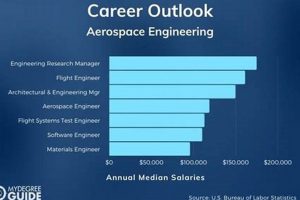
Tip 6: Understand Required Education Levels. A career in astrophysics typically requires a Ph.D. degree due to the research-intensive nature of the field. Aerospace engineering may offer more entry-level opportunities with a bachelor’s or master’s degree, though advanced roles often require further education.
Tip 7: Assess Programming Skills. Both disciplines increasingly require proficiency in programming languages such as Python, MATLAB, or C++. Astrophysics involves data analysis and simulations, while aerospace engineering utilizes computational tools for design and analysis. Invest in learning these skills regardless of the chosen path.
Careful self-assessment and thorough research are essential for making an informed decision. Considering these tips provides a framework for navigating the complex landscape of academic and professional opportunities within astrophysics and aerospace engineering.
Ultimately, the optimal path aligns individual strengths and passions with the demands and rewards of each distinct, yet interconnected, field.
1. Cosmos vs. Atmosphere

The distinction between “cosmos” and “atmosphere” fundamentally delineates the subject matter and scope of astrophysics and aerospace engineering, respectively. Astrophysics concerns itself with the entirety of the universe beyond Earth’s atmosphere, encompassing the study of celestial bodies, cosmic phenomena, and the physical laws governing their behavior. Conversely, aerospace engineering is primarily focused on the design, development, and operation of vehicles and systems that operate within or traverse the Earth’s atmosphere and near-space environment. This core difference dictates the research methodologies, engineering principles, and practical applications central to each discipline. For instance, astrophysics relies heavily on observational astronomy, theoretical modeling, and data analysis to understand the formation of galaxies or the properties of black holes, utilizing space-based telescopes and ground-based observatories to gather data from across the electromagnetic spectrum. Aerospace engineering, on the other hand, utilizes principles of aerodynamics, propulsion, and structural mechanics to design aircraft capable of efficient and safe flight within the atmosphere, or spacecraft designed to withstand the harsh conditions of space travel.
The practical significance of understanding this distinction lies in the specialization and expertise required for each field. While both disciplines share a foundation in physics and mathematics, the specific skill sets diverge significantly. An astrophysicist might develop complex simulations to model the evolution of stellar systems, while an aerospace engineer might design a new wing configuration to improve the fuel efficiency of an aircraft. The design of satellites and space probes represents an area of overlap, where astrophysical objectives related to cosmic observation intersect with the engineering challenges of constructing robust and reliable spacecraft. Examples include the James Webb Space Telescope, designed with sophisticated engineering solutions to meet exacting astrophysical requirements for infrared observation of distant galaxies, and the Voyager probes, designed to endure decades of travel through interplanetary space, transmitting data on the solar system’s outer reaches. Each probe represents a symbiosis of scientific goals and engineering capabilities, showcasing the importance of an accurate understanding of environments beyond Earth and how to operate successfully in them.
In summary, the “cosmos vs. atmosphere” dichotomy underpins the fundamental differences between astrophysics and aerospace engineering, shaping their respective research priorities, engineering practices, and technological applications. While astrophysics seeks to understand the universe’s broader context, aerospace engineering applies scientific and engineering expertise to design technology that operates within or travels through planetary atmospheres and, increasingly, the space environment. A clear understanding of this distinction is essential for aspiring professionals to identify the field that best aligns with their interests and aptitudes. Challenges remain in both fields, including improving the efficiency of space travel in aerospace engineering and resolving discrepancies in cosmic models in astrophysics. Addressing these challenges benefits from collaboration and cross-disciplinary knowledge, furthering innovation in both areas.
2. Theoretical vs. Applied

The distinction between theoretical and applied sciences serves as a fundamental descriptor when comparing astrophysics and aerospace engineering. Astrophysics, at its core, is heavily reliant on theoretical frameworks to understand the cosmos. Conversely, aerospace engineering focuses on the practical application of scientific and engineering principles to create functional systems.
- Mathematical Modeling
Astrophysics employs complex mathematical models to simulate celestial phenomena, from the formation of galaxies to the behavior of black holes. These models often push the boundaries of current theoretical understanding. Aerospace engineering, while also relying on mathematical modeling, prioritizes models that yield practical, testable results for designing aircraft and spacecraft. For example, computational fluid dynamics (CFD) models in aerospace engineering are validated against wind tunnel data to ensure accurate predictions of aerodynamic performance.
- Experimental Validation
While astrophysics benefits from observational data obtained through telescopes and other instruments, direct experimental validation of theoretical models is often limited or impossible due to the vast scales and extreme conditions involved. Aerospace engineering, however, relies heavily on experimental validation through wind tunnel testing, flight testing, and materials testing to ensure that designs meet performance and safety requirements. The process of iterative design and testing is a cornerstone of the field.
- Knowledge Application
Astrophysics contributes to our fundamental understanding of the universe, which can indirectly lead to technological advancements. For instance, research into high-energy particle physics, driven by astrophysical questions, has contributed to medical imaging technologies. Aerospace engineering directly applies scientific knowledge to create tangible products, such as aircraft, satellites, and propulsion systems. The focus is on optimizing performance, efficiency, and reliability within the constraints of real-world applications.
- Focus on Abstraction
Astrophysics often deals with abstract concepts and theoretical constructs that have no immediate practical application. The pursuit of knowledge is often the primary goal. Aerospace engineering is concerned with concrete problems and requires solutions that are both practical and cost-effective. The design process is driven by the need to meet specific performance requirements and regulatory standards.
In summary, the contrast between theoretical and applied approaches underscores the fundamental differences between astrophysics and aerospace engineering. Astrophysics seeks to understand the universe through theoretical frameworks, while aerospace engineering applies scientific principles to design and build functional aerospace systems. While both disciplines rely on a strong foundation in science and mathematics, their objectives, methodologies, and ultimate outcomes differ significantly.
3. Research Emphasis

Research plays a pivotal role in both astrophysics and aerospace engineering, albeit with differing objectives and methodologies. The nature and focus of research activities significantly contribute to distinguishing these fields.
- Fundamental Knowledge Acquisition vs. Technological Advancement
In astrophysics, research primarily aims to expand fundamental knowledge of the universe, exploring phenomena from the origins of cosmic microwave background radiation to the dynamics of black holes. This research often involves theoretical modeling and observational astronomy. Conversely, research in aerospace engineering is typically geared towards technological advancement and practical applications, such as improving aircraft efficiency, developing new propulsion systems, and designing more robust spacecraft components. Research here leans toward experimentation, simulations, and prototype testing.
- Theoretical Modeling vs. Experimental Validation
Astrophysical research frequently relies on theoretical modeling and computational simulations to understand complex cosmic processes. Observational data are used to test and refine these models. Aerospace engineering research places a strong emphasis on experimental validation through wind tunnel testing, flight testing, and materials testing. The goal is to confirm the performance and reliability of new designs and technologies under real-world conditions. The James Webb Space Telescope validates astrophysical theories, while wind tunnels inform the safe design of commercial aircraft.
- Academic vs. Industry Focus
Astrophysics research is often conducted within academic institutions and government laboratories, supported by grants and funding agencies. Publications in peer-reviewed journals are a primary output. Aerospace engineering research is conducted in both academic and industry settings, with a greater emphasis on proprietary research and development within companies such as Boeing, SpaceX, and Lockheed Martin. Patents and technical reports are common outcomes.
- Long-Term vs. Short-Term Objectives
Astrophysics research often pursues long-term objectives, addressing fundamental questions about the universe that may not have immediate practical applications. The timeline for research projects can span years or decades. Aerospace engineering research tends to focus on shorter-term objectives aligned with specific product development cycles. Research is often driven by the need to meet specific market demands or regulatory requirements, resulting in quicker turnaround times from initial research to practical implementation.
The divergent approaches to research reflect the fundamental differences between astrophysics and aerospace engineering. Astrophysics emphasizes fundamental understanding of the cosmos, while aerospace engineering prioritizes technological innovation and practical applications. Both fields benefit from rigorous research, but the methodologies, objectives, and outcomes differ significantly, influencing career paths and educational requirements. For example, collaborative projects, such as designing instruments for space telescopes, show the interplay between the fields, requiring both deep theoretical knowledge and engineering expertise.
4. Design Application

Design application represents a critical divergence point between astrophysics and aerospace engineering. The former primarily utilizes design in the context of scientific instrumentation and computational modeling, whereas the latter applies design principles to create tangible aerospace vehicles and systems. In astrophysics, the design process centers on specialized telescopes, detectors, and data analysis algorithms that facilitate the observation and interpretation of celestial phenomena. The design of the James Webb Space Telescope, for instance, demanded sophisticated optical engineering to achieve unprecedented infrared sensitivity, enabling the observation of faint, distant galaxies. Computational models also employ design principles to simulate astrophysical processes, allowing scientists to test theoretical predictions and explore complex phenomena such as star formation and black hole dynamics. In these scenarios, “design” serves as a tool to acquire and process data, rather than to create a physical artifact intended for flight.
Aerospace engineering, conversely, prioritizes the design and development of aircraft, spacecraft, and related technologies intended for operation within or beyond Earth’s atmosphere. This design process encompasses aerodynamics, propulsion, structural mechanics, and control systems. The design of a commercial airliner, for example, necessitates a multidisciplinary approach involving aerodynamic optimization to minimize drag, structural analysis to ensure airworthiness, and the integration of complex avionics systems for flight control and navigation. Similarly, the design of a spacecraft requires consideration of thermal management, radiation shielding, and propulsion systems capable of delivering payloads to specific orbits or interplanetary destinations. In each case, design decisions directly impact the performance, safety, and cost-effectiveness of the final product. Furthermore, design application in aerospace engineering involves iterative prototyping, testing, and refinement processes to validate design concepts and ensure compliance with regulatory standards.
In summary, design application in astrophysics focuses on creating tools and models for scientific exploration, while in aerospace engineering, it concentrates on engineering solutions for flight and space travel. Understanding this distinction clarifies the distinct skill sets and career paths associated with each discipline. The challenges related to design application include the increasing complexity of aerospace systems and the need for advanced computational tools to simulate and optimize designs. Recognizing these differences is crucial for aspiring professionals seeking to align their career aspirations with the specific demands and opportunities within these fields.
5. Extensive Education
Extensive education forms the bedrock for both astrophysics and aerospace engineering, though the specific nature and focus of that education differ significantly. The demands for advanced knowledge and specialized skills necessitate substantial investment in academic training for professionals in either field.
- Astrophysics: Emphasis on Theoretical Depth
The pursuit of astrophysics typically requires a strong foundation in physics and mathematics, culminating in a Ph.D. degree. The curriculum emphasizes theoretical astrophysics, quantum mechanics, statistical mechanics, and cosmology. Graduate-level studies involve significant research, often requiring years of dedicated work to develop original theoretical models or analyze large datasets. The path to becoming a professional astrophysicist demands a prolonged engagement with complex theoretical concepts and an ability to independently contribute to the scientific literature.
- Aerospace Engineering: Balancing Theory and Practice
Aerospace engineering generally requires a bachelor’s or master’s degree, although advanced roles often necessitate a Ph.D. The curriculum integrates theoretical principles with practical applications in areas such as aerodynamics, propulsion, structural analysis, and control systems. Students engage in hands-on projects, such as designing and testing aircraft components or spacecraft systems. The educational path emphasizes a balance between theoretical understanding and practical engineering skills necessary for designing and building aerospace vehicles.
- Interdisciplinary Knowledge in Both Fields
Both astrophysics and aerospace engineering increasingly demand interdisciplinary knowledge. Astrophysicists may require expertise in computer science for data analysis and simulations, while aerospace engineers may need to understand materials science for designing durable spacecraft. An extensive education, therefore, includes coursework and research experiences that bridge traditional disciplinary boundaries. The need to collaborate with professionals from other fields underscores the importance of a broad understanding beyond one’s core specialization.
- Lifelong Learning Imperative
Given the rapid pace of technological and scientific advancements, both astrophysicists and aerospace engineers must engage in lifelong learning. This includes staying abreast of new research findings, attending conferences, and participating in professional development activities. The commitment to continuous learning ensures that professionals in both fields remain competitive and contribute effectively to innovation. Keeping abreast of new data from observatories and design techniques is required to improve efficiency.
In conclusion, while both astrophysics and aerospace engineering require extensive education, the emphasis and specific skills cultivated differ. Astrophysics leans heavily towards theoretical depth and research, often requiring a Ph.D. for professional advancement. Aerospace engineering emphasizes a balance of theory and practical application, with advanced roles also benefiting from doctoral-level training. The rapid evolution of technology and scientific understanding necessitates a commitment to lifelong learning in both domains. The design and implementation of the James Webb Telescope exemplifies the benefits of deep, specialized knowledge in both fields.
6. Project Management

Project management serves as a crucial component in both astrophysics and aerospace engineering, albeit with distinct applications and challenges. In astrophysics, projects frequently involve large-scale collaborations across multiple institutions, the development of complex scientific instruments, and the analysis of vast datasets. Aerospace engineering projects, conversely, center on the design, development, testing, and production of aircraft and spacecraft. The success of endeavors in both fields hinges on effective project management practices, encompassing planning, execution, monitoring, and control. The development of the Event Horizon Telescope, for example, required coordinating numerous international observatories and research teams to capture the first image of a black hole. Similarly, the construction of the International Space Station demanded meticulous planning and coordination among multiple countries and contractors to ensure the successful integration of diverse modules and systems. Without robust project management methodologies, such complex undertakings would be impossible to execute within budget and schedule constraints. Project managers facilitate communication, allocate resources, manage risks, and ensure that project goals align with scientific or engineering objectives.
The importance of project management in aerospace engineering is particularly evident in the development of new aircraft or spacecraft. Such projects involve thousands of engineers, technicians, and managers working together to design, test, and manufacture intricate systems. Effective project management practices are essential for coordinating these efforts, managing complex supply chains, and ensuring compliance with stringent safety regulations. The development of the Boeing 787 Dreamliner, while ultimately successful, provides an example of the challenges associated with managing complex aerospace projects. The project faced delays and cost overruns due to supply chain issues, design changes, and manufacturing challenges. These issues underscore the need for robust project management processes and experienced project managers capable of navigating complex technical and logistical hurdles. Furthermore, modern trends such as agile development and lean manufacturing are increasingly being adopted in aerospace engineering to improve project efficiency and reduce costs.
In summary, project management is indispensable to both astrophysics and aerospace engineering, albeit with distinct applications and priorities. In astrophysics, project management enables complex scientific collaborations and the development of cutting-edge instrumentation. In aerospace engineering, it facilitates the design, development, and production of aircraft and spacecraft. Effective project management practices are essential for ensuring that projects in both fields are completed on time, within budget, and to the required specifications. As projects in both fields become increasingly complex and interdisciplinary, the demand for skilled project managers with expertise in both technical and managerial domains is expected to grow. The intersection of technological advancements and management skills remains a defining factor for the continued advancement of both astrophysics and aerospace engineering.
Frequently Asked Questions
This section addresses common inquiries regarding the distinctions between astrophysics and aerospace engineering, providing clarity on educational paths, career options, and fundamental differences.
Question 1: What are the primary differences in the core subject matter of astrophysics and aerospace engineering?
Astrophysics focuses on understanding the physical properties and behavior of celestial objects and phenomena across the universe. Aerospace engineering concentrates on the design, development, and operation of vehicles and systems for flight within and beyond Earth’s atmosphere.
Question 2: Does a career in astrophysics require a Ph.D.?
Generally, a Ph.D. is required for a research-intensive career in astrophysics. Independent research, academic positions, and leadership roles at major observatories typically necessitate doctoral-level training.
Question 3: What are common career paths for aerospace engineering graduates?
Aerospace engineering graduates may pursue careers in aircraft design, spacecraft development, propulsion systems, avionics, and related areas within the aerospace industry, defense sector, and government agencies.
Question 4: What foundational skills are essential for both astrophysics and aerospace engineering?
Both fields demand a strong foundation in mathematics, physics, and computer programming. Knowledge of calculus, differential equations, linear algebra, classical mechanics, and programming languages such as Python and MATLAB is crucial.
Question 5: How do research methodologies differ between astrophysics and aerospace engineering?
Astrophysics research often relies on theoretical modeling, observational astronomy, and data analysis. Aerospace engineering research emphasizes experimental validation, wind tunnel testing, flight testing, and materials testing.
Question 6: What role does design play in astrophysics compared to aerospace engineering?
Design in astrophysics primarily involves scientific instrumentation, telescopes, and data analysis algorithms. In aerospace engineering, design focuses on creating tangible aerospace vehicles and systems for flight and space travel.
Understanding these frequently asked questions clarifies the diverse academic and career paths. Choosing wisely after carefully considering all things needed in future.
The following section explores resources for further learning and career development in each domain.
Astrophysics vs Aerospace Engineering
This article has explored the divergent paths of astrophysics and aerospace engineering, delineating core subject matter, educational requirements, research methodologies, and design applications. Astrophysics delves into the fundamental physics of the universe, requiring extensive theoretical knowledge and research experience, typically culminating in a Ph.D. Aerospace engineering applies scientific principles to the design and construction of aircraft and spacecraft, emphasizing practical application and experimental validation, often leading to careers in industry or government. Project management skills are paramount in both disciplines, though applied in distinct contexts.
The choice between pursuing astrophysics and aerospace engineering rests on individual interests, aptitudes, and career aspirations. While both fields demand intellectual rigor and a strong foundation in science and mathematics, their respective focuses and objectives differ significantly. Understanding these distinctions is critical for making an informed decision and contributing meaningfully to either the exploration of the cosmos or the advancement of flight technology. Further investigation into specific programs and career opportunities is encouraged to solidify this decision.
![Best Aerospace Engineering Fundamentals Publisher [Guide] | Innovating the Future of Flight with Reliable Aviation Solutions](https://mixaerospace.com/wp-content/uploads/2026/05/th-229-300x200.jpg "Best Aerospace Engineering Fundamentals Publisher [Guide] Innovating the Future of Flight with Reliable Aviation Solutions")