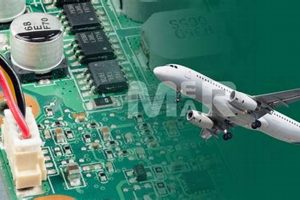
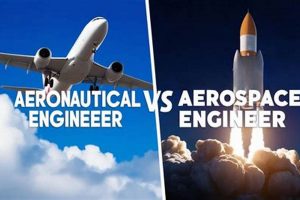
The query addresses the potential for professionals trained in mechanical engineering to transition into roles traditionally associated with aerospace engineering. Mechanical engineering encompasses a broad range of principles related to the design, analysis, and manufacturing of mechanical systems. Aerospace engineering, while related, focuses specifically on the design, development, and testing of aircraft and spacecraft. The interchangeability centers around fundamental engineering principles. For example, both disciplines require a strong understanding of fluid mechanics, thermodynamics, and materials science.
The ability of a mechanical engineer to effectively function in an aerospace engineering capacity offers several advantages. It broadens the talent pool for aerospace companies, potentially reducing recruitment costs and accelerating project timelines. It allows for cross-disciplinary collaboration and innovation, as mechanical engineers can bring different perspectives and problem-solving approaches to aerospace challenges. Historically, individuals with mechanical engineering backgrounds have successfully contributed to advancements in the aerospace sector, demonstrating the feasibility and value of this crossover.
The following sections will delve into the specific skills and knowledge areas where mechanical engineers often find overlap with aerospace engineering, highlight any potential gaps in expertise that might need addressing, and outline strategies for facilitating a successful career transition. Further discussion will involve areas of expertise a mechanical engineer possesses, gaps that must be filled to perform aerospace engineering, and how career transition success can occur.
Tips for Mechanical Engineers Transitioning to Aerospace Roles
This section outlines crucial considerations for mechanical engineers pursuing opportunities within the aerospace field. Successful integration requires a strategic approach, focusing on relevant skill development and targeted networking.
Tip 1: Deepen Understanding of Aerodynamics: Aerospace applications necessitate a refined grasp of aerodynamic principles beyond general fluid mechanics. Independent study of airfoil design, lift and drag characteristics, and computational fluid dynamics (CFD) specific to aircraft or spacecraft is recommended.
Tip 2: Acquire Proficiency in Aerospace Materials: The aerospace industry employs specialized materials with stringent performance requirements. Familiarity with composites, alloys, and other advanced materials used in airframes, engines, and propulsion systems is essential. Research specific materials common in aerospace design.
Tip 3: Develop Expertise in Flight Control Systems: Understanding the intricacies of flight control systems is critical. This includes knowledge of stability augmentation systems, autopilot functionalities, and related sensor technologies. Explore available online courses or certifications related to flight dynamics and control.
Tip 4: Gain Familiarity with Aerospace Regulations and Standards: The aerospace industry operates under strict regulatory frameworks. Becoming conversant with FAA (Federal Aviation Administration), NASA, or other relevant agency guidelines is paramount. A clear understanding of industry standards is crucial for compliant design and operation.
Tip 5: Network with Aerospace Professionals: Actively engaging with professionals in the aerospace sector can provide valuable insights and potential career leads. Attend industry conferences, join relevant professional organizations (e.g., AIAA), and participate in online forums to expand the professional network.
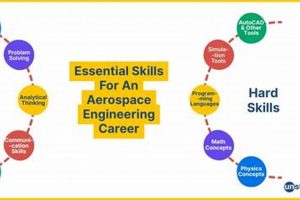
Tip 6: Tailor the Resume and Portfolio: Highlight projects and experiences that demonstrate transferable skills applicable to aerospace. Emphasize proficiency in relevant software tools (e.g., CAD/CAM, FEA) and showcase any involvement in projects with aerodynamic or structural considerations.
Tip 7: Seek Relevant Certifications: Certain certifications, such as those related to finite element analysis (FEA) or specific software packages, can enhance credibility and demonstrate commitment to professional development within the aerospace domain.
Implementing these strategies will enhance the preparedness and competitiveness of mechanical engineers seeking to leverage their existing expertise in the challenging yet rewarding field of aerospace engineering. A focused and proactive approach significantly increases the likelihood of a successful career transition.
The final segment will synthesize the principal themes discussed and present a conclusive perspective on the feasibility and strategies involved in a successful transition.
1. Fundamental Engineering Principles

The ability of a mechanical engineer to effectively perform the duties of an aerospace engineer is significantly predicated on a robust understanding of fundamental engineering principles. These principles, including thermodynamics, fluid mechanics, heat transfer, materials science, and structural analysis, form the bedrock of both disciplines. The application of these core concepts is not discipline-specific; rather, it is the context and specialized knowledge that differentiate them. For example, a mechanical engineer proficient in finite element analysis (FEA) can readily apply this skill to analyze stress distributions in aircraft wings, a task central to aerospace engineering. Similarly, a solid grasp of fluid mechanics enables both the design of efficient pumps for industrial applications (mechanical) and the optimization of airfoil shapes for enhanced aircraft performance (aerospace).
The cause-and-effect relationship is clear: a strong foundation in these principles enables a mechanical engineer to adapt their expertise to the specific demands of aerospace applications. The degree to which fundamental principles underpin a mechanical engineer’s suitability for aerospace roles is undeniable, demonstrated by numerous real-world examples. Mechanical engineers have successfully transitioned to aerospace, contributing to the design of jet engines, spacecraft structures, and satellite thermal control systems. In each case, their core engineering knowledge provided a crucial advantage, allowing them to quickly assimilate specialized aerospace concepts and practices. The practical significance lies in recognizing that mechanical engineering education, at its core, equips individuals with the tools necessary to address a wide range of engineering challenges, including those within the aerospace domain.
However, while fundamental principles are essential, they are not sufficient. Bridging the gap requires targeted acquisition of aerospace-specific knowledge and skills. The success of a mechanical engineer’s transition hinges on their ability to build upon their existing foundation with relevant expertise in areas such as aerodynamics, flight control systems, and aerospace materials. Ultimately, understanding and leveraging these foundational principles, while complementing them with specialized knowledge, is the key to unlocking opportunities in the aerospace sector.
2. Transferable Skillsets

Transferable skillsets are a cornerstone of a mechanical engineer’s potential to transition into aerospace engineering roles. The degree to which these skills align with aerospace requirements directly influences the feasibility and success of such a career shift. Identifying and leveraging these transferable competencies is crucial for both the individual engineer and potential employers.
- CAD/CAM Proficiency
Computer-Aided Design (CAD) and Computer-Aided Manufacturing (CAM) skills are highly valued across engineering disciplines. A mechanical engineer with experience in CAD software (e.g., SolidWorks, CATIA) for designing mechanical components can readily adapt these skills to designing aircraft structures or spacecraft subsystems. The underlying principles of geometric modeling and manufacturing processes remain consistent, allowing for a relatively seamless transition. The aerospace industry leverages CAD/CAM for everything from initial concept design to generating toolpaths for manufacturing critical components. This experience reduces the learning curve and increases productivity in an aerospace environment.
- Finite Element Analysis (FEA) Expertise
FEA is a numerical method used to predict the behavior of structures under various loads and conditions. Mechanical engineers routinely employ FEA for stress analysis, thermal analysis, and vibration analysis of mechanical systems. These skills are directly applicable to aerospace engineering, where FEA is crucial for ensuring the structural integrity of aircraft wings, fuselage sections, and rocket components. A mechanical engineer’s ability to model and simulate structural behavior using FEA software (e.g., ANSYS, Abaqus) translates directly to aerospace design verification and optimization, contributing to safer and more efficient aircraft and spacecraft.
- Thermodynamics and Heat Transfer Knowledge
A thorough understanding of thermodynamics and heat transfer is essential in both mechanical and aerospace engineering. Mechanical engineers apply these principles to the design of internal combustion engines, HVAC systems, and power plants. In aerospace, these principles are critical for designing propulsion systems, managing thermal environments within spacecraft, and preventing overheating of aircraft components. Mechanical engineers with experience in thermal analysis and design can contribute to the development of efficient and reliable aerospace systems, such as rocket nozzles, heat shields, and satellite thermal control systems.
- Control Systems Engineering Skills
Control systems engineering is a broad field encompassing the design and analysis of systems that regulate and control various processes. Mechanical engineers often work with control systems in areas such as robotics, automation, and vehicle dynamics. These skills are directly transferable to aerospace engineering, where control systems are used to stabilize aircraft, guide missiles, and control the orientation of spacecraft. A mechanical engineer familiar with control algorithms, sensor technologies, and actuator systems can contribute to the design and implementation of sophisticated flight control systems, autopilot systems, and satellite attitude control systems.
The convergence of these transferable skills underscores the potential for mechanical engineers to effectively transition into aerospace roles. While specialized aerospace knowledge may be required, the foundational expertise acquired through mechanical engineering education provides a solid platform for building a successful career in the aerospace sector. The specific aerospace domain dictates the degree to which these skillsets must be tailored, but the fundamental principle of leveraging existing competence remains constant.
3. Specialized Aerospace Knowledge
The transition from mechanical engineering to aerospace engineering necessitates the acquisition of specialized knowledge distinct from the core competencies of mechanical engineering. This specialized knowledge forms a critical bridge, enabling a mechanical engineer to effectively contribute to aerospace projects and organizations.
- Aerodynamics and Aircraft Performance
This area encompasses a deep understanding of airflow around aircraft, including lift, drag, and stability characteristics. It extends beyond general fluid mechanics to incorporate concepts such as airfoil design, boundary layer effects, and high-speed aerodynamics. Understanding these principles allows engineers to predict and optimize aircraft performance parameters such as range, fuel efficiency, and maneuverability. A mechanical engineer lacking this specialized knowledge would be unable to effectively contribute to the design or analysis of aircraft aerodynamic surfaces. Practical applications include designing wing profiles to minimize drag or developing control surfaces to improve stability. In the absence of understanding these elements a mechanical engineer is limited to tasks which don’t require them, impacting integration.
- Spacecraft Dynamics and Orbital Mechanics
This includes the study of satellite motion, orbital maneuvers, and the effects of the space environment on spacecraft systems. Understanding orbital mechanics is crucial for designing spacecraft trajectories, planning satellite constellations, and ensuring accurate positioning and navigation. Furthermore, knowledge of the space environment is vital for selecting appropriate materials and designing systems that can withstand radiation, vacuum, and extreme temperature variations. Without this knowledge, a mechanical engineer cannot effectively contribute to the design or operation of spacecraft and related systems. In practice, it would be impossible to calculate appropriate launch windows for a spacecraft without orbital mechanic fundamentals.
- Aerospace Materials and Structures
This domain focuses on the unique materials and structural designs employed in aerospace applications. It involves understanding the properties and behavior of lightweight materials such as aluminum alloys, titanium alloys, and composite materials under extreme conditions of stress, temperature, and radiation. Additionally, it requires knowledge of specialized structural designs, such as sandwich structures and thin-walled structures, which are used to minimize weight and maximize strength. A mechanical engineer transitioning to aerospace must become familiar with these specialized materials and structural techniques to effectively design and analyze aerospace components. Common tasks might include selecting the right composite materials for a high-speed aircraft component.
- Aerospace Propulsion Systems
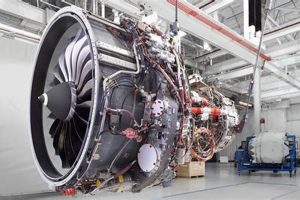
This encompasses the study of various propulsion systems used in aircraft and spacecraft, including jet engines, rocket engines, and electric propulsion systems. Understanding the thermodynamic principles, combustion processes, and fluid dynamics governing these systems is essential for designing efficient and reliable propulsion systems. It also includes knowledge of different types of propellants, nozzle designs, and thrust vectoring techniques. Without this knowledge, a mechanical engineer cannot effectively contribute to the design or analysis of aerospace propulsion systems. In example, a design requirement to maximize thrust-to-weight ratio for a launch vehicle.
The acquisition and application of specialized aerospace knowledge directly influence a mechanical engineer’s capacity to function effectively within the aerospace industry. The depth and breadth of this specialized knowledge dictate the extent to which a mechanical engineer can contribute to complex aerospace projects, underscoring its significance in facilitating a successful career transition. The absence of it creates the inability for the mechanical engineer to work efficiently as an aerospace engineer.
4. Industry-Specific Regulations
The aerospace industry operates under a stringent regulatory framework designed to ensure safety, security, and reliability. The ability of a mechanical engineer to effectively function as an aerospace engineer hinges, in part, on their understanding and adherence to these industry-specific regulations. This understanding transcends mere familiarity and requires a practical application of regulatory requirements in design, manufacturing, and operational contexts.
- FAA Regulations and Airworthiness Standards
The Federal Aviation Administration (FAA) sets forth regulations governing the design, production, and operation of aircraft in the United States. These regulations, known as the Federal Aviation Regulations (FARs), encompass a wide range of areas, including airworthiness standards, maintenance requirements, and pilot certification. A mechanical engineer transitioning to aerospace must be familiar with these regulations to ensure that their designs meet the required safety standards. For example, FAR Part 25 specifies airworthiness standards for transport category airplanes, covering areas such as structural integrity, fire protection, and emergency evacuation. Compliance with these standards is a prerequisite for obtaining FAA certification of an aircraft design. The absence of this familiarity would limit a mechanical engineer’s ability to contribute meaningfully to aircraft design projects subject to FAA oversight.
- NASA Standards and Spacecraft Safety
For projects involving spacecraft and space exploration, NASA establishes its own set of standards and guidelines to ensure mission success and crew safety. These standards cover areas such as materials selection, radiation protection, and orbital debris mitigation. A mechanical engineer working on a NASA project must be well-versed in these standards to ensure that their designs meet the stringent requirements for spaceflight. For instance, NASA-STD-5005 outlines the requirements for the design and construction of spaceflight hardware, covering aspects such as fracture control, corrosion prevention, and contamination control. Adherence to these NASA standards is essential for minimizing risks associated with space missions. Engineers ignorant of the NASA-STD-5005, for example, couldn’t design a safe and compliant structure for spaceflight.
- International Regulations and Harmonization
The aerospace industry is a global enterprise, with aircraft and spacecraft operating across international borders. This necessitates compliance with various international regulations and standards, such as those established by the European Aviation Safety Agency (EASA) and the International Civil Aviation Organization (ICAO). A mechanical engineer working in aerospace must be aware of these international requirements to ensure that their designs meet the standards of the countries in which the aircraft or spacecraft will be operated. This international aspect adds complexity and rigor to ensuring a mechanical engineer meets the standards to work as an aerospace engineer.
- Export Control Regulations
The export of aerospace technology and components is subject to strict regulations designed to prevent the proliferation of sensitive technologies to unauthorized parties. In the United States, the Export Administration Regulations (EAR) and the International Traffic in Arms Regulations (ITAR) govern the export of aerospace-related items. A mechanical engineer working in aerospace must be aware of these regulations to ensure that their activities comply with export control requirements. For example, designing a satellite component and then exporting it requires strict adherence to ITAR regulations. Failure to comply with these regulations can result in severe penalties, including fines and imprisonment. The implication of these regulations on design projects are significant, so must be taken seriously.
The complexity of aerospace regulations underscores the need for ongoing training and professional development. Mechanical engineers transitioning to aerospace must invest time and effort in learning about these regulations to ensure that they can effectively contribute to the industry while maintaining safety and compliance. The ability to navigate and apply these regulations is a distinguishing factor in determining whether a mechanical engineer can successfully perform the functions of an aerospace engineer. Compliance with these regulatory bodies is a critical facet when determining the possibility for a mechanical engineer to perform the duties of an aerospace engineer.
5. Continuing Education Imperative
The capacity for a mechanical engineer to function effectively in an aerospace engineering capacity is intrinsically linked to a commitment to continuing education. The dynamic nature of the aerospace industry, characterized by technological advancements and evolving regulatory landscapes, necessitates ongoing professional development. This imperative extends beyond initial academic qualifications and encompasses the acquisition of specialized knowledge, skills, and certifications relevant to aerospace applications.
- Aerospace-Specific Coursework and Certifications
Formal coursework focusing on aerodynamics, spacecraft dynamics, and aerospace materials provides a structured approach to acquiring specialized knowledge. Furthermore, certifications in areas such as finite element analysis (FEA) for aerospace structures or computational fluid dynamics (CFD) for aerodynamic simulations demonstrate a commitment to professional development and enhance credibility within the industry. For example, obtaining a certification in the use of industry-standard FEA software specifically tailored for aerospace applications showcases proficiency in analyzing stress and strain distributions in aircraft components, directly increasing employability and competence. These activities facilitate the understanding of theory and regulatory needs.
- Industry Conferences and Workshops
Active participation in industry conferences and workshops provides opportunities to stay abreast of the latest advancements in aerospace technology, connect with industry experts, and learn about emerging trends. These events offer valuable insights into practical applications, best practices, and challenges faced by aerospace engineers. Attending conferences dedicated to specific areas, such as propulsion systems or avionics, allows for targeted learning and networking, fostering a deeper understanding of the aerospace domain. For instance, attendance at the AIAA SciTech Forum offers exposure to cutting-edge research and development efforts, enabling mechanical engineers to identify knowledge gaps and areas for further exploration, as well as industry connections.
- Advanced Degrees and Specializations
Pursuing advanced degrees, such as a Master’s or Doctorate in Aerospace Engineering or a related specialization, offers a more comprehensive and in-depth understanding of aerospace principles and practices. These programs provide opportunities for conducting research, developing advanced skills, and gaining expertise in niche areas, such as hypersonic flight or space robotics. Specialization in areas such as structural mechanics or control systems within an aerospace context allows mechanical engineers to develop a competitive edge and contribute to cutting-edge research and development efforts. Acquiring a master’s gives the mechanical engineer knowledge that is very specific in area of aerospace the mechanical engineer is attempting to gain access into.
- Self-Directed Learning and Professional Development
In addition to formal education and training, self-directed learning plays a crucial role in maintaining professional competence. This includes reading technical journals, following industry news, and engaging in online learning resources to stay current with the latest developments in aerospace technology. Proactive participation in online forums and communities dedicated to aerospace engineering provides opportunities for knowledge sharing, problem-solving, and networking with other professionals in the field. For instance, actively contributing to online discussions on topics such as composite materials or satellite design demonstrates a commitment to continuous learning and fosters a deeper understanding of aerospace concepts. Professional development provides tools, connections, and information to ensure continued learning.
The ongoing acquisition of knowledge and skills through continuing education is paramount for mechanical engineers seeking to transition into aerospace roles. The industry’s rapid pace of innovation demands a proactive approach to professional development, ensuring that engineers possess the expertise necessary to contribute to the design, development, and operation of safe and efficient aerospace systems. A dedication to continuous learning is not merely advantageous but essential for sustained success in this challenging and rewarding field.
6. Networking Opportunities
Networking opportunities are a critical, yet often underestimated, component in facilitating a mechanical engineer’s transition into aerospace engineering. The aerospace field, characterized by its complexity and specialized knowledge, necessitates connections that provide access to information, mentorship, and potential career pathways. Without deliberate cultivation of a professional network within the aerospace domain, a mechanical engineer faces a significantly steeper learning curve and reduced prospects for successful integration.
- Access to Industry Insights and Mentorship
Networking provides direct access to seasoned aerospace professionals who can offer invaluable insights into industry trends, emerging technologies, and best practices. Mentorship relationships, cultivated through networking, can provide guidance on skill development, career planning, and navigating the specific challenges of the aerospace sector. Real-world examples include mechanical engineers connecting with aerospace engineers at industry conferences, leading to mentorship opportunities that provided critical guidance on tailoring their skills and experience to aerospace requirements. This direct transfer of knowledge from those with extensive experience within the sector mitigates the information asymmetry inherent in transitioning fields. The absence of these relationships increases the likelihood of misdirected efforts and prolonged transition times.
- Identification of Skill Gaps and Training Opportunities
Engaging with aerospace professionals allows mechanical engineers to gain a realistic assessment of their existing skillsets relative to industry demands. Through networking, individuals can identify specific areas where further training or development is necessary to meet aerospace requirements. This includes identifying relevant courses, certifications, or on-the-job training opportunities. For instance, a mechanical engineer might discover, through discussions with aerospace engineers, the importance of proficiency in specific CFD software used for aerodynamic analysis. This awareness can then drive targeted efforts to acquire the necessary skills. Without such networking, individuals may remain unaware of critical skill deficiencies, hindering their progress in the aerospace field.
- Exposure to Unadvertised Job Opportunities
A significant portion of job openings, particularly in specialized fields like aerospace, are never publicly advertised. Networking provides access to this “hidden job market” through informal conversations, referrals, and connections with hiring managers. Attending industry events and building relationships with individuals within aerospace companies can significantly increase the chances of learning about unadvertised positions. Real-world examples include mechanical engineers securing aerospace jobs through recommendations from contacts made at industry conferences or through informational interviews arranged through networking connections. The absence of this network limits exposure to potential career opportunities, potentially lengthening the job search process and reducing overall career prospects.
- Validation of Transferable Skills and Experience
Networking provides a platform for mechanical engineers to showcase their transferable skills and experience to potential employers in the aerospace industry. By engaging in conversations and demonstrating their understanding of aerospace challenges, mechanical engineers can build confidence in their ability to contribute to aerospace projects. This validation can be particularly important in overcoming potential biases related to educational background or prior work experience. For instance, a mechanical engineer might use networking opportunities to highlight their experience in finite element analysis, demonstrating its applicability to aerospace structural design. The absence of this platform may result in their expertise being overlooked due to a perceived lack of aerospace-specific experience, even when fundamental skills are directly relevant.
In summary, networking opportunities are not merely ancillary activities but essential components of a successful transition from mechanical engineering to aerospace engineering. They provide access to industry knowledge, mentorship, unadvertised job opportunities, and validation of transferable skills. Actively cultivating a professional network within the aerospace domain significantly enhances a mechanical engineer’s prospects for achieving a fulfilling and impactful career in the aerospace sector. The absence of effective networking strategies increases the difficulty of navigating the unique challenges and requirements of the aerospace field.
Frequently Asked Questions
This section addresses common inquiries regarding the transition of mechanical engineers into aerospace engineering roles, providing clear and concise answers based on industry practices and educational requirements.
Question 1: Is a formal aerospace engineering degree absolutely required to work in the aerospace industry?
A formal aerospace engineering degree is not always an absolute requirement, but is very common. While a mechanical engineering background provides a solid foundation, specialized knowledge in aerodynamics, spacecraft dynamics, and aerospace materials is essential. Evidence of acquiring this expertise, through coursework, certifications, or relevant experience, can compensate for the lack of a formal aerospace degree.
Question 2: What are the most critical skills a mechanical engineer should develop to successfully transition to aerospace engineering?
The most critical skills to develop include a strong understanding of aerodynamics, spacecraft dynamics, control systems specific to aerospace applications, and proficiency in industry-standard software for FEA and CFD. Familiarity with aerospace materials and manufacturing processes is also highly beneficial.
Question 3: How important is it for a mechanical engineer to have experience with aerospace-specific software tools?
Experience with aerospace-specific software tools, such as ANSYS, NASTRAN, or specialized CFD packages, is highly advantageous. Proficiency in these tools demonstrates the ability to perform simulations and analyses relevant to aerospace design and engineering tasks.
Question 4: What types of aerospace jobs are most accessible to mechanical engineers?
Mechanical engineers often find opportunities in areas such as structural analysis, thermal management, propulsion systems (especially those with a combustion background), and design of mechanical components for aircraft and spacecraft. The specific roles available depend on the individual’s skills and experience.
Question 5: How can a mechanical engineer demonstrate their interest and commitment to aerospace engineering to potential employers?
Demonstrating interest and commitment can be achieved through activities such as pursuing relevant certifications, completing aerospace-related projects, joining professional organizations like AIAA, attending industry conferences, and networking with aerospace professionals. Highlighting transferable skills and tailoring the resume to emphasize relevant experience is also crucial.
Question 6: Are there any legal or regulatory hurdles a mechanical engineer needs to overcome to work as an aerospace engineer?
Generally, there are no legal or regulatory hurdles that prevent a mechanical engineer from working as an aerospace engineer, provided they possess the required skills and qualifications for the specific job. However, certain positions may require security clearances or compliance with export control regulations, depending on the nature of the work and the employer.
The above questions and answers clarify the requirements and expectations for mechanical engineers seeking to enter the aerospace field. Addressing these concerns proactively can significantly increase the likelihood of a successful career transition.
The final section will summarize the key elements of a successful transition and offer a concluding perspective on this career path.
Conclusion
The preceding analysis has explored the multifaceted question: can a mechanical engineer work as an aerospace engineer? The investigation reveals that while a formal aerospace engineering degree offers a direct pathway, a mechanical engineer can indeed transition into the field. This transition necessitates a proactive acquisition of specialized aerospace knowledge, demonstrable proficiency in relevant software and tools, and a commitment to ongoing professional development. Furthermore, adherence to industry-specific regulations and the cultivation of a professional network within the aerospace community are crucial factors.
The success of this career shift hinges on the individual’s dedication to bridging the gap between fundamental mechanical engineering principles and the specialized demands of the aerospace sector. While the transition presents challenges, it is demonstrably achievable through targeted effort and strategic planning. Ultimately, the ability of a mechanical engineer to contribute meaningfully to the aerospace industry depends on their commitment to continuous learning and adaptation to the dynamic and technologically advanced nature of the field. The future of aerospace engineering will undoubtedly benefit from the diverse perspectives and skillsets that mechanical engineers can bring to the table, provided they invest in the necessary knowledge and experience. The potential benefits of this cross-disciplinary integration warrant serious consideration for both individual engineers and the aerospace industry as a whole.
![Get Into Aerospace Engineering: How To Apply [Tips] | Innovating the Future of Flight with Reliable Aviation Solutions](https://mixaerospace.com/wp-content/uploads/2026/04/th-361-300x200.jpg "Get Into Aerospace Engineering: How To Apply [Tips] Innovating the Future of Flight with Reliable Aviation Solutions")