The central question of financial compensation in the field of aerospace engineering is a significant consideration for individuals contemplating this career path. The attractiveness of any profession often hinges on the potential for earnings, and aerospace engineering is no exception. Understanding the salary landscape is essential for informed decision-making.
Adequate remuneration not only provides financial security but also reflects the value placed on the specialized skills and knowledge required in this demanding discipline. Aerospace engineers contribute to critical advancements in aviation, space exploration, and defense, areas vital to national security and economic progress. Historically, the profession has been associated with relatively high salaries due to the complexity of the work and the limited number of qualified professionals.
This analysis will delve into various factors influencing compensation for aerospace engineers, including experience level, geographic location, specialization, and the type of employer. By examining these variables, a clearer picture of the potential financial rewards in this field will emerge, enabling prospective and current aerospace engineers to better assess their career trajectory.
Evaluating Compensation in Aerospace Engineering
The following considerations are relevant when assessing the financial prospects of a career in aerospace engineering. Careful planning and strategic choices can impact earning potential throughout one’s career.
Tip 1: Focus on High-Demand Specializations: Certain areas within aerospace engineering, such as propulsion systems, avionics, and space vehicle design, may command higher salaries due to specialized skill sets and industry demand. Engineers specializing in these areas should emphasize their expertise in relevant job applications.
Tip 2: Prioritize Advanced Education: A Master’s degree or Ph.D. can significantly increase earning potential. Advanced degrees demonstrate a higher level of expertise and may open doors to research-oriented positions or leadership roles with increased compensation.
Tip 3: Gain Relevant Experience Through Internships and Co-ops: Practical experience obtained through internships or co-operative education programs enhances employability and provides a competitive edge when negotiating salary. Documenting specific project contributions and quantifiable results during these experiences is crucial.
Tip 4: Target Location Strategically: Geographic location has a substantial impact on salaries. Areas with a high concentration of aerospace companies, government research facilities, or military bases often offer higher pay rates to attract talent. Consider relocation to these regions to maximize earning potential.
Tip 5: Negotiate Salary Effectively: Research industry salary benchmarks for comparable roles and experience levels. Prepare a strong case highlighting skills, accomplishments, and the value brought to the organization. Be prepared to negotiate assertively but professionally.
Tip 6: Seek Certifications and Professional Development: Obtaining relevant professional certifications, such as those offered by professional engineering societies, can demonstrate competence and enhance credibility, potentially leading to higher compensation. Continuous professional development is crucial to maintain expertise and marketability.
Tip 7: Consider Government vs. Private Sector Opportunities: Government positions often offer competitive salaries and benefits packages, while the private sector may provide opportunities for higher compensation, particularly in specialized roles. Evaluate the advantages and disadvantages of each sector to make an informed decision.
Careful consideration of specialization, education, experience, location, and negotiation skills are vital components of optimizing financial rewards in aerospace engineering. Continuous learning and adaptation to industry trends are essential for sustained career growth and earning potential.
The following section will address potential challenges and alternative perspectives on the economic realities of the field.
1. Experience

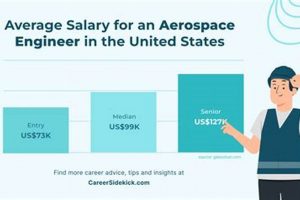
The correlation between experience and compensation in aerospace engineering is demonstrably positive. Entry-level aerospace engineers typically receive lower salaries, reflective of their limited practical application of theoretical knowledge. As engineers accumulate experience, their ability to solve complex problems, manage projects, and contribute to organizational efficiency increases, leading to higher earnings. The progression from junior engineer to senior engineer, principal engineer, or engineering manager is typically accompanied by substantial salary growth. For example, an aerospace engineer with 1-3 years of experience may earn significantly less than an engineer with 10+ years of experience and a proven track record of successful project completion. The ability to independently handle increasingly complex assignments and mentor junior engineers directly translates to increased value for the employer, justifying higher compensation.
Specific examples illustrate the practical impact of experience on earning potential. An engineer who has successfully led the design and testing of a new aircraft wing, overcoming technical challenges and adhering to strict regulatory requirements, will likely command a higher salary than an engineer whose experience is limited to simulation and analysis. Similarly, an engineer with experience in obtaining FAA certification for aircraft components is highly valuable due to the regulatory complexity involved. Furthermore, experience in specific areas, such as composite materials, hypersonic flight, or autonomous systems, which are currently in high demand, can further amplify the effect of experience on salary. This is because engineers with relevant experience are scarce, making them highly sought after by employers.
In conclusion, experience is a critical determinant of compensation in aerospace engineering. It demonstrates an engineer’s ability to apply knowledge, solve problems, and contribute to organizational success. The depth and breadth of an engineer’s experience, coupled with specialization in high-demand areas, directly correlate with higher earning potential. While challenges, such as economic downturns or shifts in industry priorities, can influence salary trends, the value of proven experience remains a consistent factor in determining financial rewards within the field.
2. Location
Geographic location exerts a substantial influence on the salary levels of aerospace engineers. Areas with a high concentration of aerospace companies, government research facilities, and military installations typically offer higher compensation packages than regions with fewer such opportunities. The principle of supply and demand is a primary driver; locations where aerospace engineering jobs are abundant, but the talent pool is limited, necessitate higher salaries to attract qualified candidates. This increased cost of living in certain locations also contributes to the salary adjustments needed to maintain a reasonable standard of living for employees.
Consider, for instance, the differences between aerospace engineering salaries in Southern California, home to numerous aerospace giants and research institutions, and those in a rural state with limited aerospace industry presence. Southern California generally features higher salaries due to the competition for skilled engineers, the presence of high-value projects, and the elevated cost of housing. Conversely, states with a smaller aerospace footprint may offer lower salaries, reflecting reduced demand and a potentially lower cost of living. Real-world examples also include comparing pay scales in metropolitan areas with substantial defense contracting, such as the Washington, D.C. area, to regions with a less concentrated government presence. This understanding is practically significant for job seekers, enabling them to strategically target locations to maximize their earning potential.
In summary, location functions as a critical variable in the aerospace engineering compensation equation. Areas with robust aerospace industries and a high cost of living generally provide more lucrative opportunities. Recognizing this connection allows engineers to make informed decisions about career relocation and negotiation strategies. While factors like experience and education are undoubtedly important, the geographic component remains a crucial consideration for those seeking optimal financial rewards within the aerospace engineering profession.
3. Education

Educational attainment significantly correlates with compensation levels in aerospace engineering. The fundamental knowledge acquired during formal education forms the basis for practical engineering skills. A Bachelor’s degree in aerospace engineering is typically the minimum requirement for entry-level positions, providing foundational understanding of aerodynamics, propulsion, structures, and control systems. However, advanced degrees, such as a Master’s degree or a Ph.D., often lead to higher earning potential, reflecting specialized knowledge and research capabilities. For instance, an engineer with a Ph.D. specializing in computational fluid dynamics may command a higher salary due to expertise in a highly technical and sought-after area. The level of education completed directly influences the complexity of tasks an engineer can perform and, consequently, the value they bring to an organization.
Furthermore, the specific educational institution attended can also indirectly influence salary expectations. Graduates from reputable universities with strong aerospace engineering programs are often viewed more favorably by employers, potentially resulting in higher initial salary offers. This is partially attributable to the rigor of the curriculum and the quality of faculty at these institutions. Employers recognize that graduates from these programs are likely to possess a deeper understanding of fundamental principles and are better prepared to tackle real-world engineering challenges. The presence of research opportunities, internships, and industry connections offered by these universities further enhances the value of their graduates. Consider the career trajectories of graduates from institutions like MIT, Stanford, or Caltech; their advanced educational background equips them for leadership roles and specialized technical positions, which are frequently accompanied by increased compensation.
In summary, education serves as a key determinant of earning potential in aerospace engineering. While a Bachelor’s degree provides a necessary foundation, advanced degrees and the reputation of the educational institution attended significantly impact career trajectory and salary levels. Employers recognize the value of specialized knowledge and research capabilities acquired through advanced education, translating into higher compensation for engineers who invest in furthering their academic qualifications. It is important to recognize that while education provides a solid base for career advancement, practical experience and continuous professional development are equally vital for long-term success in the field.
4. Specialization
The relationship between specialization and compensation within aerospace engineering is demonstrably strong. Certain specialized domains command higher salaries due to a combination of factors: increased demand, scarcity of qualified professionals, and the critical nature of the work performed. An aerospace engineer specializing in areas like propulsion systems, hypersonic aerodynamics, or advanced materials will likely encounter enhanced earning potential compared to generalist colleagues. This difference arises from the specialized knowledge, sophisticated skillsets, and in-depth understanding needed to address complex problems in those areas. As technological advancement accelerates and demand for cutting-edge solutions increases, the value of engineers possessing unique expertise rises correspondingly. For instance, the development of electric propulsion systems for aircraft and spacecraft has created a surge in demand for engineers with expertise in electric machinery, power electronics, and control systems. This demand has, in turn, led to increased salaries for qualified individuals.
The selection of a specialization can also open doors to leadership roles and research-intensive positions. Engineers specializing in areas like space mission design or satellite communication systems often find opportunities to lead project teams and contribute to groundbreaking research efforts. These roles demand not only deep technical expertise but also strong communication and problem-solving skills. Consequently, employers are willing to compensate highly for individuals who can effectively manage complex projects, navigate regulatory hurdles, and drive innovation. In practice, an engineer specializing in autonomous flight control systems might lead a team developing drone technology for commercial applications. Their expertise in sensor integration, path planning, and machine learning is essential to the project’s success, justifying a higher salary. Moreover, specialization can improve job security, as specialized engineers are less readily replaceable compared to generalists.
In summary, specialization serves as a significant determinant of earning potential within aerospace engineering. By focusing on high-demand areas and developing unique skillsets, engineers can position themselves for higher salaries and leadership opportunities. Although choosing a specialization requires careful consideration of personal interests and career goals, understanding the current and projected demands of the industry can help engineers make informed decisions that maximize their earning potential. Navigating industry demands strategically, in conjunction with acquiring and honing the specialized knowledge and skills that are highly valued, constitutes an effective approach to optimizing career prospects and remuneration within the aerospace engineering field.
5. Industry

The industry sector significantly impacts compensation levels for aerospace engineers. The source of funding, the type of work performed, and the prevailing market dynamics within specific industry segments all contribute to variations in salary.
- Commercial Aviation
Within the commercial aviation sector, aerospace engineers contribute to the design, development, and maintenance of passenger and cargo aircraft. While offering relative stability, compensation in this segment may be somewhat lower compared to other aerospace sectors due to established market conditions and cost pressures. For example, an engineer working on the next generation of fuel-efficient airliners may receive a competitive salary but potentially less than one working on cutting-edge defense systems. The focus on cost optimization in commercial aviation can moderate salary growth.
- Defense Contracting
The defense contracting industry is a significant employer of aerospace engineers. Salaries in this sector are frequently higher due to the complexity of the projects, the security clearances required, and the specialized expertise needed. Engineers engaged in developing advanced military aircraft, missile systems, or surveillance technologies are often highly compensated. Government contracts frequently include provisions for specific skill sets and experience levels, influencing compensation packages. The stringent requirements and critical importance of defense applications contribute to premium pay scales.
- Space Exploration
The space exploration sector, encompassing both government agencies and private companies, represents a dynamic and often highly compensated area for aerospace engineers. Work on spacecraft, launch vehicles, and satellite systems demands specialized knowledge and innovative problem-solving. Engineers contributing to missions to Mars or developing new satellite constellations command high salaries due to the technical challenges and strategic importance of these endeavors. Moreover, the increasing commercialization of space activities, such as space tourism and resource extraction, further drives demand and compensation in this sector.
- Research and Development
Aerospace engineers employed in research and development (R&D) roles, whether at universities, government laboratories, or private companies, are critical for innovation in the field. Compensation in R&D can vary significantly depending on the funding source, the nature of the research, and the institution’s priorities. Engineers working on fundamental research may receive lower salaries compared to those involved in applied research with clear commercial applications. However, R&D roles often offer intellectual stimulation and opportunities for career advancement, which can indirectly contribute to long-term earning potential. For instance, an engineer developing new materials for hypersonic vehicles may not initially earn as much as a counterpart in defense contracting, but the long-term potential for career growth and higher earnings is substantial.
In conclusion, the specific industry segment within aerospace engineering significantly influences compensation levels. The commercial aviation sector provides relative stability, defense contracting often offers higher pay due to specialized requirements, space exploration provides dynamic opportunities with competitive salaries, and R&D provides intellectual growth with varying compensation potential. Evaluating these industry nuances is essential for aerospace engineers seeking to maximize their earning potential.
6. Demand

The demand for aerospace engineers exerts a direct influence on their compensation. An increase in demand, driven by factors such as technological advancements, expanding space exploration initiatives, or heightened defense spending, typically leads to upward pressure on salaries. When the number of available positions surpasses the supply of qualified candidates, employers are compelled to offer more competitive compensation packages to attract and retain talent. This phenomenon is evident in periods of significant aerospace industry growth, where companies actively recruit engineers with specialized skills, resulting in increased salary levels across various experience brackets. Conversely, during economic downturns or periods of reduced aerospace activity, demand may decrease, potentially leading to salary stagnation or even reductions in some cases. This cyclical nature underscores the importance of understanding industry trends and anticipating future demand patterns.
Specific examples illustrate the practical implications of demand on compensation. The recent surge in interest in commercial spaceflight and satellite technology has significantly increased demand for engineers with expertise in areas like propulsion, avionics, and orbital mechanics. Companies involved in these sectors are actively recruiting engineers, offering competitive salaries, and providing benefits packages to secure the talent needed to drive innovation. Similarly, ongoing efforts to develop more fuel-efficient and environmentally friendly aircraft have spurred demand for engineers with expertise in aerodynamics, materials science, and sustainable propulsion systems. This heightened demand translates to improved job prospects and increased earning potential for engineers possessing these skills. Furthermore, geopolitical factors that increase defense spending can also significantly boost the demand for aerospace engineers in areas such as missile defense systems, unmanned aerial vehicles, and cybersecurity.
In conclusion, the demand for aerospace engineers is a critical determinant of their compensation. Recognizing the relationship between demand and pay allows engineers to strategically position themselves in areas with strong growth potential. Continuous monitoring of industry trends, coupled with the acquisition of in-demand skills, is essential for maximizing long-term earning potential. While economic fluctuations and shifts in industry priorities can influence demand, engineers who adapt to these changes and possess specialized expertise are best positioned to navigate the evolving landscape of the aerospace engineering profession and secure competitive compensation packages.
7. Negotiation

Negotiation is a crucial component in determining financial compensation for aerospace engineers. While experience, education, and industry demand establish a baseline salary range, the individual’s ability to negotiate effectively can significantly influence the final outcome. A strong negotiation strategy allows engineers to articulate their value proposition, highlighting skills, accomplishments, and contributions to the prospective employer. This proactive approach ensures that engineers receive fair compensation commensurate with their qualifications and the prevailing market conditions. Ineffective negotiation, conversely, may result in an underestimation of worth and a lower initial salary offer.
Consider the practical application of negotiation in real-world scenarios. An aerospace engineer with five years of experience applying for a position at a defense contractor might leverage their expertise in advanced materials and successful project management to negotiate a higher salary than the initial offer. Preparation involves researching industry salary benchmarks, quantifying accomplishments with measurable results, and demonstrating a clear understanding of the employer’s needs. Conversely, an engineer who accepts the initial offer without attempting negotiation may leave potential earnings unrealized. The ability to articulate value during the negotiation process is, therefore, a critical skill for maximizing compensation in the field.
In conclusion, effective negotiation constitutes a vital element in achieving optimal financial rewards within aerospace engineering. It allows engineers to actively shape their compensation packages, ensuring that they receive due recognition for their skills and contributions. While external factors like market conditions and industry demand play a role, the capacity to negotiate strategically empowers engineers to secure a salary that reflects their true value. Developing negotiation skills is, therefore, an investment that can yield significant returns throughout an aerospace engineer’s career, contributing directly to the answer of “does aerospace engineering pay well,” on an individual basis.
Frequently Asked Questions
The following addresses common inquiries regarding financial remuneration in the field of aerospace engineering. These questions and answers provide insights into the factors influencing earning potential and career advancement.
Question 1: Is an advanced degree necessary to attain a high salary in aerospace engineering?
While a Bachelor’s degree is typically the minimum requirement, a Master’s degree or Ph.D. can significantly increase earning potential. Advanced degrees often lead to specialized roles and research-oriented positions commanding higher salaries. However, practical experience and relevant skills also play a crucial role in career advancement.
Question 2: What geographic locations offer the highest salaries for aerospace engineers?
Locations with a high concentration of aerospace companies, government research facilities, and military installations typically offer higher salaries. These areas often face greater competition for skilled engineers, driving up compensation levels. Examples include Southern California, the Washington D.C. area, and regions with significant aerospace manufacturing activity.
Question 3: How does specialization impact salary expectations in aerospace engineering?
Specialization in high-demand areas such as propulsion systems, avionics, or space vehicle design can significantly increase earning potential. Expertise in these areas is often scarce and highly valued by employers, resulting in higher salaries for qualified individuals. The selection of specialization is a key factor in shaping career trajectory and financial rewards.
Question 4: Does the type of employer (government vs. private sector) influence salary?
Yes, the type of employer can impact compensation. Government positions often offer competitive salaries and comprehensive benefits packages, while the private sector may provide opportunities for higher earnings, particularly in specialized roles and high-growth companies. The choice between sectors depends on individual priorities and career goals.
Question 5: What role does negotiation play in determining an aerospace engineer’s salary?
Negotiation is a critical skill for maximizing compensation. By effectively articulating their value proposition and highlighting their skills and accomplishments, engineers can influence their initial salary offer. Researching industry salary benchmarks and demonstrating a clear understanding of the employer’s needs are crucial for successful negotiation.
Question 6: How does experience impact salary progression throughout an aerospace engineer’s career?
Experience is a primary driver of salary growth. As engineers accumulate experience, their ability to solve complex problems, manage projects, and contribute to organizational efficiency increases. This progression from junior to senior engineer typically translates into substantial salary increases. Demonstrating a track record of successful project completion is essential for career advancement and higher compensation.
Understanding these key factors allows individuals to make informed decisions about their career path and maximize their earning potential within the field of aerospace engineering.
The following section will explore future trends in aerospace engineering and their potential impact on compensation.
In Conclusion
The preceding analysis has addressed the core question of whether aerospace engineering yields satisfactory financial rewards. The evidence suggests that aerospace engineering provides the potential for substantial earnings, influenced by factors such as educational attainment, specialized skills, geographic location, industry sector, and individual negotiation skills. The career path requires significant investment in education and professional development, but the potential for financial return is considerable for qualified and experienced professionals.
Prospective and current aerospace engineers are encouraged to strategically plan their career paths, focusing on high-demand specializations, pursuing advanced education, and developing strong negotiation skills. While external factors, such as economic conditions and industry trends, may impact compensation, a proactive approach to career management and a commitment to continuous learning remain essential for maximizing long-term earning potential in this demanding and dynamic field.

![Top Aerospace Engineering Colleges in Michigan [Guide] | Innovating the Future of Flight with Reliable Aviation Solutions](https://mixaerospace.com/wp-content/uploads/2026/04/th-463-300x200.jpg "Top Aerospace Engineering Colleges in Michigan [Guide] Innovating the Future of Flight with Reliable Aviation Solutions")