Areas of specialization within the broader domain encompass a diverse range of disciplines. These specializations involve the design, development, testing, and production of aircraft and spacecraft, as well as the analysis of aerodynamic principles, structural integrity, propulsion systems, and control mechanisms. For instance, one might focus on the advancement of hypersonic flight vehicles, while another could dedicate their efforts to optimizing fuel efficiency in commercial airliners.
The importance stems from their contributions to national security, economic growth, and scientific discovery. Advances in these areas lead to improved transportation systems, enhanced defense capabilities, and a deeper understanding of the universe. Historically, progress in these areas has driven technological innovation, leading to breakthroughs in materials science, computer modeling, and sensor technology that have applications far beyond aviation and space exploration.
The following sections will delve into some of the key specializations, exploring their unique challenges, current research, and future directions. These areas include aerodynamics, propulsion, structures, flight mechanics, and control systems, each playing a crucial role in the advancement of air and space travel.
This section offers guidance for individuals interested in pursuing or deepening their expertise in this multifaceted discipline. Careful consideration of these points can enhance career trajectory and contribution to the field.
Tip 1: Develop a Strong Foundation in Mathematics and Physics: A solid understanding of calculus, differential equations, linear algebra, and classical mechanics is paramount. These principles underpin virtually all aspects of design and analysis.
Tip 2: Cultivate Proficiency in Computer-Aided Design (CAD) and Simulation Software: Modern engineering relies heavily on computational tools for design, analysis, and testing. Familiarity with software packages such as CATIA, ANSYS, and MATLAB is essential.
Tip 3: Gain Hands-On Experience Through Internships and Research Opportunities: Practical application of theoretical knowledge is crucial. Seek internships at aerospace companies or participate in research projects at universities to gain valuable real-world experience.
Tip 4: Specialize Based on Interests and Aptitudes: The discipline encompasses a wide array of specializations. Identify areas that align with individual interests and aptitudes, such as aerodynamics, propulsion, structures, or control systems.
Tip 5: Stay Abreast of Technological Advancements: The discipline is constantly evolving. Remain current on the latest technological advancements through continuous learning, attending conferences, and reading industry publications.
Tip 6: Hone Problem-Solving and Critical-Thinking Skills: Engineering challenges often require creative and analytical solutions. Develop strong problem-solving and critical-thinking skills through rigorous study and practical application.
Tip 7: Embrace Interdisciplinary Collaboration: Successful engineering projects typically involve collaboration across multiple disciplines. Cultivate the ability to work effectively in interdisciplinary teams.
Adherence to these guidelines will foster a deeper understanding and enhance contributions to the advancement of aerospace technology. The following sections will explore future trends shaping various sectors within this domain.
1. Aerodynamics

Aerodynamics is a fundamental specialization directly influencing design and performance across the discipline. Understanding airflow principles is paramount for creating efficient and stable aircraft and spacecraft. It dictates how air interacts with a vehicle, affecting lift, drag, and overall maneuverability.
- Lift Generation and Wing Design
The primary function of a wing is to generate lift, counteracting gravity. Aerodynamic principles dictate optimal wing shapes, airfoil profiles, and surface features like flaps and slats. These elements manipulate airflow to maximize lift while minimizing drag. An example includes the supercritical airfoils on modern airliners, designed to delay the onset of shockwaves and reduce drag at high speeds, thus improving fuel efficiency.
- Drag Reduction and Boundary Layer Control
Drag is a force that opposes motion, reducing speed and increasing fuel consumption. Aerodynamics focuses on streamlining designs to minimize drag. Techniques like boundary layer suction, riblets, and laminar flow control are employed to maintain smooth airflow and reduce turbulent drag. Aircraft manufacturers continuously research and implement strategies to reduce drag, contributing to more sustainable aviation practices.
- Stability and Control Surfaces
Aerodynamic stability ensures an aircraft returns to its equilibrium state after a disturbance. Control surfaces, such as ailerons, elevators, and rudders, manipulate airflow to control an aircraft’s attitude and direction. Proper aerodynamic design of these surfaces is critical for safe and effective flight control. For instance, careful placement of the horizontal stabilizer and vertical fin contributes to inherent stability.
- Computational Fluid Dynamics (CFD) Applications
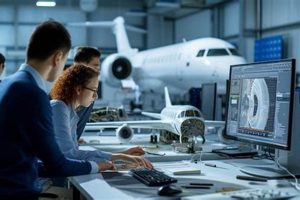
CFD is a powerful tool used to simulate airflow around complex shapes. Aerodynamicists utilize CFD to predict performance, optimize designs, and identify potential problems early in the development process. CFD simulations can analyze a wide range of conditions, including transonic and supersonic flows, allowing engineers to refine designs before physical testing. This reduces costs and accelerates development cycles.
These facets of aerodynamics collectively contribute to advancements in aircraft and spacecraft design. The ongoing pursuit of more efficient, stable, and controllable vehicles underscores the importance of this specialization within the broader landscape. Innovations in aerodynamic modeling, testing, and control systems will continue to shape the future of flight.
2. Propulsion Systems
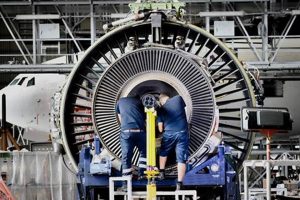
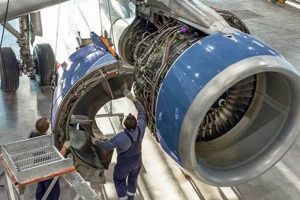
Propulsion systems are integral to specialized sectors, providing the means for aircraft and spacecraft to overcome gravity and aerodynamic forces, enabling sustained flight and space exploration. The effectiveness and efficiency of these systems directly determine vehicle performance, range, payload capacity, and mission capabilities. Advances in this area directly influence progress across all aspects, from commercial aviation to space exploration.
Real-world examples demonstrate the profound impact. The development of high-bypass turbofan engines dramatically improved fuel efficiency and reduced noise pollution in commercial airliners, making air travel more accessible and environmentally friendly. Similarly, the evolution of liquid-fueled rocket engines has enabled increasingly ambitious space missions, from lunar landings to interplanetary probes. The design and optimization involve diverse engineering disciplines, including thermodynamics, fluid mechanics, combustion, materials science, and control systems. Proper integration of these disciplines is essential for achieving optimal performance and reliability.
Understanding propulsion systems is crucial for developing the next generation of aircraft and spacecraft. Challenges include increasing fuel efficiency, reducing emissions, developing alternative fuels, and designing propulsion systems for hypersonic flight and deep-space missions. Continued research and development in propulsion technologies are essential for advancing aerospace capabilities and addressing global challenges related to transportation, energy, and space exploration. The ability to engineer innovative and efficient systems remains a key determinant of progress within specialized sectors.
3. Structural Mechanics

Structural mechanics forms a critical foundation within sectors, ensuring the integrity and safety of air and space vehicles. It encompasses the analysis of stress, strain, and deformation in aerospace structures under various loading conditions. The primary objective is to design lightweight, yet robust structures capable of withstanding extreme environments and operational demands.
- Stress Analysis and Failure Criteria
Stress analysis involves determining the distribution of internal forces within a structure subjected to external loads. This analysis employs principles of elasticity, plasticity, and fracture mechanics to predict structural behavior. Failure criteria, such as the Von Mises yield criterion or the maximum stress criterion, are used to assess the likelihood of structural failure under given loading conditions. An example includes the stress analysis of aircraft wings during flight to ensure they can withstand aerodynamic loads without exceeding allowable stress limits.
- Finite Element Analysis (FEA) Applications
FEA is a numerical technique widely used in specialized sectors for simulating the behavior of complex structures. It involves discretizing a structure into a mesh of finite elements and solving equations to determine the stress, strain, and displacement within each element. FEA enables engineers to analyze structures with complex geometries and boundary conditions, predicting their response to various loads and environmental factors. For instance, FEA can simulate the impact of bird strikes on aircraft fuselage to assess the structural damage.
- Materials Selection and Characterization
The choice of materials significantly influences the structural performance of aerospace vehicles. Materials must possess high strength-to-weight ratios, corrosion resistance, and temperature stability. Common materials include aluminum alloys, titanium alloys, composites, and high-temperature superalloys. Material characterization involves determining the mechanical properties of these materials through experimental testing and analysis. Examples include testing the tensile strength of carbon fiber composites to ensure they meet design requirements.
- Structural Dynamics and Vibration Analysis
Aerospace structures are subjected to dynamic loads and vibrations during operation. Structural dynamics focuses on analyzing the response of structures to these dynamic loads, including natural frequencies, mode shapes, and damping characteristics. Vibration analysis is used to identify and mitigate potential resonance problems that can lead to structural failure. An example includes analyzing the vibration modes of satellite solar panels to prevent structural damage during launch and deployment.
These facets of structural mechanics collectively contribute to the design of safe, reliable, and efficient aerospace structures. Continuous advancements in computational tools, material science, and testing techniques are crucial for addressing the evolving challenges faced by structural engineers within the scope of specialized sectors. Further research in areas like advanced composites and structural health monitoring will continue to shape the future of aerospace engineering.
4. Flight Control

Flight control represents a critical area within aerospace engineering, encompassing the design, development, and implementation of systems that govern the attitude and trajectory of aircraft and spacecraft. Effective management of these systems ensures stability, maneuverability, and precise navigation across diverse operational conditions. The sophistication of these systems is paramount to the overall performance and safety of aerial and space vehicles.
- Control Surface Design and Actuation
The design and actuation of control surfaces, such as ailerons, elevators, and rudders, are fundamental to flight control. The aerodynamic characteristics of these surfaces, along with the precision of their actuation mechanisms, directly influence an aircraft’s ability to execute maneuvers and maintain stability. Modern aircraft often employ fly-by-wire systems, replacing mechanical linkages with electronic signals, enabling greater control authority and enhanced stability augmentation. An example is the use of advanced hydraulic or electromechanical actuators to provide precise and rapid control surface deflections.
- Stability Augmentation Systems
Stability augmentation systems (SAS) enhance the inherent stability characteristics of an aircraft, particularly in challenging flight regimes. These systems employ sensors, such as gyroscopes and accelerometers, to detect deviations from the desired flight path and automatically apply corrective control inputs. SAS are crucial for improving ride quality, reducing pilot workload, and enabling stable flight in turbulent conditions. The integration of SAS is essential for aircraft operating in demanding environments, such as military aircraft and commercial airliners.
- Guidance, Navigation, and Control (GNC) Integration
The integration of guidance, navigation, and control (GNC) systems is essential for autonomous flight and precise navigation. GNC systems utilize a combination of sensors, such as GPS, inertial measurement units (IMUs), and radar, to determine the vehicle’s position, attitude, and velocity. This information is then used to generate control commands that guide the vehicle along a predefined trajectory. GNC systems are vital for unmanned aerial vehicles (UAVs), spacecraft, and autonomous landing systems. An illustrative instance is the autonomous landing capabilities of modern spacecraft.
- Flight Control Law Design and Optimization
The design and optimization of flight control laws are critical for achieving desired handling qualities and performance characteristics. Flight control laws are mathematical algorithms that translate pilot inputs and sensor data into control surface commands. These laws must be carefully tuned to ensure stability, responsiveness, and robustness across a wide range of flight conditions. Optimization techniques, such as model predictive control and adaptive control, are employed to enhance the performance and adaptability of flight control systems. The development of robust flight control laws is paramount for ensuring safe and efficient operation of both manned and unmanned aircraft.
These integrated facets collectively illustrate the importance of flight control within aerospace engineering. As technology advances, the integration of artificial intelligence and machine learning into flight control systems will further enhance their capabilities, enabling greater autonomy, adaptability, and performance. This ongoing evolution is essential for addressing the challenges of future air and space travel, ensuring safety and efficiency.
5. Materials Science

The intersection of materials science and specialized sectors represents a critical nexus for innovation and advancement. The performance, safety, and longevity of aircraft and spacecraft are inextricably linked to the properties and capabilities of the materials used in their construction. Selecting the appropriate materials and developing new ones tailored to the unique demands of the aerospace environment is a persistent challenge driving research in this field.
- High Strength-to-Weight Ratio Materials
A paramount requirement for aerospace materials is a high strength-to-weight ratio. Reducing weight is crucial for improving fuel efficiency, increasing payload capacity, and enhancing maneuverability. Materials such as aluminum alloys, titanium alloys, and composite materials (e.g., carbon fiber reinforced polymers) are extensively used due to their ability to provide structural integrity while minimizing weight. For example, the Boeing 787 Dreamliner utilizes a significant amount of carbon fiber composites in its airframe, resulting in substantial weight savings compared to traditional aluminum designs. This leads to improved fuel efficiency and reduced emissions.
- High-Temperature Materials
Aerospace vehicles, particularly those operating at high speeds or in extreme environments, require materials capable of withstanding elevated temperatures. Components such as engine turbine blades and heat shields are subjected to intense thermal stresses. Materials like nickel-based superalloys, ceramics, and ceramic matrix composites are employed to maintain structural integrity and prevent failure at high temperatures. The Space Shuttle’s thermal protection system, consisting of ceramic tiles, is a prime example of the application of high-temperature materials to protect the spacecraft during re-entry into the Earth’s atmosphere.
- Corrosion and Environmental Resistance
Aerospace materials must exhibit resistance to corrosion and degradation caused by exposure to harsh environmental conditions, including salt water, humidity, ultraviolet radiation, and atmospheric pollutants. Corrosion can weaken structures, leading to catastrophic failures. Protective coatings, surface treatments, and the selection of corrosion-resistant alloys are crucial for ensuring the long-term durability of aerospace components. For example, anodizing aluminum alloys and applying corrosion-inhibiting primers are common practices in aircraft manufacturing to prevent corrosion and maintain structural integrity.
- Advanced Composites and Nanomaterials
Ongoing research focuses on developing advanced composite materials and incorporating nanomaterials to enhance the performance of aerospace structures. Composites offer tailored properties, such as high strength, stiffness, and damage tolerance. Nanomaterials, such as carbon nanotubes and graphene, can be used to reinforce composite matrices, improve electrical conductivity, and enhance sensor capabilities. These materials hold promise for creating lighter, stronger, and more intelligent aerospace structures. The integration of carbon nanotubes into aircraft wings to improve structural integrity and enable embedded sensor networks represents a potential future application of nanomaterials.
The advancements in materials science directly correlate with progress across numerous domains. From enhancing fuel efficiency to enabling space exploration, innovative materials play a pivotal role in pushing the boundaries of what is achievable. Continued research and development in this area are essential for addressing the challenges of future aerospace endeavors, including hypersonic flight, deep-space missions, and sustainable aviation.
6. Space Systems
Space systems represent a critical and complex sub-discipline inextricably linked to the broader domain. These systems encompass a vast array of technologies and engineering principles necessary for the design, development, and operation of vehicles and infrastructure beyond Earth’s atmosphere. The effective integration of specialized knowledge from various areas within the field ensures successful mission outcomes, ranging from satellite deployment and operation to manned and unmanned exploration of celestial bodies. The consequences of neglecting expertise in any of these areas can be catastrophic, resulting in mission failure, loss of assets, and potential risks to human life. For instance, the design of a satellite’s communication system requires expertise in radio frequency engineering, signal processing, and orbital mechanics, all of which fall under different specializations. The successful launch and operation of the James Webb Space Telescope showcases the culmination of interdisciplinary efforts to create a groundbreaking space system.
The practical significance of understanding the interplay between space systems and its supporting fields manifests in numerous ways. Mission planning, risk assessment, and system optimization rely heavily on accurately modeling the behavior of spacecraft in the space environment. This demands a deep understanding of orbital dynamics, space weather, radiation effects, and propulsion systems. Furthermore, the development of advanced technologies such as reusable launch vehicles and in-situ resource utilization systems necessitates innovative approaches to materials science, structural mechanics, and thermodynamics. The advancements in these areas are not solely applicable to space exploration; they often lead to breakthroughs that benefit terrestrial applications, fostering economic growth and technological progress. An example is the development of advanced materials for spacecraft heat shields, which have found applications in high-speed trains and fire-resistant building materials.
In conclusion, space systems epitomize the application of knowledge, requiring seamless integration of diverse engineering disciplines. Challenges remain in mitigating the risks associated with long-duration space missions, developing sustainable propulsion systems, and ensuring the reliability of spacecraft operating in harsh environments. Addressing these challenges necessitates a continued commitment to research and development across relevant specializations and a collaborative approach to systems engineering. The future of space exploration and utilization hinges on the ability to leverage advancements in this field to create robust, efficient, and cost-effective space systems.
7. Avionics
Avionics constitutes a pivotal segment within the broader spectrum. It encompasses the electronic systems utilized on aircraft, satellites, and spacecraft. These systems are integral to navigation, communication, flight control, and various other critical functions. Understanding the scope and complexity of avionics is essential for comprehending modern air and space vehicle capabilities.
- Navigation Systems Integration
Avionics integrates various navigation systems, including GPS, inertial navigation systems (INS), and radio navigation aids. These systems provide precise positional data and guidance for pilots and autonomous flight control systems. For instance, commercial airliners rely on integrated avionics suites to navigate complex flight paths, ensuring safe and efficient air travel. The accuracy and reliability of these systems are paramount for flight safety, particularly during adverse weather conditions or in congested airspace.
- Communication Systems Implementation
Avionics facilitates communication between aircraft, ground control stations, and other vehicles. This includes voice communication, data links, and satellite communication systems. Effective communication is essential for air traffic control, emergency response, and coordination of flight operations. An example includes the use of satellite communication systems by long-range aircraft to maintain contact with ground stations over vast distances. The reliability and security of these communication systems are crucial for maintaining situational awareness and preventing unauthorized access.
- Flight Control Systems Management
Avionics plays a central role in flight control systems, including autopilots, fly-by-wire systems, and stability augmentation systems. These systems enhance aircraft stability, reduce pilot workload, and improve overall flight performance. For instance, fly-by-wire systems in modern fighter jets rely on complex avionics to translate pilot inputs into precise control surface movements, enabling enhanced maneuverability and responsiveness. The integration of artificial intelligence and machine learning into flight control avionics is enabling increasingly autonomous flight capabilities.
- Electronic Warfare and Surveillance Systems
In military applications, avionics encompasses electronic warfare systems and surveillance systems. These systems provide capabilities for electronic countermeasures, radar jamming, and reconnaissance. Surveillance systems utilize sensors such as radar, infrared cameras, and electronic intelligence (ELINT) receivers to gather information about potential threats or targets. An example includes the use of airborne early warning and control (AEW&C) aircraft to provide real-time surveillance and command and control capabilities. The sophistication and effectiveness of these systems are critical for maintaining situational awareness and ensuring mission success in contested environments.
Avionics directly influences capabilities across numerous domains within aerospace. From enhancing flight safety and efficiency to enabling advanced military capabilities, these systems are critical components of modern air and space vehicles. Continued innovation in avionics is essential for addressing the challenges of future air and space travel and ensuring the safety and security of aerospace operations.
Frequently Asked Questions
This section addresses common inquiries and misconceptions concerning the specialized areas within the domain, providing clarity and context for a more comprehensive understanding.
Question 1: What distinguishes aerodynamics from other specializations?
Aerodynamics focuses specifically on the interaction of air with moving objects. It differs from other areas like structures, which deals with mechanical integrity, or propulsion, which addresses the generation of thrust. Aerodynamics provides the foundational principles for lift, drag, and stability, essential for initial design considerations.
Question 2: How does materials science influence decisions?
Materials science dictates material selection based on performance requirements. Factors such as strength-to-weight ratio, temperature resistance, and corrosion resistance are considered when choosing materials for specific components. This specialization is critical for ensuring structural integrity and longevity under demanding operational conditions.
Question 3: What is the role of flight control in ensuring aviation safety?
Flight control is integral to maintaining stability, maneuverability, and precise navigation. Systems designed within this area augment inherent aircraft stability, reducing pilot workload and enabling safe operation across diverse conditions. Its design directly impacts an aircraft’s ability to respond to pilot inputs and environmental disturbances.
Question 4: How does avionics contribute to the overall operational efficiency?
Avionics integrates navigation, communication, and flight control systems, streamlining flight operations and enhancing situational awareness. These systems provide essential information for pilots and ground control, enabling efficient flight planning, optimized routing, and real-time monitoring of aircraft performance.
Question 5: What is the significance of structural mechanics within the context?
Structural mechanics ensures that vehicles maintain their structural integrity under diverse loading conditions. Its analytical methods are employed to design lightweight structures which are capable of withstanding extreme stresses and environmental factors. This specialization directly contributes to the safety and reliability of aircraft and spacecraft.
Question 6: In what capacity does propulsion influence the scope of future air and space travel?
Propulsion directly governs vehicle range, speed, and payload capacity. Advancements in propulsion technologies are crucial for enabling hypersonic flight, deep-space exploration, and sustainable aviation practices. The development of more efficient and environmentally friendly propulsion systems remains a central focus of research and development efforts.
Understanding these specialized areas and their respective roles is essential for anyone seeking to comprehend the intricacies. Each specialization contributes uniquely to the overall success of aviation endeavors.
The next article section explores current trends shaping the future across distinct specialized domains.
Conclusion
The preceding sections have explored facets, underscoring their individual significance and interdependencies. From aerodynamics to avionics, each specialization plays a crucial role in advancing the capabilities and safety of air and space vehicles. Understanding these specialized areas is paramount for navigating the complexities of this dynamic and ever-evolving discipline.
Continued research, development, and collaboration across these specialized areas are essential for addressing future challenges and realizing the full potential. Further investigation and commitment to these foundations will facilitate progress and innovation in aerospace technology for generations to come.