![[Guide] Freshman Aerospace Engineering Internships: Your Launchpad!](data:image/svg+xml;base64,PHN2ZyB4bWxucz0iaHR0cDovL3d3dy53My5vcmcvMjAwMC9zdmciIHdpZHRoPSI0NzQiIGhlaWdodD0iNTUiIHZpZXdCb3g9IjAgMCA0NzQgNTUiPjxyZWN0IHdpZHRoPSIxMDAlIiBoZWlnaHQ9IjEwMCUiIHN0eWxlPSJmaWxsOiNjZmQ0ZGI7ZmlsbC1vcGFjaXR5OiAwLjE7Ii8+PC9zdmc+ "[Guide] Freshman Aerospace Engineering Internships: Your Launchpad! Innovating the Future of Flight with Reliable Aviation Solutions")
Opportunities specifically designed for first-year university students pursuing a degree in the field of flight vehicle design and construction, these programs offer introductory experiences in relevant professional environments. These positions provide exposure to real-world engineering practices and often involve assisting experienced engineers with tasks such as data analysis, design support, and testing procedures. For example, a first-year student might contribute to wind tunnel testing, assist in the creation of CAD models, or analyze performance data from flight simulations.
Early exposure to practical application within the aerospace sector can be instrumental in solidifying a student’s academic interests and career goals. Participation in such programs can provide invaluable networking opportunities, leading to mentorships and future job prospects. Historically, these types of engagements were less common, but there is a growing recognition of the benefit of integrating early-career professionals into the industry pipeline. The availability of these experiences has grown with increased industry outreach to universities.
The following sections will detail effective strategies for securing these sought-after positions, highlight key skills and qualifications that can significantly enhance candidacy, and provide an overview of companies and organizations that actively recruit freshman for internship opportunities. Further discussion will explore the unique challenges and rewards associated with pursuing such positions early in one’s academic career.
Strategies for Securing Positions
Gaining a foothold in the competitive realm of aerospace engineering early requires a focused and proactive approach. The following recommendations outline key strategies for maximizing the likelihood of securing coveted positions.
Tip 1: Begin Early Preparation: The application process for many internship programs opens months in advance. Commencing the search and application preparations during the late fall or early winter of the freshman year is strongly advisable.
Tip 2: Focus on Relevant Coursework: While specific aerospace engineering courses may not yet be accessible, excelling in foundational STEM subjects such as mathematics (calculus, linear algebra), physics, and introductory programming is crucial. Demonstrating proficiency in these areas strengthens candidacy.
Tip 3: Cultivate a Strong Academic Record: Maintaining a high GPA is a primary indicator of academic aptitude. Prioritize academic performance to convey a commitment to excellence.
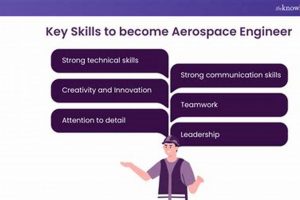
Tip 4: Develop Relevant Skills: Acquire fundamental skills in CAD software (e.g., SolidWorks, AutoCAD), programming languages (e.g., Python, MATLAB), and data analysis. Online courses and tutorials can be valuable resources for skill development.
Tip 5: Highlight Extracurricular Involvement: Participation in relevant extracurricular activities such as robotics clubs, rocketry teams, or engineering design competitions demonstrates practical application of knowledge and a passion for engineering.
Tip 6: Craft a Compelling Resume and Cover Letter: Tailor the resume and cover letter to specifically highlight relevant coursework, skills, and experiences. Emphasize quantifiable achievements and demonstrate a clear understanding of the target company’s mission and values.
Tip 7: Network Proactively: Attend industry events, career fairs, and university-hosted workshops to connect with aerospace professionals and recruiters. Networking can provide valuable insights and potential leads for internship opportunities.
By adhering to these strategies, first-year students can significantly enhance their prospects of securing valuable practical experience in their chosen field. Early preparation and a proactive approach are paramount to success.
The subsequent sections will explore the importance of targeted applications and the types of companies offering such opportunities, further aiding in the pursuit of these advantageous placements.
1. Early application preparation

Early application preparation is a cornerstone of successfully securing introductory aerospace engineering positions for first-year students. The timelines for these programs often operate on a compressed schedule, with application windows opening months prior to the typical recruitment cycles for more senior roles. This necessitates that interested students begin researching available opportunities and preparing application materials during the late summer or early fall of their freshman year, potentially even before the start of their first semester. Failure to adhere to these timelines severely limits the pool of available opportunities, rendering candidates less competitive due to missed deadlines.
The effect of early preparation extends beyond merely meeting deadlines. It allows students the time to strategically enhance their candidacy by acquiring relevant skills, such as proficiency in basic CAD software or introductory programming languages, before the application process commences. Furthermore, early engagement provides the opportunity to tailor resumes and cover letters to specific companies and roles, demonstrating a genuine interest and understanding of the organization’s work. For example, a student researching a company specializing in satellite propulsion could tailor their application to highlight any relevant coursework in physics or chemistry, even if those courses are introductory. Such proactive tailoring is only possible with ample preparation time.
In conclusion, early application preparation is not merely a logistical necessity but a strategic advantage in the pursuit of initial aerospace engineering experiences. It enables students to proactively build a competitive profile, demonstrate genuine interest, and maximize their chances of securing valuable introductory positions. The proactive approach, while demanding, offers a significant return in terms of career advancement and industry exposure. Neglecting this aspect of the process substantially diminishes the prospects of first-year students seeking to enter the aerospace engineering field.
2. Fundamental STEM proficiency

Successful acquisition of initial aerospace engineering positions is predicated upon a demonstrated aptitude in fundamental Science, Technology, Engineering, and Mathematics (STEM) disciplines. While first-year students may not yet have completed advanced coursework directly related to aerospace engineering, a strong foundation in core STEM subjects serves as a critical indicator of future academic success and professional potential. This proficiency signals to potential employers that a candidate possesses the cognitive tools necessary to understand and apply complex engineering principles.
The impact of robust STEM skills is observable in various practical scenarios. For example, a freshman adept in calculus and physics is better equipped to grasp the aerodynamic principles governing lift and drag, even if they have not formally studied aerodynamics. Similarly, proficiency in introductory programming allows students to contribute to data analysis tasks or assist in the development of simulation models, common activities in internships. Real-world examples include students leveraging their coding skills to automate data processing for wind tunnel tests or utilizing their understanding of physics to analyze the structural integrity of aircraft components. Companies actively seek candidates who can readily apply foundational knowledge to address practical engineering challenges.
In summary, fundamental STEM proficiency is a non-negotiable prerequisite for these opportunities. It functions not only as a filter during the application process but also as a catalyst for successful performance during the internship itself. Challenges may arise in demonstrating proficiency without direct aerospace experience; however, showcasing academic excellence in relevant STEM subjects, coupled with practical application through extracurricular activities, can effectively mitigate this. This understanding underscores the importance of prioritizing foundational STEM learning for students aspiring to enter the aerospace engineering field early in their academic careers.
3. Networking opportunities presence

The presence of robust networking opportunities significantly influences a first-year student’s access to, and success within, aerospace engineering internship programs. The correlation stems from the inherently competitive nature of these positions and the value placed on proactive engagement within the professional community. Networking events, such as career fairs, industry conferences, and university-hosted workshops, provide avenues for students to connect directly with industry professionals, recruiters, and potential mentors. This direct interaction can circumvent the often impersonal nature of online applications, allowing students to showcase their enthusiasm, technical aptitudes, and career aspirations in a more personalized setting. The establishment of personal connections can often lead to informational interviews or direct referrals, substantially increasing the probability of securing an internship placement. Conversely, a lack of participation in networking events may result in missed opportunities and a diminished understanding of industry trends and expectations.
The benefits extend beyond merely securing a position. Active participation in networking events allows students to gather information about specific companies, projects, and research areas that align with their interests. This knowledge enables them to tailor their applications and resumes more effectively, demonstrating a genuine interest in the specific opportunities offered. For example, a student attending a presentation by a Boeing engineer might gain insights into the company’s ongoing research in sustainable aviation, enabling them to highlight relevant coursework or projects in their application materials. Furthermore, networking provides a platform for students to seek advice from experienced professionals regarding career paths, skill development, and navigating the complexities of the aerospace industry. This mentorship can prove invaluable in guiding a student’s academic and professional development.
In summary, a proactive presence in networking opportunities is a critical component of a successful strategy for securing introductory aerospace engineering internships. The ability to forge connections, gather information, and seek guidance from industry professionals can significantly enhance a first-year student’s competitiveness and contribute to their long-term career trajectory. The cultivation of a professional network serves as both a gateway to opportunity and a source of support throughout their academic and professional journey. Challenges in accessing these opportunities, such as geographic limitations or financial constraints, require proactive solutions, including virtual networking events and university-sponsored travel assistance programs, to ensure equitable access for all aspiring engineers.
4. Relevant skill acquisition

Relevant skill acquisition is a pivotal determinant in securing introductory aerospace engineering positions. The direct relationship between a first-year student’s demonstratable abilities and their competitiveness for internships cannot be overstated. These positions, while introductory, nonetheless require a baseline competency in technical areas that align with the responsibilities of the role. Possession of relevant skills allows a student to contribute meaningfully to the team and indicates a proactive approach to professional development, thereby making them a more attractive candidate.
Consider, for example, a student who has independently learned the fundamentals of CAD software, such as SolidWorks or AutoCAD. This skill is directly applicable to assisting experienced engineers in creating and modifying designs, a common task assigned to interns. Similarly, knowledge of programming languages like Python or MATLAB enables students to contribute to data analysis and simulation efforts. The ability to write basic code to process wind tunnel data or model flight dynamics exemplifies the practical application of acquired skills. Companies such as Boeing and Lockheed Martin, which offer introductory internship programs, actively seek candidates who possess these tangible skills, as they reduce the onboarding time and accelerate the intern’s ability to contribute to ongoing projects.
In conclusion, relevant skill acquisition is not merely a supplementary attribute but an essential component of a successful strategy for securing freshman aerospace engineering internships. Students are encouraged to proactively identify in-demand skills within the aerospace industry and invest in acquiring those skills through online courses, personal projects, and extracurricular activities. The challenges in demonstrating these skills in the absence of formal academic credentials can be overcome by highlighting project-based experience and providing tangible examples of application. The long-term benefits of early skill acquisition extend beyond internship placement, equipping students with a competitive advantage throughout their academic and professional careers.
5. Resume and cover tailoring

The relationship between meticulously crafting application documents and gaining an initial practical experience in aerospace engineering is direct and significant. Given the relatively limited experience typically possessed by first-year students, the resume and cover letter serve as primary marketing tools. These documents must effectively translate academic potential and foundational skills into demonstrated qualifications relevant to the specific requirements of the target role. Tailoring involves carefully aligning the content with the advertised needs of the opportunity and highlighting transferable skills acquired through coursework, extracurricular activities, and personal projects. A generic application, lacking specific evidence of suitability, is unlikely to progress in the competitive selection process.
The importance of tailoring becomes evident when considering the screening processes employed by organizations offering such opportunities. Recruiters often utilize automated systems to filter applications based on keyword matches and specified qualifications. A resume and cover letter that do not incorporate relevant keywords, such as “CAD,” “MATLAB,” or specific areas of engineering interest (e.g., aerodynamics, propulsion), risk being overlooked entirely. Beyond keyword optimization, tailored applications demonstrate a candidate’s understanding of the company’s mission, values, and ongoing projects. For example, an application targeting a company specializing in satellite technology should emphasize any related coursework in physics, electrical engineering, or computer science, as well as any personal projects involving satellite communication or data analysis. Furthermore, the cover letter provides an opportunity to articulate how the candidate’s skills and experiences align with the company’s specific needs and to express a genuine interest in contributing to their objectives.
In conclusion, “resume and cover tailoring” is not merely a perfunctory step but a strategic imperative in the pursuit of freshman aerospace engineering internships. The ability to effectively communicate academic potential, foundational skills, and genuine interest through well-crafted application materials significantly enhances a candidate’s competitiveness. The challenge lies in demonstrating relevant qualifications in the absence of extensive professional experience; however, proactive tailoring, focusing on transferable skills and aligning the application with the specific requirements of the target role, can effectively mitigate this limitation and increase the likelihood of securing an opportunity. Effective communication serves as the bridge between academic aspirations and practical engagement within the aerospace engineering field.
6. Extracurricular engagement emphasis
Extracurricular engagement serves as a significant differentiator for freshman students seeking opportunities in aerospace engineering. Active participation in relevant activities outside of the formal curriculum signals a proactive interest in the field, demonstrating a willingness to apply theoretical knowledge and acquire practical skills beyond the classroom setting.
- Demonstration of Practical Application
Engagement in clubs like rocketry, model aircraft, or robotics provides tangible evidence of a student’s ability to translate classroom learning into real-world problem-solving. For example, designing and building a functional rocket involves applying principles of aerodynamics, propulsion, and structural mechanics. Such projects showcase a deeper understanding and a passion for engineering that can set an applicant apart.
- Development of Teamwork and Leadership Skills
Extracurricular activities often require collaborative efforts, fostering the development of essential teamwork skills. Students learn to work effectively in groups, delegate tasks, and communicate technical information. Moreover, taking on leadership roles within these organizations demonstrates initiative, organizational abilities, and the capacity to motivate others qualities highly valued by employers.
- Exposure to Industry-Relevant Tools and Technologies
Many extracurricular engineering projects involve the use of industry-standard software and hardware. For instance, designing a drone for aerial photography might require proficiency in CAD software, embedded systems programming, and image processing. Early exposure to these tools provides a valuable advantage, enabling students to contribute meaningfully to internship projects from the outset.
- Building a Professional Network
Participation in competitions, conferences, and workshops associated with extracurricular activities offers opportunities to interact with industry professionals, faculty members, and fellow students. These interactions can lead to mentorship relationships, informational interviews, and valuable networking connections, potentially opening doors to internship opportunities and future career prospects.
The facets underscore the importance of prioritizing relevant activities for those pursuing opportunities. Such investments yield practical abilities, teamwork proficiencies, industry tool familiarity, and a developing professional network. While academic aptitude is undoubtedly essential, active and strategic engagement in relevant external engagements provides substantive advantages to those seeking a meaningful introductory role in aerospace engineering.
7. Proactive company research

Effective pursuit of introductory aerospace engineering placements hinges significantly on thorough organizational investigation. A comprehensive understanding of potential employers’ activities, values, and specific requirements is crucial for demonstrating genuine interest and tailoring application materials effectively.
- Alignment of Interests and Skills
Investigating a company’s projects and research areas allows students to determine whether their interests and skills align with the organization’s work. For example, if a freshman is particularly interested in sustainable aviation, researching companies engaged in related research and development efforts enables them to target their applications accordingly, highlighting relevant coursework or personal projects. This targeted approach demonstrates a genuine passion for the company’s work and increases the likelihood of securing an opportunity.
- Understanding Company Culture and Values
Researching a company’s culture and values provides valuable insights into the work environment and the expectations placed on employees. This information can be gleaned from the company’s website, social media presence, and employee reviews. A student who understands a company’s emphasis on innovation, teamwork, or customer service can tailor their application and interview responses to demonstrate that they possess the qualities valued by the organization. This alignment with company culture increases the chances of a successful placement and a positive internship experience.
- Identifying Specific Skill Requirements
Proactive investigation reveals the specific skills and qualifications sought by potential employers for their internship programs. This knowledge enables students to strategically acquire the necessary skills, such as proficiency in CAD software, programming languages, or data analysis tools, before the application process commences. By demonstrating these in-demand skills, students significantly enhance their competitiveness and demonstrate a commitment to professional development.
- Gaining an Advantage in Interviews
Thorough research provides a distinct advantage during interviews. Candidates who demonstrate a deep understanding of the company’s history, products, and future plans impress interviewers and convey a genuine interest in the organization. The ability to ask informed questions and articulate how one’s skills and experiences align with the company’s specific needs demonstrates a proactive and thoughtful approach, increasing the likelihood of receiving an offer.
These facets demonstrate that investigative action significantly improves a candidate’s potential in securing an introductory aerospace engineering engagement. Such investigation demonstrates genuine consideration and a capacity to be a valued contributor. This proactive stance provides advantages beyond simple application, enabling alignment of interests and skills for those seeking initial industry experience.
Frequently Asked Questions
The following section addresses common inquiries and misconceptions regarding aerospace engineering internship opportunities specifically designed for first-year university students. These questions aim to provide clarity and guidance for students interested in pursuing these experiences.
Question 1: Is it realistic for a freshman with limited aerospace-specific coursework to secure an internship?
While challenging, securing an opportunity is attainable. Emphasis should be placed on demonstrating a strong foundation in fundamental STEM subjects, coupled with relevant extracurricular involvement and targeted skill development.
Question 2: What types of tasks are typically assigned to first-year interns in aerospace engineering?
Assignments often involve assisting experienced engineers with tasks such as data analysis, CAD modeling, literature reviews, and supporting research projects. The focus is on providing introductory experiences and foundational skill development.
Question 3: Which skills are most valuable for a freshman seeking an aerospace engineering internship?
Proficiency in CAD software (e.g., SolidWorks, AutoCAD), programming languages (e.g., Python, MATLAB), and basic data analysis techniques are highly valued. A strong understanding of physics and mathematics is also essential.
Question 4: What is the optimal timeline for applying for freshman aerospace engineering internships?
The application process often begins several months in advance. Commencing the search and application preparations during the late fall or early winter of the freshman year is strongly advised to maximize available opportunities.
Question 5: How can extracurricular activities enhance a freshman’s internship application?
Participation in relevant activities such as robotics clubs, rocketry teams, or engineering design competitions demonstrates practical application of knowledge, teamwork skills, and a passion for engineering, significantly strengthening candidacy.
Question 6: Are there specific companies or organizations that commonly offer internships to freshman aerospace engineering students?
While specific opportunities vary, organizations such as NASA, Boeing, Lockheed Martin, and various smaller aerospace companies and research institutions offer internship programs that may be accessible to first-year students. Researching specific program requirements is essential.
Successfully navigating the process of securing this placement requires proactive preparation, strategic skill development, and effective communication of one’s qualifications. By addressing the commonly asked questions, this section aims to provide clarity and guidance to those pursuing such experiences.
The next section will delve into real-world examples of successful freshman students who have excelled in this discipline, offering practical insights and actionable takeaways.
Conclusion
This article has explored the multifaceted landscape of freshman aerospace engineering internships, underscoring key elements for securing these competitive positions. Preparation strategies, fundamental STEM proficiency, networking opportunities, targeted skill acquisition, document tailoring, emphasis on extracurriculars, and proactive company research have been examined as essential components of a successful approach. The unique challenges and rewards associated with early industry engagement have also been highlighted.
The pursuit of freshman aerospace engineering internships represents a significant commitment, demanding a proactive and strategic approach. While demanding, the potential benefits of early exposure to the aerospace industry are substantial, potentially shaping future career trajectories and fostering a deeper understanding of engineering principles. Aspiring aerospace engineers are encouraged to utilize the insights provided herein to maximize their prospects and embark on a rewarding path toward a successful career.