The time investment required to qualify as a professional in the field of aerospace engineering typically spans a four to five year period for a bachelor’s degree. This duration focuses on foundational engineering principles and specialized aerospace coursework. Further education, such as a master’s degree or doctorate, can extend this timeframe by an additional two to six years, respectively, offering opportunities for advanced research and specialization. These additional years are dedicated to deepening expertise in areas such as aerodynamics, propulsion, or structural analysis.
The dedication of time to formal education in aerospace engineering is a critical investment for individuals seeking careers designing, developing, and testing aircraft, spacecraft, and related systems. This educational foundation equips individuals with the knowledge and skills necessary to contribute to advancements in aviation, space exploration, and national defense. Historically, the systematic approach to aerospace engineering education has fostered innovation and technological breakthroughs shaping the modern world, from commercial air travel to satellite communication.
Understanding the duration of the academic journey provides a basis for considering the specific degree paths available, the crucial role of accreditation in ensuring quality education, and the opportunities for internships and cooperative education that provide invaluable practical experience complementing classroom learning.
The attainment of a career in aerospace engineering necessitates careful planning and dedicated effort throughout the required academic period. Adhering to strategic practices can optimize the educational experience and enhance career prospects.
Tip 1: Prioritize Foundational Coursework: A strong understanding of mathematics, physics, and computer science is crucial. These subjects form the building blocks upon which advanced aerospace concepts are built. Neglecting these foundational areas can hinder progress in upper-level courses.
Tip 2: Seek Accredited Programs: Enrollment in an ABET-accredited aerospace engineering program is highly recommended. Accreditation ensures that the curriculum meets established industry standards, increasing the value of the degree and facilitating professional licensure.
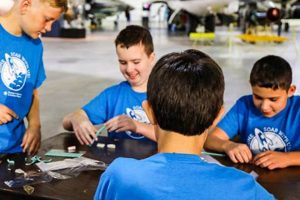
Tip 3: Engage in Hands-On Projects: Actively participate in engineering design projects, research opportunities, and student competitions. These experiences provide invaluable practical skills, enhance teamwork abilities, and demonstrate a commitment to the field.
Tip 4: Pursue Internships and Co-ops: Seek out internships or cooperative education (co-op) programs with aerospace companies or research institutions. This exposure to real-world engineering environments provides practical experience, networking opportunities, and potential pathways to future employment.
Tip 5: Cultivate a Professional Network: Attend industry conferences, join professional organizations (e.g., AIAA), and connect with practicing aerospace engineers. Networking can provide mentorship, career guidance, and access to job opportunities.
Tip 6: Specialize Strategically: Consider specializing in a specific area of aerospace engineering, such as aerodynamics, propulsion, or structural analysis. Specialization can enhance expertise and increase marketability within a competitive job market.
Tip 7: Maintain Academic Excellence: Strive for high academic performance throughout the program. A strong GPA demonstrates commitment, diligence, and a mastery of the subject matter, which can be beneficial for graduate school admissions or job applications.
These strategies can empower individuals to maximize the value of their aerospace engineering education, increasing their likelihood of success in a challenging and rewarding career.
The commitment to these practices, alongside a dedicated pursuit of knowledge, paves the way for a fulfilling and impactful career in aerospace engineering, irrespective of the specific duration of one’s educational path.
1. Undergraduate duration

The “undergraduate duration,” typically four years, represents the initial and arguably most crucial phase in determining “how many years to become aerospace engineer.” This period provides the fundamental knowledge base encompassing mathematics, physics, and core engineering principles. The successful completion of a bachelor’s degree in aerospace engineering, or a closely related field such as mechanical or electrical engineering with an aerospace focus, is generally a prerequisite for entry-level positions in the industry. For instance, companies like Boeing or SpaceX routinely require a minimum of a bachelor’s degree for roles involving design, analysis, or testing. Neglecting the importance of this foundational phase can significantly impede career progression and limit opportunities for advanced specialization. A solid undergraduate performance lays the groundwork for subsequent graduate studies and professional licensure.
The undergraduate curriculum often includes hands-on projects, laboratory experiments, and design competitions that complement theoretical knowledge. These experiences provide students with practical skills in areas such as computer-aided design (CAD), finite element analysis (FEA), and wind tunnel testing. Furthermore, many undergraduate programs offer internship or co-op opportunities with aerospace companies or research institutions, allowing students to gain real-world experience and network with industry professionals. These experiences not only enhance their technical skills but also provide valuable insights into the day-to-day realities of aerospace engineering. The duration of the undergraduate program also allows for exploration of different specializations within aerospace engineering, helping students identify their areas of interest and potential career paths.
In summary, the undergraduate duration is the cornerstone of an aerospace engineering education. It establishes the necessary theoretical foundation, provides practical skills, and offers opportunities for exploration and specialization. While advanced degrees and professional experience are undoubtedly important, the undergraduate years represent the initial investment of time and effort that sets the stage for a successful career. A strong performance during this phase is essential for minimizing the overall time required to become a qualified and competitive aerospace engineer. The value and impact of undergraduate degree ensure bright future.
2. Master's Specialization

The pursuit of a master’s degree represents a significant extension to the time required to become an aerospace engineer. A “Master’s specialization” enables focused expertise, influencing career trajectory and expanding professional opportunities, thus directly impacting “how many years to become aerospace engineer.”
- Deepened Technical Expertise
A master’s program allows for concentrated study in a specific area within aerospace engineering, such as propulsion, aerodynamics, or structural mechanics. This specialization enhances an engineer’s technical competence beyond the foundational knowledge acquired during undergraduate studies. For example, an engineer specializing in computational fluid dynamics might spend an additional two years developing advanced modeling and simulation skills, making them highly sought after in industries requiring precise aerodynamic analysis. The addition of these skills is a significant part of the additional time spent.
- Enhanced Research Capabilities
Master’s programs often involve independent research projects, providing students with valuable experience in experimental design, data analysis, and scientific reporting. An aerospace engineer pursuing a master’s degree with a research focus might spend a year or more conducting original research on topics such as advanced materials for spacecraft or novel propulsion systems. This research experience is critical for positions in research and development, and for individuals aspiring to pursue doctoral studies.
- Improved Career Prospects
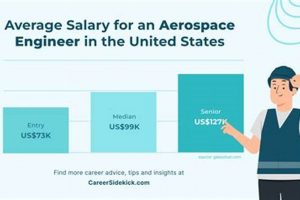
A master’s degree can significantly enhance an aerospace engineer’s career prospects, opening doors to more advanced roles and higher salaries. Employers often prioritize candidates with specialized knowledge and research experience, especially for positions involving complex problem-solving or innovative design. For instance, an engineer with a master’s degree in spacecraft engineering might be considered for a lead role in a satellite design project, while a bachelor’s degree holder might start in a more junior position.
- Professional Network Expansion
Graduate studies provide opportunities to connect with faculty members, research scientists, and fellow students, fostering a valuable professional network. These connections can lead to collaborations, mentorship opportunities, and access to job openings. Attending conferences and workshops during a master’s program further expands this network, increasing the engineer’s visibility within the aerospace community. Networking is part of an investment of time to become an aerospace engineer.
In conclusion, a “Master’s specialization” significantly extends the time commitment to becoming an aerospace engineer, typically adding two years or more. However, this investment provides deepened expertise, enhanced research capabilities, improved career prospects, and valuable networking opportunities. The additional time spent is often justified by the increased career potential and intellectual fulfillment gained through specialized graduate studies.
3. Doctoral research

Doctoral-level research represents the most extensive commitment to formal education within aerospace engineering, significantly extending the time required to attain professional expertise. The rigorous nature and focused scope of doctoral work are critical factors in determining “how many years to become aerospace engineer,” beyond the foundational undergraduate and often master’s level studies.
- Independent Investigation
Doctoral research necessitates original, independent investigation into a specific area within aerospace engineering. This commonly involves formulating research questions, designing experiments or simulations, collecting and analyzing data, and disseminating findings through publications and presentations. The timeframe for this process can span three to five years, depending on the complexity of the research topic, the availability of resources, and the progress of the candidate. For example, a doctoral candidate studying hypersonic flow may spend years developing computational models and validating them with experimental data, resulting in a substantial contribution to the field.
- Specialized Knowledge Acquisition
During doctoral research, candidates acquire highly specialized knowledge in their chosen area of focus. This entails a deep dive into existing literature, attending specialized conferences, and collaborating with experts in the field. The depth of knowledge required for doctoral research necessitates a significant investment of time, contributing to the overall duration of academic preparation. The knowledge contributes to a more complete and robust expertise.
- Contribution to the Field
The primary goal of doctoral research is to make a significant contribution to the body of knowledge in aerospace engineering. This typically involves publishing research findings in peer-reviewed journals and presenting work at international conferences. The process of writing and publishing research can be time-consuming, requiring meticulous attention to detail and adherence to academic standards. However, successful publication is a hallmark of doctoral-level work and a key indicator of a candidate’s ability to conduct independent research.
- Career Advancement Potential
While the doctoral degree adds years to the educational timeline, it often provides significantly enhanced career advancement potential. Many research-intensive positions in academia, government laboratories, and private industry require or strongly prefer candidates with doctoral degrees. The in-depth knowledge and research skills acquired during doctoral studies make graduates highly competitive for roles involving innovation, development, and technical leadership. The increased prospects make the extra time worthwhile.
Doctoral research, therefore, represents a substantial but potentially rewarding addition to the number of years required to become an aerospace engineer. The time commitment is significant, but the specialized knowledge, research skills, and career advancement opportunities associated with a doctoral degree can justify the investment for those seeking to make significant contributions to the field and advance to the highest levels of the profession.
4. Licensure requirements

Professional licensure represents a crucial milestone in an aerospace engineer’s career, impacting both responsibilities assumed and recognition garnered. The process of meeting “licensure requirements” invariably influences “how many years to become aerospace engineer” through the accumulation of practical experience and successful completion of examinations.
- Educational Credentials and Examinations
Most jurisdictions mandate a bachelor’s degree from an accredited engineering program as a prerequisite for licensure. Subsequent to graduation, candidates must pass the Fundamentals of Engineering (FE) exam, typically taken soon after graduation. This exam assesses foundational knowledge acquired during the academic program. Following a period of supervised work experience, candidates must then pass the Principles and Practice of Engineering (PE) exam, which focuses on practical application and professional judgment. These examinations directly extend the timeline associated with becoming a fully licensed aerospace engineer.
- Supervised Work Experience
A specified period of supervised work experience under a licensed professional engineer is a universal requirement. The duration varies depending on the jurisdiction but commonly ranges from four to five years. This period allows candidates to apply theoretical knowledge to real-world engineering problems, develop professional skills, and demonstrate competence in their field. This mandatory period directly prolongs the timeframe before full professional status can be achieved.
- Continuing Education
Many jurisdictions require licensed engineers to participate in continuing education activities to maintain their licensure. This ensures that engineers remain current with advancements in technology, regulations, and best practices. These activities may include attending conferences, completing courses, or participating in professional development programs. The time devoted to continuing education adds to the overall time commitment associated with maintaining professional licensure throughout an engineer’s career.
- Ethical and Professional Conduct
Licensure boards emphasize ethical and professional conduct. Applicants must demonstrate an understanding of ethical principles and a commitment to upholding the standards of the profession. Violations of ethical codes can result in disciplinary actions, including suspension or revocation of licensure. While not directly extending the initial timeframe to obtain licensure, maintaining ethical conduct requires ongoing commitment and adherence to professional standards throughout one’s career.
In summary, “licensure requirements” play a significant role in determining “how many years to become aerospace engineer.” Educational credentials, examinations, supervised work experience, and ethical standards collectively contribute to a timeline that extends beyond formal academic studies. The commitment to professional development and ethical conduct remains ongoing throughout an engineer’s career, underscoring the long-term investment required to maintain professional standing. This demonstrates commitment of professional to their career.
5. Experience accumulation

The process of “experience accumulation” is inextricably linked to determining “how many years to become aerospace engineer,” functioning as both a direct time investment and a modifier of academic timelines. Practical experience gained through internships, co-operative education programs, and entry-level positions complements theoretical knowledge acquired during formal education. This experience provides critical context, reinforces learned concepts, and develops problem-solving skills essential for effective engineering practice. For instance, an individual who completes multiple internships may demonstrate proficiency that allows for accelerated progression through early career stages, potentially reducing the overall timeframe to achieve senior engineering roles. Conversely, a lack of practical experience may necessitate a longer period in entry-level positions to develop the required competence. The more time invested in gaining expertise in aerospace engineering the higher one might move within their career.
Furthermore, “experience accumulation” often directly fulfills licensure requirements. Regulatory bodies typically mandate a specific duration of supervised engineering practice, often several years, before an engineer can qualify for professional licensure. This supervised practice provides opportunities to apply theoretical knowledge under the guidance of experienced professionals, ensuring competency and adherence to ethical standards. Examples of this can be shown when senior engineers offer their expertise to new college students to ensure they fully understand the career and field they are venturing into. The time spent in these supervised roles contributes significantly to the overall timeline for becoming a fully qualified aerospace engineer. The better the performance during the time of supervised hours, the easier it will be to complete all required tasks needed for the job.
In conclusion, “experience accumulation” is not merely an adjunct to formal education but an integral and time-consuming component of the journey to becoming an aerospace engineer. It provides practical skills, fulfills licensure requirements, and shapes career progression. A proactive approach to gaining relevant experience during academic studies and early career stages can positively influence the overall timeframe, enabling aspiring aerospace engineers to achieve their professional goals more efficiently, allowing them to have a more thorough knowledge of the particular section of aerospace engineering they’re participating in.
6. Continuing education

Continuing education plays a pivotal role in the professional development of aerospace engineers, directly impacting the total duration of their active engagement in the field. It is not merely an adjunct to initial training but a fundamental requirement for maintaining competence and adapting to technological advancements, thus influencing “how many years to become aerospace engineer” they remain effective practitioners.
- Maintaining Licensure and Certification
Many jurisdictions and professional organizations mandate ongoing professional development for licensed engineers. These requirements often include accumulating a specific number of professional development hours (PDHs) through courses, conferences, or other approved activities. Failure to meet these requirements can result in suspension or revocation of licensure, effectively shortening the period an engineer can legally practice. For instance, a structural engineer designing aircraft components must stay abreast of evolving FAA regulations and materials science, which often requires attending industry-specific seminars or completing relevant coursework. The maintenance of professional status is part of the overall time commitment.
- Adapting to Technological Advancements
Aerospace engineering is a rapidly evolving field, with constant advancements in materials, propulsion systems, avionics, and software tools. Continuing education provides engineers with opportunities to learn about these new technologies and integrate them into their work. For example, the emergence of additive manufacturing techniques for aerospace components necessitates that engineers learn about design for additive manufacturing (DfAM) principles and the properties of 3D-printed materials. The time invested in adapting to such advancements ensures engineers remain relevant and competitive throughout their careers. Engineers who do not dedicate time to learning these skills will find that they are no longer necessary in the aerospace industry.
- Specializing in Emerging Areas
Continuing education can also enable engineers to specialize in emerging areas within aerospace engineering, such as autonomous aircraft systems, space exploration technologies, or sustainable aviation. By pursuing additional training and certifications, engineers can develop expertise in these areas and position themselves for leadership roles in the industry. For example, an engineer specializing in propulsion systems might pursue additional coursework in electric propulsion to capitalize on the growing interest in electric aircraft. Continuing education allows for adaptation.
- Enhancing Leadership and Management Skills
As engineers progress in their careers, they often transition into leadership and management roles. Continuing education can provide them with the skills and knowledge necessary to effectively manage teams, lead projects, and make strategic decisions. Courses in project management, business administration, and leadership development can enhance an engineer’s ability to excel in these roles. Effective leadership allows others to focus on what they need to accomplish.
The integration of continuing education throughout an aerospace engineer’s career is not merely a matter of maintaining competence but an essential strategy for extending their active and impactful engagement in the profession. By investing in lifelong learning, aerospace engineers ensure their continued relevance, adaptability, and leadership potential, thus maximizing their contribution and extending their professional lifespan.
Frequently Asked Questions
The following questions address common inquiries regarding the time commitment and educational pathways associated with becoming a qualified aerospace engineer.
Question 1: Is a master’s degree essential to advance in aerospace engineering?
While not always strictly required for entry-level positions, a master’s degree can significantly enhance career prospects and earning potential. Advanced studies often provide specialized knowledge and research experience valued by employers.
Question 2: Can the duration of undergraduate studies be shortened?
It is possible to accelerate undergraduate studies through advanced placement credits, summer courses, or enrollment in accelerated programs. However, ensuring a comprehensive understanding of fundamental concepts is paramount.
Question 3: How long does it typically take to obtain professional licensure after graduation?
The timeframe for licensure varies by jurisdiction, but generally requires four to five years of supervised work experience under a licensed professional engineer, followed by successful completion of the Principles and Practice of Engineering (PE) exam.
Question 4: Are there alternative educational paths to becoming an aerospace engineer?
While a direct degree in aerospace engineering is most common, individuals with degrees in related fields such as mechanical or electrical engineering can pursue careers in aerospace with specialized coursework or relevant experience.
Question 5: How does the choice of specialization affect the overall time commitment?
Specializing in highly technical or research-intensive areas may necessitate pursuing advanced degrees, such as a Ph.D., thereby extending the overall time commitment to becoming a fully qualified expert in that area.
Question 6: Is continuing education a significant factor in determining long-term professional lifespan?
Absolutely. Active participation in continuing education is crucial for maintaining licensure, adapting to technological advancements, and enhancing career prospects throughout an aerospace engineer’s career.
In summary, the path to becoming an aerospace engineer involves a significant time commitment encompassing formal education, practical experience, and ongoing professional development.
Considerations regarding specific degree paths, accreditation, and opportunities for practical experience will be addressed in the subsequent section.
How Many Years to Become Aerospace Engineer
This exploration has delineated the multifaceted temporal commitment required to enter and thrive within the aerospace engineering profession. From the foundational four-year undergraduate program to the potentially extensive durations of master’s and doctoral studies, the path demands sustained dedication. Furthermore, the accumulation of practical experience for licensure and the ongoing pursuit of continuing education significantly extend the period of active engagement. Therefore, aspiring professionals must recognize that the journey to becoming a qualified and competitive aerospace engineer is a long-term investment of both time and effort.
The decision to embark on this demanding career path warrants careful consideration of personal goals and aspirations. The aerospace industry, while challenging, offers opportunities for innovation and significant contributions to society. Recognizing the time investment involved and embracing a commitment to lifelong learning are crucial for maximizing one’s impact and achieving lasting success in this dynamic field.