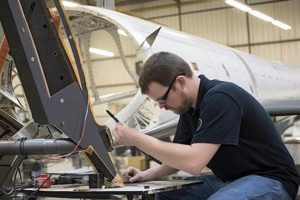
The professional existence of an individual dedicated to designing, developing, testing, and maintaining aircraft, spacecraft, and related systems constitutes a demanding yet rewarding career path. This vocation encompasses a wide array of activities, from conceptualizing new technologies to overseeing the manufacture and deployment of complex machines. For instance, an engineer in this field might spend one day designing a more efficient airplane wing and the next troubleshooting a satellite’s navigation system.
The significance of this profession lies in its contribution to advancements in air travel, space exploration, and national defense. Historically, these professionals have been at the forefront of innovation, driving progress in materials science, aerodynamics, and propulsion systems. The benefits derived from their work include safer and more efficient transportation, enhanced communication capabilities, and a deeper understanding of the universe.
The following sections will delve into the specific responsibilities, required skills, educational background, and potential career trajectories associated with this specialized engineering domain. Furthermore, it will examine the challenges and opportunities that individuals in this field commonly encounter.
Guidance for Aspiring Professionals
The following recommendations are intended to provide practical advice for individuals seeking to establish or advance a career in aerospace engineering. These insights are based on common challenges and opportunities observed within the field.
Tip 1: Cultivate a Strong Foundation in Mathematics and Physics: A rigorous understanding of fundamental principles is essential for success. Coursework in calculus, differential equations, linear algebra, and Newtonian mechanics provides a necessary framework for advanced engineering concepts.
Tip 2: Seek Out Relevant Internship Experiences: Practical application of theoretical knowledge is invaluable. Internships at aerospace companies, research institutions, or government agencies provide hands-on experience and networking opportunities.
Tip 3: Develop Proficiency in Computer-Aided Design (CAD) Software: Mastery of CAD software, such as CATIA, SolidWorks, or AutoCAD, is crucial for designing and modeling aerospace components and systems. Familiarity with simulation and analysis tools is also highly beneficial.
Tip 4: Enhance Communication and Collaboration Skills: Aerospace projects often involve multidisciplinary teams. The ability to effectively communicate technical information, collaborate with colleagues, and present findings is critical for project success.
Tip 5: Stay Abreast of Emerging Technologies: The aerospace industry is constantly evolving. Continuous learning through professional development courses, industry conferences, and scientific publications is essential for maintaining a competitive edge.
Tip 6: Consider Specialization in a Specific Area: Aerospace engineering encompasses various sub-disciplines, such as aerodynamics, propulsion, structures, and avionics. Focusing on a particular area can lead to deeper expertise and increased career opportunities.
Tip 7: Obtain Professional Certification: Earning certifications, such as the Professional Engineer (PE) license, can enhance credibility and demonstrate competence to potential employers.
These guidelines emphasize the importance of a strong academic foundation, practical experience, continuous learning, and effective communication. Adherence to these principles can significantly increase the likelihood of a successful and fulfilling career in aerospace engineering.
The subsequent sections will explore the ethical considerations and future trends that will shape the trajectory of this vital profession.
1. Innovation and Design

Innovation and design constitute fundamental pillars supporting aerospace engineering endeavors. The development of novel aircraft and spacecraft hinges on creative design solutions that address evolving needs, improve performance, and enhance safety. The professional engages in generating concepts, creating detailed blueprints, and employing advanced simulation tools to validate designs. These actions directly impact the efficiency, reliability, and cost-effectiveness of aerospace systems. For example, the transition from conventional aircraft wings to blended wing body designs represents an innovation driven by aerospace engineers seeking to improve fuel efficiency and reduce drag.
The design phase necessitates a deep understanding of aerodynamics, materials science, propulsion systems, and control theory. Engineers integrate these disciplines to optimize designs for specific mission requirements. This process includes iterative testing and refinement using computational fluid dynamics (CFD) and wind tunnel experiments. Furthermore, innovation often involves the adoption of new materials, such as carbon fiber composites and advanced alloys, which enable lighter and stronger structures. The design considerations extend to manufacturing processes, ensuring that designs are not only functional but also feasible to produce within budgetary constraints.
In summary, innovation and design are inseparable from the profession. They propel advancements in aerospace technology, drive improvements in aircraft and spacecraft capabilities, and contribute to safer and more efficient air travel and space exploration. A commitment to creative problem-solving and a strong foundation in engineering principles are essential for engineers seeking to make meaningful contributions to the field.
2. Problem Solving Skills

The successful navigation of a career in aerospace engineering hinges critically on the adept application of problem-solving skills. This ability permeates every aspect of the professional’s duties, from the initial design phase to the ongoing maintenance and troubleshooting of complex systems.
- Root Cause Analysis
Aerospace engineers must systematically identify the underlying causes of system failures or performance deviations. This often involves analyzing vast datasets, conducting rigorous testing, and employing logical deduction. For example, determining the source of an unexpected vibration in an aircraft wing requires meticulously examining flight data, structural integrity, and aerodynamic factors. The ability to pinpoint the root cause is essential for implementing effective corrective actions and preventing future occurrences.
- Design Optimization
Optimizing designs for performance, efficiency, and reliability represents a constant challenge. This involves evaluating trade-offs between competing objectives, such as minimizing weight while maximizing strength, or reducing fuel consumption without compromising flight range. Engineers utilize mathematical modeling, simulation tools, and iterative design processes to find optimal solutions that meet stringent performance requirements. Consider the design of a rocket nozzle, where engineers must optimize the nozzle geometry to maximize thrust while minimizing erosion and thermal stress.
- Risk Assessment and Mitigation
Aerospace systems operate in demanding environments where failures can have catastrophic consequences. Engineers must proactively identify and assess potential risks, such as component failures, environmental hazards, or human error. They then develop mitigation strategies to minimize the likelihood and impact of these risks. For example, designing redundancy into critical systems, implementing rigorous testing procedures, and developing emergency response plans are essential for ensuring the safety and reliability of aerospace operations.
- System Integration
Aerospace systems are complex assemblies of interconnected components, each with its own unique characteristics and limitations. Integrating these components into a cohesive and functional system requires careful planning, coordination, and problem-solving. Engineers must address compatibility issues, manage interfaces, and ensure that all components work together seamlessly to achieve overall system objectives. Consider the integration of avionics systems in an aircraft, where engineers must ensure that sensors, computers, displays, and control surfaces communicate effectively and reliably.
These distinct facets of problem-solving skills coalesce to define the capabilities of an aerospace engineer. The capacity to analyze complex problems, devise innovative solutions, assess risks, and integrate disparate systems directly impacts the safety, performance, and reliability of aerospace technologies. Proficiency in these skills is not merely desirable but essential for a successful and impactful career within this demanding and critical field.
3. Advanced Technical Knowledge

A robust understanding of sophisticated scientific and engineering principles forms the bedrock of the professional existence in the aerospace domain. This knowledge base transcends fundamental concepts, encompassing specialized expertise in diverse areas critical to the design, development, and maintenance of aircraft and spacecraft.
- Aerodynamics and Fluid Mechanics
Aerodynamics, the study of air and other fluids in motion, is fundamental to understanding how aircraft generate lift, experience drag, and maintain stability. Engineers apply computational fluid dynamics (CFD) and wind tunnel testing to analyze airflow patterns around aircraft, optimizing designs for performance and fuel efficiency. An example would be understanding the complex flow phenomena associated with transonic flight, requiring nuanced application of the Navier-Stokes equations and turbulence modeling.
- Propulsion Systems
The design and analysis of propulsion systems, including jet engines, rocket engines, and electric propulsion, demands in-depth knowledge of thermodynamics, combustion, and fluid dynamics. The engineer evaluates engine performance characteristics, such as thrust, specific fuel consumption, and exhaust emissions, while considering factors like weight, cost, and reliability. Expertise in areas like turbomachinery design, nozzle aerodynamics, and propellant chemistry is critical.
- Materials Science and Structural Analysis
The selection and application of materials in aerospace structures require a comprehensive understanding of material properties, such as strength, stiffness, fatigue resistance, and corrosion resistance. Structural analysis techniques, including finite element analysis (FEA), are used to predict the behavior of structures under various loads and environmental conditions. Examples include designing lightweight composite structures for aircraft wings or analyzing the stress distribution in a rocket engine combustion chamber.
- Control Systems and Avionics
The development of advanced control systems and avionics relies on expertise in control theory, signal processing, and embedded systems. These systems are responsible for controlling aircraft flight, navigation, and communication. This involves designing stable and responsive control algorithms, integrating sensors and actuators, and ensuring the reliability and safety of the avionics suite. An understanding of Kalman filtering, adaptive control, and fault-tolerant system design is often essential.
Possessing this level of proficiency is not merely advantageous but indispensable for the modern aerospace professional. It enables innovation, facilitates effective problem-solving, and ensures the safety and reliability of complex aerospace systems. Continuous learning and staying abreast of technological advancements are therefore paramount for maintaining competence and driving progress in this dynamic field.
4. Safety and Reliability

Within the professional scope, ensuring safety and reliability constitutes a paramount responsibility. The design, development, and operation of aerospace systems inherently involve potential hazards, necessitating a rigorous focus on minimizing risks and ensuring dependable performance.
- Redundancy and Fault Tolerance
Aerospace engineers implement redundant systems to mitigate the impact of component failures. Critical systems, such as flight control and navigation, often incorporate multiple backup components that automatically take over in the event of a primary system malfunction. This approach enhances system reliability and reduces the likelihood of catastrophic failures. An example is the use of triple-redundant flight control computers in commercial aircraft, ensuring continued operation even if one or two computers fail.
- Rigorous Testing and Validation
Before deployment, aerospace systems undergo extensive testing and validation to verify their performance and safety characteristics. This includes laboratory testing, simulated flight testing, and real-world flight testing. Engineers analyze test data to identify potential weaknesses and ensure that systems meet stringent performance requirements. Examples include wind tunnel testing to validate aerodynamic designs and fatigue testing to assess the structural integrity of aircraft components.
- Safety-Critical Software Development
Modern aerospace systems rely heavily on software to control critical functions. The development of safety-critical software requires adherence to strict coding standards, rigorous testing procedures, and formal verification methods. Engineers employ techniques such as static analysis, code reviews, and model checking to identify potential errors and ensure that software operates reliably and predictably. An example is the use of formal methods to verify the correctness of flight control software in unmanned aerial vehicles.
- Human Factors Engineering
Aerospace engineers consider human factors to design systems that are safe and easy for pilots and operators to use. This involves understanding human capabilities and limitations and designing interfaces that minimize the risk of human error. Examples include designing ergonomic cockpit layouts, developing intuitive control interfaces, and providing clear and concise information to pilots. This field of study analyzes the intersection of human interaction with a product.
These multifaceted approaches directly impact the professional responsibilities of the aerospace engineer. The commitment to safety and reliability is not merely an ethical obligation but a fundamental aspect of the profession, shaping design decisions, development processes, and operational procedures. Constant vigilance and continuous improvement are essential for maintaining the highest standards of safety and ensuring the dependable operation of aerospace systems.
5. Project Management Expertise

Project management expertise constitutes an indispensable element within the professional life of an aerospace engineer. The correlation stems from the complex, multi-faceted nature of aerospace projects, often involving large teams, extensive budgets, stringent deadlines, and demanding technical requirements. The absence of proficient project management skills can result in cost overruns, schedule delays, compromised quality, and potential safety risks. Consequently, the ability to effectively plan, organize, execute, monitor, and control projects becomes crucial for aerospace engineers seeking to achieve successful outcomes. Consider the development of a new satellite, a project involving numerous subsystems (communication, propulsion, power, etc.) and diverse engineering disciplines. Effective project management ensures seamless integration, timely completion, and adherence to budgetary constraints.
The practical application of project management principles manifests in various forms throughout the engineer’s professional duties. It encompasses defining project scope, establishing realistic timelines, allocating resources efficiently, managing risks proactively, and maintaining clear communication channels among team members. Furthermore, proficiency in project management methodologies, such as Agile or Waterfall, enables engineers to adapt to changing requirements and overcome unforeseen challenges. The development of a new aircraft, for instance, requires careful coordination between design, manufacturing, testing, and certification teams. Project management expertise ensures that each phase of the development process progresses smoothly and that all stakeholders remain aligned towards a common goal.
In summary, project management expertise is intrinsically linked to the success and professional effectiveness of an aerospace engineer. It provides the framework for managing complex projects, mitigating risks, and delivering high-quality results within budget and on schedule. The acquisition and cultivation of project management skills are therefore essential for engineers seeking to excel in this demanding yet rewarding field, where large-scale project execution is always required. Mastering this aspect contributes significantly to the career trajectory and professional impact.
6. Continuous Learning Imperative

The aerospace engineering field is characterized by rapid technological advancements and evolving industry standards. Therefore, a commitment to continuous learning is not merely beneficial, but a necessity for professionals to remain effective and competitive. This imperative arises from several factors, including the constant emergence of new materials, the evolution of digital design tools, and the ever-increasing complexity of aerospace systems. Engineers who fail to engage in ongoing education risk becoming obsolete, limiting their career progression, and potentially compromising the safety and efficiency of their work. The implementation of additive manufacturing (3D printing) in aerospace component production is a clear example. Engineers who understand this technology are better positioned to design innovative parts, optimize manufacturing processes, and contribute to cost reduction efforts.
The practical significance of understanding the continuous learning imperative extends beyond individual career advancement. It directly influences the overall competitiveness and innovation capacity of the aerospace industry. Companies that foster a culture of learning and development are more likely to attract and retain top talent, adapt to changing market demands, and develop groundbreaking technologies. Aerospace engineers may pursue continuous learning through various avenues, including formal coursework, industry conferences, professional certifications, and self-directed study. Engaging in research, publishing technical papers, and participating in professional organizations are additional mechanisms for staying abreast of the latest developments and contributing to the collective knowledge base of the field. Consider the example of system safety. Regulations governing aircraft maintenance are updated frequently to align with risk analysis results. Aerospace engineers must stay proficient in this space to keep up with legal requirements.
In conclusion, the continuous learning imperative is inextricably linked to the trajectory and impact of the aerospace engineer. It is not merely a recommended practice, but a fundamental requirement for maintaining competence, fostering innovation, and ensuring the safety and reliability of aerospace systems. While the rapid pace of technological change presents challenges, it also offers opportunities for engineers to expand their knowledge, develop new skills, and contribute to the advancement of the aerospace field. Failing to adapt to continuous learning will not only stunt professional growth, but hinder the positive impacts a qualified engineer may bring to an ever changing industry.
Frequently Asked Questions
The following section addresses common inquiries and misconceptions regarding the realities and demands of a career in aerospace engineering. The information provided aims to offer clarity and guidance to prospective and current professionals in the field.
Question 1: What are the typical working hours for an aerospace engineer?
Work schedules vary depending on the specific role, project phase, and employer. Standard workweeks of 40 hours are common. However, periods of increased workload, such as during critical design reviews or testing phases, may necessitate extended hours. Certain positions, particularly those involving on-site testing or launch support, may require shift work or on-call availability.
Question 2: What is the level of mathematical proficiency required?
A strong foundation in mathematics is indispensable. A solid understanding of calculus, differential equations, linear algebra, and statistics is essential for analyzing complex engineering problems and developing accurate models. Proficiency in numerical methods and mathematical software tools is also highly beneficial.
Question 3: How important is hands-on experience?
Practical experience gained through internships, co-op programs, or research projects is highly valued by employers. Hands-on experience allows engineers to apply theoretical knowledge to real-world problems, develop practical skills, and gain valuable insights into the engineering design process.
Question 4: What are the most in-demand skills in the current aerospace industry?
Currently, in-demand skills include proficiency in computer-aided design (CAD) software, expertise in simulation and modeling techniques, knowledge of advanced materials, and experience with data analysis and machine learning. Furthermore, strong communication, teamwork, and problem-solving skills are highly sought after.
Question 5: Is a graduate degree necessary for career advancement?
While a bachelor’s degree provides a solid foundation, a graduate degree, such as a Master’s or Ph.D., can significantly enhance career prospects, particularly for positions involving research, development, or advanced design. A graduate degree allows for specialization in a specific area of aerospace engineering and demonstrates a commitment to advanced knowledge.
Question 6: What are the primary challenges faced by professionals?
Challenges include keeping pace with rapid technological advancements, managing complex projects within budget and schedule constraints, ensuring the safety and reliability of aerospace systems, and navigating regulatory requirements. Additionally, maintaining a work-life balance can be challenging due to demanding work schedules and project deadlines.
The realities of this profession frequently demand prolonged periods dedicated to problem resolution, data refinement, and innovative solution development. The preceding questions and answers seek to demystify aspects of this complex career and offer a pragmatic overview.
Subsequent discussions will address ethical considerations impacting the role and future trajectories within the industry.
Life of Aerospace Engineer
This examination has traversed the core tenets of the aerospace engineering profession, elucidating the confluence of innovation, technical mastery, problem-solving acumen, and unwavering commitment to safety. The multifaceted nature of this field demands continuous learning, project management prowess, and the capacity to navigate complex ethical considerations.
The enduring significance of the aerospace engineer’s work lies in its contribution to the advancement of air and space travel, national defense, and scientific discovery. As technology continues to evolve, the responsibilities of this profession will undoubtedly expand, requiring future generations to embrace adaptability, embrace innovation, and uphold the highest standards of ethical conduct, ensuring a continued positive impact on society and the exploration of the universe.

![Top Aerospace Engineering Courses in USA [Ranked] | Innovating the Future of Flight with Reliable Aviation Solutions](https://mixaerospace.com/wp-content/uploads/2026/05/th-330-300x200.jpg "Top Aerospace Engineering Courses in USA [Ranked] Innovating the Future of Flight with Reliable Aviation Solutions")