The acquisition of aerospace engineering knowledge through remote, internet-based learning platforms represents a significant shift in educational accessibility. This approach to advanced technical instruction utilizes digital resources, virtual labs, and interactive simulations to deliver curriculum typically associated with on-campus programs. For example, students can access lectures, complete assignments, and collaborate on projects from diverse geographical locations.
Accessibility to this specialized field broadens significantly, removing geographical barriers and accommodating diverse learning needs. Historically, rigorous aerospace engineering programs were confined to institutions with specific facilities and resources, limiting access. The advent of internet-based instruction allows individuals with varying schedules and commitments to pursue education, and potentially contributes to a more diverse and geographically distributed talent pool within the aerospace sector. This mode also can reduce the costs associated with traditional residency requirements, such as housing and transportation.
The following sections will delve into the specifics of curriculum design, technological tools employed, accreditation standards, and career pathways available to graduates of these programs. Careful consideration will be given to the quality control measures in place to ensure comparable learning outcomes to traditional on-campus programs and how the format addresses the hands-on nature of aerospace engineering practice.
Guidance for Pursuing Instruction in Aerospace Engineering via Remote Platforms
Careful consideration is paramount for individuals contemplating the study of aerospace engineering through online platforms. The subsequent guidance serves to illuminate key factors that can significantly impact the effectiveness and success of this educational endeavor.
Tip 1: Evaluate Program Accreditation: Scrutinize whether the institution offering the curriculum possesses appropriate accreditation from recognized bodies such as ABET (Accreditation Board for Engineering and Technology). Accreditation ensures adherence to established standards of academic rigor and industry relevance, validating the quality of the educational experience.
Tip 2: Assess Curricular Breadth and Depth: Analyze the program’s curriculum to ascertain its comprehensive coverage of core aerospace engineering principles. This includes aerodynamics, propulsion, structures, control systems, and aerospace materials. Ensure that the curriculum integrates theoretical knowledge with practical applications and simulation exercises.
Tip 3: Examine Faculty Credentials and Experience: Research the qualifications and professional experience of the instructors delivering the course material. Ideally, faculty should possess advanced degrees in aerospace engineering or related fields and have relevant industry experience to provide practical insights and guidance.
Tip 4: Investigate Technological Infrastructure: Assess the technological infrastructure supporting the program, including the availability of virtual laboratories, simulation software, high-performance computing resources, and robust communication platforms for interaction with faculty and peers. The adequacy of these resources directly impacts the student’s ability to engage with complex engineering concepts.
Tip 5: Clarify Hands-On Experience Opportunities: Understand the methods employed to deliver hands-on experience typically associated with traditional aerospace engineering programs. This may include remote access to laboratory equipment, virtual simulations of flight dynamics and structural analysis, or capstone projects involving real-world engineering challenges.
Tip 6: Ascertain Student Support Services: Investigate the availability of comprehensive student support services, including academic advising, technical assistance, career counseling, and access to online libraries and research databases. These resources are crucial for academic success and career development.
Tip 7: Review Alumni Outcomes and Placement Rates: Analyze the career trajectories of graduates from the program, focusing on their success in securing employment in aerospace engineering roles. Evaluate the placement rates and the types of companies that employ graduates to gauge the program’s effectiveness in preparing students for the workforce.
Adherence to these guidelines can significantly enhance the potential for a successful and rewarding experience. Thorough evaluation of the academic rigor, faculty expertise, and technological resources will ensure students receive the knowledge and skills necessary to excel in the aerospace engineering field.
The following sections will build upon this foundational understanding, exploring specific challenges and opportunities associated with this educational pathway in greater detail.
1. Curriculum Rigor

Curriculum rigor is a cornerstone of effective aerospace engineering education, especially within online environments. The aerospace field demands a high degree of technical proficiency and a comprehensive understanding of complex engineering principles. Consequently, the online delivery of this material requires careful attention to ensure that the depth and breadth of the curriculum meet the stringent requirements of the profession. Insufficient rigor directly affects graduates’ preparedness for real-world engineering challenges. For example, a curriculum that skims over advanced topics in computational fluid dynamics or structural analysis leaves graduates ill-equipped to perform tasks routinely encountered in the aerospace industry. These programs can cause long term problems for the students.
The integration of advanced simulation software, virtual labs, and interactive problem-solving exercises is essential for maintaining curriculum rigor. These tools enable students to apply theoretical knowledge in practical contexts, simulating the experience of working with real-world engineering problems. For instance, students might use finite element analysis software to model the structural behavior of an aircraft wing under various loads, or they might simulate the performance of a rocket engine using computational fluid dynamics tools. Active learning and collaboration also strengthen curriculum rigor, enabling students to learn from their peers.
In conclusion, curriculum rigor is not merely an optional attribute but a necessary condition for a successful educational program. The absence of rigor reduces the value of the degree earned, hindering career prospects and potentially compromising safety in the field. Continuous assessment, feedback mechanisms, and curriculum updates are crucial to ensure continued effectiveness. Institutions should therefore prioritize the design and maintenance of programs that not only meet industry standards but also foster a deep understanding of aerospace engineering principles.
2. Virtual Laboratories

The integration of virtual laboratories within the framework of aerospace engineering represents a critical adaptation to the constraints of remote instruction. The physical sciences and engineering disciplines traditionally rely on hands-on experimentation to reinforce theoretical concepts and develop practical skills. In the absence of physical laboratory access, virtual environments provide a digital surrogate, simulating experiments and allowing students to manipulate parameters and observe results in a controlled setting. For example, students enrolled in an online aerospace structures course might utilize virtual testing platforms to analyze the stress distribution within a simulated aircraft wing under various load conditions. This interaction provides a tangible link between theoretical equations and observable phenomena, strengthening comprehension and retention.
The practical significance of well-designed virtual laboratories extends beyond mere simulation. They offer the opportunity to conduct experiments that might be impractical or prohibitively expensive in a traditional setting. Students can simulate high-speed wind tunnel tests, analyze the performance of various rocket nozzle designs, or investigate the dynamics of satellite orbits without the resource constraints of a physical laboratory. Furthermore, these environments often provide enhanced data acquisition and visualization tools, allowing students to analyze results with greater precision and extract insights more efficiently. Consider the application of computational fluid dynamics (CFD) simulations to aerodynamic design; students can modify airfoil shapes, adjust flow parameters, and observe the resulting changes in lift and drag forces, fostering a deeper understanding of aerodynamic principles.
However, the effectiveness of virtual laboratories hinges on their fidelity to real-world conditions and the degree to which they replicate the cognitive and psychomotor skills developed in physical experimentation. The challenge lies in creating simulations that accurately capture the complexities of aerospace systems while providing a user-friendly and engaging learning experience. Future development in this area should focus on incorporating more realistic physics engines, integrating haptic feedback devices to simulate tactile interactions, and developing assessment methods that measure not only conceptual understanding but also the ability to apply knowledge in practical problem-solving scenarios. The continued refinement and expansion of virtual laboratories are essential for ensuring that these programs can provide a truly comprehensive and rigorous educational experience, effectively preparing graduates for the challenges of the aerospace engineering profession.
3. Faculty Expertise

The caliber of faculty represents a critical determinant of program quality, particularly within the domain of online aerospace engineering. The effective transmission of complex theoretical knowledge and practical skills hinges upon the expertise, experience, and pedagogical capabilities of the instructors.
- Subject Matter Mastery
Faculty must possess an in-depth understanding of core aerospace engineering disciplines, including aerodynamics, propulsion, structures, control systems, and materials science. This mastery is evidenced by advanced degrees from reputable institutions, substantial research contributions, and practical experience in the aerospace industry. Instructors must be able to articulate complex concepts clearly, address nuanced questions from students, and connect theoretical principles to real-world applications. The absence of subject matter mastery diminishes the learning experience and reduces the value of the educational program.
- Pedagogical Proficiency
Expertise in a subject area alone does not guarantee effective teaching. Faculty must also possess pedagogical proficiency, encompassing the ability to design engaging online learning modules, facilitate interactive discussions, and provide constructive feedback on student work. This necessitates familiarity with online learning platforms, multimedia tools, and assessment strategies tailored for remote instruction. Faculty who demonstrate pedagogical proficiency can create a supportive and stimulating learning environment, fostering student engagement and promoting academic success. Without it, the student is not engaged, and their understanding will be subpar.
- Industry Experience and Connections
Practical experience in the aerospace industry provides faculty with invaluable insights into current engineering practices, emerging technologies, and career pathways. Faculty with industry connections can offer students opportunities for internships, research collaborations, and networking, enhancing their career prospects. Furthermore, industry-experienced faculty can integrate real-world case studies and design projects into the curriculum, providing students with a more relevant and engaging learning experience. These industry experts are the backbone of the connection that students have with the real world.
- Commitment to Student Success
Faculty should demonstrate a genuine commitment to student success, providing individualized support, guidance, and mentorship. This includes being readily accessible to students, responding promptly to inquiries, and offering constructive feedback on assignments and projects. A supportive and nurturing learning environment fosters student confidence, promotes academic achievement, and encourages lifelong learning. When students see the faculty’s effort, they reciprocate and produce higher quality work.
The synthesis of these facets underscores the indispensable role of faculty expertise in the efficacy of programs. A program lacking faculty with the described qualities cannot adequately prepare graduates for the challenges and opportunities within the aerospace engineering field. Prospective students should meticulously evaluate the credentials and experience of faculty before committing to an online aerospace engineering program, thereby safeguarding their investment in education and future career prospects.
4. Accreditation Standards
Accreditation standards serve as a crucial quality assurance mechanism within the realm of aerospace engineering education, particularly as instruction increasingly migrates to platforms. These standards, established by recognized accrediting bodies, ensure that programs meet specific criteria related to curriculum content, faculty qualifications, facilities, and student outcomes. Their rigorous application provides a measure of confidence to prospective students, employers, and the public regarding the quality and validity of these programs.
- Curriculum Content Alignment
Accreditation mandates that program curricula align with industry-recognized standards and cover the essential knowledge and skills required for aerospace engineers. This includes foundational topics such as aerodynamics, propulsion, structures, control systems, and aerospace materials. Curricular review processes evaluate course content, learning objectives, and assessment methods to ensure they meet the prescribed standards. Online programs must demonstrate that their curricula are equivalent in rigor and breadth to those offered in traditional on-campus settings. The design of such curricula is important in delivering the same information to students.
- Faculty Qualification Requirements
Accreditation standards dictate that faculty members possess the necessary academic qualifications and professional experience to deliver high-quality instruction. This typically involves holding advanced degrees in aerospace engineering or a closely related field, as well as demonstrating expertise through research publications, industry experience, or professional certifications. Online programs must ensure that their faculty members are not only subject matter experts but also proficient in online teaching methodologies, employing effective strategies to engage students and facilitate learning in a virtual environment. The importance of the faculty and their capabilities are imperative in these programs.
- Assessment and Evaluation Processes
Accreditation emphasizes the importance of rigorous assessment and evaluation processes to measure student learning and program effectiveness. Programs must employ a variety of assessment methods, including exams, projects, simulations, and design assignments, to evaluate students’ mastery of core concepts and their ability to apply these concepts to solve engineering problems. Furthermore, programs must collect and analyze data on student outcomes, such as graduation rates, employment rates, and performance on professional licensure exams, to continuously improve the quality of their educational offerings. Online programs must demonstrate that their assessment methods are reliable, valid, and equitable, ensuring that students are held to the same standards as those in traditional programs. These assessments are important in keeping the program accountable and on track.
- Continuous Improvement Mechanisms
Accreditation promotes a culture of continuous improvement, requiring programs to regularly review their mission, goals, and objectives and to implement changes based on data and feedback from stakeholders. This involves conducting periodic self-studies, soliciting input from students, faculty, alumni, and employers, and identifying areas for improvement in curriculum, instruction, facilities, and student support services. Online programs must demonstrate a commitment to ongoing evaluation and improvement, adapting to the evolving needs of the aerospace industry and the changing landscape of higher education. This ensures that the students will always be learning what is relevant in their industries.
In conclusion, accreditation standards play a vital role in ensuring the quality and credibility of aerospace engineering programs, particularly those delivered through methods. By adhering to these standards, institutions demonstrate a commitment to providing students with a rigorous, relevant, and effective educational experience, preparing them for successful careers in the aerospace industry and contributing to the advancement of engineering knowledge and practice. Moreover, prospective students should prioritize enrollment in programs accredited by recognized bodies to safeguard their investment in education and enhance their career prospects.
5. Career Placement

Career placement represents a critical metric for evaluating the efficacy of programs in aerospace engineering. It reflects the alignment between the skills and knowledge acquired through the curriculum and the demands of the aerospace industry, particularly within the context of online learning environments. Assessing graduate employment rates and the types of positions secured provides insight into the program’s ability to prepare students for successful careers.
- Industry Recognition and Employer Perception
Employer perception of degrees obtained through online programs significantly impacts career placement. The reputation and accreditation of the institution offering the program play a crucial role. Employers may scrutinize whether the curriculum provides sufficient hands-on experience and practical skills development, often valuing graduates from programs with robust simulation and virtual lab components. For example, companies involved in aircraft design or propulsion systems may prioritize candidates with demonstrable experience using industry-standard software gained through simulations in their program. This perception affects hiring decisions and career trajectory.
- Skills Alignment with Industry Needs
The relevance of the curriculum to the current needs of the aerospace industry is paramount for facilitating career placement. Graduates must possess skills in areas such as computational fluid dynamics, finite element analysis, advanced materials, and autonomous systems. Programs must adapt their curriculum to reflect emerging technologies and industry trends. For example, with the increasing focus on sustainable aviation, graduates with expertise in alternative fuels and electric propulsion systems are in high demand. The ability of a program to incorporate these skills directly influences the competitiveness of its graduates in the job market.
- Networking Opportunities and Industry Connections
Opportunities for students to network with industry professionals are essential for career advancement. Online programs can facilitate networking through virtual career fairs, guest lectures by industry experts, and online mentorship programs. Some programs may also offer opportunities for students to participate in industry-sponsored projects or internships. For instance, collaborations with aerospace companies can provide students with valuable real-world experience and establish connections that can lead to full-time employment after graduation. A strong network is imperative for future success in this field.
- Career Services and Professional Development
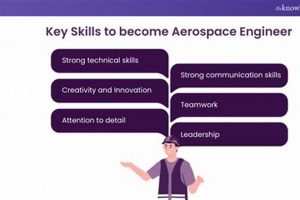
The availability of comprehensive career services significantly enhances career placement outcomes. These services may include resume and cover letter writing workshops, mock interviews, career counseling, and job search assistance. Programs can also provide professional development opportunities, such as workshops on communication skills, leadership training, and project management. For example, helping students develop strong presentation skills and the ability to effectively communicate technical information is critical for success in aerospace engineering roles. Career services provide the tools for students to be successful in their job hunt.
The integration of these facets underscores the importance of holistic program design in enhancing career placement for graduates. The program’s ability to impart job-relevant skills is crucial in landing a job. These elements must be deliberately woven into curriculum and extra curricular activities to help aerospace engineering students make the most out of their career. For the long term benefit of the industry and the graduate, these programs must have a plan.
Frequently Asked Questions Regarding Online Aerospace Engineering Programs
The following section addresses common inquiries and concerns pertaining to the pursuit of aerospace engineering degrees via online platforms. The information provided aims to clarify misconceptions and offer guidance to prospective students.
Question 1: Are degrees from programs as credible as those from traditional on-campus programs?
The credibility of a degree from an institution hinges upon its accreditation status, not the delivery method. Degrees conferred by accredited institutions offering curricula are equivalent in academic rigor and industry recognition to those earned through traditional on-campus study. Therefore, the focus should be on verifying the accreditation of the program rather than dismissing it based solely on its mode of delivery.
Question 2: Can practical skills be adequately developed without access to physical laboratories?
While physical laboratories provide invaluable hands-on experience, programs compensate through the integration of advanced simulation software, virtual laboratories, and remote access to experimental equipment. These digital resources enable students to conduct experiments, analyze data, and apply theoretical knowledge in a simulated environment, thereby developing practical skills relevant to the aerospace field.
Question 3: What level of interaction is available with faculty and fellow students?
Programs leverage communication tools such as video conferencing, discussion forums, and virtual office hours to facilitate interaction between students and faculty. These platforms enable students to ask questions, participate in discussions, and collaborate on projects. The effectiveness of interaction depends on the student’s proactive engagement and the faculty’s commitment to fostering a supportive learning environment.
Question 4: Are employers less likely to hire graduates from programs?
Employer perceptions of programs are evolving. As acceptance of online learning grows, employers are increasingly focused on the skills and knowledge possessed by candidates, rather than the mode of instruction. Graduates who demonstrate a strong academic record, relevant experience, and professional skills are competitive in the job market, regardless of whether they earned their degree online or on-campus.
Question 5: How is the quality of instruction maintained?
Quality control measures in programs include rigorous faculty selection processes, curriculum review procedures, and student feedback mechanisms. Institutions also utilize learning management systems to monitor student progress, assess learning outcomes, and identify areas for improvement. These measures ensure that the quality of instruction meets the standards of the institution and the requirements of the aerospace engineering profession.
Question 6: What technical requirements are necessary to participate in an program?
Participation typically requires a computer with sufficient processing power, a reliable internet connection, and access to necessary software, such as CAD programs, simulation tools, and collaboration platforms. Specific technical requirements vary depending on the program and institution. Prospective students should consult the program’s technical specifications to ensure they have the necessary hardware and software before enrolling.
In summary, aerospace engineering programs offer a viable pathway to acquiring the knowledge and skills necessary for a career in the aerospace industry. However, it is crucial to carefully evaluate program accreditation, curriculum rigor, faculty expertise, and student support services to ensure a high-quality educational experience.
The subsequent sections will delve deeper into specific challenges and opportunities associated with pursuing an aerospace engineering education online.
Conclusion
The preceding analysis has elucidated the multifaceted nature of aerospace engineering instruction delivered via methods. Key aspects examined include curriculum rigor, virtual laboratories, faculty expertise, accreditation standards, and career placement. Each element contributes significantly to the overall quality and efficacy of these programs, influencing their ability to adequately prepare graduates for the demands of the aerospace sector. Further investigation into specific pedagogical techniques and technological advancements within the context of methods is warranted to optimize learning outcomes.
Ultimately, the proliferation of these methods presents both opportunities and challenges for the aerospace engineering profession. Continuous evaluation and refinement of program standards are essential to ensure that graduates possess the requisite knowledge, skills, and ethical grounding to contribute meaningfully to the field. Prospective students are encouraged to exercise due diligence in evaluating program accreditation and outcomes, thereby maximizing their investment in this evolving educational landscape. The future trajectory of aerospace engineering education hinges upon the collective commitment of institutions, faculty, and students to uphold standards of excellence and innovation.