The attributes, skills, knowledge, and credentials considered essential for individuals seeking a career focused on the design, development, testing, and production of aircraft, spacecraft, and related systems define the necessary preparation. This encompasses a robust academic foundation, practical experience, and specific competencies critical for success in this demanding field. For example, a strong aptitude for mathematics and physics is a fundamental element of the required skillset.
Possessing these attributes is paramount for ensuring innovation, safety, and efficiency in the aerospace industry. Historically, the field has demanded a rigorous educational background coupled with hands-on experience. The development of cutting-edge technologies and the increasing complexity of aerospace systems make these requirements increasingly important for addressing the challenges of modern aerospace engineering.
The following sections will delve into the specifics of the educational background, required technical skills, necessary personal attributes, and available professional certifications that contribute to a successful career in the field. Exploration of these components will provide a comprehensive understanding of the path to becoming a successful professional in this area.
Guidance for Aspiring Professionals
The following points offer valuable direction for those individuals pursuing a career path focused on aircraft and spacecraft engineering, highlighting key areas for development and focus.
Tip 1: Emphasize a Strong Foundation in STEM: A solid understanding of mathematics, physics, and computer science is crucial. Dedicate time to mastering these subjects, as they form the bedrock of engineering principles.
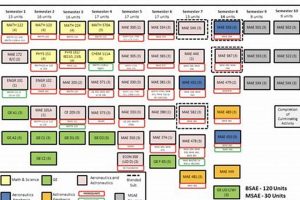
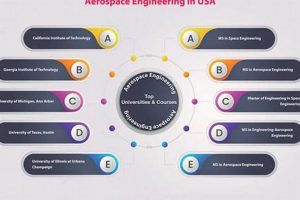
Tip 2: Pursue a Relevant Academic Degree: A bachelor’s or master’s degree in aerospace engineering, mechanical engineering, or a closely related field is generally required. Select a program with a strong curriculum and research opportunities.
Tip 3: Seek Internship Opportunities: Practical experience gained through internships is invaluable. Actively seek out internships at aerospace companies, research institutions, or government agencies to gain hands-on experience.
Tip 4: Develop Strong Analytical and Problem-Solving Skills: Aerospace engineering involves complex problem-solving. Cultivate these abilities through coursework, projects, and extracurricular activities such as robotics clubs or engineering competitions.
Tip 5: Enhance Computer-Aided Design (CAD) and Simulation Skills: Proficiency in CAD software and simulation tools is essential for designing and analyzing aerospace systems. Become familiar with industry-standard software packages like CATIA, ANSYS, or MATLAB.
Tip 6: Cultivate Strong Communication Skills: Effectively communicating technical information is vital. Practice writing technical reports, presenting project findings, and collaborating with team members.
Tip 7: Stay Current with Industry Trends: The aerospace industry is constantly evolving. Remain updated on the latest technologies, regulations, and advancements by reading industry publications, attending conferences, and joining professional organizations.
These suggestions underscore the importance of a blend of academic rigor, practical experience, and continuous learning to achieving competency within this engineering specialization.
The subsequent section will provide concluding remarks regarding the field, along with valuable insights for continued professional growth.
1. STEM proficiency

Science, Technology, Engineering, and Mathematics (STEM) proficiency constitutes a foundational element for individuals aspiring to contribute to the design, development, and maintenance of aircraft and spacecraft. A robust understanding of these disciplines provides the cognitive framework necessary to comprehend and apply complex engineering principles. The design of an aircraft wing, for example, demands a strong grasp of fluid dynamics (science), materials science (technology), structural analysis (engineering), and calculus (mathematics) to ensure aerodynamic efficiency and structural integrity. Without a solid foundation in these areas, an aspiring engineer would be unable to effectively contribute to the design process.
Consider the development of a satellite propulsion system. Such a system necessitates an understanding of thermodynamics, orbital mechanics, control systems, and materials engineering. The ability to model and simulate system performance, optimize fuel consumption, and ensure reliable operation in the harsh conditions of space depends directly on the application of mathematical and scientific principles. Furthermore, the advancement of aerospace technology often requires innovative solutions that arise from a deep understanding of underlying scientific and mathematical concepts. Failure to adequately grasp these concepts can lead to design flaws, performance limitations, or even catastrophic failures during operation.
In summary, STEM proficiency serves as a critical gateway to the aerospace field. It is not merely a desirable attribute but a fundamental prerequisite for successful engagement in the design, analysis, and implementation of aerospace systems. Its importance underscores the need for rigorous STEM education and continuous learning throughout an engineer’s career. The challenges associated with mastering these disciplines highlight the dedication and intellectual rigor required to excel in the aerospace sector.
2. Engineering Degree

Attainment of an engineering degree forms a cornerstone in the necessary preparation for contributing to the aerospace sector. The structured curriculum, specialized coursework, and research opportunities offered within degree programs impart fundamental knowledge and skills vital for succeeding in this discipline.
- Curriculum Specialization
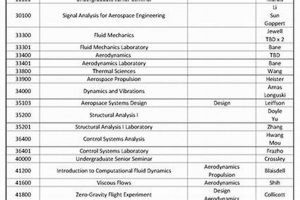
A focused curriculum in aerospace, mechanical, or a related engineering field ensures exposure to core principles, including aerodynamics, propulsion, structural mechanics, and control systems. These areas constitute the foundational knowledge base upon which subsequent expertise is built. For example, aerospace-specific coursework provides in-depth analysis of aircraft and spacecraft design, equipping graduates with the specific skills sought by employers in this industry.
- Mathematical and Scientific Foundations
Engineering curricula emphasize rigorous application of mathematical and scientific principles. Through coursework in calculus, differential equations, physics, and chemistry, students develop analytical capabilities crucial for problem-solving in complex engineering scenarios. The ability to formulate mathematical models, conduct simulations, and interpret data is essential for designing efficient and reliable aerospace systems.
- Design and Project Experience
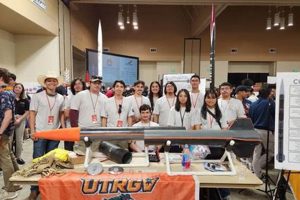
Engineering programs frequently incorporate design projects and capstone experiences that simulate real-world engineering challenges. Students collaborate in teams to design, build, and test aerospace-related systems, gaining hands-on experience and honing their teamwork and communication skills. These projects enhance practical abilities and offer valuable insights into the engineering design process, preparing graduates for immediate contributions in professional settings.
- Research Opportunities
Many engineering degree programs offer opportunities for undergraduate and graduate students to participate in research. Engaging in research provides exposure to cutting-edge technologies and allows students to work alongside faculty experts on innovative projects. Research experience cultivates critical thinking, problem-solving, and independent learning skills, and is particularly valuable for individuals pursuing advanced degrees or research-oriented careers.
Collectively, these facets demonstrate that an engineering degree, especially one with a focus on aerospace, equips individuals with the technical expertise, analytical skills, and practical experience necessary to contribute meaningfully to the advancement of aerospace technology. The completion of such a program is a foundational requirement for aspiring engineers seeking to enter and succeed within this challenging and dynamic field. The knowledge and competencies acquired through a structured engineering education are indispensable for addressing the complex engineering problems inherent in the design, development, and operation of aircraft and spacecraft.
3. Internship experience
Practical involvement in the aerospace sector through internship programs represents a critical component in developing the attributes and knowledge sought in engineering candidates. Internships provide opportunities to apply theoretical knowledge learned in academic settings to real-world engineering challenges. This application solidifies understanding and develops essential problem-solving skills crucial for effective professional performance. The cause-and-effect relationship is clear: acquiring relevant experience through internships directly enhances the perceived value and competence of aspiring engineers, better positioning them for entry-level positions and advanced career opportunities. For example, an internship involving the design and testing of aircraft components allows an individual to develop skills in areas such as CAD software, finite element analysis, and data interpretation, skills which are highly valued by prospective employers.
The significance of internship experience extends beyond the acquisition of technical skills. Internships foster professional development by exposing individuals to workplace dynamics, team collaboration, and communication practices within the aerospace industry. Participation in design reviews, project meetings, and technical presentations develops crucial interpersonal skills essential for successful engineering careers. Moreover, internships can provide valuable networking opportunities, connecting individuals with seasoned professionals who can provide mentorship and guidance. Consider an engineering student who interns at a NASA research center, assisting in the development of new propulsion technologies. This experience offers not only technical expertise but also insight into the organization’s culture, operations, and future research directions, providing a distinct advantage over candidates lacking similar experience.
In conclusion, internship experience acts as a bridge connecting academic learning with professional practice, solidifying theoretical knowledge and developing practical skills vital for success in the aerospace sector. The integration of internship programs into an engineering education provides invaluable preparation for the challenges and demands of an engineering career. As a component of professional preparation, such opportunities are essential to a well-rounded and competitive profile for prospective aerospace engineers.
4. Analytical Aptitude
Analytical aptitude forms a fundamental requirement for individuals seeking proficiency in the aerospace engineering field. It involves the capacity to dissect complex problems, identify key variables, and formulate solutions grounded in sound reasoning and data analysis. This innate capability is a cornerstone for success in a discipline characterized by intricate systems and demanding performance criteria.
- Problem Decomposition
The capacity to deconstruct complex engineering challenges into manageable components is critical. This involves identifying underlying principles, assessing interdependencies, and isolating key variables that influence system performance. In the context of aerospace engineering, this might involve analyzing the aerodynamic forces acting on an aircraft wing or evaluating the structural integrity of a spacecraft under extreme thermal stress. The ability to break down these complex problems into smaller, solvable parts facilitates the application of appropriate analytical techniques and the identification of potential failure modes.
- Quantitative Reasoning
Aerospace engineering relies heavily on quantitative analysis and modeling. A strong analytical aptitude enables individuals to apply mathematical and statistical methods to solve engineering problems, interpret data, and make informed decisions. This includes proficiency in areas such as calculus, differential equations, linear algebra, and statistics, which are essential for simulating system behavior, optimizing designs, and assessing performance under various operating conditions. For instance, accurately predicting the trajectory of a satellite requires a solid understanding of orbital mechanics and the ability to apply appropriate mathematical models.
- Critical Evaluation
Analytical aptitude entails the ability to critically evaluate information from diverse sources, assess the validity of assumptions, and identify potential biases or limitations. This is particularly important in aerospace engineering, where engineers must rely on data from experiments, simulations, and historical records to inform design decisions. The capacity to assess the reliability and accuracy of this data is crucial for avoiding errors and ensuring the safety and reliability of aerospace systems. Furthermore, a critical approach to problem-solving promotes innovative solutions and helps identify potential risks or unforeseen consequences.
- Logical Inference
Analytical aptitude includes the ability to draw logical conclusions from available data and evidence, formulate hypotheses, and test them through experimentation or simulation. This involves employing deductive and inductive reasoning to make informed judgments and predictions about system behavior. For example, analyzing data from wind tunnel tests to infer the aerodynamic characteristics of a new aircraft design requires the application of logical inference and an understanding of the underlying physical principles. This capacity is essential for optimizing designs, improving performance, and ensuring that aerospace systems meet stringent safety and operational requirements.
The aforementioned facets highlight the centrality of analytical aptitude to the attributes necessary for successful engagement in the aerospace engineering profession. Possessing and refining such aptitude through education and experience equips engineers with the critical thinking skills demanded by the challenges inherent in the conception, creation, and ongoing enhancement of flight and space systems.
5. CAD Familiarity
Computer-Aided Design (CAD) competence stands as a crucial element in the skillset for aspiring aerospace engineers. Proficiency in CAD software enables the creation, modification, analysis, and optimization of designs for aircraft, spacecraft, and associated components. Its integral nature reflects the digital paradigm underpinning modern engineering practice.
- Design Visualization and Communication
CAD proficiency enables the creation of precise and visually informative models. These models facilitate clear communication of design concepts among engineers, stakeholders, and manufacturers. For instance, detailed CAD renderings can be used to illustrate the internal structure of a jet engine or the aerodynamic profile of an aircraft wing. The ability to produce these visualizations aids in design reviews, collaborative problem-solving, and the accurate translation of design intent into physical form.
- Simulation and Analysis Integration
CAD software interfaces directly with simulation and analysis tools, enabling engineers to assess design performance under various operating conditions. By importing CAD models into finite element analysis (FEA) or computational fluid dynamics (CFD) software, engineers can evaluate structural integrity, aerodynamic characteristics, and thermal behavior. This integrated workflow allows for iterative design optimization, minimizing the need for costly physical prototypes. For example, the structural strength of a satellite component can be assessed within a simulation environment directly from its CAD model, identifying potential weaknesses before manufacturing.
- Manufacturing Process Automation
CAD models serve as the foundation for automated manufacturing processes, such as computer numerical control (CNC) machining and 3D printing. Detailed CAD designs can be directly translated into machine instructions, ensuring precise and efficient production of aerospace components. This seamless integration between design and manufacturing reduces errors, minimizes material waste, and accelerates the product development cycle. The ability to generate accurate and manufacturable CAD models is essential for ensuring the cost-effective and timely production of complex aerospace systems.
- Design Iteration and Modification
CAD software facilitates rapid design iteration and modification, allowing engineers to quickly explore alternative design concepts and optimize existing designs. CAD systems allow quick changes to the geometry, material properties or assembly. The flexibility to iterate quickly reduces the development time. For example, different wing configurations for an aircraft can be rapidly modeled, analyzed, and compared. The resulting efficiency streamlines the design process.
The relationship between CAD familiarity and the attributes of an aerospace engineer highlights the intersection of design, analysis, and manufacturing within modern engineering workflows. Mastery of CAD tools not only enhances individual productivity but also fosters collaboration, innovation, and efficiency across the entire product lifecycle. This competence is, therefore, a key attribute for anyone seeking success in this technology-driven field.
6. Communication abilities

Effective conveyance of technical information constitutes a critical aspect of an aerospace engineer’s capabilities. The ability to articulate complex concepts concisely and accurately, both verbally and in writing, directly impacts project success and team collaboration. Clear communication reduces ambiguity, prevents misunderstandings, and facilitates efficient decision-making throughout the engineering process. For instance, conveying the results of a stress analysis on a new aircraft wing design requires the engineer to synthesize complex data into a readily understandable format for project managers, manufacturing personnel, and regulatory agencies. Failure to communicate these findings effectively can lead to design flaws, production delays, or even safety compromises.
The demands extend beyond internal project communications. Aerospace engineers frequently interact with external stakeholders, including clients, suppliers, and the public. The capacity to present technical information in a clear and persuasive manner is crucial for securing funding, negotiating contracts, and building public trust. Consider the scenario of presenting a new satellite technology to potential investors. The engineer must not only demonstrate the technical feasibility of the project but also articulate its potential benefits and risks in a way that is accessible to a non-technical audience. A lack of effective communication can undermine investor confidence and jeopardize the project’s viability.
In summary, communication proficiency is not merely a supplementary skill but a core competency directly influencing an aerospace engineer’s ability to contribute effectively to project outcomes, collaborate with diverse teams, and represent their organization to external stakeholders. Challenges such as jargon and audience awareness demand ongoing effort to hone presentation capabilities. The skill of conveying information is integral for engineering and design, making it an essential component for success in the aerospace field.
7. Industry awareness

Industry awareness, encompassing a comprehensive understanding of current trends, technological advancements, regulatory landscapes, and competitive dynamics within the aerospace sector, is an indispensable component of a qualified aerospace engineer’s skill set. The cause-and-effect relationship is evident: deeper comprehension of the industry’s intricacies translates directly into more informed decision-making, innovative problem-solving, and effective contributions to engineering projects. For example, awareness of emerging materials science breakthroughs, such as advanced composites, enables engineers to incorporate these innovations into aircraft designs, resulting in lighter, stronger, and more fuel-efficient aircraft. Ignorance of these advancements could lead to the use of outdated materials, resulting in inferior designs and competitive disadvantages.
The practical significance of industry awareness extends to adherence to evolving safety regulations and environmental standards. Aerospace engineers must stay abreast of changes in aviation regulations, emissions standards, and noise pollution requirements. This knowledge informs design choices, ensuring that aircraft and spacecraft comply with all applicable laws and guidelines. For instance, understanding the increasing emphasis on sustainable aviation fuels (SAF) can guide engineers in designing engines and fuel systems compatible with these alternative fuels, reducing the environmental impact of air travel. Furthermore, awareness of competitive pressures within the industry allows engineers to contribute to cost-reduction efforts, efficiency improvements, and the development of innovative products and services that meet market demands.
In conclusion, industry awareness is not merely a desirable trait but a critical qualification for aerospace engineers. It enables informed decision-making, promotes innovation, ensures regulatory compliance, and enhances competitiveness. The challenges of staying updated in this rapidly evolving field necessitate continuous learning and active engagement with industry publications, conferences, and professional networks. This active approach ensures that engineers possess the up-to-date knowledge required to contribute to the advancement of aerospace technology and the success of their organizations.
Frequently Asked Questions Regarding the Attributes for Pursuing a Career in Aerospace Engineering
This section addresses common inquiries concerning the characteristics, education, and capabilities vital for individuals aspiring to contribute to the aerospace engineering field.
Question 1: Does an aerospace engineer always need a formal degree in aerospace engineering?
While a degree specifically in aerospace engineering is frequently the most direct path, a bachelor’s or master’s degree in a closely related field, such as mechanical engineering, electrical engineering, or physics, can also provide a strong foundation. Additional coursework or specialization in aerospace-related topics may be necessary.
Question 2: How important are internships, and what kind of experience should one seek?
Internship experience is exceptionally valuable. Aspiring engineers should seek opportunities that provide hands-on experience in areas such as design, testing, analysis, or manufacturing, preferably within an aerospace company or research institution. Internships allow for the application of classroom knowledge to real-world problems.
Question 3: What level of mathematics proficiency is truly necessary?
A strong command of mathematics is essential. This includes proficiency in calculus, differential equations, linear algebra, and statistics. These mathematical tools are fundamental for modeling, simulating, and analyzing aerospace systems.
Question 4: Are there specific software skills that are particularly important?
Yes. Familiarity with industry-standard CAD software (e.g., CATIA, SolidWorks), simulation tools (e.g., ANSYS, MATLAB), and programming languages (e.g., Python, C++) is highly desirable. These skills enable engineers to design, analyze, and optimize aerospace systems effectively.
Question 5: How crucial are communication abilities given the technical nature of the work?
Communication skills are paramount. Aerospace engineers must be able to effectively communicate complex technical information to colleagues, clients, and the public, both orally and in writing. Clear and concise communication prevents misunderstandings and facilitates collaboration.
Question 6: Is staying current with industry trends really that significant?
Staying abreast of industry trends and technological advancements is critical. The aerospace sector is constantly evolving, and engineers must continuously update their knowledge and skills to remain competitive and contribute to innovation. Regular engagement with industry publications and participation in professional conferences is necessary.
In summary, attaining the attributes required for success in aerospace engineering necessitates a combination of formal education, practical experience, and continuous professional development. A proactive approach to acquiring these elements is essential for aspiring engineers.
The next segment provides concluding thoughts regarding the discussed elements and valuable resources for continued development.
Qualifications to be an Aerospace Engineer
This exploration has elucidated the essential attributes, skills, and knowledge expected of individuals seeking to contribute meaningfully to the aerospace field. A robust STEM foundation, coupled with a relevant engineering degree, provides the bedrock for technical competence. Practical experience gained through internships complements academic training, fostering real-world problem-solving abilities. Analytical aptitude, coupled with CAD proficiency, equips engineers to design, analyze, and optimize complex systems. Furthermore, the capacity for clear and concise communication facilitates collaboration and effective dissemination of technical information. Finally, a commitment to industry awareness ensures that engineers remain abreast of technological advancements, regulatory changes, and competitive pressures.
Prospective aerospace engineers are encouraged to view these qualifications not as a checklist but as a roadmap for professional development. The pursuit of excellence in these areas is essential for addressing the ever-evolving challenges and opportunities within the aerospace sector. The advancement of flight and space technologies hinges on the dedication and competence of skilled engineers committed to pushing the boundaries of what is possible.