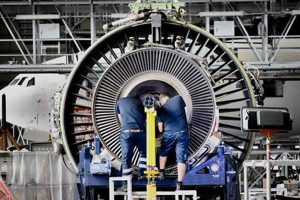
The core duties of professionals in this field encompass a wide array of tasks related to the design, development, testing, and maintenance of aircraft, spacecraft, satellites, and related systems. This includes conducting research, creating prototypes, analyzing data, and ensuring compliance with safety regulations. For example, these professionals might be involved in designing a new wing for a commercial airliner, developing a propulsion system for a rocket, or creating software to control a satellite’s orbit.
These duties are crucial for advancing technological capabilities in air and space travel and defense. Effective performance in these areas contributes to improved efficiency, safety, and innovation within the aerospace industry. Historically, these professionals have been instrumental in breakthroughs such as jet propulsion, space exploration, and the development of sophisticated satellite communication systems.
Understanding the specific tasks and accountabilities is essential for comprehending the breadth and depth of the work performed in the aerospace sector. The following sections will delve into specific areas such as design, testing, and research, illustrating the practical applications of expertise in this demanding and constantly evolving field.
Guidance for Aspiring and Practicing Professionals
The following points offer guidance for individuals pursuing or currently engaged in careers relating to aerospace engineering. These recommendations emphasize critical areas for professional development and success within this demanding field.
Tip 1: Prioritize Continuous Learning: The aerospace field evolves rapidly. Staying abreast of new technologies, materials, and methodologies is crucial. Actively seek opportunities for professional development through courses, conferences, and industry publications.
Tip 2: Cultivate Strong Analytical Skills: Aerospace engineering relies heavily on data analysis and problem-solving. Honing skills in mathematics, physics, and computer science provides a strong foundation for effectively addressing complex challenges.
Tip 3: Develop Effective Communication Abilities: Collaboration is central to success. Clearly communicating technical information to colleagues, clients, and stakeholders is vital for project success. Practice both written and verbal communication skills.
Tip 4: Emphasize Safety and Ethical Considerations: Aerospace engineering inherently involves safety-critical systems. Adhering to the highest ethical standards and prioritizing safety protocols is paramount. Understand and apply relevant industry regulations and guidelines.
Tip 5: Gain Practical Experience: Complement theoretical knowledge with hands-on experience. Internships, co-op programs, and research projects provide valuable opportunities to apply principles learned in the classroom and develop practical skills.
Tip 6: Master Computer-Aided Design (CAD) and Simulation Tools: Proficiency in relevant software is essential for design, analysis, and simulation tasks. Develop expertise in tools such as CAD, CAE, and CFD to effectively contribute to project development.
Effective implementation of these suggestions can enhance professional competence and contribute to success in the aerospace industry. A commitment to continuous improvement and a strong foundation in core principles are vital for navigating the challenges and opportunities within this sector.
The subsequent sections will synthesize the preceding insights and offer a comprehensive conclusion regarding the multifaceted nature of roles within aerospace engineering.
1. Design and Development

Design and development form a cornerstone of the accountabilities assumed by professionals in this discipline. This aspect incorporates the conceptualization, planning, and creation of aerospace vehicles and systems, demanding a deep understanding of engineering principles and innovative problem-solving.
- Conceptual Design and System Architecture
This facet involves defining the overall structure and functionality of aerospace systems. Professionals must determine the optimal configuration of components, consider performance requirements, and establish the foundation for subsequent detailed design stages. An example includes outlining the architecture of a new satellite communication system, specifying the types of antennas, power sources, and communication protocols to be employed. This initial phase sets the trajectory for the entire project.
- Detailed Engineering Design
Detailed engineering design translates conceptual ideas into tangible plans. It requires precise calculations, material selection, and component specification to ensure that systems meet performance, safety, and reliability standards. Professionals utilize computer-aided design (CAD) software and simulation tools to create detailed models and analyze performance characteristics. An illustration of this is the design of a new aircraft wing, specifying the airfoil shape, structural components, and control surfaces to optimize lift and minimize drag.
- Prototyping and Fabrication
This facet focuses on the creation of physical prototypes to validate design concepts and identify potential issues before mass production. Professionals oversee the fabrication process, ensuring that components are manufactured to precise specifications. Prototyping allows for experimentation and refinement of designs based on real-world performance data. An example includes building a scaled-down model of a spacecraft to test its thermal properties and structural integrity in a simulated space environment.
- System Integration and Testing
System integration involves combining individual components into a functional system and verifying that all parts work together seamlessly. Professionals conduct rigorous testing to identify and address any integration issues. Testing may include wind tunnel experiments, flight simulations, and ground-based tests to assess performance under various operating conditions. An illustration of this is the integration of a new navigation system into an aircraft and conducting flight tests to ensure accurate and reliable performance.
These interconnected facets underscore the significant role professionals play in shaping the future of air and space travel. The capacity to translate abstract ideas into functional systems, while adhering to stringent safety standards, exemplifies the multifaceted nature of responsibilities in this engineering domain.
2. Testing and Analysis

Testing and analysis are integral to the duties in this discipline, providing crucial validation of designs and systems. This rigorous process ensures that all components meet performance standards, safety requirements, and operational specifications before deployment. It is an iterative process that informs design improvements and mitigates potential risks.
- Performance Testing
This facet involves evaluating the operational effectiveness of aerospace components and systems under various conditions. Engineers conduct tests to measure parameters such as speed, altitude, payload capacity, and fuel efficiency. For example, wind tunnel testing assesses the aerodynamic performance of aircraft wings, while engine testing evaluates thrust output and fuel consumption. This data informs design modifications aimed at optimizing performance.
- Structural Analysis
Structural analysis ensures that aerospace components can withstand the stresses and strains encountered during operation. Engineers use computational tools and physical experiments to assess the structural integrity of aircraft fuselages, rocket bodies, and satellite structures. Finite element analysis, for instance, simulates the effects of aerodynamic loads on an aircraft wing, identifying areas of potential weakness. These assessments are critical for preventing structural failures.
- Materials Testing
Materials testing assesses the properties and durability of materials used in aerospace applications. Engineers conduct tests to measure tensile strength, fatigue resistance, and corrosion resistance. This data informs material selection decisions and ensures that components can withstand the harsh environments of flight and space. For example, testing the resistance of composite materials to extreme temperatures ensures their suitability for use in hypersonic vehicles.
- Reliability and Failure Analysis
Reliability and failure analysis focus on identifying potential failure modes and developing strategies to improve system reliability. Engineers conduct accelerated life testing to simulate years of operation in a compressed timeframe. They also perform root cause analysis to determine the underlying causes of failures. For example, analyzing the failure of a satellite component can lead to design improvements that prevent similar failures in future missions.
The insights gained from testing and analysis are vital for ensuring the safety, reliability, and performance of aerospace systems. These activities directly impact the design and development process, driving continuous improvement and innovation. Effective execution of these duties is essential for fulfilling the overarching in this field.
3. Research and Innovation

Research and innovation form a critical dimension of the duties within aerospace engineering. These activities propel technological advancements, address emerging challenges, and expand the boundaries of air and space travel. Professionals engaged in these areas contribute to the evolution of existing technologies and the development of novel concepts.
- Advanced Materials Development
The development of new materials with enhanced properties is vital for improving aircraft performance, reducing weight, and increasing durability. Research focuses on composites, alloys, and nanomaterials that can withstand extreme temperatures, pressures, and corrosive environments. For example, research into carbon fiber composites has led to lighter and stronger aircraft structures, improving fuel efficiency. These advancements directly influence the design and manufacturing accountabilities.
- Aerodynamic Efficiency and Flight Dynamics
Improving aerodynamic efficiency and flight dynamics is essential for enhancing aircraft performance and reducing fuel consumption. Research in this area includes computational fluid dynamics (CFD) simulations, wind tunnel testing, and flight experiments. For instance, the development of winglets on aircraft wings has significantly reduced drag, improving fuel efficiency. Such advancements are crucial for meeting environmental and economic constraints, influencing design and operational practices.
- Propulsion Systems and Energy Efficiency
Developing advanced propulsion systems that are more efficient and environmentally friendly is a key area of research. This includes exploring alternative fuels, hybrid-electric propulsion, and advanced engine designs. Research into scramjet engines, for example, aims to enable hypersonic flight. These innovations are essential for expanding the capabilities of air and space travel and for reducing the environmental impact of aviation, impacting design and systems integration considerations.
- Space Exploration Technologies
Research into space exploration technologies focuses on developing new methods for reaching and exploring other planets and celestial bodies. This includes developing advanced spacecraft, propulsion systems, and life support systems. For example, research into ion propulsion has enabled longer and more efficient space missions. These advancements are crucial for expanding human knowledge and capabilities in space, driving innovation in spacecraft design and mission planning.
These facets of research and innovation are interconnected and contribute to the overall progress in the aerospace sector. Each area demands specialized knowledge, analytical skills, and a commitment to pushing the boundaries of what is possible. Through these efforts, engineers play a pivotal role in shaping the future of air and space travel, impacting not only design and development but also the broader implications of aerospace technologies.
4. System Integration

System integration represents a critical function within the responsibilities of an aerospace engineer. It involves the cohesive assembly and validation of diverse components and subsystems into a unified, functioning aerospace system. The effectiveness of this integration directly impacts the overall performance, reliability, and safety of the final product, be it an aircraft, spacecraft, or satellite. Neglecting proper integration can lead to catastrophic failures, highlighting its significance as a core accountability. For example, the integration of a new flight control system within an aircraft necessitates seamless communication and coordination between sensors, actuators, and the aircraft’s central processing unit. Failure in this integration process could result in unresponsive controls and potential loss of the aircraft.
The scope of system integration spans across multiple engineering disciplines, demanding that aerospace engineers possess a comprehensive understanding of aerodynamics, propulsion, avionics, materials science, and software engineering. Practical application involves meticulous planning, detailed interface design, rigorous testing, and continuous monitoring throughout the integration lifecycle. Consider the development of a communication satellite: the integration process entails combining the payload (transponders), power system, attitude control system, and thermal management system. Each subsystem must operate in harmony to ensure the satellite meets its mission objectives, highlighting the complex interdependencies involved.
In conclusion, system integration forms a fundamental cornerstone within the wider spectrum of duties. Its importance stems from the direct impact on mission success and safety. Challenges in this domain often arise from the complexity of modern aerospace systems and the need for cross-disciplinary collaboration. A deep appreciation for the principles of system integration, combined with rigorous testing and validation procedures, is crucial for aerospace engineers to effectively fulfill their responsibilities and contribute to the advancement of the field.
5. Safety Compliance

Safety compliance constitutes a non-negotiable aspect of duties within aerospace engineering. It encompasses adherence to stringent regulations, standards, and best practices established to minimize risks and ensure the well-being of passengers, crew, and the general public. Rigorous adherence to safety protocols directly influences all phases of design, development, testing, and operation of aerospace systems.
- Regulatory Adherence and Certification
Aerospace engineers must demonstrate strict adherence to national and international aviation regulations, such as those mandated by the Federal Aviation Administration (FAA) in the United States or the European Union Aviation Safety Agency (EASA). This includes obtaining certifications for aircraft designs, systems, and operational procedures. For instance, the design of an aircraft’s emergency exit system must meet specific requirements for evacuation time and accessibility. Failure to comply can result in rejection of certification and potential grounding of the aircraft, directly impacting design accountabilities.
- Risk Assessment and Mitigation
A core function is the systematic identification, assessment, and mitigation of potential hazards throughout the lifecycle of an aerospace system. This involves conducting Failure Modes and Effects Analysis (FMEA) and Fault Tree Analysis (FTA) to identify potential failure points and their consequences. For example, engineers must assess the risks associated with engine failure during flight and implement redundancy measures to ensure continued operation. This proactive approach is fundamental to system reliability and safety compliance efforts.
- Materials and Component Safety
Ensuring the safety and reliability of materials and components is essential. Engineers must select materials that meet stringent performance and safety standards and conduct rigorous testing to verify their durability and resistance to environmental factors. For instance, materials used in aircraft wings must withstand extreme temperatures, pressures, and corrosive environments. Non-compliance can lead to structural failures and catastrophic incidents, directly affecting engineering design and material selection responsibilities.
- Human Factors Engineering
Consideration of human factors is integral to safety compliance. Engineers must design systems that are intuitive, user-friendly, and minimize the potential for human error. This involves designing cockpit layouts, control interfaces, and maintenance procedures that enhance situational awareness and reduce workload for pilots and maintenance personnel. For example, clear and unambiguous labeling of aircraft controls is crucial for preventing accidental activation of critical systems. This integrates human capabilities and limitations into design considerations, ensuring compliance with safety standards.
These interrelated facets highlight the critical role of safety compliance in all aspects of aerospace engineering duties. Effective implementation of these principles is paramount for maintaining the integrity of aerospace systems, minimizing risks, and safeguarding human lives. Adherence to these standards is not merely a regulatory requirement, but a fundamental ethical obligation for professionals in this field.
6. Project Management

Project management is an indispensable component of the accountabilities assumed by professionals in aerospace engineering. Given the intricate and multidisciplinary nature of aerospace projects, effective management is crucial for ensuring timely completion, adherence to budget constraints, and maintenance of specified performance criteria. Project management principles provide the framework for coordinating resources, mitigating risks, and aligning diverse teams toward common objectives.
- Scope Definition and Requirements Management
This facet involves clearly defining the project’s objectives, deliverables, and boundaries. Accurate scope definition is paramount for preventing scope creep and ensuring that the project remains focused. For example, in the development of a new satellite, the scope document would detail the satellite’s intended mission, payload specifications, orbital parameters, and lifespan. Effective requirements management ensures that all stakeholders have a shared understanding of the project’s goals, minimizing ambiguity and preventing costly rework. This process directly influences subsequent design and implementation phases.
- Scheduling and Resource Allocation
This aspect entails creating a realistic timeline for project activities, identifying dependencies, and allocating resources (personnel, equipment, budget) effectively. Project management tools, such as Gantt charts and critical path method (CPM), are employed to visualize the project schedule and identify potential bottlenecks. For instance, the construction of a new aircraft requires careful scheduling of manufacturing processes, component deliveries, and testing activities. Proper resource allocation ensures that each task has the necessary resources to be completed on time and within budget. This facet greatly influences the overall project timeline and budget adherence.
- Risk Management and Mitigation
Aerospace projects are inherently complex and subject to numerous risks, including technical challenges, budget overruns, and schedule delays. Effective risk management involves identifying potential risks, assessing their likelihood and impact, and developing mitigation strategies. For example, the development of a new rocket engine may involve the risk of component failure during testing. Mitigation strategies could include redundant designs, rigorous testing protocols, and contingency plans. Proactive risk management minimizes the potential for adverse events and ensures project success. This step is crucial for maintaining project stability and preventing unforeseen complications.
- Team Leadership and Communication
Aerospace projects often involve multidisciplinary teams comprising engineers, scientists, technicians, and project managers. Effective team leadership is essential for fostering collaboration, promoting communication, and resolving conflicts. Project managers must possess strong interpersonal skills, be able to motivate team members, and ensure that everyone is working towards the same goals. Clear communication channels, regular meetings, and transparent reporting are crucial for keeping stakeholders informed and addressing any issues that may arise. This leadership ensures team cohesion and efficient information flow throughout the project lifecycle.
In summary, project management provides the framework for effectively managing the inherent complexities of aerospace engineering endeavors. The ability to define scope, allocate resources, mitigate risks, and lead teams are essential skills for aerospace engineers aiming to deliver successful projects. These abilities directly contribute to achieving project goals within defined constraints, underscoring the vital link between project management principles and the accountabilities inherent in the profession.
Frequently Asked Questions Regarding the Duties Within Aerospace Engineering
This section addresses common inquiries and clarifies certain aspects regarding the multifaceted accountabilities assumed by professionals in this field.
Question 1: Is the primary focus of an aerospace engineer solely on aircraft design?
While aircraft design is a significant aspect, the scope extends far beyond. Professionals also engage in the design and development of spacecraft, satellites, missiles, and related systems. The focus encompasses a broad range of vehicles operating within and beyond Earth’s atmosphere.
Question 2: Does the role of an aerospace engineer involve hands-on manufacturing?
Typically, the role does not primarily involve hands-on manufacturing. However, professionals often oversee manufacturing processes, ensuring adherence to design specifications and quality standards. They may also be involved in prototyping and testing, which may require some hands-on work.
Question 3: How important is computer proficiency in this field?
Computer proficiency is exceptionally important. Professionals utilize computer-aided design (CAD) software, simulation tools, and programming languages for design, analysis, and testing. A strong command of these tools is essential for effective performance.
Question 4: What level of mathematical expertise is required?
A high level of mathematical expertise is necessary. A strong foundation in calculus, differential equations, linear algebra, and statistics is crucial for analyzing complex engineering problems and developing accurate solutions.
Question 5: Are aerospace engineers primarily employed by government agencies?
While government agencies such as NASA are significant employers, professionals are also employed by private aerospace companies, defense contractors, research institutions, and consulting firms. Employment opportunities exist across a wide spectrum of organizations.
Question 6: How crucial is ongoing professional development in this field?
Ongoing professional development is paramount. The aerospace industry is constantly evolving, with new technologies and methodologies emerging regularly. Continuous learning is essential for staying current and maintaining a competitive edge.
The answers provided above offer clarity on various aspects of the duties inherent within aerospace engineering, addressing prevalent misconceptions and highlighting essential skills and knowledge.
The concluding section will summarize the key points and provide a comprehensive overview of the accountabilities discussed.
Responsibilities of an Aerospace Engineer
This exploration has detailed the multifaceted nature of what professionals in this discipline undertake. From design and development to testing, analysis, research, system integration, safety compliance, and project management, the breadth of their involvement is substantial. The effective execution of these accountabilities is paramount for advancing the capabilities of air and space travel, ensuring safety, and driving innovation within the aerospace sector.
The aerospace field demands a commitment to continuous learning, rigorous analytical skills, and unwavering adherence to ethical principles. The challenges inherent in this profession are significant, but the opportunities to contribute to groundbreaking advancements are equally compelling. Continued dedication to these critical is essential for securing the future of aerospace technology and exploration.