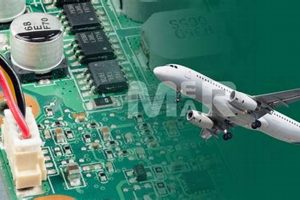
The field encompasses a diverse range of specializations focusing on the design, development, testing, and production of aircraft and spacecraft. These areas address distinct challenges and require specialized knowledge, contributing to advancements in both atmospheric and space-based technologies. For instance, one branch focuses on creating efficient and reliable air transportation systems, while another is dedicated to exploring and utilizing the space environment.
The various specializations are vital to national security, economic growth, and scientific discovery. They drive innovation in materials science, propulsion systems, and control algorithms, leading to more fuel-efficient aircraft, advanced satellite technologies, and enhanced space exploration capabilities. Historically, these focused areas have evolved alongside advancements in technology and shifts in societal needs, resulting in a constantly evolving and adapting discipline.
The following sections will delve into specific areas within the broader field, providing details on their core functions, required skills, and potential career paths. This examination will offer a clearer understanding of the opportunities and specializations available within the aerospace sector.
Individuals pursuing or considering a career in the aerospace domain should carefully evaluate their interests and aptitudes to identify a suitable specialization. Informed decision-making is critical for success in this demanding and constantly evolving field.
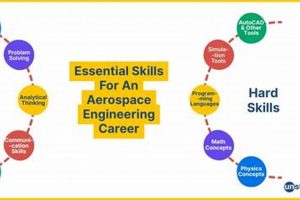
Tip 1: Gain a Solid Foundation in Fundamental Principles: A strong understanding of mathematics, physics, and computer science is essential for all specializations. Foundational knowledge provides the necessary tools to analyze complex problems and develop innovative solutions.
Tip 2: Explore Specific Sub-Disciplines Through Coursework and Projects: Investigate areas like aerodynamics, propulsion, structures, control systems, and astrodynamics. Engaging in relevant projects provides practical experience and helps to identify areas of interest.
Tip 3: Seek Internships or Research Opportunities: Practical experience in a professional setting is invaluable. Internships and research positions provide exposure to real-world challenges and allow individuals to apply their knowledge.
Tip 4: Network with Professionals in the Aerospace Industry: Attend industry conferences, join professional organizations, and connect with aerospace engineers. Networking can provide valuable insights and career opportunities.
Tip 5: Develop Strong Analytical and Problem-Solving Skills: Aerospace engineering requires the ability to analyze complex data, identify problems, and develop effective solutions. Practice problem-solving through coursework, projects, and independent study.
Tip 6: Cultivate Effective Communication Skills: Aerospace engineers must be able to communicate technical information clearly and concisely, both orally and in writing. Practice communication skills through presentations, reports, and collaborative projects.
Tip 7: Stay Updated on the Latest Advancements in Technology: The aerospace industry is constantly evolving. Individuals should stay informed about new technologies and research developments through journals, conferences, and online resources.
Adhering to these guidelines can increase the likelihood of a successful and fulfilling career in the aerospace field. Careful planning and continuous learning are crucial for navigating the diverse range of opportunities available.
The next section will summarize key considerations for choosing a specific path within aerospace engineering, emphasizing the importance of aligning personal interests with career goals.
1. Aerodynamics

Aerodynamics is a fundamental discipline within the aerospace field, directly impacting the performance, stability, and control of aircraft and spacecraft. Its principles are interwoven into various specializations, making it a critical area of expertise for many aerospace engineers.
- Lift and Drag Analysis
Aerodynamics provides the framework for understanding lift generation and drag reduction. Aircraft wing design, for instance, relies heavily on aerodynamic principles to maximize lift while minimizing drag, thereby improving fuel efficiency and flight performance. Computational Fluid Dynamics (CFD) simulations are frequently used to analyze airflow patterns and optimize aerodynamic shapes.
- Stability and Control
The stability and control characteristics of an aircraft or spacecraft are directly determined by its aerodynamic properties. Aerodynamic control surfaces, such as ailerons, elevators, and rudders, are designed to manipulate airflow and provide the necessary control forces for maneuvering. Aerodynamic analysis is crucial for ensuring stability throughout the flight envelope.
- Supersonic and Hypersonic Flow
Aerodynamic principles become increasingly complex at supersonic and hypersonic speeds. Shock waves, thermal effects, and dissociation of air molecules must be carefully considered in the design of high-speed vehicles. Specialized wind tunnels and CFD simulations are used to study these phenomena and develop appropriate aerodynamic solutions.
- Atmospheric Re-entry
Aerodynamics plays a critical role in the design of spacecraft that re-enter the Earth’s atmosphere. The extreme heat generated by atmospheric friction requires specialized aerodynamic shapes and thermal protection systems to ensure the safe return of astronauts and payloads. Ablative heat shields are a prime example of aerodynamic engineering applied to atmospheric re-entry.
The application of aerodynamics extends across a wide spectrum of aerospace engineering endeavors, from designing more efficient commercial aircraft to developing advanced space exploration vehicles. Its fundamental principles remain essential for innovation and progress within the field.
2. Propulsion Systems
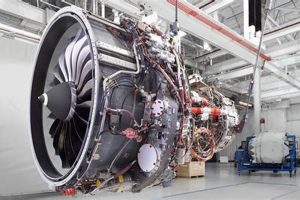
Propulsion systems are integral to the field, serving as the driving force behind both atmospheric and space-bound vehicles. The selection and design of a propulsion system are fundamentally dictated by the specific type of aerospace engineering endeavor. For instance, the requirements for a commercial airliners engines differ vastly from those of a spacecraft intended for deep-space exploration. This divergence stems from variations in operating environment, mission duration, and performance objectives. The efficiency, thrust, and reliability of these systems directly influence an aircraft’s range, speed, and payload capacity or a spacecraft’s ability to reach distant celestial bodies. The development of jet engines, for example, revolutionized air travel, enabling faster and more efficient long-distance flights. Similarly, rocket engines are essential for placing satellites into orbit and exploring other planets.
Further examples illustrate this connection. The design of a scramjet engine for hypersonic flight requires a profound understanding of fluid dynamics, combustion, and materials science, representing a specialized area within aerospace. Conversely, the development of electric propulsion systems for satellites involves expertise in plasma physics, electrical engineering, and control systems. In each case, the chosen propulsion system dictates the specific engineering challenges and demands a tailored approach to design, testing, and operation. Advances in propulsion technology often spur innovation across other disciplines. For example, the development of lighter and more heat-resistant materials benefits both engine performance and the structural integrity of the overall vehicle.
Understanding the relationship between propulsion systems and the various areas of aerospace engineering is crucial for engineers seeking to contribute to the advancement of flight and space exploration. Challenges remain in achieving higher fuel efficiency, reducing emissions, and developing more reliable and powerful propulsion systems. Successfully addressing these challenges will require continued collaboration across various sub-disciplines, ensuring that propulsion system design is fully integrated with the broader objectives of aerospace engineering.
3. Structural Analysis

Structural analysis is a cornerstone of aerospace engineering, directly influencing the safety, performance, and longevity of aircraft and spacecraft. The application of structural analysis techniques varies significantly across different areas, reflecting the diverse operational environments and mission objectives. This discipline ensures that aerospace vehicles can withstand the stresses and strains encountered during flight and space travel. Without rigorous structural analysis, the possibility of catastrophic failure increases exponentially, leading to loss of life and mission objectives. Consider the design of a commercial airliner versus a deep-space probe. The airliner, subjected to repeated pressurization cycles and turbulence, demands extensive fatigue analysis. The space probe, enduring extreme temperature gradients and radiation exposure, requires a different analytical approach focused on material degradation in a harsh environment.
The methods employed in structural analysis range from classical hand calculations for preliminary design to sophisticated finite element analysis (FEA) simulations for detailed verification. FEA allows engineers to model complex geometries and material properties, predicting stress concentrations and potential failure modes under various loading conditions. Real-world examples highlight the practical significance. The Comet airliner disasters of the 1950s, caused by metal fatigue around the square windows, led to significant advances in fatigue analysis and the adoption of oval window designs in subsequent aircraft. Similarly, the development of composite materials for aircraft wings necessitates advanced analytical techniques to predict their behavior under complex loading scenarios, accounting for anisotropic properties and potential delamination. The structural integrity of rocket engines, subject to intense pressure and temperature gradients, requires specialized analysis to prevent catastrophic failures during launch.
In conclusion, structural analysis is an indispensable element of aerospace engineering, ensuring the reliability and safety of flight and space systems. The diverse applications of structural analysis across different specializations reflect the unique challenges associated with each type of aerospace vehicle. Ongoing advancements in computational methods and materials science continue to improve the accuracy and efficiency of structural analysis, contributing to safer and more capable aerospace designs. Addressing challenges related to model validation, uncertainty quantification, and the analysis of novel materials remains crucial for the continued progress of the field.
4. Control Engineering

Control engineering is an indispensable element within diverse aerospace specializations. It directly governs the stability, maneuverability, and overall performance of aircraft and spacecraft. The core function involves designing and implementing systems that automatically regulate the behavior of these vehicles, often under dynamic and unpredictable conditions. Consider the profound differences in control system requirements between a fixed-wing aircraft and a satellite in orbit. The former demands precise control of flight surfaces to maintain stability and execute maneuvers within the atmosphere, while the latter requires accurate attitude control and orbital adjustments in the vacuum of space. In both cases, the effectiveness of the control system is paramount to mission success and safety.
The application of control engineering is evident across numerous aerospace systems. Autopilots in commercial airliners exemplify this, automatically maintaining altitude, heading, and airspeed, thereby reducing pilot workload and enhancing safety. Fly-by-wire systems, prevalent in modern fighter aircraft, rely on sophisticated control algorithms to translate pilot commands into precise movements of control surfaces, enabling superior maneuverability and responsiveness. Similarly, attitude control systems in satellites utilize sensors and actuators to maintain the desired orientation, ensuring accurate pointing of instruments and antennas. In space exploration, control engineering is critical for trajectory optimization, guidance, and landing of spacecraft on other planets. The successful landing of the Mars rovers, for example, relied on complex control algorithms to manage the descent and touchdown process.
In summary, control engineering is an essential and pervasive aspect of aerospace engineering, underpinning the functionality and performance of both atmospheric and space-based vehicles. The challenges involved in designing robust and reliable control systems, particularly in the face of uncertainty and disturbances, necessitate a deep understanding of control theory, dynamics, and sensor technology. Continued advancements in control engineering will be critical for enabling future innovations in aerospace, including autonomous flight, hypersonic vehicles, and deep-space exploration.
5. Materials Science

Materials science plays a critical, enabling role across all aerospace engineering disciplines. The performance, safety, and longevity of aircraft and spacecraft are inextricably linked to the materials from which they are constructed. Material selection is not arbitrary; it is a direct consequence of the specific operational environment and performance requirements. For example, high-speed aircraft and spacecraft encounter extreme temperatures and aerodynamic forces, necessitating materials with exceptional strength, thermal resistance, and low density. The development of titanium alloys and composite materials, such as carbon fiber reinforced polymers, has been instrumental in achieving these objectives. The inherent properties of these materials, including their strength-to-weight ratio and resistance to corrosion, directly influence the design and capabilities of aerospace vehicles. The successful integration of advanced materials is therefore paramount to innovation and progress within the aerospace sector.
The application of materials science extends beyond structural components to encompass propulsion systems, thermal protection systems, and electronic devices. Turbine blades in jet engines, operating at temperatures exceeding the melting point of conventional metals, rely on advanced nickel-based superalloys and thermal barrier coatings to maintain structural integrity. Re-entry vehicles, such as the Space Shuttle, employ specialized ceramic tiles to dissipate the intense heat generated during atmospheric entry. Furthermore, the miniaturization and performance enhancement of electronic components in avionics systems depend on the development of novel semiconductor materials and fabrication techniques. Each of these applications necessitates a deep understanding of material properties, processing methods, and failure mechanisms. The ongoing pursuit of lighter, stronger, and more durable materials continues to drive innovation in materials science and engineering, directly impacting the capabilities of aerospace systems.
In summary, materials science is a fundamental and enabling discipline within aerospace engineering. The selection, development, and application of advanced materials are critical for achieving the performance, safety, and longevity requirements of aircraft and spacecraft. The interdisciplinary nature of this field demands close collaboration between materials scientists, aerospace engineers, and other specialists to address the complex challenges associated with flight and space exploration. Continuous research and development in materials science are essential for enabling future advancements in aerospace technology, including hypersonic flight, advanced space propulsion, and long-duration space missions.
6. Avionics Integration

Avionics integration serves as a crucial nexus connecting various aerospace engineering domains. The process entails seamlessly incorporating electronic systems into aircraft and spacecraft to manage flight control, navigation, communication, and other critical functions. Its effectiveness directly influences vehicle performance, safety, and mission success. A clear example lies in modern commercial airliners where avionics systems manage autopilot functions, flight management, and collision avoidance, reflecting the importance of effective integration for reliable operations. Conversely, poorly integrated avionics can lead to system malfunctions, increased pilot workload, and compromised safety, emphasizing the high stakes associated with avionics design and implementation.
Different types of aerospace engineering necessitate specialized avionics solutions. Military aircraft, requiring advanced radar systems, electronic warfare capabilities, and secure communication networks, pose unique integration challenges compared to commercial aviation. Spacecraft, operating in extreme environments and often autonomously, demand radiation-hardened components, fault-tolerant architectures, and reliable telemetry systems. The trend towards more autonomous systems in both aircraft and spacecraft further underscores the importance of robust avionics integration. The increasing complexity of modern aircraft and spacecraft means that avionics integration is rarely a straightforward task; systems are often interconnected, so a failure in one system can affect other systems too.
Understanding the principles and practices of avionics integration is therefore paramount for aerospace engineers. This involves comprehending hardware and software design, communication protocols, sensor technologies, and system-level testing. Effective avionics integration requires a holistic approach that considers the interplay between different systems and their impact on overall vehicle performance. As aerospace technology continues to evolve, innovative avionics solutions will be crucial for enabling future advancements in air travel, space exploration, and national defense. Consequently, it is paramount to address challenges such as system complexity and cybersecurity.
7. Spacecraft Design
Spacecraft design represents a complex synthesis of various aerospace engineering disciplines, tailored to the unique challenges of operating in the space environment. Its multifaceted nature necessitates expertise in a wide array of specialized areas to ensure mission success and vehicle reliability.
- Orbital Mechanics and Trajectory Design
Understanding orbital mechanics is fundamental to spacecraft design. Calculating trajectories, orbital maneuvers, and rendezvous procedures requires expertise in astrodynamics and celestial mechanics. Mission constraints, such as launch window availability and target location, dictate the design of efficient and fuel-optimal trajectories. For example, the Hohmann transfer orbit is a commonly used technique for transferring between circular orbits, minimizing propellant consumption.
- Power Systems and Thermal Management
Spacecraft rely on solar panels, radioisotope thermoelectric generators (RTGs), or batteries for power generation. Designing efficient power systems and managing thermal loads in the vacuum of space, where heat can only be dissipated through radiation, is critical. Temperature control is essential to prevent overheating or freezing of sensitive components. Multi-Layer Insulation (MLI) blankets and heat pipes are commonly employed to regulate temperature.
- Communication Systems and Data Handling
Establishing reliable communication links between spacecraft and ground stations is essential for transmitting data and receiving commands. Antenna design, signal processing, and modulation techniques are crucial aspects of spacecraft communication systems. Data handling involves managing and storing scientific data collected by onboard instruments. Error correction codes are used to mitigate the effects of noise and interference in the communication channel.
- Structural Integrity and Radiation Shielding
Spacecraft structures must withstand the stresses of launch, orbital maneuvers, and long-duration exposure to the space environment. Radiation shielding is necessary to protect sensitive electronic components and crew members from harmful radiation. Material selection, structural analysis, and radiation transport modeling are crucial considerations in spacecraft design. Aluminum, titanium, and composite materials are commonly used for spacecraft structures.
These facets of spacecraft design highlight the interdisciplinary nature of aerospace engineering. Effective spacecraft design demands a holistic approach, integrating expertise from various specialized areas to achieve mission objectives and ensure vehicle survivability in the challenging space environment. Future advancements in spacecraft technology will rely on continued innovation in these core disciplines, enabling more ambitious and complex space missions.
Frequently Asked Questions About Specializations Within Aerospace Engineering
This section addresses common inquiries regarding the different areas of focus within aerospace engineering, providing clarity on the scope and requirements of each. The intent is to offer a comprehensive overview for those considering entering or specializing within the aerospace field.
Question 1: What fundamental distinction differentiates aeronautical and astronautical engineering?
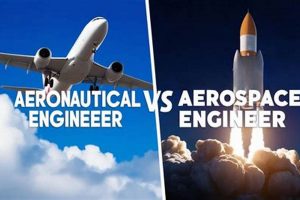
Aeronautical engineering primarily concentrates on the design, development, and operation of aircraft within Earth’s atmosphere. Astronautical engineering, conversely, focuses on spacecraft and related technologies designed for operation beyond the Earth’s atmosphere. The key differentiator lies in the operating environment and the associated engineering challenges.
Question 2: How critical is materials science to advancement within aerospace engineering?
Materials science is exceptionally critical. Aerospace vehicles demand materials with specific properties, including high strength-to-weight ratios, thermal resistance, and durability. Innovations in materials science directly enable the development of lighter, more efficient, and more robust aircraft and spacecraft.
Question 3: What role does control engineering play in spacecraft missions?
Control engineering is essential for maintaining spacecraft stability, orientation, and trajectory. Control systems ensure accurate pointing of instruments, precise orbital maneuvers, and reliable communication with Earth. Without effective control systems, spacecraft missions would be impossible to execute accurately or safely.
Question 4: Why is aerodynamics considered a foundational area in aerospace engineering?
Aerodynamics governs the interaction between air and moving objects, significantly influencing aircraft performance. It is fundamental to understanding lift, drag, and stability. Aerodynamic principles are applied in aircraft design to optimize fuel efficiency, maneuverability, and overall flight characteristics.
Question 5: In what way does propulsion system selection impact overall mission design?
Propulsion system selection directly affects an aircraft or spacecraft’s range, speed, and payload capacity. The type of propulsion system (e.g., jet engine, rocket motor, electric thruster) is chosen based on mission requirements. The selection process involves a careful trade-off between performance, efficiency, and reliability.
Question 6: How does avionics integration contribute to modern aerospace systems?
Avionics integration involves incorporating electronic systems for flight control, navigation, communication, and other functions. Properly integrated avionics enhance safety, reduce pilot workload, and enable complex mission capabilities. Effective avionics integration demands a systems-level perspective.
In summary, aerospace engineering encompasses a diverse range of specializations, each playing a critical role in the design, development, and operation of aircraft and spacecraft. A thorough understanding of these specializations is crucial for anyone considering a career in the aerospace field.
The following section will provide information on educational pathways and career opportunities available within each of these specializations.
Conclusion
This exposition has delineated the various specializations within the broad field. From aerodynamics and propulsion to structural analysis, control engineering, materials science, avionics integration, and spacecraft design, each area contributes uniquely to the development and advancement of flight and space technologies. Comprehending the diverse aspects is essential for individuals seeking to contribute to the aerospace sector.
The ongoing evolution of aerospace demands continuous innovation and expertise across all these domains. Further exploration and specialization in these areas will be critical for addressing the challenges and opportunities presented by future advancements in air and space travel, ensuring continued progress in this vital field.
![Get Into Aerospace Engineering: How To Apply [Tips] | Innovating the Future of Flight with Reliable Aviation Solutions](https://mixaerospace.com/wp-content/uploads/2026/04/th-361-300x200.jpg "Get Into Aerospace Engineering: How To Apply [Tips] Innovating the Future of Flight with Reliable Aviation Solutions")