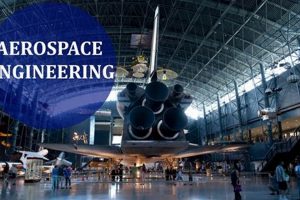
The field encompasses the design, development, testing, and production of aircraft and spacecraft. It is a multifaceted discipline requiring expertise in areas such as aerodynamics, propulsion, structures, control systems, and materials science. Practical application ranges from commercial airliners to satellites orbiting Earth and probes exploring other planets.
This area of engineering is crucial for advancements in transportation, communication, and scientific discovery. Its benefits include faster and more efficient global travel, worldwide access to information via satellite networks, and a deeper understanding of the universe through space exploration. Historically, it evolved from aeronautical engineering, expanding its scope with the advent of spaceflight.
A thorough examination of related topics such as fluid dynamics, orbital mechanics, and propulsion systems provides a comprehensive understanding of the underlying principles and challenges within the field. Furthermore, investigation into ethical considerations and the impact of regulations is necessary.
Essential Considerations for Aspiring Aerospace Engineers
This section offers guidance for individuals considering a career path focused on the design and development of aircraft and spacecraft. These points are intended to provide a realistic understanding of the demands and opportunities within the field.
Tip 1: Develop a Strong Foundation in Mathematics and Physics: A comprehensive understanding of calculus, differential equations, linear algebra, and physics principles is indispensable. These disciplines form the bedrock upon which all aerospace engineering concepts are built. Without a firm grasp of these subjects, progress will be significantly hindered.
Tip 2: Cultivate Proficiency in Computer-Aided Design (CAD) and Simulation Software: Modern aerospace engineering relies heavily on digital tools for design, analysis, and testing. Familiarity with software packages like CATIA, ANSYS, and MATLAB is essential for creating and evaluating designs virtually.
Tip 3: Seek Opportunities for Hands-on Experience: Theoretical knowledge must be complemented by practical application. Internships, research projects, and involvement in student organizations that build and fly aircraft or rockets provide invaluable real-world experience.
Tip 4: Master Fundamentals of Aerodynamics: Comprehend the behavior of air and other fluids as they interact with surfaces and objects. It’s key to understanding lift, drag, and stability. Knowledge in this area directly impacts aircraft performance and safety.
Tip 5: Learn About Materials Science: Understand different materials, like Aluminum alloys and composite materials, along with its strength, lightweighting, and resistance to extreme heat and corrosion. Space and aircraft structures depends highly on selection materials.
Tip 6: Stay Current with Industry Trends and Technological Advancements: The aerospace industry is constantly evolving. Maintaining awareness of new materials, propulsion systems, and design methodologies through industry publications, conferences, and continuing education is crucial for long-term success.
Tip 7: Embrace Interdisciplinary Collaboration: Aerospace projects often require collaboration with experts from various fields, including electrical engineering, mechanical engineering, computer science, and materials science. Developing effective communication and teamwork skills is, therefore, vital.
These considerations will help prepare individuals for the challenges and rewards of a career focused on the vehicles and technologies that enable flight within and beyond Earth’s atmosphere. These tips offers a framework that facilitates the building of a solid base within aerospace engineering.
Building upon this foundation, the following sections delve deeper into specific areas within the aerospace domain, providing a more detailed understanding of the field.
1. Aerodynamics

Aerodynamics is a cornerstone of design and analysis of aircraft and spacecraft. Its principles govern how air interacts with moving objects, influencing lift, drag, thrust, and stability. Understanding these interactions is fundamental to creating safe and efficient aerospace vehicles.
- Lift Generation
Lift, the upward force that counteracts gravity, is primarily generated by the shape of wings. Airflow over a wing creates a pressure difference, with lower pressure above and higher pressure below, resulting in an upward force. This principle is applied in various aircraft designs, from commercial airliners to fighter jets, each optimized for specific flight conditions. Inadequate lift leads to stall, a dangerous condition requiring careful design and control systems.
- Drag Reduction
Drag, the force that opposes motion through air, must be minimized to improve fuel efficiency and increase speed. Streamlining aircraft shapes reduces drag, and design strategies like winglets further diminish induced drag caused by wingtip vortices. Aerodynamic drag reduction directly relates to reducing fuel consumption, a critical concern for economic and environmental reasons. Minimizing drag improves the performance and efficiency of vehicles intended to travel within the Earth’s atmosphere.
- Stability and Control
Aerodynamic stability ensures an aircraft returns to its original flight path after a disturbance. Control surfaces, such as ailerons, elevators, and rudders, manipulate airflow to control the aircraft’s attitude and direction. Improper aerodynamic design can lead to instability, making an aircraft difficult or impossible to control. Stable and controllable vehicles, essential for safe and efficient operation, are the results of precise control over aerodynamic forces.
- Supersonic and Hypersonic Aerodynamics
At speeds exceeding the speed of sound (supersonic) and many times the speed of sound (hypersonic), air behaves differently, creating shockwaves and significant temperature increases. Designing aircraft for these regimes requires specialized knowledge of compressible flow and thermal management. Spacecraft re-entering Earth’s atmosphere experience extreme heating due to hypersonic airflow, requiring thermal protection systems designed using principles of hypersonic aerodynamics.
These aerodynamic principles are integral to the effective operation of all vehicles moving through the atmosphere. Design requirements and optimization of aerodynamic performance of such vehicles are crucial for aerospace engineers.
2. Propulsion Systems

Propulsion systems are fundamental to aerospace engineering, enabling aircraft and spacecraft to overcome gravity and atmospheric drag to achieve and maintain flight. These systems translate energy into thrust, dictating a vehicle’s performance capabilities and operational range. Their design and optimization are critical aspects of aerospace vehicle development.
- Rocket Engines
Rocket engines generate thrust by expelling hot gases produced from the combustion of propellants. These engines are essential for spacecraft launch and orbital maneuvers. The Space Shuttle Main Engines and the engines used on the Saturn V rocket are prominent examples. Rocket engine efficiency and reliability directly impact payload capacity and mission success.
- Jet Engines
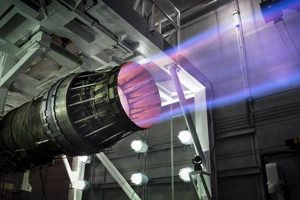
Jet engines, including turbojets, turbofans, and turboprops, provide thrust for aircraft by accelerating air through a series of compressors, combustors, and turbines. Commercial airliners predominantly use turbofan engines for their efficiency and high thrust-to-weight ratio. Jet engine advancements are crucial for reducing fuel consumption and emissions in the aviation sector.
- Electric Propulsion
Electric propulsion systems, such as ion drives and Hall-effect thrusters, use electric fields to accelerate ionized propellant. These systems offer high specific impulse, enabling long-duration space missions. NASA’s Dawn spacecraft, which explored the asteroid Vesta and the dwarf planet Ceres, utilized ion propulsion effectively. Electric propulsion is particularly suited for deep-space exploration and satellite station-keeping.
- Propellers
Propellers, driven by piston or turbine engines, generate thrust by creating a pressure difference between the front and rear of the propeller blades. Propellers are commonly used on smaller aircraft and for specialized applications like crop dusting. The design of propeller blades influences efficiency and noise levels. Optimization involves balancing thrust and fuel efficiency for specific operational profiles.
Effective propulsion is indispensable for successful aerospace endeavors. Selection, design, and implementation of these systems represent a critical element for any vehicle designed to operate within or beyond Earth’s atmosphere, illustrating the core principles of aerospace engineering.
3. Materials Science

Materials science plays a pivotal role in the field of aerospace engineering. The selection, development, and application of advanced materials are critical for achieving the performance, safety, and reliability demanded of aircraft and spacecraft. Material properties directly impact vehicle weight, structural integrity, thermal resistance, and overall operational lifespan.
- High-Strength Lightweight Alloys
Aluminum alloys, titanium alloys, and magnesium alloys are extensively employed due to their high strength-to-weight ratios. These materials are used in airframes, engine components, and landing gear. The Boeing 787 Dreamliner, for example, utilizes significant amounts of aluminum alloys to reduce weight and improve fuel efficiency. The use of lighter materials translates directly into improved performance, longer flight ranges, and reduced operational costs.
- Composite Materials
Carbon fiber reinforced polymers (CFRP) and other composite materials offer exceptional strength and stiffness at a fraction of the weight of traditional metals. They are found in aircraft wings, fuselage sections, and control surfaces. Modern aircraft, such as the Airbus A350, incorporate CFRP to achieve significant weight savings. The enhanced material properties contribute to structural integrity and improved aerodynamic performance.
- High-Temperature Ceramics and Coatings
Ceramic matrix composites (CMCs) and thermal barrier coatings (TBCs) are crucial for components exposed to extreme heat, such as turbine blades in jet engines and heat shields on spacecraft. These materials withstand temperatures that would melt conventional metals, protecting critical components from failure. The Space Shuttle’s heat shield, composed of ceramic tiles, exemplifies the vital role of high-temperature materials in aerospace applications.
- Smart Materials
Shape memory alloys (SMAs) and piezoelectric materials are increasingly utilized for adaptive structures, vibration damping, and sensing applications. These materials can change shape or properties in response to external stimuli, enabling dynamic control and improved performance. SMAs are used in morphing wing technology, allowing aircraft to adapt their wing shape for optimal flight conditions. The integration of smart materials into aerospace systems enhances functionality and efficiency.
The advancements in materials science are essential drivers of progress in aerospace engineering. Through continued research and development, more efficient, durable, and high-performance aerospace vehicles will come to fruition. The correlation between improved materials and improvements in aircraft and spacecraft capabilities reinforces their joint value.
4. Structural Analysis

Structural analysis, a core component of aerospace engineering, ensures the integrity and reliability of aircraft and spacecraft under diverse operational loads. It is a systematic process of evaluating the mechanical behavior of structures, predicting stresses, strains, and deformations. This predictive capability is essential for preventing catastrophic failures and ensuring airworthiness. Without accurate structural analysis, the safety and efficiency of aerospace vehicles would be severely compromised.
The process involves several stages: modeling the structure, defining material properties, applying loads and boundary conditions, and then solving for the structural response using analytical or numerical methods. Finite Element Analysis (FEA) is commonly employed, allowing engineers to simulate complex geometries and loading scenarios. For example, when designing an aircraft wing, structural analysis determines the required thickness and material distribution to withstand aerodynamic forces during flight. This analysis considers factors such as lift, drag, turbulence, and maneuver loads. Similarly, spacecraft structures are analyzed to withstand launch stresses, thermal gradients, and radiation exposure in space. The consequences of neglecting structural analysis are exemplified by historical structural failures in aircraft, highlighting the necessity of meticulous design and analysis.
In conclusion, structural analysis is not merely an analytical exercise but an indispensable step in the creation of safe, reliable, and high-performing aerospace vehicles. It underpins every aspect of aerospace vehicle design, from the airframe to individual components, ensuring that the vehicles can operate safely in extreme conditions. Challenges remain in modeling complex material behavior and accurately predicting failure modes, but ongoing research and development continue to improve the accuracy and efficiency of structural analysis techniques, further cementing its role within aerospace engineering.
5. Control Systems

Control systems are intrinsic to aerospace engineering, governing the stability, maneuverability, and autonomous operation of aircraft and spacecraft. These systems, encompassing sensors, actuators, and sophisticated algorithms, enable precise management of vehicle attitude, trajectory, and engine performance. A deficiency in control system design directly compromises flight safety and mission efficacy. For instance, the successful landing of a spacecraft on Mars relies heavily on autonomous control systems that manage descent, parachute deployment, and retro-rocket firing, compensating for atmospheric uncertainties and gravitational forces. The development and implementation of these systems are critical elements in the design and operation of aerospace vehicles.
Advanced control methodologies, such as adaptive control and model predictive control, are increasingly employed to address complex challenges in aerospace applications. Adaptive control systems adjust their parameters in real-time to compensate for changing flight conditions or system degradation, enhancing robustness and reliability. Model predictive control utilizes mathematical models to predict future system behavior and optimize control actions over a defined time horizon, enabling precise trajectory tracking and resource management. The implementation of fly-by-wire systems in modern aircraft, replacing mechanical linkages with electronic signals and computer control, showcases the practical application of advanced control systems in enhancing flight performance and safety. Such advancements are crucial for enabling more efficient, safer, and more autonomous aerial and space operations.
In summary, control systems are an indispensable aspect of aerospace engineering, influencing every facet from basic flight dynamics to complex autonomous operations. Ongoing research and development in control theory, sensor technology, and computational algorithms are continuously expanding the capabilities of aerospace vehicles. The continuous demand for enhanced performance, safety, and autonomy will further drive the development and integration of advanced control systems within the ever-evolving aerospace landscape.
6. Orbital Mechanics

Orbital mechanics constitutes a critical subdiscipline within aerospace engineering, governing the motion of spacecraft and other celestial bodies under the influence of gravitational forces. Its principles dictate trajectory planning, satellite positioning, and mission design for space exploration and utilization, representing a vital component of aerospace projects.
- Trajectory Design and Optimization
Trajectory design involves calculating and optimizing the paths of spacecraft between celestial bodies, considering factors such as fuel consumption, travel time, and gravitational assists. Mission planners use orbital mechanics principles to determine the most efficient routes for interplanetary travel or to maintain specific satellite orbits. An example includes Hohmann transfer orbits, which minimize fuel usage for transferring between circular orbits. Proper trajectory design is crucial for resource allocation and mission success.
- Satellite Orbit Determination and Maintenance
Orbit determination involves accurately calculating and predicting the position and velocity of satellites in orbit. Orbit maintenance, also known as station-keeping, employs thrusters to counteract orbital perturbations caused by gravitational anomalies, atmospheric drag, and solar radiation pressure. Accurate orbit determination is essential for navigation, communication, and Earth observation applications. Without precise orbit maintenance, satellites would drift from their intended positions, disrupting their functionality.
- Rendezvous and Docking
Rendezvous and docking maneuvers involve bringing two spacecraft together in orbit, requiring precise control of relative position and velocity. These operations are essential for resupplying space stations, performing satellite repairs, and assembling large structures in space. The rendezvous of the Apollo Lunar Module with the Command Module in lunar orbit exemplifies the criticality of precise orbital mechanics calculations. Safe and efficient rendezvous and docking are essential for human spaceflight and in-space servicing missions.
- Interplanetary Mission Planning
Interplanetary mission planning utilizes orbital mechanics principles to design trajectories for spacecraft traveling to other planets, asteroids, or comets. These missions require careful consideration of launch windows, gravitational assists, and arrival conditions. The trajectory of the Voyager spacecraft, which used gravitational assists from multiple planets to explore the outer solar system, exemplifies the application of advanced orbital mechanics techniques. Successful interplanetary missions depend on accurate calculations and meticulous planning.
The principles of orbital mechanics are foundational to aerospace engineering, enabling the development and execution of space missions that expand scientific knowledge, enhance communication capabilities, and facilitate exploration beyond Earth. Understanding these principles is indispensable for engineers involved in designing, launching, and operating spacecraft, reinforcing the intrinsic link between orbital mechanics and the broader field of aerospace engineering.
7. Systems Integration
Systems integration is a linchpin within this engineering field, representing the process of combining individual components and subsystems into a unified, functional whole. It is more than mere assembly; it requires ensuring seamless interaction and interoperability among disparate elements to achieve overall system performance requirements. Given the complexity of modern aircraft and spacecraft, this is vital to operational safety and effectiveness.
- Interface Management
Interface management entails defining and controlling the interactions between different subsystems. This involves specifying communication protocols, data formats, and physical connections to ensure compatibility and prevent conflicts. An example is the integration of the avionics system with the flight control system, where precise data exchange is critical for stable flight. Poor interface management can lead to communication breakdowns, system malfunctions, and compromised mission objectives.
- Verification and Validation
Verification and validation (V&V) processes confirm that the integrated system meets specified requirements and performs as intended under various operating conditions. Verification confirms that the system is built correctly, while validation confirms that the system meets the user’s needs. V&V activities involve rigorous testing, simulation, and analysis to identify and resolve potential issues before deployment. Failure to adequately verify and validate a system can result in costly rework, schedule delays, or even catastrophic failures during operation.
- Configuration Management
Configuration management establishes and maintains control over the design, development, and modification of the integrated system. This involves tracking changes, managing versions, and ensuring that all components are properly documented. Effective configuration management is essential for maintaining system integrity, traceability, and auditability throughout its lifecycle. A lack of configuration control can lead to confusion, errors, and difficulties in troubleshooting problems.
- Risk Management
Risk management involves identifying, assessing, and mitigating potential risks associated with the integrated system. This includes considering technical risks, programmatic risks, and operational risks. Strategies are developed to minimize the likelihood and impact of identified risks. A proactive approach to risk management is crucial for ensuring mission success and avoiding costly setbacks. Failure to adequately manage risks can result in schedule overruns, budget increases, and performance shortfalls.
These facets of systems integration directly influence the success of aerospace projects. From ensuring reliable communication between subsystems to managing the complexities of design changes and mitigating potential risks, effective systems integration is indispensable. As aerospace systems continue to grow in complexity and sophistication, the importance of skillful integration will only continue to escalate.
Frequently Asked Questions
This section addresses common inquiries concerning aerospace engineering, providing insight into its scope, requirements, and career prospects.
Question 1: What distinguishes aerospace engineering from other engineering disciplines?
Aerospace engineering focuses specifically on the design, development, and testing of aircraft and spacecraft. This specialization requires a deep understanding of aerodynamics, propulsion, structural analysis, and orbital mechanics, distinguishing it from broader fields such as mechanical or electrical engineering.
Question 2: What are the primary educational requirements for pursuing a career in aerospace engineering?
A bachelor’s degree in aerospace engineering is generally the minimum requirement. Advanced roles may necessitate a master’s degree or a doctorate. A strong foundation in mathematics, physics, and computer science is essential throughout all levels of academic pursuit.
Question 3: What career opportunities are available to aerospace engineers?
Career paths include working in aircraft design, spacecraft development, propulsion systems, avionics, and flight testing. Opportunities exist in government agencies, private aerospace companies, and research institutions.
Question 4: What skills are most valuable for success in aerospace engineering?
Critical thinking, problem-solving, strong analytical abilities, and proficiency in computer-aided design (CAD) software are highly valued. Effective communication and teamwork skills are also important for collaborative projects.
Question 5: How does aerospace engineering contribute to advancements in other fields?
Aerospace engineering innovations often lead to advancements in materials science, computational modeling, and control systems, with applications extending to industries such as automotive, energy, and medicine. These advancements reflect the broad impact of the discipline.
Question 6: What are the major challenges currently facing the aerospace engineering field?
Key challenges include reducing aircraft emissions, developing sustainable propulsion systems, enabling long-duration space missions, and ensuring the safety and reliability of autonomous aircraft systems. Addressing these challenges requires ongoing innovation and collaboration.
In summary, aerospace engineering is a multifaceted discipline demanding rigorous education, specialized skills, and a commitment to innovation. Its impact extends beyond the design of aircraft and spacecraft, contributing to technological advancements across various sectors.
Transitioning from these FAQs, the next segment highlights the future trajectory and potential advancements within this engineering area.
In Conclusion
This exposition on “what is aerospace engineering all about” has revealed a multifaceted discipline encompassing the design, development, and operation of vehicles that traverse both the Earth’s atmosphere and the vastness of space. It has demonstrated the reliance on core competencies such as aerodynamics, propulsion, materials science, structural analysis, control systems, orbital mechanics, and systems integration. This engineering field’s demand for precision, innovation, and a commitment to safety is paramount.
The continued pursuit of knowledge and technological advancement within this area will undoubtedly shape the future of transportation, communication, and exploration. Investment in research, education, and ethical practices will be instrumental in realizing its potential and addressing the complex challenges that lie ahead. The journey into aerospace engineering requires a steadfast dedication to the pursuit of what is possible.