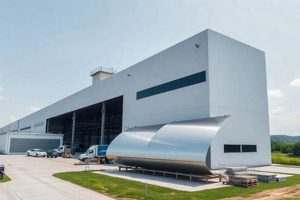
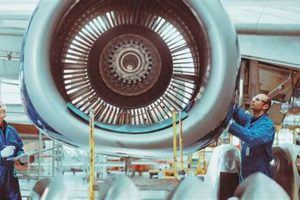
The geographic distribution of employment opportunities for professionals in the field of flight and space vehicle design and development is not uniform. Concentrations of these roles are typically observed in regions with established aerospace industries. These industries are often characterized by the presence of major aerospace manufacturers, government research facilities, and supporting supply chains.
Understanding the concentration of these job opportunities is crucial for career planning and workforce development. Individuals pursuing careers in this sector may benefit from focusing their job search efforts in areas where these industries have a strong presence. Historically, government investment in aerospace has significantly influenced the geographic distribution of these employment opportunities.
The following sections will detail specific geographic areas within the United States and globally where a substantial number of positions for aerospace engineers are located. These areas are often centers of innovation and production, providing a range of opportunities for professionals at various stages of their careers.
Guidance Regarding Geographic Job Market Analysis for Aerospace Engineers
The following insights aim to inform individuals seeking employment within the aerospace engineering sector. A strategic approach to job searching should incorporate an understanding of regional industry concentrations.
Tip 1: Prioritize States with Established Aerospace Industries: Focus job search efforts on states such as California, Washington, Texas, and Florida. These states host major aerospace manufacturers, government research facilities, and extensive supplier networks.
Tip 2: Research Proximity to Government Installations: Consider locations near NASA centers, Department of Defense research labs, and Air Force bases. These installations often employ a significant number of aerospace engineers and related professionals.
Tip 3: Investigate Areas with Strong University Partnerships: Target regions with universities that have robust aerospace engineering programs. These universities often foster collaborations with industry partners, creating employment opportunities for graduates and experienced engineers alike.
Tip 4: Analyze Economic Development Initiatives: Monitor state and local economic development initiatives that support the growth of the aerospace industry. Government incentives and tax breaks can attract new companies and create jobs in specific regions.
Tip 5: Examine the Presence of Aerospace Clusters: Identify regions recognized as aerospace clusters. These clusters typically offer a concentration of aerospace companies, research institutions, and skilled workers, creating a dynamic and competitive job market.
Tip 6: Track Industry News and Trends: Stay informed about industry news and trends related to aerospace manufacturing, research, and development. This information can provide insights into emerging job markets and areas of growth.
Tip 7: Consider Cost of Living Factors: Evaluate the cost of living in different regions before making relocation decisions. Balance the potential for job opportunities with the affordability of housing, transportation, and other essential expenses.
By strategically targeting regions with established aerospace industries, individuals can significantly enhance their prospects of securing employment in this competitive field. Thorough research and analysis are crucial for navigating the geographic landscape of aerospace engineering jobs.
The subsequent sections will further explore specific companies and organizations that contribute to these geographic concentrations of aerospace engineering employment.
1. California concentration

California’s prominence as a hub for aerospace engineering employment is a direct consequence of its historical development and ongoing investment in the aerospace industry. The presence of major aerospace manufacturers like Boeing (formerly McDonnell Douglas) in Southern California, along with defense contractors such as Lockheed Martin and Northrop Grumman, has created a sustained demand for aerospace engineers for decades. This demand, in turn, has attracted a highly skilled workforce and fostered a supporting ecosystem of suppliers, research institutions, and specialized training programs. The sheer scale of these operations ensures that a significant proportion of available aerospace engineering jobs are located within the state.
Furthermore, California’s concentration is reinforced by its academic institutions, including the California Institute of Technology (Caltech), Stanford University, and the University of California system. These institutions conduct cutting-edge research in aerospace-related fields, generating a steady stream of graduates and attracting federal research funding. This symbiotic relationship between academia and industry strengthens California’s position as a leading center for innovation and employment in the aerospace sector. Examples include the Jet Propulsion Laboratory (JPL), managed by Caltech for NASA, which serves as a major employer of aerospace engineers.
Understanding the California concentration is of practical significance for job seekers. It highlights the potential benefits of targeting the state for employment opportunities, but also underscores the competitive nature of the job market in this region. While California offers numerous advantages, including higher salaries and a thriving aerospace community, the high cost of living and intense competition must be considered. Ultimately, a successful job search strategy requires a careful assessment of individual skills and career goals in relation to the opportunities and challenges presented by the California aerospace landscape.
2. Texas expansion

The recent expansion of the aerospace industry in Texas directly influences the geographic distribution of employment opportunities for aerospace engineers. This expansion constitutes a shift, altering traditional concentrations and establishing Texas as a significant hub for such jobs. Several factors contribute to this phenomenon. The state’s favorable business climate, characterized by lower taxes and reduced regulatory burdens, has attracted major aerospace companies seeking to reduce operational costs. Furthermore, Texas offers a large and skilled workforce, supported by reputable engineering programs at universities like the University of Texas at Austin, Texas A&M University, and Rice University. The presence of NASA’s Johnson Space Center in Houston provides a strong foundation for research and development, further stimulating growth in the private sector. Examples include expansions by SpaceX and Blue Origin, both of which have established significant operations in Texas, generating numerous engineering positions.
The implications of this expansion are multi-faceted. It not only increases the overall number of aerospace engineering jobs but also diversifies the types of opportunities available. The influx of private space companies introduces a more entrepreneurial and fast-paced environment, contrasting with the traditional government-dominated sector. This shift necessitates a broader skill set among engineers, emphasizing adaptability and innovation. Moreover, the lower cost of living in many parts of Texas, compared to established aerospace hubs like California, makes it an attractive destination for engineers seeking to improve their quality of life. The practical significance of understanding the Texas expansion lies in recognizing its potential to reshape career paths and create new areas of specialization within aerospace engineering. Examples include growth in space tourism, manufacturing, and launch operations.
In summary, the Texas expansion is a critical factor reshaping the landscape of aerospace engineering employment. By attracting major players and fostering a supportive ecosystem, Texas is becoming an increasingly important location for those seeking opportunities in this field. While challenges remain, such as competition for talent and infrastructure development, the long-term outlook suggests that Texas will continue to play a significant role in the aerospace industry and the distribution of its associated jobs. Understanding this trend is essential for individuals and organizations seeking to capitalize on the evolving geography of aerospace engineering employment.
3. Washington presence

Washington State’s significant presence in the aerospace industry directly contributes to the concentration of aerospace engineering jobs. The primary driver of this presence is the Boeing Company, which maintains its largest manufacturing facilities in the Puget Sound region. This concentration is not merely a numerical statistic; it represents a deeply embedded ecosystem comprising suppliers, research institutions, and a highly skilled workforce specifically trained for the demands of aircraft manufacturing and related engineering disciplines. The presence of Boeing acts as a magnet, attracting talent and fostering innovation, creating a self-sustaining cycle of growth in aerospace engineering employment. The result is a geographical clustering of opportunities that significantly influences where a substantial number of these jobs are located. For instance, the development of new aircraft programs at Boeing’s Everett factory necessitates a constant demand for engineers specializing in aerodynamics, structures, avionics, and related fields, further solidifying Washington’s position as a key location.
The importance of the “Washington presence” extends beyond a single company. The region’s aerospace cluster supports a network of smaller firms that supply components, provide specialized services, and contribute to research and development. This network, in turn, generates additional employment opportunities for aerospace engineers, spanning roles in design, manufacturing, testing, and maintenance. Furthermore, the presence of universities with strong aerospace engineering programs, such as the University of Washington, ensures a steady influx of qualified graduates into the local workforce. This collaborative environment, where industry and academia interact closely, further reinforces Washington’s position as a center for aerospace innovation and job creation. Practical applications of understanding this “Washington presence” include targeted job search strategies, career development plans aligned with the region’s specific industry needs, and educational choices that prioritize skills sought by local employers.
In summary, the robust “Washington presence” within the aerospace sector is a critical component influencing the geographic distribution of aerospace engineering jobs. The concentration of Boeing’s operations, coupled with a supportive ecosystem of suppliers, research institutions, and educational programs, establishes Washington State as a primary location for employment in this field. While the industry faces cyclical fluctuations and external pressures, the established infrastructure and skilled workforce provide a foundation for sustained growth and continued demand for aerospace engineers. Understanding this connection is crucial for individuals seeking to pursue or advance their careers in aerospace engineering and for organizations seeking to tap into the talent pool concentrated in the Pacific Northwest.
4. Florida opportunities

Florida’s significance as a location for aerospace engineering employment is directly linked to its historical role in space exploration and its evolving aerospace industry. The presence of Kennedy Space Center (KSC) and Cape Canaveral Space Force Station has long established Florida as a hub for rocket launch operations, attracting a concentration of engineers specializing in propulsion, avionics, and related fields. This legacy, coupled with ongoing investments in commercial space ventures, has fostered a dynamic job market. Private companies, such as SpaceX, Blue Origin, and Boeing, maintain a presence in Florida, capitalizing on the state’s infrastructure and workforce, thereby amplifying aerospace engineering employment opportunities. The state’s proactive approach to attracting aerospace businesses through incentives and infrastructure improvements further bolsters its position as a relevant location for engineers. These factors collectively contribute to Florida’s inclusion in any assessment regarding the geographic distribution of aerospace engineering employment.
Beyond launch operations, Floridas aerospace industry encompasses broader activities such as aircraft maintenance, repair, and overhaul (MRO), as well as the development of unmanned aerial systems (UAS). These activities contribute to a diversification of job roles for aerospace engineers, expanding beyond the traditional focus on rocketry. The state’s universities, including the University of Central Florida and the Florida Institute of Technology, offer robust aerospace engineering programs, supplying a steady stream of graduates to the local workforce. The practical significance of understanding “Florida opportunities” lies in recognizing the specific skill sets sought by employers in the region, such as experience with launch operations, familiarity with UAS technologies, or expertise in MRO practices. Individuals targeting employment in Florida’s aerospace sector should tailor their qualifications to match these specific demands.
In conclusion, Florida’s established presence in space launch operations, coupled with the growth of commercial aerospace activities and related industries, solidifies its importance as a location for aerospace engineering employment. While the concentration of jobs may not rival that of California or Washington, the specialized nature of Florida’s industry and its continued expansion warrant consideration for individuals seeking careers in this field. Overcoming challenges related to workforce development and infrastructure investment will be crucial for Florida to further enhance its position as a leading center for aerospace engineering employment.
5. Government installations

The presence of government installations represents a significant factor influencing the geographical distribution of aerospace engineering employment. These installations, encompassing research facilities, testing centers, and operational bases, often serve as anchor institutions, attracting both private-sector contractors and a skilled workforce.
- Research and Development
Government research facilities, such as NASA centers (e.g., Langley Research Center, Glenn Research Center, Ames Research Center) and Department of Defense laboratories (e.g., Air Force Research Laboratory, Naval Research Laboratory), conduct cutting-edge research in aerospace technologies. These facilities employ a substantial number of aerospace engineers specializing in areas like aerodynamics, propulsion, materials science, and control systems. Proximity to these research centers fosters collaboration with universities and private companies, further stimulating job creation in the surrounding areas.
- Testing and Evaluation
Government testing and evaluation centers, such as the Air Force Test Center at Edwards Air Force Base and the Naval Air Warfare Center Aircraft Division at Patuxent River, provide crucial support for the development and certification of aerospace systems. These centers require aerospace engineers with expertise in flight testing, structural analysis, and systems integration. The presence of these facilities creates localized employment opportunities, particularly in areas with a high concentration of military operations or aerospace manufacturing.
- Operational Bases and Commands
Military bases and commands, such as Air Force Materiel Command and Space Operations Command, employ aerospace engineers to maintain, upgrade, and operate aerospace systems. These positions often require expertise in aircraft maintenance, systems engineering, and logistics. The geographical distribution of these bases and commands directly influences the location of aerospace engineering jobs, particularly in states with a significant military presence.
- Regulatory Agencies
Government regulatory agencies, such as the Federal Aviation Administration (FAA), employ aerospace engineers to develop and enforce safety standards for aircraft design and operation. These positions require expertise in aircraft certification, air traffic management, and accident investigation. The FAA’s regional offices and headquarters contribute to the concentration of aerospace engineering jobs in specific locations, particularly near major airports and aerospace manufacturing centers.
In summary, government installations exert a considerable influence on the geographic distribution of aerospace engineering employment. Through research and development, testing and evaluation, operational support, and regulatory oversight, these facilities create a sustained demand for skilled engineers in specific regions. Understanding the location and function of these installations is crucial for individuals seeking employment in the aerospace sector, as well as for policymakers seeking to promote regional economic development.
6. Research facilities
Research facilities play a pivotal role in determining the geographical distribution of aerospace engineering employment. These centers of innovation serve as focal points, attracting talent and fostering industry growth in specific regions.
- Government-Funded Research
Government-funded research facilities, such as NASA centers and Department of Defense laboratories, are major employers of aerospace engineers. These institutions conduct fundamental research and development, driving technological advancements and creating opportunities in areas like aerodynamics, propulsion, and materials science. The presence of these facilities directly correlates with a higher concentration of aerospace engineering jobs in the surrounding regions. Examples include the concentration of jobs near NASA’s Ames Research Center in California and Langley Research Center in Virginia.
- University-Affiliated Research
Universities with strong aerospace engineering programs often operate research facilities that contribute to the local job market. These facilities provide opportunities for graduate students and postdoctoral researchers, as well as attract industry partnerships and funding. The location of these universities influences the geographical distribution of entry-level and research-oriented aerospace engineering positions. Examples include the Massachusetts Institute of Technology (MIT) in Massachusetts and Stanford University in California.
- Private Sector Research and Development
Aerospace companies maintain their own research and development facilities, contributing to the concentration of jobs in areas where these companies are located. These facilities focus on applied research and product development, creating opportunities for engineers with expertise in specific areas like aircraft design, satellite technology, or unmanned aerial systems. The location of companies like Boeing, Lockheed Martin, and SpaceX significantly impacts the distribution of aerospace engineering jobs.
- Industry Consortiums and Partnerships
Industry consortiums and partnerships that support collaborative research efforts also influence job distribution. These organizations bring together companies, universities, and government agencies to work on shared research goals. The location of these consortiums and partnerships can create clusters of aerospace engineering activity, particularly in regions with a strong history of collaboration and innovation.
The presence and investment in research facilities across government, academic and private sectors have created a diverse range of employment opportunities. Government and private sectors also contributed to create research sectors in industry consortiums and partnership with universities to enhance job opportunities. These facilities are often the locus of innovation, and their geographic location is a key factor in determining the distribution of aerospace engineering jobs.
7. Industry clusters

The geographic concentration of aerospace engineering employment is significantly influenced by the presence and strength of industry clusters. These clusters represent regional ecosystems characterized by a high density of interconnected companies, specialized suppliers, service providers, research institutions, and associated organizations in a particular field, in this case, aerospace. The clustering effect directly shapes the spatial distribution of jobs within the aerospace sector.
- Concentration of Talent and Expertise
Aerospace industry clusters attract and retain a highly skilled workforce. The presence of major aerospace companies, research universities, and specialized training programs creates a competitive labor market that draws talented engineers from across the country and the globe. This concentration of expertise further enhances the region’s attractiveness to new companies and investment, leading to a virtuous cycle of job growth. For example, the Seattle metropolitan area, with its strong Boeing presence, has a deep pool of aerospace engineers and technicians, making it a prime location for other aerospace-related businesses.
- Synergistic Innovation and Collaboration
Industry clusters foster collaboration and knowledge sharing among companies, research institutions, and government agencies. This collaborative environment promotes innovation and the rapid development of new technologies. The proximity of different players in the aerospace value chain facilitates the exchange of ideas and the creation of new business opportunities. For instance, Silicon Valley’s aerospace cluster benefits from its close ties to the technology sector, leading to the development of innovative aerospace solutions in areas like autonomous flight and satellite communication.
- Supplier and Value Chain Proximity
Aerospace industry clusters typically have well-established supply chains, with a network of specialized suppliers providing components, materials, and services to major aerospace manufacturers. This proximity reduces transportation costs, improves communication, and facilitates just-in-time delivery, making the region more competitive. The presence of a robust supplier base also creates additional job opportunities for aerospace engineers, particularly in areas like manufacturing, quality control, and supply chain management. The Wichita, Kansas, area, known as the “Air Capital of the World,” has a long history of aircraft manufacturing and a dense network of aerospace suppliers.
- Government and Institutional Support
Successful aerospace industry clusters often receive strong support from government agencies, universities, and other institutions. This support can take the form of funding for research and development, infrastructure investments, workforce training programs, and regulatory policies that favor the aerospace industry. Government and institutional support helps to create a stable and predictable business environment, encouraging companies to invest and expand their operations within the cluster. The Toulouse region in France benefits from significant government investment in aerospace research and development, as well as the presence of major aerospace companies like Airbus.
In summary, industry clusters serve as magnets for aerospace engineering jobs by concentrating talent, fostering innovation, providing supplier proximity, and attracting government support. The geographic distribution of these clusters directly influences where the majority of aerospace engineering positions are located, making it crucial for job seekers and companies alike to understand the dynamics of these regional ecosystems. Understanding these clusters also offers important guidance for regional economic development strategies aimed at attracting and growing aerospace industries.
Frequently Asked Questions
This section addresses common inquiries regarding the geographical distribution of aerospace engineering employment opportunities, providing factual answers to guide informed decision-making.
Question 1: Are aerospace engineering jobs primarily concentrated in coastal states?
While coastal states like California and Washington have historically been aerospace hubs, opportunities also exist in states such as Texas, Florida, and Colorado. Geographic diversification is occurring due to factors like cost of living and government investment.
Question 2: How does proximity to NASA facilities impact job availability?
Locations near NASA centers (e.g., Johnson Space Center, Kennedy Space Center) often exhibit a higher concentration of aerospace engineering jobs, particularly in areas related to space exploration, mission control, and related research and development activities.
Question 3: Do defense contractors primarily hire aerospace engineers?
Yes, defense contractors are significant employers of aerospace engineers. These companies require expertise in areas such as aircraft design, missile systems, and defense-related research and development projects.
Question 4: What role do universities play in the distribution of these jobs?
Universities with strong aerospace engineering programs often serve as talent pipelines for local industries. These universities may also host research facilities that create employment opportunities for engineers and scientists.
Question 5: Is it necessary to relocate to find aerospace engineering employment?
Relocation may be necessary to access a wider range of job opportunities, particularly in specialized areas of aerospace engineering. The decision to relocate should be based on individual career goals and an assessment of regional job markets.
Question 6: How can one identify emerging aerospace job markets?
Monitoring industry news, government initiatives, and company expansions can provide insights into emerging job markets. Professional networking and attending industry conferences can also help identify new opportunities.
In summary, the geographic distribution of aerospace engineering jobs is influenced by various factors, including historical industry presence, government investment, university programs, and regional economic conditions. A strategic approach to job searching requires a thorough understanding of these factors.
The subsequent section will provide insights into specific companies that employ aerospace engineers.
Geographic Distribution of Aerospace Engineering Employment
The preceding analysis has explored the varied factors contributing to the geographic distribution of aerospace engineering jobs. The legacy of historical aerospace hubs, evolving economic climates, governmental investments, and the emergence of industry clusters all contribute to the present concentrations of these roles. Understanding these dynamics is crucial for individuals seeking careers in the field.
The future of aerospace engineering employment will likely be shaped by continued technological advancements, increased commercial space activities, and evolving geopolitical considerations. Prospective engineers must remain informed about these trends and strategically target their job searches to align with the changing landscape of the industry, ensuring optimal career trajectory within this vital sector.