The typical duration required to complete an undergraduate degree in aerospace engineering is four years. This timeframe encompasses the necessary coursework and laboratory experience designed to provide a foundational understanding of the principles governing flight and space exploration. For example, a student enrolling in a Bachelor of Science in Aerospace Engineering program can generally expect to graduate after four academic years of full-time study.
The dedication of four years to mastering aerospace engineering provides numerous advantages. It allows for comprehensive coverage of crucial topics such as aerodynamics, propulsion, and structural analysis. This intense period of study equips graduates with the skills and knowledge needed to contribute meaningfully to the aerospace industry and pursue advanced research. Historically, a solid grounding in these principles over this length of time has been a consistent prerequisite for professional success in this field.
Subsequent sections will elaborate on the curriculum involved in an aerospace engineering program, the potential for accelerated or extended study, and the implications of further graduate-level education on career opportunities within the sector.
Guidance for Prospective Aerospace Engineering Students
Careful planning can optimize the educational path for individuals interested in pursuing aerospace engineering. This section outlines key strategies to consider during the typical four-year undergraduate program.
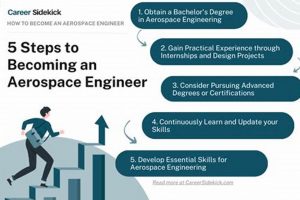
Tip 1: Optimize the Curriculum: A strategic approach involves selecting courses that align with specific career interests within aerospace engineering, such as propulsion systems or spacecraft design. This focused selection allows for deeper expertise in a chosen area.
Tip 2: Secure Relevant Internships: Practical experience gained through internships at aerospace companies or research institutions is invaluable. These opportunities offer exposure to real-world engineering challenges and enhance employability after graduation. Aim for multiple internships throughout the four-year study.
Tip 3: Engage in Research Opportunities: Participating in undergraduate research projects can strengthen analytical and problem-solving skills. Collaborating with faculty members on research initiatives provides exposure to cutting-edge technologies and research methodologies.
Tip 4: Join Aerospace-Related Student Organizations: Active involvement in organizations like the American Institute of Aeronautics and Astronautics (AIAA) provides networking opportunities and access to professional development resources. These groups often host competitions, workshops, and guest lectures.
Tip 5: Cultivate Strong Foundational Knowledge: A solid understanding of mathematics, physics, and computer science is essential for success in aerospace engineering. Prioritize these core subjects early in the curriculum to build a strong academic foundation.
Tip 6: Seek Mentorship: Connect with experienced aerospace engineers or professors who can offer guidance and support throughout the academic journey. Mentors can provide valuable insights into the industry and help navigate career choices.
By adhering to these strategies, students can maximize the value of their four-year aerospace engineering education, ultimately enhancing their career prospects.
The subsequent section will discuss the advantages and disadvantages of pursuing graduate studies in aerospace engineering after completing the standard undergraduate program.
1. Undergraduate baseline (four years)

The undergraduate curriculum, typically spanning four years, serves as the foundational block for any aspiring aerospace engineer. This initial phase establishes a comprehensive understanding of essential principles, including aerodynamics, propulsion, materials science, and control systems. The correlation between “Undergraduate baseline (four years)” and “how many years to study aerospace engineering” highlights that these initial years are not merely a prerequisite, but rather the crucial platform upon which advanced knowledge and practical skills are built. Failure to adequately master these core concepts during the undergraduate period can significantly impede progress in subsequent graduate studies or professional practice. For example, a robust grasp of calculus and differential equations acquired during the first two years is indispensable for comprehending advanced topics in fluid dynamics or structural analysis later in the curriculum.
Furthermore, the four-year undergraduate experience fosters the development of critical thinking, problem-solving, and teamwork abilities, which are essential for success in the collaborative and technically demanding aerospace industry. Capstone design projects, often undertaken during the senior year, require students to apply their accumulated knowledge to design, build, and test aerospace-related systems, mirroring the challenges encountered in real-world engineering scenarios. The successful completion of these projects demonstrates a student’s ability to integrate theoretical knowledge with practical application, a hallmark of a well-rounded aerospace engineer. The absence of this structured, comprehensive foundation would leave individuals ill-prepared for the complexities of advanced study or professional roles.
In summary, the “Undergraduate baseline (four years)” is an indispensable component of “how many years to study aerospace engineering,” providing both the theoretical framework and practical skills necessary for a successful career in the field. While further specialization through graduate studies may be pursued, the core knowledge and competencies acquired during the undergraduate years are the bedrock upon which all subsequent learning and professional development are built. This understanding underscores the importance of a rigorous and well-structured undergraduate curriculum in aerospace engineering.
2. Master's degree (plus two years)

A Master’s degree in aerospace engineering, typically requiring an additional two years of study beyond the undergraduate level, represents a significant extension of the educational commitment. This period is often dedicated to specialized knowledge and advanced research, expanding upon the foundational principles acquired during the initial four years of a Bachelor’s program. The decision to pursue this advanced degree directly impacts the total time invested in becoming a qualified aerospace engineer.
- Specialized Knowledge Acquisition
The Master’s program provides an opportunity to delve into specific areas of aerospace engineering, such as computational fluid dynamics, advanced propulsion systems, or space mission design. This specialization equips graduates with expertise in a particular niche, enhancing their value in the job market. For example, a student might focus on developing advanced control algorithms for unmanned aerial vehicles (UAVs), a skill highly sought after in the defense and commercial sectors. This focused study requires dedicated time and effort, explaining the two-year duration.
- Advanced Research Skills
Many Master’s programs incorporate a substantial research component, requiring students to conduct independent investigations and contribute to the existing body of knowledge. This research experience hones critical thinking, analytical, and problem-solving abilities, which are essential for innovation and development in the aerospace industry. The time required for research, including literature reviews, experimentation, and data analysis, accounts for a significant portion of the two-year commitment. For example, a student may work on developing new composite materials for aircraft structures, requiring extensive testing and analysis.
- Career Advancement Potential
Holding a Master’s degree can significantly enhance career prospects and earning potential. Employers often seek candidates with advanced knowledge and research experience for roles in research and development, design engineering, and project management. The additional two years of study demonstrate a commitment to professional development and a deeper understanding of complex engineering principles. This can lead to faster career progression and access to more challenging and rewarding positions. For example, graduates with a Master’s degree may be more likely to secure positions in leading aerospace companies or government research laboratories.
- Industry-Specific Application
The content covered during the Master’s degree can be directly applied to current challenges in the aerospace sector, aligning academic insights with practical industry needs. It can also be tied to solving real-world, up-to-date issues of aerospace. The practical application is an important value of “how many years to study aerospace engineering”.
In summary, a Master’s degree, adding two years to the overall educational timeline, is a strategic investment for those seeking specialized expertise, advanced research capabilities, and enhanced career opportunities within the aerospace engineering field. The added duration of the Master’s degree program is vital in enhancing the technical and soft skills of individuals to reach higher standards in aerospace. While not mandatory for all roles, it offers a distinct advantage in a competitive industry.
3. Doctoral studies (variable duration)
Doctoral studies in aerospace engineering represent the pinnacle of academic pursuit in this field, substantially extending the overall time commitment beyond undergraduate and master’s level programs. The duration of these studies is notably variable, contingent upon the research topic, institutional requirements, and individual progress, directly impacting the “how many years to study aerospace engineering” question.
- Research Scope and Complexity
The duration of doctoral studies is heavily influenced by the scope and complexity of the research undertaken. Projects involving cutting-edge technologies or novel theoretical frameworks often necessitate extensive experimentation, data analysis, and iterative refinement. For instance, the development of a new propulsion system based on advanced plasma physics principles may require several years of dedicated research, including simulations, prototype construction, and performance testing. The inherently unpredictable nature of research contributes to the variable timeline.
- Publication Requirements and Dissertation Process
Doctoral programs typically require candidates to publish their research findings in peer-reviewed journals and to produce a comprehensive dissertation that demonstrates original contributions to the field. The process of preparing manuscripts for publication, addressing reviewer feedback, and defending the dissertation can significantly impact the overall duration of study. Students must not only conduct rigorous research but also effectively communicate their findings, which demands considerable time and effort. The timeline for successfully navigating the publication and dissertation process can vary depending on the field, the student’s individual progress, and the institution’s requirements.
- Funding Availability and Resource Access
The availability of funding and access to necessary research resources can also influence the duration of doctoral studies. Projects requiring specialized equipment, extensive computational resources, or travel to remote research sites may be delayed if funding is limited or access is restricted. Securing grants and fellowships often involves a competitive application process, and delays in funding can extend the overall time to completion. Similarly, limited access to critical infrastructure, such as wind tunnels or specialized laboratories, can impede research progress.
- Institutional Policies and Supervisory Guidance
The policies and requirements of the doctoral-granting institution, as well as the guidance and support provided by the dissertation supervisor, play a crucial role in determining the duration of study. Institutions may have specific residency requirements, coursework mandates, or examination schedules that impact the overall timeline. A supportive and engaged supervisor can provide invaluable guidance and mentorship, helping the student navigate the research process efficiently. Conversely, a lack of adequate supervision or conflicting institutional policies can prolong the time to completion.
In conclusion, the variable duration of doctoral studies in aerospace engineering highlights the highly individualized nature of advanced research. The factors outlined above research scope, publication requirements, funding availability, and institutional policies collectively determine the total number of years required to complete a doctoral degree, adding a significant and often unpredictable increment to the “how many years to study aerospace engineering” equation. Understanding these complexities is essential for prospective doctoral students as they plan their academic and career trajectories.
4. Specialized certifications

Specialized certifications, while not directly extending the formal duration of aerospace engineering studies in a degree-granting sense, significantly influence the overall time investment required to achieve professional competence and advancement. These certifications, often obtained after completing the fundamental four-year undergraduate program or even a graduate degree, demonstrate focused expertise in a particular domain. The pursuit of these certifications adds to the continuous learning process that characterizes an aerospace engineer’s career, impacting their overall skill set and professional trajectory. They indirectly contribute to the “how many years to study aerospace engineering” concept by representing ongoing, targeted education. For example, a certified Project Management Professional (PMP) with an aerospace background indicates not only their engineering knowledge but also their capability to manage complex aerospace projects effectively.
The connection between certifications and effective career management is often vital to the successful integration of “how many years to study aerospace engineering”. The investment in time and resources to acquire certifications such as Certified Systems Engineering Professional (CSEP) or FAA Airframe and Powerplant (A&P) licenses often translates to enhanced job performance, increased responsibilities, and improved career prospects. Companies frequently prioritize candidates holding relevant certifications, recognizing the value of standardized knowledge and validated skills. It also reflects on the dedication and continued learning process of an aerospace engineer. For example, an engineer with a CSEP certification is likely to be more involved in the development and integration process of new aerospace systems.
In conclusion, although specialized certifications do not add to the initial four-year undergraduate or graduate study duration, they are instrumental in shaping an aerospace engineer’s long-term professional development. Their acquisition reflects a commitment to continuous learning and specialized knowledge, ultimately contributing to career advancement and industry expertise. The pursuit of certifications is an important consideration for aerospace engineers who seek to remain competitive and effective in a rapidly evolving technological landscape.
5. Continuing professional education
Continuing professional education is an indispensable element in the career of an aerospace engineer, significantly impacting the perception of “how many years to study aerospace engineering.” The initial four years of undergraduate study provide a foundational knowledge base. However, the aerospace industry is characterized by rapid technological advancements. Therefore, ongoing learning is not merely supplementary but essential for maintaining competence and relevance. This continuous education takes various forms, including workshops, conferences, online courses, and self-directed study. Its absence can quickly render an engineer’s skills obsolete, diminishing their effectiveness and career prospects. For instance, an aerospace engineer who fails to update their knowledge of advanced composite materials or computational fluid dynamics techniques risks falling behind in a field where these technologies are constantly evolving. The understanding that formal education is just the starting point underscores the importance of lifelong learning in this discipline.
The practical implications of integrating continuing professional education are multifaceted. Engineers who actively engage in learning new skills and technologies are better equipped to contribute to innovative projects, adapt to changing industry demands, and assume leadership roles. Participation in industry conferences and workshops provides opportunities to network with peers, share knowledge, and stay abreast of emerging trends. Online courses and self-directed study allow engineers to deepen their expertise in specific areas of interest or address skill gaps identified through performance evaluations. Furthermore, companies often recognize and reward employees who demonstrate a commitment to continuous learning, providing opportunities for professional growth and advancement. The commitment to constant learning makes the initial time of study just a foundation and a base point for career growth.
In summary, continuing professional education is intrinsically linked to the perceived timeframe of “how many years to study aerospace engineering.” While a formal degree provides the initial qualifications, sustained learning and skill development are crucial for maintaining competence and career progression in the dynamic aerospace sector. Neglecting this aspect can lead to professional stagnation, while embracing it fosters adaptability, innovation, and long-term success. The integration of continuing professional education transforms the concept of “how many years to study aerospace engineering” from a fixed duration to an open-ended commitment to lifelong learning and professional development.
Frequently Asked Questions
This section addresses common inquiries regarding the time commitment required to pursue a career in aerospace engineering, providing clarity on typical program lengths and related factors.
Question 1: What is the standard length of an undergraduate aerospace engineering program?
A typical Bachelor of Science in Aerospace Engineering program requires four years of full-time study. This timeframe encompasses core coursework, laboratory work, and often a capstone design project.
Question 2: Is it possible to complete an aerospace engineering degree in less than four years?
Accelerated programs may exist, allowing motivated students to graduate in a shorter timeframe. However, these programs often require a heavier course load and may not be suitable for all individuals.
Question 3: How much longer does a Master’s degree add to the overall study duration?
A Master’s degree in aerospace engineering typically requires an additional two years of study beyond the undergraduate level. This may vary depending on the specific program and research requirements.
Question 4: What is the average duration of a doctoral program in aerospace engineering?
The duration of doctoral studies is highly variable, depending on the research topic, funding availability, and institutional requirements. It can range from three to seven years beyond the Master’s level.
Question 5: Do internships or co-op programs extend the time required to complete an aerospace engineering degree?
Internships or co-op programs may extend the overall time to graduation, particularly if they are taken during the academic year. However, the practical experience gained is invaluable and often enhances career prospects.
Question 6: Does continuing professional education affect the overall time investment in aerospace engineering?
While continuing education does not directly extend the formal degree program, it represents an ongoing time commitment throughout an aerospace engineer’s career. It is essential for maintaining competence and staying abreast of technological advancements.
The information provided clarifies the typical durations associated with various levels of aerospace engineering education. However, individual circumstances and program requirements may influence the actual time commitment.
Subsequent sections will address career paths and specializations within the aerospace engineering field.
Conclusion
The preceding sections have explored the multifaceted nature of “how many years to study aerospace engineering.” A four-year undergraduate degree forms the foundational base, while advanced degrees and specialized certifications extend the formal learning period. Further, continuing professional education constitutes a lifelong commitment to mastering novel technologies and methodologies inherent within the dynamic aerospace sector.
The duration required to achieve competency in this field is not a static figure, but rather a function of individual career goals, evolving technological demands, and a dedication to ongoing learning. Success in aerospace engineering necessitates a sustained investment of time and effort, ensuring continuous adaptation and mastery of its complex and ever-changing landscape.