The demand for professionals skilled in the design, development, and testing of aircraft and spacecraft is driven by factors such as advancements in technology, the growth of the space exploration sector, and national defense initiatives. These specialists apply principles of engineering, science, and mathematics to create innovative solutions within both the aviation and astronautics fields. Their expertise is vital for pushing the boundaries of aerospace technology.
The importance of these engineers stems from their pivotal role in advancing air travel safety, enhancing space mission capabilities, and contributing to technological progress that often spills over into other industries. Historically, the need for such expertise has fluctuated with geopolitical events and economic conditions, but the underlying drive for innovation and exploration has maintained a consistent demand.
Consequently, a variety of sectors and locations offer opportunities for individuals with aerospace engineering backgrounds. This includes roles within government agencies, private companies specializing in aircraft manufacturing, space technology firms, and research institutions. Examining these specific avenues reveals the breadth of career paths available to those with the requisite education and skills.
A strategic approach is essential when seeking opportunities in the aerospace engineering field. Understanding industry trends, developing relevant skills, and targeting specific sectors will significantly increase the likelihood of securing a desirable position.
Tip 1: Target Specific Industry Sectors: Analyze which areas are experiencing growth. Currently, both commercial spaceflight and sustainable aviation are expanding, creating new demands for expertise.
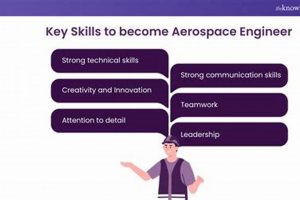
Tip 2: Develop Specialized Skills: Gain proficiency in areas such as computational fluid dynamics (CFD), finite element analysis (FEA), or advanced materials. These skills are highly valued by employers.
Tip 3: Cultivate Networking Connections: Attend industry conferences, join professional organizations (e.g., AIAA), and connect with engineers on platforms like LinkedIn. Networking expands awareness of available positions and provides valuable insights.
Tip 4: Consider Government Positions: Agencies like NASA and the Department of Defense offer stable career paths and the opportunity to work on cutting-edge projects. Be aware of specific citizenship requirements.
Tip 5: Focus on Locations with Aerospace Hubs: States like California, Texas, and Washington have a high concentration of aerospace companies. Prioritize your job search in these regions.
Tip 6: Obtain Relevant Certifications: Certain certifications, such as those related to project management or specific software platforms, can enhance your resume and demonstrate competence.
Tip 7: Tailor Your Resume and Cover Letter: Customize these documents to highlight the skills and experience that are most relevant to each specific job application. Generic applications are less effective.
Adopting these strategies requires dedication and proactive engagement. However, the potential rewards in terms of career satisfaction and professional growth are substantial.
Ultimately, a proactive and informed approach will yield the best results in a competitive job market. Understanding the nuances of this sector is paramount for achieving a successful career.
1. Aircraft manufacturing
Aircraft manufacturing is a primary driver in determining the geographic locations and the specific skillsets that define where aerospace engineers are needed. The process, encompassing design, production, testing, and certification of aircraft, necessitates a significant concentration of engineering talent. Therefore, areas where major aircraft manufacturers are located experience high demand for these professionals. This is a direct cause-and-effect relationship; the presence of aircraft manufacturing facilities precipitates the need for a skilled aerospace engineering workforce.
The importance of aircraft manufacturing as a component influencing the need for aerospace engineers lies in its comprehensive integration of multiple engineering disciplines. Beyond core aerospace engineering, these projects often require expertise in areas such as materials science, mechanical engineering, electrical engineering, and software engineering. For example, the development of the Boeing 787 Dreamliner involved engineers from diverse backgrounds collaborating to create a fuel-efficient and technologically advanced aircraft. This collaborative environment underscores the diverse range of opportunities and the interdisciplinary nature of roles within the aircraft manufacturing sector. Furthermore, locations that house the headquarters or major production facilities of companies like Airbus, Boeing, Bombardier, or Embraer inevitably have a higher concentration of aerospace engineering jobs.
In summary, aircraft manufacturing activities exert a significant influence on the distribution of aerospace engineering job opportunities. The complexities inherent in modern aircraft production necessitate a broad spectrum of engineering skills, attracting and sustaining demand for qualified professionals in specific geographic regions. This understanding is of practical significance for both job seekers and educational institutions, as it highlights the importance of aligning training programs with industry needs and directing career searches towards areas with established manufacturing hubs.
2. Space exploration

Space exploration, a multifaceted endeavor encompassing robotic missions, human spaceflight, and the development of related technologies, exerts a substantial influence on the demand for aerospace engineers. The ambition to venture beyond Earth’s atmosphere necessitates advanced engineering solutions, thereby shaping where these skilled professionals are most needed.
- Propulsion Systems Development
The creation of efficient and reliable propulsion systems is fundamental to space exploration. Developing technologies such as advanced rocket engines, ion drives, and other innovative propulsion methods requires extensive expertise in thermodynamics, fluid dynamics, and combustion. Companies and research institutions involved in these projects, such as SpaceX, Blue Origin, and NASA’s Glenn Research Center, have a continual need for aerospace engineers specializing in propulsion. This demand concentrates in areas with established aerospace industries or significant research infrastructure.
- Spacecraft Design and Construction
Spacecraft, including satellites, probes, and crewed vehicles, demand robust design to withstand the harsh conditions of space. Expertise is crucial in structural analysis, thermal management, radiation shielding, and systems engineering. The design must account for extreme temperature variations, vacuum conditions, and the potential for micrometeoroid impacts. Aerospace engineers with these skills are predominantly needed in locations hosting spacecraft manufacturing facilities, like those of Lockheed Martin Space, Boeing Space & Launch, and various NASA centers.
- Mission Planning and Operations
Executing space missions involves detailed planning, navigation, and control. Aerospace engineers play a critical role in trajectory optimization, orbital mechanics, and spacecraft attitude control. Missions to Mars, the outer solar system, or even near-Earth asteroids require precise calculations and sophisticated software. The Jet Propulsion Laboratory (JPL) and mission control centers associated with government agencies and private space companies are key employers of aerospace engineers in this domain.
- Robotics and Automation
Robotic systems are integral to space exploration, enabling remote exploration, sample collection, and in-situ resource utilization. The development of rovers, robotic arms, and autonomous systems requires expertise in robotics, control systems, and artificial intelligence. Aerospace engineers contribute to designing the mechanical aspects, control algorithms, and integration of these systems. The need for these specialists is growing at institutions developing planetary rovers and companies pursuing space-based resource extraction.
These facets of space explorationpropulsion, spacecraft design, mission planning, and roboticscollectively amplify the demand for aerospace engineers across various geographical locations and specializations. As space exploration continues to evolve with increasingly ambitious goals, the necessity for skilled professionals in these fields will only intensify, further shaping the landscape of the aerospace engineering job market.
3. Defense contractors
Defense contractors are pivotal in determining the demand for aerospace engineers. These organizations, dedicated to developing and producing military and defense-related technologies, heavily rely on professionals with specialized expertise in aerospace engineering. The cause-and-effect relationship is direct: Increased defense spending and the pursuit of advanced military capabilities lead to a greater need for these engineers. Their skills are crucial for designing, developing, and testing advanced aircraft, missile systems, unmanned aerial vehicles (UAVs), and satellite technologies.
The importance of defense contractors as a factor influencing the demand for aerospace engineers is underscored by the scale and complexity of their projects. Companies such as Lockheed Martin, Boeing Defense, Space & Security, and Northrop Grumman require a substantial engineering workforce to manage projects ranging from fighter jet development to missile defense systems. For example, the development of the F-35 Lightning II, a multirole combat aircraft, involved thousands of engineers across multiple disciplines. Furthermore, emerging technologies like hypersonic weapons and advanced surveillance systems continue to drive the need for innovation, further amplifying the requirement for skilled aerospace professionals. The geographic distribution of these contractors significantly impacts the locations where aerospace engineers are most sought after, typically clustering around major defense hubs.
Understanding the interplay between defense contractors and the demand for aerospace engineers carries practical significance for job seekers and educational institutions alike. Individuals pursuing careers in this field should consider the locations and specializations most aligned with the needs of these companies. Educational institutions can tailor their curricula to emphasize the skills and knowledge most valued by defense contractors, ensuring that graduates are well-prepared for the workforce. Recognizing this connection facilitates a more strategic approach to career planning and workforce development, benefiting both individual engineers and the defense industry as a whole.
4. Government agencies
Government agencies play a critical role in shaping the demand for aerospace engineers. These entities, responsible for national security, space exploration, and aviation regulation, directly influence the types and locations of opportunities available to these professionals. Increased investment in space programs, defense initiatives, or air traffic modernization inherently creates a demand for engineers with relevant skills, thereby establishing a clear cause-and-effect relationship.
The importance of government agencies in determining employment for aerospace engineers lies in their wide range of activities. NASA, for instance, employs engineers for spacecraft design, mission planning, and scientific research related to space exploration. The Federal Aviation Administration (FAA) relies on aerospace engineers for air traffic control system development, aircraft certification, and aviation safety regulations. Defense agencies, such as the Department of Defense, require engineers for the design and development of advanced military aircraft, missile systems, and related technologies. A practical example is NASA’s Artemis program, which necessitates a significant influx of aerospace engineers specialized in lunar lander design, propulsion systems, and mission operations. Similarly, the FAA’s NextGen program for modernizing the national airspace system creates a need for engineers with expertise in avionics, communication systems, and air traffic management.
In conclusion, government agencies serve as a cornerstone in the aerospace engineering job market. Recognizing their influence is strategically vital for both aspiring and established engineers. Understanding the specific technical focuses and geographic locations of major government facilities is essential for navigating career opportunities effectively. This knowledge enables engineers to align their skills with the agencies’ priorities, thereby optimizing their potential for success and contribution to national objectives.
5. Research institutions

Research institutions, encompassing universities, government laboratories, and private research centers, are significant contributors to the demand for aerospace engineers. The pursuit of cutting-edge advancements in aerospace technology necessitates a concentration of specialized expertise, directly influencing the geographic distribution and types of roles available. Locations with prominent research institutions experience heightened demand due to ongoing projects in areas such as advanced materials, propulsion systems, and autonomous flight. The presence of these institutions acts as a catalyst, creating a localized need for engineers skilled in research, development, and experimentation.
The importance of research institutions lies in their role as innovation incubators. Organizations like MIT’s Lincoln Laboratory, Caltech’s Jet Propulsion Laboratory (JPL), and various university aerospace engineering departments are at the forefront of aerospace research. For example, JPL’s ongoing development of interplanetary spacecraft and rovers requires a continuous influx of aerospace engineers with expertise in areas like thermal engineering, structural analysis, and control systems. Similarly, university research programs focused on hypersonics or sustainable aviation technologies attract and employ aerospace engineers, contributing to regional clusters of expertise. The continuous stream of research funding, both public and private, further sustains this demand, supporting salaries and providing resources for groundbreaking projects.
Understanding the link between research institutions and the need for aerospace engineers is crucial for both job seekers and policymakers. Aspiring engineers can strategically target regions with a strong research presence, enhancing their career prospects. Policymakers can leverage research funding to stimulate regional economic growth by attracting and retaining aerospace talent. By fostering a supportive environment for research and development, both sectors contribute to the advancement of aerospace technology and maintain a competitive edge in the global aerospace industry.
6. Academia
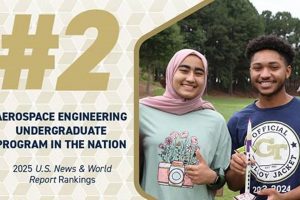
Academia significantly influences the landscape of employment for aerospace engineers. Universities and colleges with robust aerospace engineering programs act as a nexus, both generating graduates who will enter the workforce and attracting industry partners seeking research collaborations and talent. The presence of strong aerospace engineering departments in a given region often correlates with increased opportunities, creating a localized demand fueled by the institution’s activities. This is a direct cause-and-effect relationship: the presence of a leading aerospace engineering program elevates the demand for engineers within the surrounding area.
The importance of academic institutions extends beyond simply producing graduates. Research conducted within these departments often leads to the development of new technologies and methodologies that are subsequently adopted by industry. For instance, the development of advanced composite materials or innovative propulsion systems at universities like MIT or Stanford directly benefits companies such as Boeing and SpaceX, who then require engineers familiar with these advancements. Furthermore, academic institutions provide continuing education and professional development opportunities, enabling practicing engineers to stay abreast of the latest technological developments. The clustering of aerospace companies around academic centers is a testament to the synergistic relationship between academia and industry, where knowledge transfer and talent acquisition mutually benefit both sectors. This interconnectedness also fosters innovation, driving advancements in aerospace technology that contribute to economic growth and national security.
In summary, academia is a critical component in determining where aerospace engineers are needed. Its influence extends from training the next generation of engineers to conducting groundbreaking research that fuels industry innovation. Understanding this connection is vital for students, job seekers, and policymakers alike. Students can strategically target institutions with strong industry ties, increasing their prospects for employment upon graduation. Policymakers can invest in aerospace engineering programs to attract businesses and create high-skilled jobs. By recognizing and leveraging the importance of academia, regions can cultivate a thriving aerospace ecosystem that benefits all stakeholders.
Frequently Asked Questions
The following questions address common inquiries regarding the geographic distribution and sector-specific demand for aerospace engineers. This information is intended to provide a clear understanding of the job market for this profession.
Question 1: What are the primary geographic locations where aerospace engineers are most needed?
Aerospace engineering positions are typically concentrated in regions with a significant presence of aircraft manufacturers, space exploration companies, or defense contractors. States such as California, Texas, Washington, and Florida often exhibit high demand due to their established aerospace industries.
Question 2: Which specific industries offer the most opportunities for aerospace engineers?
Key industries include commercial aviation, space exploration, defense, and government agencies. Companies involved in aircraft manufacturing, satellite development, missile systems, and space launch services frequently seek qualified aerospace engineers.
Question 3: How does government spending impact the demand for aerospace engineers?
Government funding for space programs, defense initiatives, and aviation modernization directly influences the need for aerospace engineers. Increased investment in these areas typically leads to a rise in job opportunities.
Question 4: What role do research institutions play in determining the demand for aerospace engineers?
Research institutions, including universities and government laboratories, contribute significantly to the demand by conducting cutting-edge research and development. These institutions often employ aerospace engineers to work on innovative projects and attract industry partners.
Question 5: What skills are most valuable for aerospace engineers seeking employment?
Skills in areas such as computational fluid dynamics (CFD), finite element analysis (FEA), systems engineering, and advanced materials are highly sought after. Expertise in specific software platforms and project management is also beneficial.
Question 6: How does academia contribute to the aerospace engineering job market?
Universities and colleges with strong aerospace engineering programs produce graduates who enter the workforce and foster research collaborations with industry. The presence of these programs enhances the demand for engineers in the surrounding area.
In conclusion, the demand for aerospace engineers is influenced by a complex interplay of factors, including geographic location, industry sector, government spending, research institutions, and academic programs. Understanding these dynamics is essential for navigating the aerospace engineering job market successfully.
The next section explores the impact of emerging technologies on the future of aerospace engineering employment.
Where Are Aerospace Engineers Needed
This exploration has illuminated key determinants in the geographic and sectoral distribution of aerospace engineering employment. Factors such as the presence of aircraft manufacturers, space exploration initiatives, defense contractors, government agencies, research institutions, and academic programs are critical in shaping the demand for these professionals. Understanding these influences is essential for individuals seeking to enter or advance within the field, and for organizations aiming to attract and retain skilled aerospace engineers.
The future of aerospace engineering will be shaped by ongoing technological advancements, evolving geopolitical priorities, and the continued pursuit of space exploration. A sustained commitment to innovation, strategic workforce development, and investment in research will be paramount to ensuring that the aerospace industry meets the challenges and opportunities that lie ahead, thereby solidifying the critical importance of clearly identifying where aerospace engineering talent is most effectively deployed.