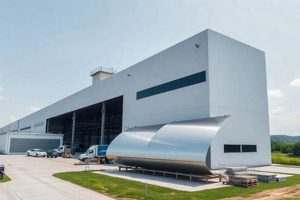
The availability of employment opportunities within the aeronautics and astronautics sector in the Charleston, South Carolina metropolitan area represents a specific segment of the regional job market. These positions encompass a range of skilled and professional roles involved in the design, development, manufacturing, testing, and maintenance of aircraft, spacecraft, and related systems. An example includes positions for aerospace engineers, technicians, and quality control specialists within companies operating in or near Charleston.
The presence of these roles is significant for the local economy, fostering innovation, attracting skilled labor, and contributing to economic growth. Historically, the concentration of such positions is often linked to factors such as government contracts, proximity to military installations, or the establishment of aerospace manufacturing facilities. The concentration of high-tech jobs offers advanced training opportunities, increasing the overall skill base of the local workforce.
The following discussion will detail the types of roles typically available, the skills and qualifications required for success, and the key companies and organizations that drive the demand for talent within this specialized employment area.
The following guidelines are designed to aid individuals seeking employment within the aerospace sector in the Charleston, South Carolina region. Adherence to these principles may enhance the prospects of securing a suitable position.
Tip 1: Research Local Aerospace Companies: Identify and thoroughly research companies with a significant presence in the Charleston area. Understanding their specific operations, technologies, and hiring practices is crucial. Example: Boeing South Carolina’s focus on aircraft manufacturing requires a different skillset than a smaller firm specializing in avionics repair.
Tip 2: Target Specific Skill Gaps: Analyze the advertised requirements for roles and determine the areas where one’s own skillset requires enhancement. Focus on acquiring certifications, completing relevant coursework, or gaining experience that directly addresses these identified gaps. Example: A mechanical engineer might pursue certification in CAD/CAM software utilized by local aerospace manufacturers.
Tip 3: Network Strategically: Attend industry events, conferences, and job fairs in the Charleston area to connect with potential employers and industry professionals. Prepare a concise and compelling summary of one’s qualifications and career objectives. Example: Utilize LinkedIn to identify and connect with recruiters and hiring managers at local aerospace companies.
Tip 4: Tailor Resumes and Cover Letters: Customize each application to reflect the specific requirements of the advertised role. Highlight relevant experience, skills, and accomplishments that demonstrate a clear understanding of the company’s needs and operations. Example: Quantify achievements whenever possible, such as “Reduced production costs by 15% through process optimization.”
Tip 5: Prepare for Technical Interviews: Anticipate technical questions related to aerospace engineering principles, manufacturing processes, and quality control procedures. Practice problem-solving skills and be prepared to discuss past projects in detail. Example: Review relevant textbooks and technical publications to refresh knowledge of fundamental concepts.
Tip 6: Leverage Local Resources: Utilize career services offered by local universities and technical colleges. These institutions often have partnerships with aerospace companies and can provide valuable resources, including resume reviews, interview preparation, and job placement assistance. Example: Attend workshops and seminars offered by Trident Technical College’s aeronautics program.
Tip 7: Consider Contract Positions: Explore opportunities for contract work with aerospace companies. These positions can provide valuable experience and exposure to the industry, potentially leading to permanent employment. Example: Search for contract positions through staffing agencies specializing in engineering and technical recruitment.
These strategies provide a framework for successfully entering or advancing within the aerospace industry in Charleston. Consistent application of these principles should increase the likelihood of a positive outcome.
The following sections will explore relevant certifications, educational pathways, and emerging trends that shape the demand for talent in the region.
1. Engineering Opportunities

The availability of engineering positions represents a core element of the aeronautics and astronautics job market in Charleston, South Carolina. These roles form the foundation upon which aircraft design, manufacturing, and maintenance activities are built. Without a skilled engineering workforce, the region’s capacity to participate in the aerospace industry would be significantly diminished. Specifically, engineering roles are vital for translating theoretical concepts into practical designs, ensuring the airworthiness of aircraft, and developing innovative technologies. For instance, mechanical engineers design structural components, electrical engineers work on avionics systems, and aerospace engineers optimize aerodynamic performance. The presence and quality of these engineering opportunities directly influence the overall health and competitiveness of Charleston’s aerospace sector.
The impact of these opportunities extends beyond direct employment figures. A robust engineering sector attracts further investment in research and development, leading to the creation of new businesses and the expansion of existing companies. Consider the expansion of Boeing’s South Carolina facilities; this growth was predicated, in part, on the availability of a qualified pool of engineers. Furthermore, engineering roles tend to command higher salaries, contributing to the region’s economic prosperity. These high-paying jobs have a multiplier effect, increasing demand for local goods and services and generating further economic activity. The presence of a strong engineering base also fosters a culture of innovation, attracting talented individuals from across the country and around the world.
In summary, engineering opportunities are not merely a component of Charleston’s aeronautics and astronautics sector; they are a driving force behind its growth and competitiveness. A sustained commitment to developing and attracting engineering talent is essential for ensuring the long-term success of this vital industry in the region. Challenges remain in recruiting and retaining qualified engineers, but addressing these challenges will be critical for realizing the full potential of the local aerospace economy.
2. Technical Skill Requirements
The successful acquisition and maintenance of positions within the aeronautics and astronautics sector in Charleston, South Carolina, are directly contingent upon possessing specific technical skills. These skills serve as fundamental prerequisites for roles spanning aircraft maintenance, component manufacturing, quality control, and systems integration. A deficiency in requisite technical competencies will necessarily impede an individual’s ability to secure or retain employment within this sector. For example, a technician tasked with maintaining aircraft avionics systems must possess demonstrable proficiency in electronic troubleshooting, wiring diagram interpretation, and the operation of specialized test equipment. Without these skills, they cannot effectively perform their duties.
Furthermore, the evolution of technology within the aerospace industry necessitates continuous skill development. Modern aircraft incorporate increasingly complex digital systems, composite materials, and advanced manufacturing techniques. Therefore, ongoing training and certification are essential for individuals to remain competitive in the job market. Consider the growing use of additive manufacturing in aerospace component production; technicians must acquire proficiency in 3D printing technologies, materials science, and computer-aided design (CAD) software. This demand for specialized knowledge extends across multiple disciplines, from software engineering to non-destructive testing. The practical significance lies in the fact that employers prioritize candidates who possess demonstrable technical proficiency and a commitment to continuous learning, as this translates directly into improved efficiency, safety, and product quality.
In summation, technical skill requirements represent a critical gateway to employment in Charleston’s aeronautics and astronautics sector. These requirements are not static, but rather evolve in response to technological advancements. Therefore, individuals seeking careers in this field must prioritize continuous skill development and pursue relevant certifications to ensure their competitiveness. The challenge lies in aligning educational programs and training initiatives with the specific needs of the aerospace industry to cultivate a workforce equipped to meet the demands of this dynamic sector. A failure to address this challenge could result in a shortage of qualified personnel and hinder the growth of the local aerospace economy.
3. Manufacturing Presence
The presence of manufacturing facilities directly drives the creation of employment opportunities within the aeronautics and astronautics sector in the Charleston, South Carolina area. The establishment or expansion of manufacturing operations necessitates the hiring of personnel across various skill levels, from assembly line workers and machinists to quality control inspectors and production managers. The scale of manufacturing activities directly correlates with the number and type of positions available. For example, Boeing’s presence in Charleston, focused on the assembly of aircraft, has resulted in the creation of thousands of manufacturing-related jobs. A reduction in manufacturing output or the closure of a facility invariably leads to job losses. Therefore, the health and growth of the local aerospace job market are intrinsically linked to the strength and stability of the manufacturing base.
Beyond direct job creation, a robust manufacturing presence fosters the development of a supporting ecosystem of suppliers and service providers. These businesses, ranging from component manufacturers to logistics companies, also require skilled workers, further expanding the employment opportunities linked to the aerospace sector. Consider the demand for precision machining services; as aerospace manufacturing activity increases, local machine shops must expand their workforce to meet the increased demand. This ripple effect extends to other sectors, such as transportation, warehousing, and even construction, as new facilities are built and existing ones are expanded. The practical significance of this understanding lies in recognizing that attracting and retaining aerospace manufacturing companies is a crucial strategy for boosting the regional economy and creating sustainable employment opportunities.
In conclusion, the manufacturing presence is a fundamental determinant of the availability of positions within the aeronautics and astronautics sector in Charleston. The establishment and growth of manufacturing operations directly stimulate job creation across a range of skill levels and foster the development of a supporting ecosystem of suppliers and service providers. While other factors, such as government contracts and research and development activities, also play a role, the manufacturing base remains a primary driver of employment within this sector. Addressing challenges related to workforce development, infrastructure investment, and regulatory compliance is essential for ensuring the continued growth and competitiveness of aerospace manufacturing in Charleston, and, consequently, the creation of further employment opportunities.
4. Defense Sector Linkages

The connection between defense sector linkages and the availability of aeronautics and astronautics positions in Charleston, South Carolina, is substantial. Government contracts awarded to aerospace firms for defense-related projects directly stimulate job creation in the region. These contracts often involve the design, development, manufacturing, and maintenance of military aircraft, unmanned aerial vehicles (UAVs), and related systems. For instance, if a company in Charleston receives a contract to upgrade avionics systems on military transport aircraft, it will necessarily hire engineers, technicians, and project managers. The size and duration of these contracts directly influence the number of positions created and the stability of employment within the sector. The importance of defense sector linkages stems from the consistent demand for military hardware and support services, which provides a relatively stable source of revenue and employment for aerospace firms.
Real-life examples underscore this connection. The presence of Joint Base Charleston and its associated aerospace maintenance and logistics activities creates a demand for skilled workers in areas such as aircraft maintenance, repair, and overhaul (MRO). Furthermore, companies that supply components or services to defense contractors often establish operations in Charleston to be closer to their customers, further contributing to job growth. The practical significance of this understanding lies in the ability of local economic development agencies to target aerospace firms with a strong presence in the defense sector, thereby attracting additional investment and creating high-skilled, high-paying positions. Understanding the specific needs of the Department of Defense and tailoring workforce development programs to meet those needs can further enhance the region’s attractiveness to defense contractors.
In conclusion, defense sector linkages represent a significant driver of aeronautics and astronautics employment in Charleston. Government contracts provide a stable source of revenue and create a demand for skilled workers. The presence of military installations and related support activities further enhances this connection. While diversification of the aerospace sector is important for long-term economic stability, the defense sector will likely remain a key source of employment in Charleston for the foreseeable future. The challenge lies in ensuring that the local workforce possesses the necessary skills and training to meet the evolving needs of the defense industry, and in fostering a business environment that is conducive to attracting and retaining defense-related aerospace firms.
5. Economic Impact Drivers

The generation of employment opportunities within Charleston’s aeronautics and astronautics sector is directly and significantly influenced by specific economic impact drivers. These factors, operating in concert, determine the volume, type, and quality of available positions. Government investment, corporate expansion, research and development initiatives, and workforce development programs act as primary catalysts. Government investment, through contracts and infrastructure projects, provides direct funding to aerospace companies, enabling them to expand operations and hire personnel. Corporate expansion decisions, driven by market demand and strategic considerations, lead to the establishment of new facilities or the enlargement of existing ones, creating a corresponding demand for skilled labor. Research and development activities, particularly those focused on advanced aerospace technologies, necessitate the employment of engineers, scientists, and technicians. Finally, workforce development programs, aimed at training and upskilling local residents, ensure a steady supply of qualified candidates to meet the demands of the industry. Without these drivers, the local aerospace job market would stagnate or decline.
Boeing’s presence in Charleston provides a clear illustration of these dynamics. Government contracts for military aircraft components have sustained a significant portion of Boeing’s operations. The company’s expansion of its North Charleston facility to include the 787 Dreamliner assembly line resulted in the creation of thousands of manufacturing jobs. Furthermore, Boeing’s investment in research and development activities related to advanced composite materials has fueled demand for materials scientists and engineers. Local institutions like Trident Technical College, through their aerospace-focused training programs, contribute to the workforce development component, ensuring a pipeline of qualified technicians and mechanics. The practical significance of understanding these economic impact drivers lies in the ability of policymakers and economic development agencies to strategically leverage them to promote further growth in the aerospace sector and create additional employment opportunities. For instance, targeted tax incentives can encourage aerospace companies to expand their operations in Charleston, while investments in infrastructure improvements can enhance the region’s attractiveness to aerospace firms.
In summary, economic impact drivers are critical determinants of the strength and vitality of Charleston’s aeronautics and astronautics employment landscape. Government investment, corporate expansion, research and development, and workforce development are all essential for generating job opportunities in this sector. While challenges remain in maintaining a competitive business environment and attracting skilled talent, a coordinated effort to strengthen these economic impact drivers will be crucial for ensuring the long-term success of the local aerospace industry and the creation of sustainable, high-quality employment. Failing to recognize and strategically manage these drivers could result in a decline in the sector’s competitiveness and a corresponding loss of employment opportunities.
6. Educational Pathways

The availability and quality of educational pathways directly influence the supply of qualified candidates for aeronautics and astronautics positions in Charleston, South Carolina. These pathways, encompassing degree programs, technical certifications, and apprenticeship opportunities, are essential for equipping individuals with the knowledge and skills required to succeed in the industry. The absence of robust educational opportunities would create a significant skills gap, hindering the growth and competitiveness of the local aerospace sector. Specifically, educational pathways provide individuals with the theoretical foundations, practical experience, and industry-recognized credentials necessary to perform their roles effectively. For instance, a bachelor’s degree in aerospace engineering provides students with a deep understanding of aerodynamics, propulsion, and structural analysis, while a technical certification in aircraft maintenance equips technicians with the hands-on skills to diagnose and repair aircraft systems. The effectiveness of these educational pathways in preparing students for the demands of the aerospace industry directly impacts the quality of the local workforce and the attractiveness of Charleston as a location for aerospace companies.
Trident Technical College’s aeronautics program provides a practical illustration of this connection. The college’s associate degree programs in aviation maintenance technology and aircraft structural technology are designed to meet the specific needs of the local aerospace industry. The curriculum is developed in close consultation with aerospace companies to ensure that graduates possess the skills and knowledge sought by employers. Furthermore, the college offers apprenticeship opportunities that allow students to gain real-world experience while earning academic credit. This close collaboration between educational institutions and industry ensures a steady pipeline of qualified technicians and mechanics, supporting the growth of the aerospace sector in Charleston. Similarly, the engineering programs at local universities contribute to the supply of highly skilled engineers capable of designing and developing advanced aerospace technologies. Without these educational pathways, aerospace companies in Charleston would face significant challenges in recruiting and retaining qualified personnel, potentially hindering their ability to compete in the global marketplace.
In summary, educational pathways are a critical component of the aeronautics and astronautics employment landscape in Charleston. Degree programs, technical certifications, and apprenticeship opportunities provide individuals with the knowledge and skills required to succeed in the industry. The success of the local aerospace sector depends on the effectiveness of these educational pathways in preparing students for the demands of the workforce. Addressing challenges related to curriculum development, faculty recruitment, and industry collaboration is essential for ensuring a continued supply of qualified candidates and maintaining the competitiveness of Charleston’s aerospace industry. A failure to invest in and strengthen educational pathways could result in a skills gap, limiting the growth potential of the sector and hindering the creation of high-quality employment opportunities.
7. Specific Company Roles

The types of positions available within the aeronautics and astronautics sector in Charleston, South Carolina, are largely determined by the presence and operational focus of specific companies. Each organization has a unique organizational structure and set of specializations, leading to varied demands for particular skill sets and expertise. The absence of a particular company limits the availability of roles aligned with its specific area of operation. For example, an aerospace manufacturer specializing in composite structures will require composite technicians, design engineers with composite experience, and quality control inspectors familiar with composite materials. Similarly, a company focused on avionics systems will need electrical engineers, software developers, and avionics technicians. The specific roles within each company are a direct consequence of its core activities and technological focus, shaping the overall demand for certain types of employment within the region’s aerospace sector.
Boeing South Carolina provides a concrete example. Their focus on 787 Dreamliner assembly creates a significant demand for aircraft mechanics, structural assemblers, and quality control specialists. In contrast, a smaller company specializing in aircraft maintenance and repair might prioritize hiring airframe and powerplant (A&P) mechanics, avionics technicians, and inspection personnel. The skills and experience required for these roles differ significantly, reflecting the distinct activities of each organization. The practical significance of this relationship lies in the need for individuals seeking positions in the Charleston aerospace sector to understand the specific operational focuses of the dominant companies. This knowledge enables targeted skill development and focused job applications, increasing the likelihood of successful employment.
In conclusion, the correlation between specific company roles and the overall aerospace job market in Charleston is fundamental. Understanding the types of companies present and their specific operational focuses is critical for both job seekers and workforce development initiatives. While other factors, such as government contracts and economic trends, also influence the job market, the direct impact of specific company roles on the types of positions available cannot be overstated. Addressing challenges related to workforce alignment with company needs and fostering a diverse range of aerospace businesses is essential for creating a robust and sustainable aerospace job market in Charleston.
Frequently Asked Questions
This section addresses common inquiries concerning employment opportunities within the aeronautics and astronautics sector in Charleston, South Carolina. The information provided aims to offer clarity and guidance to prospective applicants and industry stakeholders.
Question 1: What are the primary skill sets demanded by employers in the Charleston aerospace sector?
Employers typically seek candidates possessing expertise in areas such as aerospace engineering, aircraft maintenance, avionics, composite materials, and quality control. Proficiency with relevant software and adherence to industry safety standards are also frequently required.
Question 2: Which companies are the major employers of aerospace professionals in the Charleston region?
Boeing South Carolina is a significant employer. Additionally, numerous smaller companies specializing in aircraft maintenance, component manufacturing, and engineering services operate within the Charleston metropolitan area.
Question 3: What educational qualifications are generally required for entry-level positions in this sector?
Educational requirements vary depending on the specific role. Technical positions often require an associate’s degree or certification from a technical college. Engineering roles typically necessitate a bachelor’s or master’s degree in a relevant engineering discipline.
Question 4: What is the typical salary range for aerospace jobs in Charleston?
Salary ranges are dependent on the specific position, level of experience, and the size and type of the employer. Entry-level positions generally offer lower salaries, while experienced professionals can command significantly higher compensation.
Question 5: Are there opportunities for career advancement within the Charleston aerospace industry?
Opportunities for career advancement exist for individuals who demonstrate strong performance, acquire additional skills, and pursue professional development opportunities. Advancement may involve promotions to supervisory or managerial roles, or specialization in a specific technical area.
Question 6: How does the presence of Joint Base Charleston impact the local aerospace job market?
Joint Base Charleston provides a source of demand for aerospace maintenance and logistics services, creating employment opportunities for technicians and support personnel. It also facilitates partnerships between military and civilian organizations within the aerospace sector.
These FAQs are intended to provide a general overview of the aerospace job market in Charleston. Specific circumstances may vary, and it is advisable to conduct thorough research and seek personalized career guidance.
The subsequent section will explore resources for finding available positions within this dynamic industry.
Aerospace Jobs Charleston SC
This analysis has explored the multifaceted nature of employment opportunities within the aeronautics and astronautics sector in Charleston, South Carolina. Key points include the importance of engineering roles, the necessity of specific technical skills, the impact of manufacturing presence, the influence of defense sector linkages, the role of economic drivers, the significance of educational pathways, and the effect of company specializations on available positions.
The continued growth and stability of the aerospace sector in Charleston are vital for the region’s economic prosperity. Sustained investment in workforce development, infrastructure improvements, and strategic partnerships is crucial to ensuring a competitive environment for both employers and employees. Future success hinges on adapting to evolving technological advancements and proactively addressing emerging challenges within the global aerospace industry.