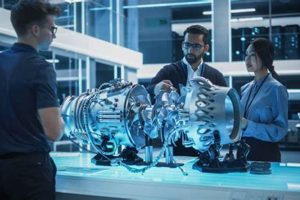
The field encompasses the design, development, testing, and production of aircraft, spacecraft, and related systems within the United States. This specialized branch of engineering integrates principles from various disciplines, including aerodynamics, propulsion, materials science, and control systems, to create advanced technologies for air and space exploration, defense, and commercial applications. Examples of work in this domain include designing fuel-efficient aircraft, developing satellite communication systems, and creating technologies for future space missions.
Its significance lies in driving technological advancements, fostering economic growth, and ensuring national security. Historically, investments in this area have led to significant innovations in aviation, space travel, and related industries, providing numerous benefits. These advancements have not only improved transportation and communication but have also spurred the development of new materials, manufacturing processes, and computing technologies.
The remainder of this discussion will delve into the educational pathways for aspiring professionals, career opportunities available within the nation, notable research institutions and industry leaders, and the future trends shaping the evolution of this critical engineering sector. Further sections will examine the impact of government policies and funding on related innovation and development.
This section provides essential considerations for individuals interested in pursuing or advancing careers in the U.S. context. These guidelines aim to offer practical advice based on current industry practices and academic standards.
Tip 1: Prioritize a Strong Foundation in STEM: A rigorous understanding of mathematics, physics, and computer science is paramount. These disciplines form the bedrock upon which advanced engineering concepts are built. For instance, proficiency in calculus and differential equations is essential for understanding fluid dynamics and orbital mechanics.
Tip 2: Seek Accreditation: Ensure educational programs hold accreditation from ABET (Accreditation Board for Engineering and Technology). Accreditation signifies the program meets industry standards and prepares graduates for professional practice. Employers often prioritize candidates from accredited institutions.
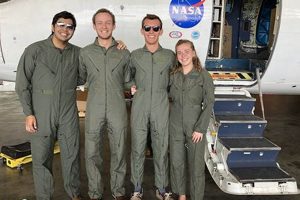
Tip 3: Emphasize Practical Experience: Internships and research opportunities provide invaluable hands-on experience. Participating in projects such as designing and testing aircraft components or developing software for satellite control systems strengthens both theoretical knowledge and practical skills.
Tip 4: Develop Specialization: The field encompasses various specializations, including aerodynamics, propulsion, structural engineering, and avionics. Focusing on a specific area allows for deeper expertise and increases competitiveness within the job market. Research current industry needs to identify high-demand specializations.
Tip 5: Cultivate Communication Skills: Effective communication is crucial for collaborating with multidisciplinary teams and presenting technical information to diverse audiences. Practice technical writing, public speaking, and presentation skills to ensure clear and concise conveyance of ideas.
Tip 6: Obtain Security Clearance When Applicable: Given the involvement of numerous U.S. entities in defense-related projects, the ability to obtain a security clearance can significantly broaden career prospects. Explore opportunities to gain experience in areas that require clearance to improve your eligibility.
Tip 7: Stay Current with Technological Advancements: The field is constantly evolving. Continuous learning through professional development courses, conferences, and industry publications is essential to remain competitive and contribute meaningfully to innovation. Areas of interest include additive manufacturing, artificial intelligence, and autonomous systems.
By following these principles, individuals can significantly improve their chances of success within the dynamic landscape. A solid academic background, practical experience, and continuous professional development are crucial for navigating the complexities and capitalizing on the opportunities.
The next section will explore specific career paths and potential employers, providing additional insights into securing positions and advancing within the industry.
1. Academic Institutions
Academic institutions within the United States serve as the foundational pillars for the advancement of aerospace engineering. These institutions not only provide comprehensive educational programs but also conduct cutting-edge research that directly impacts the sector’s innovation and competitiveness. The interplay between academic research and practical application is critical for sustaining U.S. leadership.
- Curriculum Development and Specialized Programs
Universities offer a spectrum of undergraduate and graduate programs tailored to various specializations. Curricula are continuously updated to reflect industry advancements, incorporating topics such as advanced materials, autonomous systems, and space propulsion. This ensures graduates possess the requisite skills and knowledge to contribute immediately upon entering the workforce. For instance, programs focusing on computational fluid dynamics equip engineers with the skills necessary to simulate and optimize aircraft designs, reducing the need for costly physical testing.
- Research and Development Initiatives
Academic institutions are at the forefront of aerospace-related research. University laboratories conduct experiments and theoretical studies that push the boundaries of current technologies. Funding from government agencies and private corporations supports research into areas like hypersonic flight, electric propulsion, and advanced composite materials. This collaborative approach accelerates technological development and facilitates the transition from laboratory findings to practical applications. For example, research into lightweight composites has led to the development of more fuel-efficient aircraft designs.
- Industry Partnerships and Technology Transfer
Strong connections between universities and industry are vital. Partnerships foster collaboration on research projects, provide students with internship opportunities, and facilitate the transfer of technology from academia to the private sector. These relationships contribute to a more skilled workforce and ensure that research efforts are aligned with industry needs. Cooperative programs where students spend time working in aerospace companies provide practical experience and exposure to real-world engineering challenges. Additionally, universities often license their patented technologies to companies, enabling them to develop and commercialize new products.
- Workforce Development and Skills Training
Academic institutions play a crucial role in training the next generation of professionals. They equip students with fundamental knowledge and specialized skills through coursework, research projects, and hands-on experience. Furthermore, they often offer continuing education programs for practicing engineers, enabling them to stay abreast of technological advancements. These training initiatives ensure a highly skilled workforce capable of driving innovation and maintaining U.S. competitiveness. Through initiatives like capstone design projects, students apply their accumulated knowledge to solve real-world problems.
In summary, the role of academic institutions in shaping the landscape is multifaceted, encompassing education, research, and industry engagement. Their contributions directly enhance the competitiveness of this sector, fostering innovation and sustaining U.S. leadership. The continuous evolution of curricula and research initiatives ensures that graduates are well-prepared to tackle the challenges and opportunities within the evolving engineering field.
2. Research and Development

Research and development (R&D) constitutes the engine of innovation within the U.S. landscape, directly shaping its technological capabilities and competitive edge. Sustained investment and strategic prioritization of R&D are paramount for maintaining U.S. leadership in this critical sector.
- Fundamental and Applied Research
Fundamental research, driven by scientific curiosity, expands the knowledge base upon which future innovations are built. Applied research focuses on translating these discoveries into practical applications. For example, fundamental research into new materials may lead to the development of stronger and lighter aircraft components, enhancing fuel efficiency and performance. This bidirectional flow of knowledge from fundamental to applied research is vital for continuous improvement.
- Technology Transfer and Commercialization
Effective technology transfer mechanisms are essential for moving innovations from laboratories to the market. This involves licensing agreements, spin-off companies, and collaborative projects between universities, government agencies, and private enterprises. For instance, NASA’s technology transfer program has facilitated the adaptation of technologies developed for space exploration for use in commercial aviation, such as improved navigation systems and advanced materials.
- Government and Private Sector Funding
Both government and private sector funding are crucial for sustaining a robust R&D ecosystem. Government funding, through agencies such as NASA, the Department of Defense, and the National Science Foundation, supports high-risk, long-term research projects. Private sector investment focuses on developing and commercializing technologies with near-term market potential. The synergistic effect of government and private funding ensures a balanced approach to innovation.
- Advanced Materials and Manufacturing
Advances in materials science and manufacturing techniques are critical for pushing the boundaries of aerospace capabilities. R&D in areas such as composite materials, additive manufacturing (3D printing), and nanotechnology enables the creation of lighter, stronger, and more efficient aircraft and spacecraft. For example, the development of carbon fiber composites has significantly reduced the weight of aircraft structures, leading to improved fuel efficiency and performance. Additive manufacturing allows for the creation of complex geometries and customized components, enabling innovation in aircraft design and manufacturing.
The interconnected nature of these R&D facets underscores its significance. These research activities underpin U.S. competitiveness, driving advancements in aviation, space exploration, and defense technologies. Continued investment and strategic prioritization of R&D are imperative for sustaining U.S. leadership and addressing future challenges.
3. Government Regulations

Government regulations exert a pervasive influence across all facets of aerospace engineering in the United States. These regulations, implemented and enforced by various federal agencies, dictate safety standards, operational procedures, and technological development within the industry. Compliance with these directives is not merely a legal obligation but a critical factor in ensuring public safety, national security, and environmental responsibility.
- Federal Aviation Administration (FAA) Oversight
The FAA is the primary regulatory body overseeing civil aviation. Its mandates encompass aircraft certification, air traffic management, and pilot licensing. Stringent certification processes ensure aircraft designs meet rigorous safety standards. For example, new aircraft designs must undergo extensive testing and analysis to demonstrate compliance with airworthiness directives. These regulations directly influence the design and operational characteristics of aircraft, impacting factors such as fuel efficiency, noise levels, and passenger safety.
- Environmental Protection Agency (EPA) Standards
The EPA sets standards for emissions and noise pollution from aircraft engines and operations. These standards drive innovation in engine technology and aircraft design. For example, regulations on nitrogen oxide (NOx) emissions have spurred the development of more efficient combustion technologies. Compliance with EPA standards is essential for minimizing the environmental impact of aviation and promoting sustainable practices. These standards often require significant engineering modifications and the adoption of new materials to reduce weight and improve fuel efficiency.
- Department of Defense (DoD) Regulations
The DoD imposes regulations on the design, development, and procurement of military aircraft and related systems. These regulations prioritize performance, reliability, and security. Compliance with DoD standards is essential for defense contractors and manufacturers supplying equipment to the U.S. military. These regulations often mandate specific materials, manufacturing processes, and testing protocols to ensure the performance and survivability of military aircraft. For instance, stringent cybersecurity requirements are imposed to protect sensitive information and prevent unauthorized access to aircraft systems.
- Export Control Regulations
Export control regulations, administered by agencies such as the Department of Commerce, restrict the export of sensitive technologies and equipment to prevent proliferation. These regulations impact the international collaboration and trade within this sector. Compliance with export control regulations is crucial for companies engaged in the international sale or transfer of technologies. These regulations require careful screening of customers and end-users to ensure compliance with national security policies. Violations of export control regulations can result in severe penalties, including fines and imprisonment.
In summary, government regulations represent a fundamental shaping force within U.S. landscape. These mandates, enforced by various federal agencies, dictate safety standards, environmental protections, and technological development. Compliance with these regulations is not merely a legal requirement but a critical factor in ensuring public safety, national security, and the sustainable growth of this vital industry. The aerospace industry must navigate this complex regulatory landscape to maintain its competitive edge and contribute to the nation’s economic prosperity.
4. Defense Spending
Defense spending constitutes a significant driver of activity and innovation within the U.S. aerospace engineering sector. Resource allocation by the Department of Defense (DoD) directly influences research, development, and production activities, shaping technological trajectories and workforce demands.
- Research and Development Funding
Defense budgets allocate substantial funds to research and development (R&D) projects aimed at advancing aerospace technologies. These investments support the creation of novel materials, propulsion systems, and electronic warfare capabilities. Examples include the development of hypersonic vehicles, unmanned aerial systems (UAS), and advanced radar technologies. Government contracts awarded to private companies and academic institutions fuel innovation and provide opportunities for aerospace engineers to contribute to cutting-edge projects.
- Procurement of Military Aircraft and Systems
A major portion of defense spending is dedicated to the procurement of military aircraft, spacecraft, and related systems. This includes fighter jets, transport aircraft, helicopters, satellites, and missile defense systems. These procurements drive manufacturing activity and sustain employment opportunities for aerospace engineers in design, testing, and production roles. Programs such as the F-35 Joint Strike Fighter and the B-21 Raider bomber represent significant investments that stimulate demand for aerospace engineering expertise.
- Modernization and Sustainment Programs
In addition to procurement, defense spending supports the modernization and sustainment of existing aerospace assets. This involves upgrading aircraft with advanced avionics, sensors, and weapons systems, as well as maintaining the operational readiness of the military fleet. These programs generate ongoing demand for aerospace engineers skilled in maintenance, repair, and overhaul (MRO) operations. Examples include service life extension programs (SLEPs) for legacy aircraft and the integration of new technologies into existing platforms.
- Workforce Development and Training Initiatives
The DoD also invests in workforce development and training initiatives to ensure a skilled workforce capable of supporting defense-related activities. These programs provide scholarships, grants, and internships to students pursuing degrees in aerospace engineering and related fields. Additionally, the military operates its own training programs to develop aerospace engineers within its ranks. These investments help address the demand for qualified professionals and ensure the continued technological superiority of the U.S. armed forces.
The interplay between defense spending and U.S. sector is multifaceted, encompassing R&D, procurement, modernization, and workforce development. Resource allocation shapes technological advancements, workforce demands, and the overall competitiveness of the industry. Fluctuations in defense budgets can have significant implications for aerospace companies, academic institutions, and individual engineers, underscoring the sector’s sensitivity to shifts in national security priorities.
5. Commercial Aviation
Commercial aviation represents a substantial consumer of aerospace engineering expertise within the United States. The design, manufacturing, operation, and maintenance of commercial aircraft necessitate a highly skilled workforce proficient in diverse engineering disciplines. The economic impact of commercial aviation further amplifies the importance of its relationship with this engineering field.
- Aircraft Design and Development
Aerospace engineers are integral to the design and development of commercial aircraft. This includes aerodynamic design, structural analysis, propulsion system integration, and avionics development. Efficiency, safety, and passenger comfort are paramount design considerations. For instance, engineers are continually refining wing designs to reduce drag and improve fuel efficiency, contributing to lower operating costs for airlines. The development of new aircraft models requires extensive collaboration between aerospace engineers, manufacturers, and regulatory agencies within the U.S.
- Air Traffic Management Systems
The safe and efficient operation of commercial aviation relies on sophisticated air traffic management (ATM) systems. Aerospace engineers contribute to the design and implementation of these systems, which include radar technology, communication networks, and software algorithms. The Next Generation Air Transportation System (NextGen) initiative represents a major effort to modernize the U.S. ATM infrastructure, requiring substantial engineering expertise to develop and deploy advanced technologies. These technologies aim to improve airspace capacity, reduce delays, and enhance safety.
- Aircraft Maintenance and Repair
The maintenance, repair, and overhaul (MRO) of commercial aircraft constitute a significant area of employment for aerospace engineers. MRO activities ensure the continued airworthiness and safety of the commercial fleet. Engineers in this sector are responsible for conducting inspections, diagnosing mechanical problems, and implementing repairs or modifications. The MRO industry in the U.S. adheres to stringent regulatory requirements and employs advanced diagnostic techniques to maintain the reliability of aircraft components. For example, non-destructive testing methods are used to detect hidden cracks and corrosion in aircraft structures.
- Aviation Safety and Security
Aerospace engineers play a critical role in enhancing aviation safety and security. This includes developing technologies to prevent accidents, mitigate the effects of incidents, and protect aircraft from terrorist threats. Research into crashworthiness, fire resistance, and explosives detection is ongoing. The development of advanced security screening technologies at airports also relies on engineering expertise. These efforts contribute to maintaining a high level of safety and security within the commercial aviation system.
These facets illustrate the multifaceted connection between commercial aviation and aerospace engineering. The continued growth and safety of commercial aviation depend on the expertise and innovation of aerospace engineers in the United States. Technological advancements and regulatory requirements further necessitate the ongoing engagement of these professionals in various aspects of the industry. Innovations developed in this area often have crossover applications in other sectors, highlighting the broader economic benefits of a robust engineering sector.
6. Space Exploration

Space exploration serves as a paramount driver for innovation and advancement. This pursuit necessitates sophisticated technologies and engineering solutions, directly influencing the direction of aerospace engineering within the United States.
- Satellite Technology and Communication Systems
The design, development, and deployment of satellites for communication, navigation, and Earth observation rely heavily on expertise. Aerospace engineers contribute to the creation of satellite platforms, communication payloads, and ground-based control systems. Examples include satellite constellations for global internet access and remote sensing satellites that monitor climate change. The miniaturization of components, improved power management, and enhanced data transmission capabilities are ongoing engineering challenges.
- Launch Vehicle Development
Access to space requires reliable and cost-effective launch vehicles. Aerospace engineers are involved in the design, construction, and testing of rockets and spacecraft. This includes propulsion system development, structural analysis, and trajectory optimization. Companies like SpaceX and Blue Origin are actively developing reusable launch vehicles to reduce the cost of space access. Challenges include improving engine efficiency, enhancing vehicle reliability, and developing autonomous launch and landing capabilities.
- Robotics and Automation
Space exploration missions often rely on robots and automated systems to perform tasks in harsh environments. Aerospace engineers contribute to the design and programming of rovers, robotic arms, and autonomous spacecraft. Examples include the Mars rovers and the International Space Station robotic arm. Challenges include developing robots capable of navigating complex terrain, performing scientific experiments, and maintaining spacecraft systems with minimal human intervention.
- Human Spaceflight and Life Support Systems
Human spaceflight presents unique engineering challenges related to life support, radiation shielding, and spacecraft design. Aerospace engineers are involved in the development of spacecraft capable of sustaining human life in space for extended periods. This includes designing closed-loop life support systems, radiation-resistant materials, and ergonomic habitats. Future missions to Mars will require advanced life support systems and long-duration spaceflight technologies. NASA’s Artemis program aims to return humans to the Moon and establish a sustainable presence, driving further innovation in human spaceflight.
The examples provided demonstrate that space exploration remains a vital catalyst for progress in all facets. The pursuit of ambitious space missions continues to push the boundaries of what is technically feasible, resulting in advancements that benefit both space exploration and terrestrial applications. These interconnected advancements ensure the relevance and continued prominence of U.S.-based engineering within the global landscape.
7. Job Market Growth
Job market growth in the United States directly correlates with the sustained vitality of the aerospace engineering sector. Economic indicators, technological advancements, and national priorities collectively influence employment opportunities for aerospace engineers and related professionals. Understanding the driving forces behind this growth is crucial for workforce planning and strategic investment.
- Expansion of Commercial Space Activities
The increasing commercialization of space activities, including satellite launch services, space tourism, and resource extraction, is generating new employment opportunities. Companies engaged in these ventures require skilled engineers to design, build, and operate spacecraft, launch vehicles, and ground-based facilities. For instance, the growth of companies providing satellite-based internet access has created a demand for engineers specializing in satellite communications and orbital mechanics. This trend contributes significantly to the overall demand for aerospace engineers.
- Increased Demand for Unmanned Aerial Systems (UAS)
The proliferation of UAS, commonly known as drones, across various sectors is driving job market growth. UAS are increasingly used for applications such as aerial photography, infrastructure inspection, package delivery, and agricultural monitoring. This trend necessitates engineers with expertise in aerodynamics, control systems, and autonomous navigation. The integration of UAS into the national airspace system requires further engineering advancements to ensure safe and efficient operations, creating additional employment prospects.
- Modernization of Military Aircraft and Systems
Ongoing efforts to modernize military aircraft and defense systems contribute to the demand for engineers. The development of new fighter jets, bombers, and missile defense systems requires a skilled workforce in design, testing, and manufacturing. Furthermore, the maintenance and upgrade of existing military assets generate sustained employment opportunities for engineers. Government contracts with aerospace companies drive innovation and create stable career paths within the defense sector.
- Growth in Air Travel and Aircraft Production
The increasing demand for air travel and the associated growth in aircraft production stimulate job market expansion. Airlines are expanding their fleets to accommodate rising passenger numbers, driving demand for new aircraft. This trend benefits aircraft manufacturers and their suppliers, creating employment opportunities for aerospace engineers in design, manufacturing, and quality control. The development of more fuel-efficient and environmentally friendly aircraft further contributes to the need for skilled engineers.
These multifaceted growth drivers collectively shape the trajectory of the job market. The interconnected influences demonstrate that the sustained expansion of the U.S. sector depends upon the continuous supply of qualified professionals to meet the evolving demands of these dynamic markets. Industry, academia, and government must collaborate to ensure workforce development initiatives align with these trends, securing continued U.S. competitiveness.
Frequently Asked Questions
The following questions and answers address common inquiries regarding the field within the United States. This information aims to provide clarity and insight for prospective students, practicing engineers, and stakeholders.
Question 1: What are the primary areas of specialization?
Specializations within aerospace engineering encompass aerodynamics, propulsion, structural analysis, control systems, and avionics. Each area demands specific skill sets and knowledge, catering to various facets of aircraft and spacecraft design, development, and operation. Further specialization within these areas is also common, such as focusing on computational fluid dynamics within aerodynamics or satellite communication within avionics.
Question 2: Which academic institutions are recognized for their programs?
Several universities hold prestigious positions for their aerospace engineering programs. Prominent examples include the Massachusetts Institute of Technology (MIT), California Institute of Technology (Caltech), Stanford University, and the University of Michigan. These institutions offer comprehensive curricula, conduct cutting-edge research, and maintain strong ties with industry, providing graduates with excellent career prospects.
Question 3: What role do government regulations play in the field?
Government regulations, primarily enforced by the Federal Aviation Administration (FAA), dictate safety standards, operational procedures, and environmental compliance within the field. These regulations influence aircraft design, air traffic management, and pilot licensing. Adherence to these regulations is crucial for ensuring public safety and maintaining the integrity of the aviation system.
Question 4: How does defense spending impact employment opportunities?
Defense spending significantly impacts employment opportunities by funding research, development, and procurement of military aircraft and related systems. Companies receiving government contracts require skilled engineers for design, testing, and manufacturing. Fluctuations in defense budgets can, therefore, influence the demand for aerospace engineers, particularly those specializing in defense-related technologies.
Question 5: What are the typical career paths for graduates?
Graduates can pursue diverse career paths in areas such as aircraft design, spacecraft development, propulsion system engineering, and air traffic management. They can find employment in aircraft manufacturing companies, government agencies like NASA, research laboratories, and consulting firms. The specific career path depends on the individual’s specialization, interests, and skills.
Question 6: What is the outlook for job market growth?
The job market is projected to experience continued growth, driven by factors such as increasing air travel, expansion of commercial space activities, and modernization of military aircraft. Technological advancements and evolving regulatory requirements will further necessitate a skilled workforce. However, economic fluctuations and shifts in national priorities can influence the rate of job market expansion.
In summary, understanding the various facets, including specializations, academic institutions, government regulations, and job market dynamics, is essential for navigating this complex and dynamic field. The information provided aims to offer a comprehensive overview for those interested in pursuing or advancing careers within the U.S.
The next article section will delve into emerging trends and future directions.
Conclusion
This exploration of aerospace engineering in usa has revealed its multifaceted nature, encompassing academic rigor, research innovation, regulatory oversight, and economic impact. Key sectors like commercial aviation, space exploration, and defense spending drive technological advancements and create opportunities for skilled professionals. The health of this sector hinges upon sustained investment in research, robust educational programs, and strategic workforce development initiatives.
Sustaining leadership requires a steadfast commitment to innovation, rigorous adherence to safety standards, and proactive adaptation to evolving global challenges. The future of aerospace engineering in usa is contingent upon the collective efforts of government, industry, and academia to foster a dynamic and competitive environment, ensuring its continued contribution to technological progress and national security.