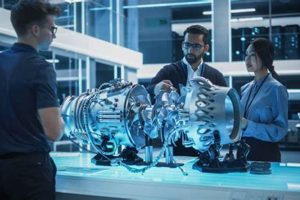
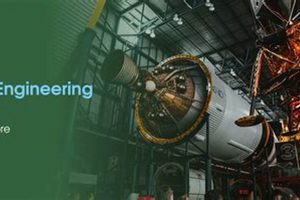
A foundational overview of the principles and practices involved in the design, development, and manufacturing of aircraft and spacecraft constitutes the initial phase of study in this specialized field. This preliminary exploration typically encompasses a wide range of topics, from basic aerodynamics and propulsion systems to materials science and flight mechanics. Successful completion of this introductory phase allows individuals to grasp core concepts essential for further, more advanced studies.
The significance of gaining a strong grasp of fundamental aerospace concepts cannot be overstated. It provides a solid base for comprehending complex engineering challenges and enables informed decision-making in design and analysis processes. Historically, such grounding has been pivotal in driving innovation, leading to safer, more efficient, and technologically advanced air and space vehicles. Moreover, these initial studies often expose students to the ethical considerations and societal impacts inherent in aerospace endeavors.
Consequently, subsequent articles will delve into specific aspects of this complex and dynamic field, including detailed analyses of aerodynamic forces, the design of propulsion systems, the selection of appropriate materials for extreme environments, and the principles governing stability and control in both atmospheric and space flight.
Guidance for Newcomers to Aerospace Engineering Studies
The following recommendations serve to assist individuals commencing their academic journey in this demanding, yet rewarding, field. These suggestions aim to facilitate a deeper understanding of fundamental concepts and promote academic success.
Tip 1: Prioritize Foundational Mathematics: A robust understanding of calculus, differential equations, and linear algebra is paramount. These mathematical tools form the basis for analyzing aerodynamic forces, designing control systems, and modeling complex physical phenomena. Neglecting this foundation will hinder progress in more advanced topics.
Tip 2: Master Basic Physics Principles: A comprehensive grasp of Newtonian mechanics, thermodynamics, and fluid dynamics is crucial. These principles govern the behavior of aircraft and spacecraft. For example, understanding Bernoulli’s principle is essential for comprehending lift generation.
Tip 3: Cultivate Strong Problem-Solving Skills: Aerospace engineering involves tackling complex, multifaceted problems. Develop proficiency in analytical and numerical problem-solving techniques. Practice applying theoretical knowledge to real-world scenarios, such as designing a wing for a specific aircraft.
Tip 4: Develop Proficiency with Software Tools: Familiarity with industry-standard software packages for Computer-Aided Design (CAD), Computational Fluid Dynamics (CFD), and finite element analysis (FEA) is highly beneficial. These tools are essential for design, simulation, and analysis. Early exposure will provide a competitive advantage.
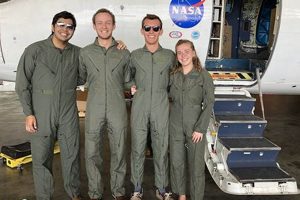
Tip 5: Engage in Hands-on Projects: Seek opportunities to participate in hands-on projects, such as building model aircraft, designing rocket components, or working on university-sponsored research initiatives. Practical experience reinforces theoretical knowledge and fosters critical thinking.
Tip 6: Seek Mentorship and Collaboration: Connect with experienced engineers, professors, or senior students. A mentor can provide invaluable guidance and support. Collaboration on projects allows for knowledge sharing and diverse perspectives.
Tip 7: Stay Informed About Industry Trends: Aerospace technology is constantly evolving. Read industry publications, attend conferences, and follow research developments to stay abreast of the latest advancements in areas such as autonomous systems, advanced materials, and space exploration.
In summary, success in aerospace engineering requires a strong foundation in mathematics and physics, well-developed problem-solving abilities, familiarity with software tools, practical experience, and a commitment to lifelong learning. By prioritizing these aspects, newcomers can enhance their understanding and achieve their academic and professional goals.
Subsequent articles will explore advanced topics within aerospace engineering, building upon these foundational principles and providing a deeper understanding of specific areas of specialization.
1. Aerodynamics foundation

Aerodynamics, the study of air in motion and its interaction with solid objects, constitutes a cornerstone of “introduction to aerospace engineering.” A solid grounding in aerodynamic principles is a prerequisite for comprehending the behavior of aircraft, rockets, and other airborne vehicles. The ability to predict and manipulate aerodynamic forces such as lift, drag, and thrust directly influences design decisions related to wing shape, airfoil selection, and overall vehicle configuration. For instance, the design of a high-speed aircraft necessitates a deep understanding of supersonic and hypersonic aerodynamics to mitigate the effects of shock waves and aerodynamic heating. Failure to adequately address these effects can compromise the structural integrity of the vehicle and severely impact its performance.
The aerodynamic foundation acquired during an introductory phase enables students to analyze and optimize the performance of various aerospace systems. This includes the ability to calculate lift and drag coefficients, analyze boundary layer behavior, and predict stall characteristics. Consider the development of unmanned aerial vehicles (UAVs); their efficient operation relies on careful aerodynamic design to maximize flight time and payload capacity. Similarly, the design of wind turbines leverages aerodynamic principles to efficiently extract energy from the wind. These examples illustrate the practical application of aerodynamics across diverse aerospace and related fields.
In conclusion, the relationship between aerodynamics and the introductory aerospace engineering curriculum is intrinsic. Mastery of this fundamental area is not merely an academic exercise but a vital component that empowers engineers to design, analyze, and optimize a vast range of aerospace systems. Understanding aerodynamic principles directly impacts vehicle performance, stability, and safety. Although challenges remain in accurately modeling complex flow phenomena, a strong aerodynamic foundation provides a crucial framework for addressing these issues and advancing the field.
2. Propulsion systems overview

The study of propulsion systems represents an indispensable segment within the “introduction to aerospace engineering.” A comprehensive understanding of these systems is foundational to the design, analysis, and operation of all airborne and spaceborne vehicles. The following outlines critical facets of propulsion systems, illustrating their significance in aerospace engineering.
- Types of Air-Breathing Engines
Air-breathing engines, including turbojets, turbofans, and ramjets, rely on atmospheric oxygen for combustion. Each type exhibits distinct performance characteristics in terms of thrust, fuel efficiency, and operational altitude. Understanding these differences is essential for selecting the appropriate engine for a given aircraft mission. For example, a commercial airliner utilizes turbofans for their efficiency at subsonic speeds, while a high-speed interceptor aircraft might employ turbojets or ramjets for maximum thrust at supersonic speeds. The “introduction to aerospace engineering” curriculum provides students with the analytical tools necessary to evaluate these trade-offs.
- Rocket Propulsion Fundamentals
Rocket propulsion, unlike air-breathing propulsion, carries its own oxidizer, enabling operation in the vacuum of space. This category encompasses liquid-propellant rockets, solid-propellant rockets, and hybrid systems, each with varying levels of performance, complexity, and cost. Understanding the rocket equation and its implications for mission design is a fundamental aspect of spacecraft engineering. The introductory course equips students with the knowledge to calculate propellant requirements and predict the performance of rocket-powered vehicles.
- Combustion Principles and Thermodynamics
The core of any propulsion system is the combustion process, which releases energy by reacting fuel with an oxidizer. Understanding the thermodynamics of combustion, including heat transfer and chemical kinetics, is crucial for optimizing engine efficiency and minimizing pollutant emissions. The introductory course provides a basis for further study of advanced combustion techniques, such as staged combustion and lean-burn strategies, which aim to improve engine performance and reduce environmental impact.
- Performance Metrics and System Integration
Evaluating the performance of a propulsion system involves considering various metrics, including thrust-to-weight ratio, specific impulse, and fuel consumption. System integration encompasses the challenges of incorporating the engine into the overall vehicle design, considering factors such as weight, drag, and structural integrity. The “introduction to aerospace engineering” curriculum emphasizes the importance of balancing these competing requirements to achieve optimal vehicle performance. For example, the placement of engines on an aircraft wing can significantly affect both lift and drag, requiring careful aerodynamic analysis.
In conclusion, a thorough “Propulsion systems overview” is integral to understanding the broader field. The principles learned during the introductory phase serve as a building block for more advanced topics, enabling students to analyze, design, and optimize propulsion systems for a wide range of aerospace applications. From commercial airliners to interplanetary spacecraft, a solid grasp of propulsion fundamentals is essential for aerospace engineers.
3. Materials science basics

Materials science fundamentals are intrinsically linked to the study of aerospace engineering. The performance, safety, and longevity of aerospace vehicles are directly dependent on the properties and behavior of the materials from which they are constructed. An “introduction to aerospace engineering” invariably includes an exploration of these “materials science basics” due to the extreme environmental and mechanical demands placed on aerospace structures. For instance, aircraft operating at high altitudes encounter drastically lower temperatures and pressures, requiring materials that maintain their structural integrity and mechanical properties under these conditions. Similarly, spacecraft experience extreme temperature variations and are subjected to intense radiation in the vacuum of space, necessitating specialized materials capable of withstanding such harsh conditions. These cause-and-effect relationships emphasize the critical role of materials science in ensuring successful aerospace operations.
The selection of appropriate materials for aerospace applications involves a complex interplay of factors, including strength-to-weight ratio, corrosion resistance, thermal stability, and cost. Consider the development of modern jet engines; advancements in nickel-based superalloys have enabled higher operating temperatures, leading to increased engine efficiency and thrust. Similarly, the use of composite materials, such as carbon fiber reinforced polymers, has significantly reduced the weight of aircraft structures, improving fuel efficiency and payload capacity. The introductory aerospace engineering curriculum provides students with the tools to evaluate material properties, understand material behavior under stress, and select appropriate materials for specific applications. This understanding is not purely theoretical; it has immediate practical implications for the design and manufacturing processes used in the aerospace industry.
In conclusion, the study of “materials science basics” is not merely an adjunct to aerospace engineering; it is a core component essential for understanding the principles governing the design and operation of aerospace vehicles. The ability to select, analyze, and utilize materials effectively is a critical skill for aerospace engineers. While challenges remain in developing materials with ever-increasing performance characteristics, a solid grounding in materials science provides a crucial foundation for innovation and advancement in the field. The introduction to aerospace engineering serves as a gateway, providing the fundamental knowledge needed to address these challenges and contribute to the future of aerospace technology.
4. Flight mechanics introduction
The study of flight mechanics forms an integral part of an “introduction to aerospace engineering.” It provides a fundamental understanding of how aircraft and spacecraft move through the atmosphere and space. Mastery of these principles is crucial for the design and operation of safe and efficient aerospace vehicles.
- Aircraft Stability and Control
Aircraft stability refers to an aircraft’s inherent tendency to return to its equilibrium state after being disturbed. Control, conversely, enables pilots or automated systems to intentionally alter the aircraft’s trajectory and attitude. Introductory flight mechanics covers static and dynamic stability analyses, control surface design, and basic autopilot concepts. An unstable aircraft is inherently unsafe, while ineffective control surfaces can hinder maneuverability and compromise mission objectives. The Wright brothers’ early struggles with aircraft control highlight the importance of this topic. The design of modern fly-by-wire systems builds upon these foundational principles.
- Aerodynamic Forces and Moments
The interplay of aerodynamic forces (lift, drag, thrust, and weight) and moments (pitch, roll, and yaw) dictates an aircraft’s flight path. The “flight mechanics introduction” includes a quantitative analysis of these forces and moments, considering factors such as airspeed, angle of attack, and aircraft configuration. Accurate prediction of these forces is essential for performance analysis and flight simulation. Incorrect estimations can lead to inaccurate performance predictions, potentially jeopardizing safety and mission success. For example, understanding stall characteristics is critical for preventing loss of control.
- Equations of Motion
The equations of motion mathematically describe the aircraft’s translational and rotational movements. These equations, derived from Newton’s laws, form the basis for flight simulation, control system design, and performance analysis. An “introduction to aerospace engineering” presents simplified versions of these equations, emphasizing the underlying physical principles. Students learn to linearize the equations for small perturbations and analyze the aircraft’s response to control inputs. The complexity of these equations necessitates the use of numerical methods and computer simulations for more advanced analyses.
- Performance Analysis
Performance analysis involves evaluating an aircraft’s capabilities, such as its maximum speed, range, climb rate, and turning performance. Introductory flight mechanics provides the tools to estimate these performance metrics based on the aircraft’s aerodynamic characteristics, engine performance, and weight. This analysis is crucial for mission planning and aircraft design. For example, a cargo aircraft requires a high payload capacity and long range, while a fighter aircraft prioritizes speed and maneuverability. These requirements dictate the aircraft’s overall design and performance characteristics.
These facets demonstrate the crucial role of “flight mechanics introduction” within the broader context of aerospace engineering. The principles learned serve as the foundation for more advanced topics, such as flight control systems, aircraft design, and space mission analysis. A strong understanding of flight mechanics is essential for aerospace engineers who aim to design, analyze, and operate safe and efficient aerospace vehicles.
5. Spacecraft design elements
The field of spacecraft design encompasses a multifaceted array of engineering disciplines, all crucial components of an “introduction to aerospace engineering.” These design considerations differ significantly from those encountered in aircraft engineering, owing to the unique challenges of operating in the space environment. The following sections delineate several critical spacecraft design elements, highlighting their role and significance in aerospace engineering curricula.
- Orbital Mechanics and Trajectory Design
Orbital mechanics, the study of spacecraft motion under the influence of gravity, is fundamental to mission planning. An understanding of Kepler’s laws, orbital maneuvers, and trajectory optimization is essential for placing spacecraft into desired orbits. For example, the design of a communication satellite constellation requires precise orbital placement to ensure continuous coverage. This element within “introduction to aerospace engineering” demonstrates the practical application of physics and mathematics to achieve specific mission objectives. Trajectory design encompasses not only the orbital path but also the maneuvers required to reach the final destination, factoring in fuel consumption and mission duration. The analysis of interplanetary missions, such as those to Mars, presents complex challenges in trajectory design due to the gravitational influence of multiple celestial bodies.
- Power Systems
Spacecraft power systems are critical for providing the electrical energy required to operate onboard instruments, communication equipment, and other subsystems. Solar arrays, batteries, and radioisotope thermoelectric generators (RTGs) are common power sources, each with distinct advantages and limitations. Solar arrays are widely used for missions in Earth orbit, but their effectiveness diminishes at greater distances from the Sun. RTGs, which convert heat from radioactive decay into electricity, are employed on missions to the outer solar system where solar energy is scarce. An “introduction to aerospace engineering” examines the principles of energy generation, storage, and distribution within spacecraft power systems. Understanding these principles is essential for designing reliable and efficient power systems that can meet the demands of various mission profiles.
- Thermal Control Systems
Maintaining stable temperatures within a spacecraft is vital for ensuring the proper functioning of its components. Thermal control systems mitigate the effects of extreme temperature variations encountered in space, using a combination of passive and active techniques. Passive thermal control methods, such as multi-layer insulation (MLI) and surface coatings, minimize heat absorption and radiation. Active thermal control systems, including heaters, radiators, and fluid loops, provide precise temperature regulation. The “introduction to aerospace engineering” curriculum emphasizes the importance of thermal analysis and design, enabling students to predict temperature distributions and select appropriate thermal control strategies. The failure of a thermal control system can lead to overheating or freezing of critical components, potentially causing mission failure.
- Communication Systems
Reliable communication links between spacecraft and ground stations are essential for transmitting data, receiving commands, and monitoring spacecraft health. Communication systems typically consist of antennas, transceivers, and signal processing equipment. The selection of appropriate frequencies, modulation techniques, and antenna designs depends on factors such as distance, data rate, and atmospheric conditions. An “introduction to aerospace engineering” provides an overview of communication system principles, including signal propagation, noise analysis, and coding techniques. Understanding these principles is crucial for designing robust communication links that can operate reliably over vast distances.
In summary, the “Spacecraft design elements” detailed above are fundamental components in aerospace engineering. The ability to effectively design, analyze, and integrate these elements dictates mission success. The initial studies often expose students to the design processes inherent in aerospace endeavors. By addressing challenges, the student are enable to create safe and effective aerospace exploration.
Frequently Asked Questions About Introduction to Aerospace Engineering
The following addresses common inquiries regarding the initial stages of studying aerospace engineering. The information provided aims to clarify expectations and offer guidance to prospective students.
Question 1: What foundational knowledge is expected prior to commencing studies in aerospace engineering?
A solid background in mathematics, particularly calculus, differential equations, and linear algebra, is essential. Furthermore, a strong grasp of Newtonian mechanics, thermodynamics, and basic chemistry is expected. Deficiencies in these areas may hinder progress in subsequent coursework.
Question 2: What distinguishes aerospace engineering from other engineering disciplines?
Aerospace engineering focuses specifically on the design, development, and testing of aircraft and spacecraft. While it shares common principles with mechanical, electrical, and materials engineering, it incorporates specialized knowledge related to aerodynamics, propulsion, orbital mechanics, and aerospace materials.
Question 3: Is a strong aptitude for mathematics and physics absolutely necessary for success in aerospace engineering?
Yes. A strong aptitude for mathematics and physics is critical. These disciplines provide the fundamental tools and concepts required to analyze and solve complex engineering problems encountered in aerospace engineering. While dedication and hard work can compensate for some initial weaknesses, a natural affinity for these subjects is highly beneficial.
Question 4: What are the common career paths available to graduates with a degree in aerospace engineering?
Graduates may pursue careers in aircraft and spacecraft design, propulsion systems development, avionics, flight testing, research and development, and mission planning. Opportunities exist in both the public and private sectors, including aerospace companies, government agencies, and research institutions.
Question 5: How computationally intensive is the field of aerospace engineering?
Aerospace engineering is highly computationally intensive. Students will be expected to utilize computer-aided design (CAD) software, computational fluid dynamics (CFD) tools, and other simulation software to analyze and design aerospace systems. Proficiency in programming languages such as MATLAB or Python is also highly valuable.
Question 6: What are some of the most significant challenges currently facing the aerospace engineering field?
Significant challenges include developing more fuel-efficient and environmentally friendly aircraft, reducing the cost of space access, improving the reliability and safety of aerospace systems, and developing new technologies for space exploration and colonization.
In summary, a successful “introduction to aerospace engineering” hinges on a strong foundation in mathematics and physics, coupled with a willingness to engage with computational tools and a deep interest in the challenges and opportunities within the aerospace field.
Subsequent sections will explore specific areas of specialization within aerospace engineering, building upon the foundational knowledge addressed herein.
Conclusion
This exploration of “introduction to aerospace engineering” has underscored the foundational knowledge, essential skills, and prevailing challenges within the field. It is a discipline demanding a rigorous understanding of mathematical and scientific principles, coupled with practical experience and a commitment to lifelong learning. The presented overview highlights the interconnectedness of core subjects such as aerodynamics, propulsion, materials science, and flight mechanics, illustrating how they collectively contribute to the design and operation of aircraft and spacecraft.
The aerospace engineering field continues to evolve, driven by technological advancements and pressing global needs. It is incumbent upon those entering this discipline to embrace innovation, address complex engineering challenges, and contribute to the advancement of air and space technologies for the benefit of society. Continued dedication to rigorous study and ethical practice remains paramount for those seeking to make meaningful contributions to the aerospace domain.