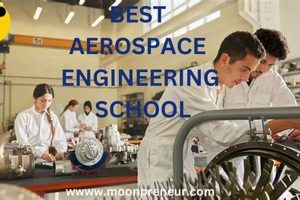
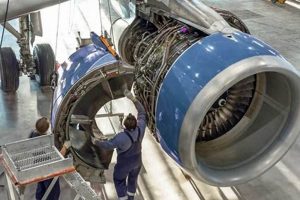
One field focuses on the study of celestial objects and phenomena, seeking to understand the universe’s origins, evolution, and composition. It encompasses observation, theoretical modeling, and the analysis of cosmic radiation. The other discipline concentrates on the design, development, testing, and production of aircraft, spacecraft, and related systems. It applies principles of physics, engineering, and mathematics to create technologies that operate within and beyond Earth’s atmosphere.
These two disciplines represent distinct yet occasionally overlapping paths of scientific and technological endeavor. The pursuit of understanding the cosmos relies on data gathered by instruments created and launched through engineering expertise. Historically, astronomical observations have spurred advancements in areas such as optics, mechanics, and propulsion, influencing the development of flight technologies. The ongoing expansion of space exploration capabilities directly benefits from both the knowledge gained about the universe and the innovative solutions arising from engineering challenges.
The following sections will delve into the specific characteristics, educational requirements, career opportunities, and practical applications associated with each of these fields, highlighting the unique contributions each makes to our understanding of the universe and our ability to navigate within it.
The decision between pursuing astronomy or aerospace engineering requires careful consideration of interests, aptitudes, and career aspirations. The following points offer guidance for those weighing these options.
Tip 1: Evaluate Core Interests: Determine the primary driver: a deep curiosity about the universe and its workings, or a passion for designing and building complex systems that operate in space and air. Astronomy leans heavily towards theoretical understanding, while aerospace engineering emphasizes practical application.
Tip 2: Assess Mathematical and Scientific Aptitude: Both fields demand strong skills in mathematics and physics. Astronomy requires a thorough grasp of celestial mechanics, astrophysics, and statistical analysis. Aerospace engineering necessitates proficiency in calculus, differential equations, thermodynamics, and materials science.
Tip 3: Understand Career Paths: Astronomy careers often involve research positions in universities or observatories, requiring advanced degrees. Aerospace engineering offers diverse opportunities in the aerospace industry, government agencies, and research institutions, with roles ranging from design and development to testing and project management.
Tip 4: Consider Educational Requirements: Astronomy typically requires a Ph.D. for independent research roles. Aerospace engineering allows for entry-level positions with a bachelor’s or master’s degree, with further specialization possible through advanced studies.
Tip 5: Explore Interdisciplinary Options: Some careers bridge the gap between astronomy and aerospace engineering. Examples include developing space-based telescopes, designing planetary rovers, or working on propulsion systems for deep-space exploration.
Tip 6: Investigate Research Opportunities: Seek out research experiences in both astronomy and aerospace engineering. Participating in research projects provides valuable insights into the day-to-day realities of each field and helps solidify career decisions.
These considerations aim to provide a framework for evaluating the suitability of astronomy or aerospace engineering as a career path. A clear understanding of individual strengths, interests, and long-term goals is paramount in making an informed choice.
Further research into the specific aspects of each field is recommended to refine the decision-making process and prepare for a fulfilling career in either astronomy or aerospace engineering.
1. Celestial Observation

Celestial observation serves as a cornerstone of astronomical inquiry, providing the raw data upon which theories of the universe are built. Its relationship to these scientific disciplines is multifaceted, impacting both its goals and methodologies.
- Telescopic Instrumentation
Telescopes, both ground-based and space-based, are the primary tools for celestial observation. Astronomers rely on increasingly sophisticated instruments to gather light and other electromagnetic radiation from distant objects. Aerospace engineers are essential in designing, building, and deploying these space-based observatories, ensuring their functionality and longevity in harsh space environments. Examples include the James Webb Space Telescope and the Hubble Space Telescope, both of which required extensive engineering expertise.
- Data Acquisition and Analysis
Celestial observation yields vast quantities of data that require specialized processing and analysis. Astronomers develop algorithms and techniques to extract meaningful information from raw data, such as identifying exoplanets, measuring redshift, or mapping the distribution of galaxies. The performance of data acquisition systems and the robustness of analytical tools are directly influenced by advancements in aerospace engineering, particularly in areas like signal processing and control systems.
- Orbital Mechanics and Spacecraft Positioning
For space-based observatories, precise orbital mechanics and spacecraft positioning are critical for achieving optimal observing conditions. Aerospace engineers use their expertise in orbital dynamics, propulsion systems, and attitude control to ensure that telescopes are accurately pointed at their targets and maintain stable orbits. Imperfect positioning can lead to blurred images or loss of data, highlighting the importance of engineering precision.
- Atmospheric Effects Mitigation
Ground-based celestial observation is affected by atmospheric turbulence, which distorts astronomical images. Adaptive optics systems, developed in part by aerospace engineers, compensate for these distortions in real-time, improving the resolution of ground-based telescopes. Furthermore, understanding atmospheric composition and its impact on light propagation is important for calibrating astronomical observations.
The interplay between celestial observation and these fields underscores the dependence of astronomical discovery on engineering innovation. Future advancements in astronomical knowledge will depend on continued collaboration between astronomers who define the scientific questions and aerospace engineers who provide the technological means to answer them.
2. System Design
System design constitutes a critical juncture where the domains of astronomy and aerospace engineering intersect. Within the realm of astronomy, system design is primarily concerned with the architecture of observatories, the integration of sensors and detectors, and the development of data acquisition and processing pipelines. Examples include the design of the Atacama Large Millimeter/submillimeter Array (ALMA), where engineers addressed challenges of operating sensitive instruments at high altitudes, and the Square Kilometre Array (SKA), a planned radio telescope that requires intricate signal processing and data management systems. The effectiveness of astronomical research is contingent upon well-designed systems that can efficiently capture, process, and interpret astronomical data.
Aerospace engineering, conversely, focuses on the design, construction, and operation of spacecraft, launch vehicles, and related infrastructure. The system design process in this field is far-reaching, encompassing propulsion systems, structural integrity, thermal control, navigation, and communication. A prominent example is the design of the James Webb Space Telescope (JWST), which required engineers to develop a complex deployment mechanism for its sunshield and mirror segments. Another illustration is the design of interplanetary probes, such as the Mars rovers, where robustness, autonomy, and power efficiency are paramount. The success of space missions hinges on the ability of engineers to design reliable, high-performance systems that can withstand the rigors of space travel.
The relationship between system design and both fields is therefore symbiotic. Astronomical research defines the requirements for advanced instrumentation, and aerospace engineering provides the means to realize those requirements. Conversely, the challenges of space exploration drive innovation in aerospace engineering, which in turn benefits astronomical observation. By understanding the principles and practices of system design within each field, it becomes apparent that both contribute significantly to our understanding of the universe, albeit through different, yet complementary, approaches.
3. Theoretical Research
Theoretical research plays a foundational role in both astronomy and aerospace engineering, albeit with distinct focuses. In astronomy, theoretical work provides frameworks for understanding the cosmos, developing models of stellar evolution, galaxy formation, and the behavior of black holes. This research, often expressed mathematically, interprets observational data and predicts new phenomena. Without it, astronomical observations would remain disconnected facts. An example includes the theoretical prediction of gravitational waves by Einstein’s theory of general relativity, later confirmed through experimental observation, fundamentally altering our understanding of gravity and the universe’s structure.
Aerospace engineering leverages theoretical research to design and improve aircraft and spacecraft. Fluid dynamics, materials science, and control theory are applied to optimize aerodynamic performance, structural integrity, and autonomous navigation. Computational fluid dynamics (CFD), for instance, relies on theoretical models to simulate airflow around aircraft, enabling engineers to refine designs before physical prototypes are even constructed. This predictive capability is crucial for developing efficient and safe aerospace vehicles. Another key point, materials science helps research and develop new super-strength alloys, thermal protection systems, and new age composites for aerospace projects, such as reusable spacecraft and hypersonic aircraft.
In summary, theoretical research is indispensable for both disciplines. Astronomy relies on it to interpret observational data and develop a coherent understanding of the universe, while aerospace engineering utilizes it to design and optimize technological systems for operation in air and space. Although the objectives and applications differ, both areas depend on theoretical insights to advance scientific knowledge and technological capabilities. Future progress in each field will require continuous investment in, and development of, robust theoretical frameworks.
4. Practical Application
Practical application bridges the divide between theoretical knowledge and tangible outcomes in both astronomy and aerospace engineering. The translation of concepts into functional systems and measurable results is where the true value of each field is realized. The following aspects illustrate this connection.
- Telescope and Instrument Design
Astronomical research relies heavily on advanced telescopes and instruments. The practical application lies in the design, construction, and deployment of these tools. Aerospace engineering plays a crucial role in the development of space-based observatories, ensuring their operability in the harsh environment of space. Ground-based telescope design also benefits from engineering expertise in areas such as adaptive optics and structural stability. An example is the James Webb Space Telescope, a feat of engineering designed to observe the universe in infrared light, significantly furthering astronomical knowledge.
- Space Mission Planning and Execution
The execution of space missions, from robotic exploration to human spaceflight, exemplifies practical application. Aerospace engineers are responsible for designing spacecraft, planning trajectories, and managing the complex systems that enable these missions. Astronomy provides the scientific goals and target destinations, guiding mission planning and data collection strategies. The successful landing of rovers on Mars, such as Curiosity and Perseverance, demonstrates the practical application of combined astronomical objectives and aerospace engineering capabilities.
- Satellite Technology and Communication
Satellite technology, crucial for communication, navigation, and Earth observation, represents a significant area of practical application. Aerospace engineers design and build satellites, while astronomers utilize satellite data to study Earth’s atmosphere, climate, and environment. The Global Positioning System (GPS) is a prime example of a technology enabled by aerospace engineering that has transformed numerous aspects of modern life. It also relies on precise astronomical calculations to maintain accuracy.
- Data Analysis and Modeling
Both astronomy and aerospace engineering generate vast amounts of data. Practical application involves developing algorithms and techniques for analyzing this data to extract meaningful information. In astronomy, this includes identifying exoplanets, measuring the expansion rate of the universe, and studying the properties of black holes. In aerospace engineering, it involves analyzing flight data to improve aircraft performance, monitoring satellite health, and predicting the behavior of complex systems. Machine learning and artificial intelligence are increasingly used in both fields to automate data analysis and improve predictive capabilities.
These examples underscore that practical application is the linchpin connecting theoretical research to real-world outcomes in both astronomy and aerospace engineering. The synergy between these fields drives innovation and advances our understanding of the universe and our ability to operate within it.
5. Cosmic Understanding

Cosmic understanding, the overarching goal of deciphering the universe’s origins, evolution, and fundamental laws, serves as a critical nexus for both astronomy and aerospace engineering. While astronomy seeks to unveil the cosmos through observation and theory, aerospace engineering provides the tools and technologies necessary to explore and access it. The pursuit of cosmic understanding directly influences the development and application of these disciplines.
- Formation of Galaxies and Large-Scale Structures
Astronomical observations and theoretical models aim to explain how galaxies form and evolve, as well as the distribution of matter on the largest scales. Aerospace engineering contributes by enabling the construction and deployment of space-based telescopes, such as the James Webb Space Telescope, which can observe the universe at wavelengths not accessible from Earth, providing data that refines cosmological models. Furthermore, rocket technology and satellite deployment are crucial for studying the cosmic microwave background radiation, a relic of the early universe that provides insights into its origins and evolution. For instance, WMAP and Planck satellites have mapped the CMB with unprecedented precision using aerospace equipment.
- Exoplanet Detection and Characterization
The search for exoplanets, planets orbiting stars other than our Sun, is a key area of astronomical research. Aerospace engineering plays a crucial role in designing and building spacecraft, such as the Kepler Space Telescope and the Transiting Exoplanet Survey Satellite (TESS), which are used to detect exoplanets by observing the dimming of a star’s light as a planet passes in front of it. Furthermore, aerospace engineers are developing technologies for future missions that could directly image exoplanets and analyze their atmospheres, potentially revealing signs of life. Future missions may need specialized aerospace engineering designs that use starshades to block starlight, allowing better viewing of exoplanets.
- Black Holes and Gravitational Physics
Black holes, regions of spacetime with extreme gravity, are objects of intense study in astronomy. Aerospace engineering contributes by developing instruments and spacecraft that can observe black holes and test theories of gravity. X-ray telescopes, such as the Chandra X-ray Observatory, are used to study the high-energy radiation emitted by matter falling into black holes. Furthermore, gravitational wave detectors, such as LIGO and Virgo, rely on advanced engineering techniques to detect ripples in spacetime caused by the merging of black holes, providing new insights into gravity and the universe’s evolution. As an example, the Event Horizon Telescope relies on complex data synthesis techniques that have computational implications, further expanding the intersection of fields.
- Space Exploration and Resource Utilization
The long-term goal of space exploration and resource utilization requires both scientific understanding and technological capability. Aerospace engineering is essential for designing and building spacecraft, rovers, and habitats for future space missions. Astronomical research informs the selection of targets for exploration, such as Mars, Europa, and the Moon. Understanding the composition and environment of these bodies is crucial for planning future resource utilization efforts, such as mining asteroids for valuable minerals or extracting water ice from the lunar poles. Future practical application in space can lead to long-term settlements, such as the International Space Station.
These facets highlight the interdependence of astronomy and aerospace engineering in the pursuit of cosmic understanding. While astronomy defines the scientific questions and provides the theoretical framework, aerospace engineering provides the technological means to explore and investigate the universe. The continued advancement in both fields will be essential for unraveling the mysteries of the cosmos and expanding humanity’s reach into space.
6. Technological Advancement

Technological advancement forms the bedrock upon which progress in both astronomy and aerospace engineering is built. In astronomy, increasingly sophisticated instruments allow for the observation of fainter, more distant objects, revealing details previously inaccessible. Examples include the development of larger telescopes with adaptive optics that compensate for atmospheric distortion, enabling sharper images of celestial objects. Space-based telescopes, deployed by aerospace engineering, eliminate atmospheric interference altogether, providing pristine views of the universe across a wider spectrum. New sensor technologies, such as highly sensitive CCDs and infrared detectors, enhance the ability to detect and analyze faint signals from distant galaxies and exoplanets. These technological leaps are not merely enhancements; they are essential for pushing the boundaries of astronomical knowledge.
Similarly, aerospace engineering relies heavily on technological advancements in materials science, propulsion systems, and avionics. The development of lightweight, high-strength composite materials allows for the construction of more efficient and capable aircraft and spacecraft. Advanced propulsion systems, such as ion thrusters and variable-cycle engines, enable longer-duration missions and higher speeds. Sophisticated avionics and control systems enhance the precision and autonomy of aerospace vehicles, enabling complex maneuvers and automated operations. The ongoing development of reusable launch vehicles promises to significantly reduce the cost of space access, opening up new opportunities for space exploration and utilization. All of this is a result of theoretical and practical advancements which build upon each other at an increasing rate.
The interplay between technological advancement and both fields is mutually reinforcing. New astronomical discoveries inspire the development of new technologies, while advancements in engineering provide the means to make new observations and conduct more ambitious space missions. This synergistic relationship drives progress in both fields, leading to a deeper understanding of the universe and expanding human capabilities in space. It is through this cycle of innovation that both astronomy and aerospace engineering continue to advance, addressing fundamental questions about our place in the cosmos and enabling the exploration of new frontiers. Technological innovation is the fuel propelling discovery and advancement in both pursuits.
Frequently Asked Questions
The following questions address common inquiries and misconceptions regarding the distinctions and overlaps between astronomy and aerospace engineering. The aim is to provide concise, informative answers that clarify the essential aspects of each field.
Question 1: Is a background in one field directly transferable to the other?
While both fields share a foundation in mathematics and physics, direct transferability is limited. Specific skill sets and knowledge bases differ significantly. An astronomer might possess a deep understanding of astrophysics but lack the engineering expertise to design a satellite. Conversely, an aerospace engineer might excel in structural analysis but require additional training to interpret astronomical data.
Question 2: Which field offers more immediate career opportunities after graduation?
Aerospace engineering generally presents more immediate career opportunities at the bachelor’s or master’s level. The aerospace industry requires a steady influx of engineers for design, testing, and manufacturing roles. Astronomy, especially research-oriented positions, typically necessitates a Ph.D. and postdoctoral experience.
Question 3: How does the required level of education differ between the two fields?
A terminal degree (Ph.D.) is often required for independent research positions in astronomy. While a Master’s degree can be advantageous, many research astronomers pursue a doctoral path. Aerospace engineering offers more diverse career paths with a Bachelor’s or Master’s degree, although advanced degrees can lead to specialized roles and higher earning potential.
Question 4: What are the typical work environments for professionals in each field?
Astronomers often work in universities, observatories, or research institutions. Work may involve telescope operation, data analysis, theoretical modeling, and teaching. Aerospace engineers typically find employment in the aerospace industry, government agencies (e.g., NASA, ESA), or private research firms. Roles may include designing aircraft and spacecraft, developing propulsion systems, or managing aerospace projects.
Question 5: Are there opportunities for interdisciplinary collaboration between astronomers and aerospace engineers?
Yes, numerous opportunities exist for collaboration. The development of space-based telescopes and planetary probes requires close cooperation between astronomers who define the scientific objectives and aerospace engineers who design and build the necessary hardware. Designing missions to study stellar objects requires interdisciplinary cooperation, as well.
Question 6: Which field is more focused on theoretical knowledge versus practical application?
Astronomy tends to be more heavily focused on theoretical knowledge and understanding the fundamental laws of the universe. While observation and data analysis are crucial, the emphasis is on developing theoretical models to explain cosmic phenomena. Aerospace engineering places a greater emphasis on practical application, translating scientific principles into functional systems and technologies.
In summary, while both astronomy and aerospace engineering contribute to our understanding of the universe and our ability to explore it, they differ significantly in their focus, educational requirements, career paths, and work environments. A clear understanding of these differences is essential for making an informed career decision.
The following section delves into specific career paths and employment prospects within each discipline, providing further insights into the professional landscape.
Astronomy vs. Aerospace Engineering
This exploration of astronomy vs. aerospace engineering has elucidated the distinct yet interconnected nature of these fields. Astronomy seeks to understand the universe through observation and theoretical modeling, while aerospace engineering focuses on designing and building the technologies that enable space exploration and observation. The choice between these disciplines hinges on individual interests, aptitudes, and career goals. Both contribute significantly to scientific progress and technological innovation, advancing our knowledge of the cosmos and expanding humanity’s reach beyond Earth.
Continued advancements in both astronomy and aerospace engineering are essential for addressing fundamental questions about the universe and for realizing the full potential of space exploration. Further research and development in these fields will undoubtedly lead to groundbreaking discoveries and transformative technologies, shaping the future of science and human civilization. The pursuit of knowledge and innovation remains the driving force behind both endeavors, inspiring future generations of scientists and engineers to push the boundaries of what is possible.