



The question of whether professionals trained in the design, development, and testing of aircraft and spacecraft are eligible for space travel is a multifaceted one. Aerospace engineers possess the technical knowledge related to space environments, vehicle performance, and systems operation. Their expertise is crucial for mission success, yet holding such a degree does not automatically qualify someone for astronaut status.
Historically, astronauts have come from diverse backgrounds, including military pilots, scientists, and medical doctors. Engineering expertise is highly valued, especially for mission specialists and engineers involved in orbital operations. The benefits of having aerospace engineers participate directly in space missions include their ability to troubleshoot technical issues, conduct on-site experiments, and provide real-time feedback on vehicle performance, ultimately contributing to enhanced safety and mission effectiveness.
Several paths enable an aerospace engineer to potentially travel beyond Earth’s atmosphere. These pathways include fulfilling astronaut selection criteria, pursuing specialized training programs, and participating in commercial spaceflight opportunities. The subsequent sections will examine these different avenues in more detail, outlining the requirements, training involved, and factors influencing access to space for individuals with an aerospace engineering background.
Guidance for Aerospace Engineers Aspiring to Space Travel
Opportunities exist for aerospace engineers to participate in space missions. Strategic planning and diligent execution are required to maximize the likelihood of achieving this objective.
Tip 1: Prioritize Academic Excellence. A strong academic foundation in aerospace engineering or a related field is paramount. Focus on achieving high grades in core subjects such as propulsion, aerodynamics, and orbital mechanics.
Tip 2: Pursue Relevant Professional Experience. Seek employment in sectors directly related to space exploration, such as spacecraft design, mission operations, or satellite development. Hands-on experience strengthens candidacy.
Tip 3: Develop Specialized Skills. Acquire expertise in areas relevant to astronaut duties, such as robotics, life support systems, or extravehicular activity. Certifications and advanced training demonstrate commitment.
Tip 4: Maintain Exceptional Physical and Mental Fitness. Astronaut selection requires rigorous physical and psychological evaluations. Regular exercise, healthy lifestyle choices, and stress management techniques are essential.
Tip 5: Consider Military Service. Military service, particularly as a test pilot or flight engineer, provides invaluable experience and increases exposure to high-performance environments. The armed forces remain a significant pathway to becoming an astronaut.
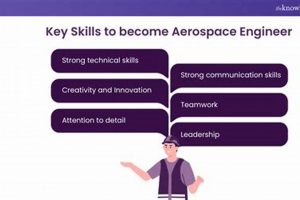
Tip 6: Cultivate Strong Communication and Teamwork Abilities. Astronauts operate in close-knit teams under high-pressure conditions. Developing excellent communication skills and the ability to collaborate effectively are crucial attributes.
Tip 7: Obtain an Advanced Degree. A Master’s or Doctoral degree in a STEM field demonstrates dedication and enhances technical expertise, increasing competitiveness for astronaut positions.
Following this guidance increases the chances of an aerospace engineer realizing a spacefaring ambition. A combination of strong academics, professional experience, physical fitness, and well-developed interpersonal skills is essential.
The subsequent section will explore the various organizations and programs offering opportunities for engineers seeking to work in space, either as astronauts or in supporting roles.
1. Education

Formal education plays a pivotal role in establishing a foundation for aspiring space travelers from the aerospace engineering discipline. It provides the theoretical framework and technical expertise necessary to contribute to space missions, directly impacting the feasibility of participating in such endeavors.
- Core Engineering Principles
Undergraduate curricula in aerospace engineering concentrate on fundamental principles like aerodynamics, propulsion, structural analysis, and control systems. A strong grasp of these concepts is essential for understanding spacecraft design and operation, which is a baseline requirement for any engineer hoping to work in space. The Apollo program, for instance, relied heavily on engineers with expertise in these core areas to develop and maintain the lunar module.
- Specialized Coursework
Advanced degrees offer opportunities to specialize in areas directly relevant to space missions. Examples include astrodynamics (orbital mechanics and mission planning), space systems engineering (design and integration of spacecraft subsystems), and human factors engineering (designing systems for human interaction in space). Specializing can improve an engineer’s suitability for roles involving system design or maintenance.
- Research and Development Experience
Graduate studies often involve research projects that contribute to advancements in space technology. This could involve developing new materials for spacecraft, designing more efficient propulsion systems, or improving the reliability of life support systems. Such research experience is highly valued by space agencies and commercial space companies, demonstrating a capacity for innovation.
- Interdisciplinary Knowledge
Space missions are inherently interdisciplinary, requiring engineers to collaborate with scientists, medical professionals, and other specialists. Educational programs that encourage interdisciplinary learning, such as joint projects or minors in related fields, can enhance an engineer’s ability to work effectively in a team environment. This collaborative skill is essential for successful integration into astronaut crews or mission support teams.
The correlation between a robust educational background and the potential for aerospace engineers to participate in space missions is significant. While education alone does not guarantee a trip to space, it provides the essential technical knowledge and problem-solving skills necessary to contribute meaningfully to space exploration efforts and enhances their competitiveness within the limited pool of candidates considered for astronaut or mission support roles.
2. Experience
Practical experience is a critical differentiator in determining the likelihood of aerospace engineers participating directly in space missions. Academic credentials alone are insufficient; hands-on involvement in relevant projects and roles significantly enhances candidacy and preparedness.
- Flight Test Engineering
Experience in flight test engineering, particularly with high-performance aircraft or experimental spacecraft, provides invaluable insights into vehicle behavior and performance limits. These engineers actively participate in testing new designs and systems, gathering data, and troubleshooting issues in real-time. For instance, engineers who worked on the Space Shuttle’s flight test program possessed firsthand knowledge of the vehicle’s capabilities and limitations, increasing their value in subsequent operational phases.
- Mission Operations
Direct involvement in mission operations provides practical experience with the execution of space missions. This includes roles in flight control, trajectory analysis, and real-time problem-solving. Engineers with this background understand the complexities of operating spacecraft in orbit, communicating with ground stations, and responding to unexpected events. Their understanding of mission protocols and contingency procedures can be invaluable during actual spaceflights.
- Spacecraft Design and Development
Experience in the design, development, and testing of spacecraft components and systems is essential. This includes working on propulsion systems, life support systems, communication systems, and robotic systems. Engineers who have contributed to the creation of these technologies possess a deep understanding of their capabilities and potential failure points, making them well-suited to troubleshoot issues in space. Their design expertise also enables them to modify and adapt systems as needed.
- Research and Development (R&D) in Space-Related Technologies
Participation in R&D projects focused on advancing space technologies provides valuable experience in innovation and problem-solving. This can include developing new materials for spacecraft construction, designing more efficient propulsion systems, or creating advanced robotics for space exploration. Engineers with an R&D background are adept at tackling complex technical challenges and devising novel solutions, skills that are highly sought after for space missions that push the boundaries of current technology.
The breadth and depth of an aerospace engineer’s practical experience directly correlate with their chances of participating in space missions. Hands-on experience in flight testing, mission operations, spacecraft design, and R&D provides the critical skills and knowledge necessary to contribute effectively to space exploration endeavors. While a strong educational foundation is essential, practical experience is what often distinguishes those who aspire to travel to space from those who remain ground-based engineers.
3. Physical Fitness

A demonstrable level of physical fitness constitutes a non-negotiable prerequisite for aerospace engineers seeking participation in space travel. The space environment imposes extreme physiological demands on the human body, necessitating a high degree of cardiovascular endurance, muscular strength, and overall physical resilience. These demands stem from factors such as prolonged exposure to microgravity, radiation, and the need to perform physically taxing tasks during extravehicular activities (EVAs). For example, astronauts involved in servicing the Hubble Space Telescope required extensive physical conditioning to endure the rigors of multiple EVAs, demonstrating the direct link between physical preparedness and mission success. The inability to meet specified physical standards can disqualify an otherwise highly qualified aerospace engineer from spaceflight opportunities.
The required fitness levels are not merely about avoiding immediate health risks during flight; they are also about ensuring optimal performance and cognitive function under stress. Physical exercise contributes to maintaining bone density, mitigating muscle atrophy, and regulating fluid shifts, all of which are significantly impacted by microgravity. Furthermore, rigorous physical training can enhance mental acuity and stress management skills, which are crucial for making critical decisions in high-pressure situations. Consider the Soyuz program, where cosmonauts undergo extensive physical conditioning programs to prepare for long-duration missions aboard the International Space Station. These programs are designed to counteract the adverse effects of prolonged spaceflight and ensure that crew members can perform their duties effectively throughout the mission.
In summary, the correlation between physical fitness and access to space for aerospace engineers is direct and consequential. While technical expertise is paramount, the physical demands of space travel necessitate that candidates possess exceptional physical capabilities. These demands span from withstanding the initial G-forces of launch to performing complex tasks in a weightless environment, underscoring the indispensable role of physical conditioning. Meeting and maintaining these standards presents an ongoing challenge, but it is a challenge that aspiring spacefaring engineers must address proactively to enhance their prospects of contributing to space exploration endeavors.
4. Training
The connection between training and the potential for aerospace engineers to travel into space is fundamental. Specialized training bridges the gap between theoretical knowledge and the practical demands of spaceflight, directly influencing an engineer’s preparedness and eligibility. This training encompasses a range of disciplines, from survival techniques and spacecraft systems operation to robotics and extravehicular activity (EVA) procedures. Without such training, the expertise of an aerospace engineer, irrespective of its depth, remains largely confined to ground-based applications. For example, an engineer specializing in spacecraft propulsion systems must still undergo training in emergency procedures, spacecraft control, and mission-specific protocols to be considered for a mission specialist role.
The specific type of training required varies depending on the role an engineer seeks to fulfill during a space mission. Mission specialists, responsible for conducting experiments and operating specialized equipment, require intensive training in the relevant scientific disciplines and operational procedures. Payload specialists, focusing on specific experiments or payloads, undergo training tailored to their assigned tasks, often including collaboration with scientists and technicians from various fields. Furthermore, all personnel involved in spaceflight receive comprehensive training in emergency egress, fire suppression, first aid, and other essential survival skills. The rigorous training programs implemented by NASA, Roscosmos, and other space agencies underscore the vital role of specialized instruction in preparing individuals for the challenges and hazards of space travel.
In summary, the ability of aerospace engineers to participate directly in space missions hinges significantly on their access to and successful completion of appropriate training programs. These programs not only equip engineers with the practical skills necessary to operate effectively in space but also instill the discipline, teamwork, and problem-solving abilities essential for mission success. While advanced engineering knowledge is a prerequisite, it is the transformative effect of specialized training that ultimately qualifies these professionals for the extraordinary challenges and opportunities presented by space exploration, shaping their capacity to contribute directly to future missions beyond Earth.
5. Opportunities
Available pathways and openings exert a direct influence on the possibility of aerospace engineers traveling into space. Without accessible avenues for selection and participation, the skills and expertise of even the most qualified engineers remain earthbound. The existence of structured programs, whether governmental or commercial, presents concrete chances for these professionals to transition from ground-based roles to active participation in space missions. For instance, NASA’s astronaut selection program and the European Space Agency’s (ESA) astronaut corps provide formalized paths for engineers to apply, undergo evaluation, and potentially be chosen for spaceflight assignments. These programs constitute fundamental opportunities that directly translate into the potential for space travel.
The expansion of commercial spaceflight initiatives introduces alternative routes for aerospace engineers to engage in space-related activities. Companies such as SpaceX, Blue Origin, and Virgin Galactic offer employment opportunities that may lead to space travel, either as mission specialists, test pilots, or engineers involved in vehicle operation and maintenance during suborbital or orbital flights. Furthermore, collaborative projects between space agencies and private enterprises create additional openings for engineers to contribute directly to space exploration efforts. The Artemis program, for example, involves partnerships with numerous commercial entities, providing various engineering roles and potentially leading to participation in lunar missions. The increasing commercialization of space opens up possibilities that were previously unavailable.
The availability of relevant opportunities serves as a critical determinant in the career trajectories of aerospace engineers aspiring to space travel. The presence of structured programs, the growth of commercial spaceflight, and collaborative initiatives directly influence the probability of these professionals transitioning from theoretical contributions to active involvement in space missions. Understanding the landscape of available opportunities, and proactively pursuing them, remains essential for realizing the ambition of working and traveling beyond Earth’s atmosphere.
6. Selection

The selection process acts as a critical gateway determining whether aerospace engineers can transition from contributing to space programs on the ground to directly participating in space missions. This process is rigorous and multifaceted, assessing a wide range of qualifications beyond mere technical proficiency. The criteria reflect the demanding nature of space travel and the critical responsibilities astronauts undertake.
- Medical and Psychological Evaluation
A comprehensive assessment of physical and mental health forms a cornerstone of the selection process. Candidates undergo extensive medical examinations to identify pre-existing conditions that could be exacerbated by the space environment. Psychological evaluations assess stability, resilience, and the ability to cope with the stress and isolation inherent in long-duration missions. For instance, NASA’s astronaut candidate program requires passing stringent medical and psychological screenings before advancement.
- Technical Skills and Expertise
While a background in aerospace engineering provides a strong foundation, selection panels scrutinize candidates’ specific technical skills and expertise. This includes evaluating experience in areas such as spacecraft systems, mission operations, and research and development related to space technologies. Practical experience, demonstrated through relevant projects and professional roles, is highly valued. Candidates must demonstrate a depth of understanding beyond theoretical knowledge.
- Leadership and Teamwork Abilities
Astronauts operate in close-knit teams under high-pressure conditions. Selection processes prioritize individuals who demonstrate strong leadership qualities, effective communication skills, and the ability to collaborate effectively with diverse teams. Candidates may undergo simulations and group exercises to assess their interpersonal skills and their capacity to contribute positively to team dynamics. An example is the use of team-building exercises to select candidates for long-duration missions on the International Space Station.
- Educational Background and Achievements
A strong educational background, typically including advanced degrees in STEM fields, is a prerequisite for astronaut selection. Selection committees assess candidates’ academic performance, research contributions, and involvement in relevant extracurricular activities. Educational achievements demonstrate a commitment to learning and a capacity for complex problem-solving, both of which are essential for successful participation in space missions.
The rigorous selection processes implemented by space agencies and commercial space companies underscore the complexity of determining who can effectively and safely travel to space. The factors evaluated extend beyond technical expertise, encompassing medical and psychological fitness, interpersonal skills, and a demonstrated commitment to continuous learning. This multifaceted approach ensures that selected individuals possess the diverse capabilities needed to contribute to the success of space exploration endeavors.
Frequently Asked Questions
The following section addresses common inquiries regarding the potential for aerospace engineers to participate directly in space missions, clarifying misconceptions and providing informative answers.
Question 1: Does holding a degree in aerospace engineering automatically qualify an individual for spaceflight?
Possessing an aerospace engineering degree provides a foundational advantage due to the relevant technical knowledge acquired. However, it does not guarantee selection for spaceflight. Additional factors, including experience, physical and psychological fitness, and specialized training, are critical determinants.
Question 2: What types of professional experience are most beneficial for an aerospace engineer aspiring to travel to space?
Experience in flight test engineering, mission operations, spacecraft design and development, and related research and development activities significantly enhances an engineer’s candidacy. Hands-on involvement in these areas provides practical skills and a deeper understanding of space systems.
Question 3: What level of physical fitness is required for space travel, and why is it so important?
Exceptional physical fitness is a prerequisite due to the demanding nature of spaceflight. Astronauts must exhibit high cardiovascular endurance, muscular strength, and overall physical resilience to withstand the physiological stressors of microgravity and perform tasks during extravehicular activities.
Question 4: What specific types of training do aerospace engineers typically undergo to prepare for space missions?
Training programs encompass a wide range of disciplines, including survival techniques, spacecraft systems operation, robotics, extravehicular activity procedures, and mission-specific protocols. The training equips engineers with the practical skills and knowledge needed to operate effectively in the space environment.
Question 5: Are there alternative pathways to space travel for aerospace engineers besides becoming a NASA astronaut?
Yes, commercial spaceflight initiatives offer alternative routes for engineers to participate in space activities. These opportunities may involve roles as mission specialists, test pilots, or engineers involved in vehicle operation and maintenance with companies such as SpaceX, Blue Origin, and Virgin Galactic.
Question 6: What are the key factors considered during the astronaut selection process?
The selection process involves a comprehensive evaluation of medical and psychological fitness, technical skills and expertise, leadership and teamwork abilities, and educational background and achievements. These criteria ensure that selected individuals possess the diverse capabilities needed to contribute to mission success.
In summary, the ability of aerospace engineers to travel to space depends on a combination of education, experience, fitness, training, and the rigorous selection processes implemented by space agencies and commercial entities.
The subsequent section will provide concluding remarks, summarizing the key points discussed throughout this analysis.
Can Aerospace Engineers Go to Space
The preceding analysis has explored the multifaceted relationship between aerospace engineering expertise and the potential for space travel. Educational background, practical experience, physical and psychological fitness, specialized training, and the rigorous selection processes employed by space agencies and commercial entities all exert significant influence. While a degree in aerospace engineering provides a strong foundation, it does not, in itself, guarantee access to space. Opportunities exist through both governmental programs and the expanding commercial space sector, but candidates must demonstrate exceptional qualifications across a range of demanding criteria.
The pursuit of space travel remains a challenging but attainable goal for qualified aerospace engineers. Success hinges on a sustained commitment to professional development, physical and mental well-being, and proactive engagement with available opportunities. The ongoing evolution of space exploration initiatives suggests continued prospects for engineers who possess the skills, resilience, and dedication necessary to contribute to humanity’s endeavors beyond Earth. The future of space exploration depends upon the continued dedication of skilled engineers willing to push the boundaries of what is possible.
![Top Aerospace Engineering Staffing Agencies | [Your Company] | Innovating the Future of Flight with Reliable Aviation Solutions](https://mixaerospace.com/wp-content/uploads/2026/04/th-293-300x200.jpg "Top Aerospace Engineering Staffing Agencies | [Your Company] Innovating the Future of Flight with Reliable Aviation Solutions")