The initial step for individuals pursuing a career in designing, developing, and testing aircraft and spacecraft frequently involves obtaining an undergraduate qualification. This academic achievement typically provides a foundational understanding of aerodynamics, propulsion, materials science, and structural analysis. Completion of this program often marks entry into the professional field.
Earning such a qualification offers several advantages, including increased career opportunities in the aerospace sector and higher earning potential compared to roles requiring only a secondary education. Furthermore, it provides a solid base for advanced studies at the graduate level, allowing for specialization in areas such as astrodynamics or spacecraft design. Historically, the development of this specific academic path has been closely tied to advancements in aviation and space exploration, reflecting the growing demand for qualified engineers.
The following sections will delve into the specific curriculum requirements, career paths available upon graduation, and the potential for further academic advancement following the completion of the undergraduate program. The exploration will also address the role of accreditation in ensuring the quality and relevance of these engineering programs.
Guidance for Prospective Aerospace Engineers
Aspiring aerospace engineers seeking entry into the field via undergraduate education should consider the following recommendations for optimal preparation and success.
Tip 1: Emphasize Foundational Science and Mathematics: A strong base in physics, calculus, differential equations, and linear algebra is paramount. These disciplines provide the analytical tools required for understanding complex engineering principles.
Tip 2: Seek Relevant Extracurricular Activities: Participation in engineering clubs, robotics competitions, or aerospace-related projects demonstrates practical application of theoretical knowledge and cultivates teamwork skills.
Tip 3: Select an Accredited Program: Ensure the chosen program is accredited by ABET (Accreditation Board for Engineering and Technology). Accreditation signifies adherence to quality standards and enhances employment prospects.
Tip 4: Pursue Internships or Co-op Opportunities: Practical experience gained through internships or co-operative education programs is invaluable. These experiences provide exposure to real-world engineering challenges and industry practices.
Tip 5: Develop Strong Communication Skills: Effective written and oral communication is essential for conveying technical information to colleagues, clients, and stakeholders. Coursework and activities that hone these skills are highly beneficial.
Tip 6: Cultivate Problem-Solving Abilities: Aerospace engineering demands creative problem-solving. Engage in challenging projects and exercises that require innovative solutions to complex design or operational issues.
Tip 7: Focus on Specific Areas of Interest: Identify specific areas of aerospace engineering that resonate, such as aerodynamics, propulsion, or avionics, and tailor coursework and projects accordingly to develop specialized expertise.
Adhering to these recommendations can significantly improve the likelihood of success in obtaining an undergraduate qualification and securing a fulfilling career in aerospace engineering. Preparation, practical application, and continuous learning are key.
The subsequent sections will address career prospects and potential for advanced learning following the completion of an undergraduate degree in this field.
1. Foundation

The acquisition of foundational knowledge is inextricably linked to attaining an undergraduate qualification in aerospace engineering. This academic pursuit necessitates a robust understanding of core scientific and mathematical principles that form the bedrock of the discipline. Without this foundation, the ability to comprehend advanced concepts in aerodynamics, propulsion, structural analysis, and control systems is severely compromised. For instance, a student lacking a firm grasp of calculus and differential equations would struggle to model fluid flow over an aircraft wing, hindering their ability to design effective aerodynamic surfaces.
The foundational coursework within aerospace engineering curricula typically encompasses physics, chemistry, calculus, differential equations, linear algebra, and introductory engineering mechanics. These subjects are not merely prerequisites but are integral components of the analytical and problem-solving skills required for success in the field. For example, understanding Newtonian mechanics is crucial for analyzing the forces acting on an aircraft during flight, while knowledge of materials science informs the selection of appropriate materials for constructing lightweight and durable spacecraft components. A solid foundation in these areas enables students to apply theoretical knowledge to practical engineering challenges.
In essence, the foundational elements of an undergraduate aerospace engineering program represent the essential building blocks upon which all subsequent learning and professional practice are built. Neglecting this foundational knowledge will directly impede a student’s ability to succeed in advanced coursework and contribute meaningfully to the aerospace industry. Thus, a strong foundation is not just recommended but is an indispensable pre-requisite for becoming a competent and effective aerospace engineer. Securing a robust foundation significantly improves future career prospects and the ability to tackle challenges effectively.
2. Specialization

While the attainment of an undergraduate qualification in aerospace engineering provides a broad foundation, the degree itself frequently permits a degree of specialization. This specialization allows students to focus on specific areas of interest within the field, enhancing their expertise and preparing them for particular career paths. Although the bachelor’s degree does not typically reach the depth of specialization found in graduate programs, it offers opportunities to tailor coursework and projects to align with individual aspirations.
The availability and extent of specialization options vary depending on the institution. Some programs offer structured concentrations or tracks in areas such as aerodynamics, propulsion, structures, or avionics. Students selecting a specific track will then take a set of focused elective courses, augmenting their core curriculum. Other programs offer greater flexibility, allowing students to choose electives across different sub-disciplines based on their preferences. For instance, a student interested in aircraft design might choose to take advanced courses in computational fluid dynamics and finite element analysis, while a student focused on spacecraft might select courses in orbital mechanics and satellite communications. This early specialization can provide a competitive edge when seeking internships or entry-level positions.
In conclusion, the undergraduate aerospace engineering qualification acts as a gateway to future specialized careers. It offers initial exposure to certain areas, making graduates more attractive to employers. Although it does not provide expertise at the level offered by post-graduate work, its importance for graduates beginning their careers is evident. Furthermore, the option to focus on specific disciplines contributes to a more personalized learning experience and is a significant advantage for individuals considering an undergraduate course in aerospace engineering.
3. Accreditation

Accreditation serves as a critical validation of the quality and standards maintained by undergraduate aerospace engineering programs. Specifically, accreditation by organizations such as ABET (Accreditation Board for Engineering and Technology) signifies that a program meets established criteria for curriculum content, faculty qualifications, facilities, and student outcomes. Consequently, possession of a bachelor’s degree from an ABET-accredited program assures employers and graduate schools that the graduate has received a rigorous and relevant education. A direct cause-and-effect relationship exists: rigorous standards (accreditation requirements) leading to quality education (bachelor’s in aerospace engineering), which in turn leads to improved career opportunities.
The importance of accreditation as a component of the aerospace engineering undergraduate experience extends beyond mere validation. It directly impacts licensure and professional recognition. Many state engineering boards require graduation from an accredited program as a prerequisite for licensure as a professional engineer. Moreover, employers frequently prioritize graduates from accredited programs, particularly in industries with stringent safety regulations, such as aviation and space exploration. For instance, companies like Boeing, Lockheed Martin, and NASA often require or strongly prefer candidates holding degrees from ABET-accredited institutions. Failing to attend an accredited program limits employment opportunities and advancement within the field.
In summary, accreditation is inextricably linked to the value and recognition of a bachelor’s degree in aerospace engineering. It provides assurance of program quality, facilitates licensure, and enhances employment prospects. The absence of accreditation raises significant concerns regarding the rigor and relevance of the education received, thereby diminishing the practical significance of the degree. Consequently, prospective students must carefully consider accreditation status when selecting an undergraduate aerospace engineering program to maximize their future career opportunities.
4. Opportunities
The successful completion of an undergraduate qualification in aerospace engineering creates a multitude of opportunities across various sectors. The curriculum, grounded in fundamental engineering principles and often allowing for specialization, equips graduates with a versatile skill set highly valued by employers. The acquisition of a bachelor’s degree is often a prerequisite for entry-level positions in aerospace companies, government agencies, and research institutions. For instance, entry-level aerospace engineers find opportunities in design, development, testing, and analysis roles. These positions contribute directly to the creation and improvement of aircraft, spacecraft, satellites, and related systems. Without this academic foundation, entry into these professional roles is severely limited.
Beyond direct employment, this undergraduate qualification fosters opportunities for continued education and specialization. Graduates can pursue advanced degrees, such as a Master’s or Doctorate, allowing for in-depth research and specialized knowledge in niche areas of aerospace engineering. For example, a graduate with a bachelor’s degree might specialize in astrodynamics, propulsion systems, or advanced materials. These specialized skill sets further enhance career prospects and open doors to leadership and research-oriented roles. Moreover, the degree can serve as a springboard to other fields. The analytical and problem-solving skills gained are transferable to industries such as mechanical engineering, systems engineering, and even finance, providing a broad base for career adaptability.
In summary, a bachelor’s degree in aerospace engineering is not merely an academic achievement, but a strategic investment in future opportunities. It unlocks pathways to employment, advanced education, and interdisciplinary career transitions. The degree’s value lies in its ability to provide a robust foundation, foster critical thinking, and equip individuals with the necessary skills to contribute meaningfully to the advancement of aerospace technology and related fields. Denying its importance limits chances for career advancement and further academic exploration.
5. Progression
The concept of progression is central to understanding the significance of possessing a bachelor’s degree in aerospace engineering. It establishes a structured pathway for career advancement and the acquisition of specialized knowledge. This progression is not merely linear but encompasses diverse opportunities for growth and specialization within the field.
- Advanced Studies
A bachelor’s degree in aerospace engineering serves as a crucial stepping stone towards advanced academic pursuits. Graduates are well-positioned to pursue Master’s degrees, PhDs, or specialized graduate certificates in areas such as astrodynamics, propulsion, or materials science. This advanced education provides deeper theoretical knowledge and research skills, enabling contributions to cutting-edge developments in the aerospace industry. For instance, a master’s degree focused on computational fluid dynamics may be required to model complex airflow patterns around novel aircraft designs, a task beyond the scope of the undergraduate curriculum.
- Professional Licensure and Certification
In many jurisdictions, professional licensure as an engineer requires graduation from an accredited undergraduate program, often followed by a period of supervised experience and successful completion of a professional engineering examination. A bachelor’s degree in aerospace engineering fulfills the educational requirement for this licensure, which enhances credibility and allows engineers to take responsibility for engineering designs and projects. Certifications in specific areas, such as project management or systems engineering, further demonstrate competence and can lead to increased responsibilities and career advancement.
- Career Path Diversification
While a bachelor’s degree provides a strong foundation in aerospace engineering principles, it also opens doors to related or even distinct career paths. The analytical and problem-solving skills acquired are transferable to fields such as mechanical engineering, systems engineering, software development, or even finance. For example, an aerospace engineer with strong programming skills might transition into developing software for flight simulation or data analysis. This versatility provides a safety net and allows for career adjustments based on individual interests and market demands.
- Leadership and Management Roles
With experience and continued professional development, aerospace engineers can progress into leadership and management roles within organizations. This progression typically involves gaining expertise in project management, team leadership, and strategic decision-making. A strong technical foundation, coupled with these management skills, enables engineers to oversee complex projects, lead teams of engineers, and contribute to the overall strategic direction of an aerospace company. For example, a senior engineer might become a project manager responsible for the development and testing of a new satellite system.
In conclusion, a bachelor’s degree in aerospace engineering is not an end point, but rather a starting point for a career marked by continuous progression. This progression can manifest through advanced education, professional licensure, career diversification, or advancement into leadership roles. The degree provides the necessary foundation to pursue these various paths, making it a valuable investment for individuals seeking a rewarding and impactful career in the aerospace industry and beyond.
Frequently Asked Questions
The following addresses common inquiries regarding the nature and value of obtaining a bachelor’s degree in aerospace engineering. These answers aim to provide clarity and informed guidance for prospective students and interested individuals.
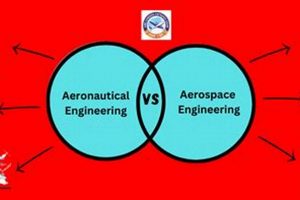
Question 1: Does the curriculum for a bachelor’s degree in aerospace engineering encompass both aeronautical and astronautical engineering?
The curriculum typically provides a foundational understanding of both aeronautical engineering, dealing with flight within Earth’s atmosphere, and astronautical engineering, focusing on spaceflight. The degree often includes opportunities for specialization in one area or the other, allowing for a more focused skill set.
Question 2: Is an ABET-accredited program crucial for a bachelor’s degree in aerospace engineering?
Accreditation by ABET (Accreditation Board for Engineering and Technology) is strongly recommended. It signifies that the program meets rigorous standards for curriculum quality and prepares graduates for professional practice and licensure, which can enhance employment prospects.
Question 3: What are the typical entry-level job opportunities with a bachelor’s degree in aerospace engineering?
Graduates can find entry-level positions in areas such as design engineering, testing, research and development, and manufacturing within aerospace companies, government agencies, and research institutions. Specific roles vary based on individual skills and program focus.
Question 4: Does a bachelor’s degree in aerospace engineering necessitate advanced studies for career advancement?
While a bachelor’s degree provides a solid foundation, advanced studies, such as a Master’s or PhD, can significantly enhance career prospects and enable specialization in niche areas. Many leadership and research-oriented roles often require advanced degrees.
Question 5: Can the skills acquired from a bachelor’s degree in aerospace engineering be applied to other industries?
Yes, the analytical, problem-solving, and technical skills gained are transferable to other fields such as mechanical engineering, systems engineering, software development, and even finance, providing a versatile skill set applicable across various sectors.
Question 6: How does the availability of internships impact the value of a bachelor’s degree in aerospace engineering?
Internships provide invaluable practical experience, allowing students to apply theoretical knowledge to real-world problems and gain exposure to industry practices. They significantly enhance employability and often lead to full-time job offers upon graduation.
In summary, pursuing a bachelor’s degree in aerospace engineering can open doors to various exciting career paths. The skills learned in the degree will allow graduates to contribute to the cutting edge development of aerospace technology.
The subsequent sections will explore potential challenges and how one may prepare for them.
Conclusion
The preceding analysis has established definitively that aerospace engineering is, in many cases, initially pursued as a bachelor’s degree. This educational pathway provides a fundamental understanding of the scientific and engineering principles necessary for designing, developing, and testing aircraft and spacecraft. The curriculum equips individuals with a broad skillset applicable to various specializations within the aerospace sector, as well as transferable skills valuable in other industries. Accreditation, particularly by ABET, serves as a critical marker of program quality and enhances career prospects.
While a bachelor’s degree provides a robust foundation, advanced studies are often necessary for specialized roles and leadership positions. Aspiring aerospace engineers must carefully consider their career goals and the importance of continuous learning to remain competitive in a rapidly evolving technological landscape. The pursuit of this degree demands dedication, a strong aptitude for mathematics and science, and a commitment to lifelong professional development. The returns, however, can be substantial, offering opportunities to contribute to humanity’s exploration of both air and space.

![[Guide] How to Get an Aerospace Engineering Internship + Tips! | Innovating the Future of Flight with Reliable Aviation Solutions](https://mixaerospace.com/wp-content/uploads/2026/04/th-268-300x200.jpg "[Guide] How to Get an Aerospace Engineering Internship + Tips! Innovating the Future of Flight with Reliable Aviation Solutions")