Educational programs delivered via the internet focusing on the design, development, and testing of aircraft and spacecraft represent a significant shift in accessibility for aspiring engineers. These programs replicate traditional curricula through digital platforms, offering lectures, simulations, and assessments remotely. This format allows individuals to pursue advanced education without geographical limitations, enabling participation from diverse locations and schedules.
The emergence of digital educational resources has democratized access to specialized knowledge, removing barriers associated with physical presence and inflexible schedules. This increased accessibility can lead to a more diverse and globally representative cohort of trained professionals. Furthermore, the integration of cutting-edge technologies within these programs prepares students for the evolving demands of the aerospace industry, fostering innovation and technological advancement. Historically, access to specialized aerospace education was limited to a select number of institutions and individuals. Digital platforms have broadened these opportunities significantly.
The following sections will delve into specific areas related to this evolving educational landscape, including curriculum structures, accreditation considerations, and the overall impact on professional development within the aerospace sector. These aspects are critical for both prospective students and educators involved in shaping the future of aerospace engineering.
Careful consideration is vital when selecting and engaging with remote educational programs in the field. The following outlines key factors that contribute to a successful and meaningful educational experience.
Tip 1: Evaluate Accreditation Status. Accreditation provides an assurance of quality and rigor. Verify that any prospective institution holds accreditation from a recognized body, which signifies adherence to established educational standards. For engineering programs, look for ABET accreditation.
Tip 2: Examine Curriculum Structure. A comprehensive program should encompass fundamental principles, advanced topics, and practical applications. Scrutinize the course catalog to ensure coverage of essential areas such as aerodynamics, propulsion, structures, and control systems. Evaluate whether simulations and hands-on projects are a key element of the curriculum.
Tip 3: Assess Faculty Expertise. Investigate the qualifications and experience of the instructors. Faculty with relevant industry experience or research backgrounds contribute valuable insights and perspectives. Review faculty biographies and research publications to determine their level of expertise.
Tip 4: Investigate Technology Requirements. Remote education relies heavily on technology. Ensure personal computing capabilities meet the minimum software and hardware specifications needed for accessing course materials, running simulations, and participating in online discussions. Verify platform compatibility.
Tip 5: Confirm Accessibility of Support Services. Access to technical support, academic advising, and career counseling is vital for student success. Investigate the availability and responsiveness of these services prior to enrollment. Inquire about tutoring and mentoring opportunities.
Tip 6: Assess the availability of hands-on elements. While fully remote, the best programs will incorporate physical elements, such as design projects that require construction or experimentation with physical models, or access to simulations and remotely-operated labs.
Tip 7: Investigate networking opportunities. Remote programs can sometimes limit networking opportunities. The more comprehensive programs will arrange virtual events where students can meet with industry professionals or take part in online career fairs.
These guidelines underscore the importance of thorough due diligence in selecting the optimal learning environment. Rigorous assessment promotes informed decisions and fosters successful academic and professional trajectories.
The subsequent section will address common misconceptions surrounding the validity and effectiveness of remote aerospace education, offering clarifying perspectives grounded in empirical evidence.
1. Curriculum Depth

Curriculum depth represents a critical determinant in the value and efficacy of online aerospace engineering programs. It dictates the extent to which a course of study equips students with the knowledge and skills required for professional practice and continued learning in a highly specialized field.
- Core Principles Mastery
Comprehensive coverage of fundamental engineering principles, such as fluid mechanics, thermodynamics, and structural analysis, is paramount. These principles form the bedrock upon which advanced aerospace concepts are built. For example, a deep understanding of fluid dynamics is essential for designing efficient airfoils and optimizing aircraft performance. Without a firm grasp of these basics, students will struggle with more advanced material.
- Specialized Subject Integration
An effective curriculum extends beyond basic principles to incorporate specialized subjects relevant to aerospace engineering. This includes propulsion systems, spacecraft design, orbital mechanics, and aerospace materials. For example, advanced courses may cover the design and analysis of rocket engines, the planning of satellite missions, or the selection of composite materials for high-performance aircraft. The availability of such specialized content distinguishes a superficial program from one that provides genuine expertise.
- Mathematical and Computational Rigor
Aerospace engineering relies heavily on mathematical modeling and computational simulations. A curriculum exhibiting appropriate depth integrates advanced mathematical concepts, numerical methods, and software tools. Students should be proficient in using computational fluid dynamics (CFD) software, finite element analysis (FEA) packages, and programming languages commonly used in the aerospace industry. This competency enables students to address complex engineering problems and design innovative solutions.
- Design Synthesis and Application
The culmination of a deep curriculum involves design projects and application-oriented assignments. These activities require students to synthesize their knowledge, apply engineering principles, and address real-world challenges. For example, students might design a small aircraft, analyze the structural integrity of a satellite component, or optimize the trajectory of an interplanetary mission. Such experiences promote critical thinking, problem-solving skills, and a holistic understanding of the engineering design process.
The degree of curriculum depth directly influences the ability of these courses to prepare graduates for the demands of the aerospace sector. Programs lacking comprehensive coverage risk producing graduates ill-equipped for professional roles or further advanced study. Therefore, prospective students must meticulously evaluate curriculum content to ensure its suitability for their academic and career objectives.
2. Faculty Credentials

Faculty credentials represent a fundamental pillar supporting the credibility and effectiveness of remote aerospace engineering programs. The expertise, experience, and qualifications of instructors directly influence the quality of instruction and the preparation of students for professional practice.
- Academic Qualifications
Possession of advanced degrees, typically a Ph.D., in aerospace engineering or a closely related field signifies a high level of theoretical knowledge and research expertise. Instructors with doctoral degrees can impart a deeper understanding of complex concepts and guide students in independent research projects. For example, a professor with a Ph.D. in fluid dynamics might lead a course on computational aerodynamics, drawing on their own research to illustrate key principles and methodologies. Such qualifications are a baseline expectation for reputable programs.
- Industry Experience
Practical experience in the aerospace industry provides faculty members with valuable insights into real-world challenges and current practices. Instructors who have worked in aerospace companies, research laboratories, or government agencies can offer students firsthand knowledge of the engineering design process, project management, and regulatory requirements. A professor who previously worked as a structural engineer at Boeing, for instance, could share practical tips on stress analysis and material selection. Industry experience bridges the gap between theory and practice.
- Research Contributions
Active involvement in research and scholarly publications demonstrates a commitment to advancing knowledge in aerospace engineering. Faculty members who conduct research can integrate their findings into the curriculum, expose students to cutting-edge technologies, and foster a culture of innovation. A professor who publishes research papers on advanced propulsion systems might incorporate those findings into a course on rocket engine design. Research contributions indicate that instructors are at the forefront of their fields.
- Professional Certifications and Affiliations
Professional certifications, such as Professional Engineer (PE) licenses, signify a commitment to ethical conduct and professional competence. Membership in professional organizations, such as the American Institute of Aeronautics and Astronautics (AIAA), provides access to a network of experts and resources. These credentials demonstrate a commitment to ongoing professional development and adherence to industry standards. They validate an instructor’s expertise and credibility.
Collectively, these facets of faculty credentials contribute to the overall quality and reputation of remote aerospace engineering education. Prospective students must carefully examine the qualifications of instructors to ensure they receive rigorous training and are well-prepared for careers in the aerospace sector. The expertise and dedication of faculty members are essential for nurturing the next generation of aerospace engineers.
3. Accreditation Status
Accreditation status serves as a critical indicator of quality assurance for programs of study, including those focused on aerospace engineering. For curricula offered via online platforms, accreditation assumes even greater importance due to the potential for variability in educational rigor and institutional resources. Accreditation, typically granted by recognized agencies like ABET (Accreditation Board for Engineering and Technology), signifies that a program has undergone rigorous evaluation and meets established standards for curriculum content, faculty qualifications, and learning outcomes. The absence of accreditation raises concerns regarding the program’s validity and its ability to adequately prepare students for professional practice. For example, graduates from non-accredited online aerospace engineering programs may encounter difficulties when seeking professional licensure or advanced degrees at accredited institutions. This consequence highlights the practical significance of understanding accreditation’s role.
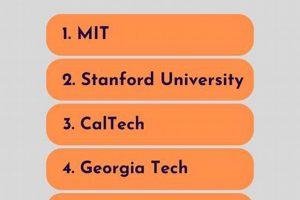
The process of accreditation involves a comprehensive review of the program’s objectives, curriculum design, assessment methods, and the qualifications of its faculty. Accrediting bodies assess whether the program effectively prepares students to meet the demands of the aerospace engineering profession and adheres to ethical and professional standards. Furthermore, accredited programs are subject to periodic reviews to ensure continued compliance with established criteria. Real-life examples include institutions like MIT and Stanford, whose online aerospace engineering offerings hold ABET accreditation, ensuring students receive an education aligned with industry standards. Accreditation, therefore, acts as a consumer protection mechanism, ensuring that prospective students can make informed decisions about their educational investments. It also demonstrates the program’s commitment to quality and continuous improvement.
In conclusion, accreditation status is a vital consideration for individuals pursuing online aerospace engineering education. It serves as a benchmark for program quality, ensures alignment with industry standards, and enhances the credibility of graduates in the job market. While accreditation does not guarantee individual success, it provides a reliable indicator of a program’s commitment to excellence and its ability to equip students with the knowledge and skills necessary to succeed in the complex and demanding field of aerospace engineering. Potential challenges involve the evolving landscape of online education and the need for accreditation standards to adapt to new technologies and pedagogical approaches. Understanding accreditation is therefore not merely an academic exercise but a practical necessity for both students and employers in the aerospace industry.
4. Software Proficiency
Aerospace engineering, particularly within the context of remote education, relies heavily on specialized software tools for design, analysis, and simulation. Online courses must, therefore, prioritize the development of proficiency in these essential platforms. Software capabilities serve as both a cause and an effect within the learning environment. Mastery of software directly impacts a student’s ability to complete assignments, conduct research, and contribute meaningfully to collaborative projects. Conversely, the structure and content of courses are often shaped by the availability and accessibility of specific software licenses and training materials. The integration of industry-standard software, such as ANSYS for finite element analysis or MATLAB for mathematical modeling, is not merely supplementary but a core component of ensuring the relevance and applicability of the curriculum. Without adequate training and hands-on experience with these tools, students may lack the practical skills necessary to succeed in the field. The impact is clear: software competence directly translates to increased employability and professional effectiveness.
Consider a scenario where an online aerospace engineering course focuses on aircraft design. Students utilize CAD software, like CATIA or SolidWorks, to create detailed 3D models of aircraft components. Subsequently, they employ CFD software to simulate aerodynamic performance and identify areas for improvement. Finally, they use FEA software to analyze structural integrity under various loading conditions. This workflow demonstrates how different software packages are interconnected and essential for the design process. Another real-life example involves mission planning for satellites. Students might use Systems Tool Kit (STK) to simulate orbital trajectories, analyze communication links, and assess the performance of onboard sensors. Proficiency in these tools enables students to tackle complex engineering problems, optimize designs, and make informed decisions based on data-driven analysis. The practical applications extend beyond the academic setting, providing students with the skills employers seek.
In summary, software proficiency is an indispensable element of online aerospace engineering programs. It bridges the gap between theoretical knowledge and practical application, enabling students to design, analyze, and simulate complex aerospace systems. However, challenges persist regarding access to software licenses, the need for continuous updates to curriculum content to reflect advancements in software technology, and ensuring equitable access for all students regardless of their location or resources. Overcoming these hurdles requires a collaborative effort between educational institutions, software vendors, and the aerospace industry. Ultimately, prioritizing software proficiency will enhance the quality and relevance of remote aerospace engineering education, empowering graduates to contribute meaningfully to the advancement of the field.
5. Simulation Accessibility

Within the context of remote aerospace engineering education, simulation accessibility is a critical factor influencing the effectiveness of learning and the development of essential engineering skills. Access to robust and realistic simulation tools directly impacts students’ ability to apply theoretical knowledge to practical problems and to gain hands-on experience in a virtual environment that mimics real-world scenarios. The availability and quality of simulations can significantly enhance the learning experience and better prepare students for the challenges of the aerospace profession.
- Software Licensing and Distribution
The primary barrier to simulation accessibility often lies in the licensing and distribution of specialized software. Many industry-standard simulation packages, such as computational fluid dynamics (CFD) solvers or finite element analysis (FEA) tools, carry substantial licensing fees, making them prohibitively expensive for individual students. Educational institutions must, therefore, secure site licenses or negotiate partnerships with software vendors to provide students with affordable access to these tools. Cloud-based simulation platforms can offer a viable solution by allowing students to access software remotely without the need for local installations. Effective licensing strategies ensure that students have the tools they need to complete assignments and conduct research.
- Hardware Requirements and Computational Resources
Even with access to software licenses, the computational demands of many aerospace engineering simulations can pose a significant challenge. Complex simulations, such as those involving turbulent flows or large structural models, require substantial processing power and memory. Students may lack access to high-performance computers capable of running these simulations efficiently. Educational institutions can address this issue by providing access to remote computing resources, such as cloud-based virtual machines or high-performance computing clusters. Optimized simulation codes and simplified models can also reduce computational demands and make simulations more accessible on standard laptops.
- Training and User Support
Access to simulation software and hardware is only beneficial if students are adequately trained to use these tools effectively. Comprehensive training programs, user-friendly interfaces, and readily available technical support are essential for maximizing the impact of simulation accessibility. Online courses should incorporate tutorials, example problems, and interactive exercises that guide students through the process of setting up, running, and interpreting simulations. Faculty members and teaching assistants should be readily available to answer questions and provide assistance with troubleshooting. Effective training and support empower students to leverage simulation tools for learning and research.
- Integration with Curriculum
Simulation accessibility is most effective when simulation tools are seamlessly integrated into the curriculum. Simulation assignments should be designed to reinforce theoretical concepts, promote critical thinking, and develop problem-solving skills. Students should be encouraged to use simulations to explore different design options, investigate the effects of various parameters, and validate analytical models. Simulation activities should be closely aligned with learning objectives and assessed in a manner that reflects their importance in the curriculum. Integration of simulations must not be treated as an optional add-on, but essential to the program, further deepening understanding and competence.
The factors outlined above emphasize the need for carefully planned simulation accessibility within online aerospace engineering courses. Providing the software, hardware, training, and curricular integration enables students to bridge theory with practice, equipping them with the competencies to meet the challenges in the field.
6. Assessment Rigor

Assessment rigor is a cornerstone of credible aerospace engineering programs, particularly those delivered online. The methods used to evaluate student learning must be sufficiently challenging and comprehensive to ensure that graduates possess the necessary knowledge and skills for professional practice. This requires a deliberate and thoughtful approach to assessment design.
- Comprehensive Examinations
Traditional examinations remain a valuable tool for assessing fundamental knowledge and problem-solving abilities. However, in the online context, these examinations must be carefully designed to prevent cheating and ensure academic integrity. This may involve proctored exams, randomized question pools, and time limits. The questions should test not only recall but also the ability to apply concepts to novel situations. For instance, a comprehensive examination in aerodynamics might require students to analyze the performance of a new airfoil design or troubleshoot a problem with an aircraft’s control system. Such examinations provide a broad measure of student understanding.
- Project-Based Assessments
Project-based assessments offer opportunities for students to apply their knowledge in a more practical and open-ended manner. These projects might involve designing an aircraft component, analyzing the structural integrity of a spacecraft, or developing a control system for a drone. The projects should be challenging and require students to integrate knowledge from multiple areas of aerospace engineering. Real-world projects, such as analyzing data from a NASA mission or developing a proposal for a new aerospace technology, can further enhance the relevance and impact of these assessments. The evaluation of these projects must emphasize not only the final outcome but also the process followed, the methodologies used, and the justifications provided.
- Simulation-Based Evaluations
The ability to use simulation software effectively is crucial for aerospace engineers. Assessments should, therefore, incorporate simulation-based evaluations that require students to model and analyze complex systems. For example, students might be asked to simulate the performance of a rocket engine or analyze the aerodynamic characteristics of an aircraft wing using computational fluid dynamics (CFD) software. The evaluations should assess not only the accuracy of the simulations but also the student’s ability to interpret the results, draw conclusions, and make design recommendations. Properly structured simulation-based evaluations can bridge the gap between theoretical knowledge and practical application.
- Peer Review and Collaboration
Aerospace engineering often involves collaborative work. Incorporating peer review and collaborative assessments into online courses can help students develop teamwork and communication skills. Peer review assignments require students to evaluate the work of their peers, providing constructive feedback and identifying areas for improvement. Collaborative projects require students to work together to solve a complex engineering problem, sharing responsibilities and integrating their individual contributions. The evaluation of these assessments should consider both the quality of individual work and the effectiveness of the team’s collaboration. Careful design is necessary to ensure equitable participation and prevent free-riding.
The facets of assessment rigor contribute significantly to the overall quality and credibility of online aerospace engineering education. It is important for prospective students to consider the assessment methods used by online programs when making their educational decisions. A program with rigorous and comprehensive assessments is more likely to equip graduates with the knowledge and skills necessary to succeed in the demanding field of aerospace engineering. Failure to ensure rigor can lead to a devaluation of the online program and a detriment to the future prospects of its students.
7. Industry Relevance

Industry relevance constitutes a fundamental determinant of the value and efficacy of educational programs, particularly within rapidly evolving technical disciplines such as aerospace engineering. Digital learning platforms must demonstrate a clear and consistent alignment with current industry practices, emerging technologies, and evolving professional expectations to ensure graduates possess the competencies demanded by employers. The absence of this alignment renders the investment in education significantly less valuable, potentially leaving graduates ill-prepared for the challenges of the professional arena. For instance, an aerospace engineering program that neglects recent advancements in composite materials or additive manufacturing techniques fails to equip students with essential knowledge for modern aerospace design and production processes.
Practical applications of industry relevance within these programs manifest in several critical areas. Curriculum content should be regularly updated to reflect changes in industry standards, regulatory requirements, and technological advancements. Furthermore, faculty expertise plays a crucial role, as instructors with relevant industry experience can provide valuable insights into real-world engineering challenges and best practices. Many effective programs incorporate industry-sponsored projects, internships, or guest lectures by practicing engineers to expose students to the realities of the aerospace sector. A tangible example is an online course incorporating a design project sponsored by a major aerospace manufacturer, providing students with the opportunity to work on a real-world problem and receive feedback from industry professionals. Such experiences enhance students’ understanding of industry practices and foster valuable professional connections. The value is direct: graduates are more attractive candidates for employment with less on-the-job training required.
In conclusion, the critical importance of industry relevance can not be overstated. Aligning curriculum, instruction, and practical experiences with current industry demands is essential for ensuring the credibility and effectiveness of this mode of training. Challenges remain, however, in keeping pace with rapid technological advancements and ensuring equitable access to industry-sponsored opportunities for all students. Overcoming these challenges requires ongoing collaboration between educational institutions, industry partners, and professional organizations. In ensuring close ties to industry, these online courses will continue to produce graduates ready to contribute meaningfully to the advancement of the field.
Frequently Asked Questions
The following elucidates common inquiries pertaining to the nature, validity, and implications of pursuing aerospace engineering education through online platforms. The information provided seeks to address concerns and clarify misunderstandings surrounding this evolving educational landscape.
Question 1: Is an aerospace engineering degree obtained entirely online considered legitimate by industry employers?
The acceptance of online degrees within the aerospace sector is contingent upon accreditation. Degrees earned from accredited institutions, regardless of delivery method, typically hold equivalent recognition to traditional on-campus programs. However, employers may scrutinize the rigor and practical components of online curricula.
Question 2: What are the key differences between online and traditional on-campus aerospace engineering programs?
The primary distinction lies in the mode of delivery. Online programs offer greater flexibility and accessibility but may require more self-discipline and independent learning. Traditional programs often provide more hands-on laboratory experiences and face-to-face interaction with faculty and peers, although online programs are striving to incorporate similar virtual elements.
Question 3: How is laboratory work and hands-on experience incorporated into online aerospace engineering courses?
Online programs employ various strategies to address the need for practical experience, including virtual labs, remote access to physical equipment, simulation software, and collaborative projects. The efficacy of these methods in replicating the experience of traditional laboratories is an ongoing area of evaluation.
Question 4: Are the faculty members teaching online aerospace engineering courses qualified and experienced?
The qualifications of faculty members are a critical factor in the quality of any educational program. Reputable online programs employ instructors with advanced degrees, relevant industry experience, and a demonstrated commitment to teaching and research. Prospective students should carefully review faculty profiles before enrolling in a program.
Question 5: What types of software and computing resources are required for online aerospace engineering courses?
Students typically require access to a computer with sufficient processing power and memory to run industry-standard software for computer-aided design (CAD), computational fluid dynamics (CFD), and finite element analysis (FEA). Some programs provide remote access to these resources, while others require students to obtain their own software licenses. Specific requirements vary depending on the program and the courses being taken.
Question 6: What career opportunities are available to graduates of online aerospace engineering programs?
Graduates can pursue a wide range of career paths in aerospace engineering, including design, analysis, research, development, and testing of aircraft, spacecraft, and related systems. The specific career opportunities available depend on the student’s specialization, skills, and experience. Accreditation and demonstrated proficiency in industry-standard software are vital.
The preceding responses aim to provide a foundational understanding of frequently voiced inquiries. Careful consideration of these points is vital when considering engaging in this field of study.
The subsequent section will address future trends influencing the trajectory of education in this domain.
Online Courses for Aerospace Engineering
This exploration has addressed the significance of digital learning platforms in the context of advanced engineering education. Key factors, including accreditation status, curriculum depth, faculty credentials, and the integration of industry-standard software, have been examined. The efficacy of these courses relies upon the ability to deliver rigorous instruction and practical experience comparable to traditional on-campus programs, despite the challenges inherent in the remote format. Successfully addressing these challenges is paramount to ensuring the validity and credibility of this educational pathway.
The future trajectory of aerospace engineering education will undoubtedly be shaped by technological advancements and evolving industry demands. Continued emphasis on quality assurance, curriculum innovation, and collaboration between academic institutions and industry partners is essential to ensure that online programs remain a viable and valuable pathway for aspiring aerospace engineers. The responsibility rests upon educators, students, and industry leaders to collectively shape the future of this domain, ensuring that it remains accessible, rigorous, and relevant to the evolving needs of the aerospace sector.

![Top CAD Software for Aerospace Engineers [2024 Guide] | Innovating the Future of Flight with Reliable Aviation Solutions](https://mixaerospace.com/wp-content/uploads/2026/05/th-246-300x200.jpg "Top CAD Software for Aerospace Engineers [2024 Guide] Innovating the Future of Flight with Reliable Aviation Solutions")