An individual who acquires the knowledge and skills necessary to design, develop, and test aircraft and spacecraft, primarily through independent study and practical experience, represents a unique pathway into the field. Such individuals may pursue learning through online courses, textbooks, workshops, and personal projects, often bypassing formal university education. A notable example includes individuals who start with amateur rocketry and advance their skills through dedicated learning and practical application, eventually contributing to aerospace projects in various capacities.
This alternative route offers increased accessibility to a traditionally exclusive field, allowing motivated individuals regardless of background or financial constraints to contribute to aerospace innovation. The commitment and self-discipline required to master complex concepts independently can lead to highly adaptable and resourceful problem-solvers, offering fresh perspectives and innovative solutions within the aerospace industry. Historically, many pioneering figures in engineering fields honed their expertise through similar self-directed learning approaches, leaving lasting impacts on technological advancements.
The following article delves into the challenges and opportunities faced by those who pursue this path, exploring the necessary skills, resources, and strategies for success. It will also examine the acceptance and recognition of such individuals within the industry and the contributions they make to the ongoing advancement of aerospace technology.
Guidance for Independent Aerospace Study
The following guidelines are intended to provide a structured approach to self-directed learning in the aerospace field. Adherence to these principles can enhance the effectiveness of independent study and improve prospects for contributing meaningfully to the aerospace industry.
Tip 1: Establish a Foundational Understanding of Core Principles. A solid grasp of physics, mathematics (calculus, differential equations, linear algebra), and basic engineering principles is essential. Prioritize these subjects as a prerequisite to specialized aerospace topics.
Tip 2: Focus on Specific Areas of Interest Within Aerospace Engineering. Aerospace engineering is a broad field. Specialization in areas such as aerodynamics, propulsion, structural analysis, or control systems facilitates deeper learning and more targeted skill development.
Tip 3: Utilize Comprehensive Learning Resources. Leverage online courses, textbooks, and industry publications to acquire a comprehensive understanding of aerospace concepts. Supplement theoretical knowledge with practical examples and real-world case studies.
Tip 4: Engage in Hands-on Projects and Experimentation. Practical application of theoretical knowledge is critical. Consider building and testing small-scale models, participating in amateur rocketry projects, or contributing to open-source aerospace initiatives.
Tip 5: Develop Proficiency in Relevant Software and Tools. Familiarize oneself with industry-standard software for CAD, simulation, and analysis. Experience with programming languages commonly used in aerospace, such as MATLAB or Python, is also highly beneficial.
Tip 6: Seek Mentorship and Guidance from Experienced Professionals. Networking with aerospace engineers and seeking their advice can provide valuable insights and direction. Consider joining professional organizations or attending industry events.
Tip 7: Document Projects and Build a Portfolio. A portfolio showcasing projects, skills, and accomplishments is essential for demonstrating competence and attracting potential employers or collaborators.
Consistent application of these recommendations will improve the acquisition of pertinent skills, foster a deeper understanding of aerospace engineering principles, and prepare individuals for impactful contributions within the field.
The subsequent sections of this article will explore the unique challenges and advantages of navigating the aerospace field through independent study, further elaborating on strategies for successful integration and advancement.
1. Dedication

The pursuit of aerospace engineering expertise through self-directed means necessitates unwavering dedication. This commitment serves as the foundational impetus, driving sustained effort in the face of demanding technical concepts and the absence of structured academic guidance. Without consistent dedication, the self-taught individual is unlikely to acquire the requisite knowledge and practical skills to meaningfully contribute to the aerospace field. The correlation is direct: increased dedication yields deeper understanding and greater competence.
An illustrative instance involves individuals who, despite lacking formal engineering education, have independently mastered computational fluid dynamics to design and optimize aircraft components. Such achievements invariably stem from persistent study and practical application spanning numerous hours. These individuals proactively seek out resources, overcome challenges through rigorous self-assessment, and refine their skills through iterative experimentation. Their success underscores the direct link between sustained dedication and demonstrable competence in specific aerospace domains.
In summary, dedication constitutes a critical determinant of success for self-directed learners in aerospace engineering. It not only fosters the acquisition of essential knowledge and skills but also cultivates the resilience required to navigate the challenges inherent in this demanding field. The degree of dedication directly influences the depth of understanding and the practical impact of the self-taught individual’s contributions.
2. Resourcefulness

Resourcefulness is a defining characteristic for individuals who pursue aerospace engineering knowledge and skills through self-directed learning. The ability to independently identify, acquire, and effectively utilize learning resources is paramount for success in this field. Unlike students in structured academic programs, the self-taught individual must proactively navigate the vast landscape of available information and tools.
- Identification of Relevant Learning Materials
The self-taught aerospace engineer must possess the ability to discern credible and authoritative sources from the overwhelming volume of online information. This includes identifying suitable textbooks, academic papers, industry publications, open-source projects, and online courses. A discerning approach is crucial to avoid misinformation and ensure that learning is based on sound engineering principles. For example, correctly identifying and utilizing NASA technical reports as opposed to unsubstantiated forum posts can significantly impact the quality of acquired knowledge.
- Effective Utilization of Online Platforms and Communities
Online platforms such as specialized forums, open-source repositories (e.g., GitHub), and Massive Open Online Courses (MOOCs) represent valuable resources. Resourcefulness in this context involves actively participating in relevant online communities, contributing to collaborative projects, and effectively leveraging online learning tools. A self-taught individual might contribute to an open-source flight simulation project, gaining practical experience and feedback from experienced developers.
- Adaptation of Learning Strategies to Limited Resources
Self-directed learners may face constraints in terms of access to expensive software, hardware, or laboratory equipment. Resourcefulness in this context necessitates finding alternative solutions, such as utilizing free or open-source software, designing low-cost experimental setups, or collaborating with individuals or organizations that possess the necessary resources. Developing simplified models to simulate complex aerospace phenomena can allow self-taught engineers to test their assumptions.
- Independent Problem-Solving and Troubleshooting
Without direct access to instructors, the self-taught individual must develop strong problem-solving and troubleshooting skills. This involves the ability to diagnose issues independently, consult relevant documentation, and formulate effective solutions. An instance of this could involve debugging a self-written aerodynamics simulation code or rectifying errors encountered during the construction of a model aircraft.
The various facets of resourcefulness are inextricably linked to the success of the self-taught aerospace engineer. These skills enable individuals to acquire the necessary knowledge and practical experience to overcome the challenges inherent in independent learning and to contribute meaningfully to the aerospace field, often demonstrating ingenuity in the face of limited conventional resources.
3. Continuous Learning
The dynamic nature of aerospace engineering, characterized by rapid technological advancements and evolving industry practices, mandates continuous learning. For the individual pursuing this field through self-directed means, this ongoing acquisition of knowledge is not merely beneficial but indispensable for maintaining relevance and contributing effectively.
- Adapting to Technological Advancements
Aerospace technology is marked by relentless innovation. New materials, propulsion systems, computational methods, and manufacturing techniques emerge regularly. The self-taught engineer must consistently update their knowledge base to remain current with these advancements. For example, the increasing use of additive manufacturing in aerospace necessitates understanding its principles, applications, and limitations through ongoing self-study.
- Mastering New Software and Tools
Aerospace engineering relies heavily on sophisticated software for design, simulation, analysis, and testing. Proficiency in these tools is essential for practical application of theoretical knowledge. As software packages evolve and new tools are introduced, continuous learning is required to maintain competence. This could involve mastering a new version of a CAD software or learning to utilize a novel computational fluid dynamics solver.
- Expanding Knowledge Beyond Core Competencies
While specialization is valuable, a broader understanding of related disciplines enhances problem-solving capabilities. Continuous learning should extend beyond immediate areas of expertise to encompass subjects such as electronics, control systems, and materials science. An aerospace engineer specializing in aerodynamics might benefit from understanding the impact of material properties on aircraft performance. The best self taught aerospace engineer should know basics from many fields.
- Staying Informed About Industry Trends and Regulations
The aerospace industry is subject to strict regulations and evolving market demands. Continuous learning includes staying abreast of these trends to ensure that engineering practices are compliant and aligned with industry needs. This could involve tracking changes in aviation safety regulations or understanding the implications of emerging space launch technologies.
In summary, continuous learning is not an optional pursuit but a fundamental requirement for self-taught aerospace engineers. This ongoing commitment to acquiring new knowledge and skills is crucial for maintaining relevance, adapting to technological advancements, and contributing meaningfully to the field. The capacity for self-directed, lifelong learning distinguishes successful self-taught individuals in this dynamic domain.
4. Practical Application
For the self-taught aerospace engineer, practical application is not merely a supplement to theoretical knowledge; it is the cornerstone of their education. Lacking the structured laboratory environments and hands-on projects inherent in formal academic programs, these individuals must proactively seek opportunities to apply their knowledge in tangible ways.
- Model Building and Experimentation
Constructing physical models of aircraft, rockets, or spacecraft components provides invaluable insights into aerodynamic principles, structural mechanics, and systems integration. Experimentation with these models, whether through wind tunnel testing or simulated flight, allows the self-taught engineer to validate theoretical understanding and identify potential design flaws. An example is building a small-scale wind tunnel to test airfoil designs, directly observing the effects of different shapes on lift and drag.
- Software Simulation and Analysis
Proficiency in industry-standard software for computational fluid dynamics (CFD), finite element analysis (FEA), and systems modeling is essential. Practical application involves using these tools to simulate the behavior of aerospace systems, analyze their performance under various conditions, and optimize their design. This could involve simulating airflow around a wing using CFD software to identify areas of high stress or turbulence, or modeling the structural response of a spacecraft under launch loads using FEA.
- Participation in Open-Source Projects
Contributing to open-source aerospace projects, such as flight simulators or satellite tracking software, offers opportunities to collaborate with experienced developers and apply skills in a real-world context. This provides valuable experience in software development, systems integration, and project management. For example, contributing code to an open-source flight simulator allows a self-taught engineer to apply their knowledge of aerodynamics, control systems, and software engineering.
- Amateur Rocketry and Aerospace Competitions
Engaging in amateur rocketry activities and participating in aerospace competitions provides opportunities to design, build, and test actual aerospace systems. This offers hands-on experience in all aspects of aerospace engineering, from conceptual design to manufacturing and testing. Participating in a university level rocketry competition could entail designing and building a two-stage rocket capable of reaching a specific altitude. The experience helps one learn every aspect of aerospace.
These avenues for practical application are critical for the self-taught aerospace engineer, bridging the gap between theoretical knowledge and real-world engineering challenges. They facilitate the development of essential skills, provide valuable experience, and enable individuals to demonstrate competence to potential employers or collaborators. These applications prove to be the best way of learning.
5. Critical Thinking

Critical thinking assumes heightened significance for the self-taught aerospace engineer, serving as an indispensable tool for navigating the complexities of a field typically accessed through structured academic pathways. This intellectual discipline enables the independent learner to evaluate information, solve problems, and make sound engineering judgments without the direct guidance of instructors or formal curricula.
- Information Evaluation and Source Validation
The self-taught individual must rigorously assess the credibility and reliability of information obtained from diverse sources, including online resources, textbooks, and industry publications. This involves evaluating the author’s expertise, the publication’s reputation, and the presence of supporting evidence. For instance, a self-taught engineer researching airfoil design must critically assess the validity of data presented on a personal website compared to information published in a peer-reviewed academic journal. The ability to differentiate between credible sources and misinformation is paramount for ensuring the accuracy of acquired knowledge and the soundness of subsequent engineering decisions.
- Problem Decomposition and Solution Synthesis
Aerospace engineering problems often involve complex systems and multifaceted challenges. Critical thinking enables the self-taught engineer to decompose these problems into manageable components, analyze each component systematically, and synthesize effective solutions. Consider the challenge of designing a propulsion system for a small satellite. Critical thinking would involve breaking down the problem into constituent parts: fuel selection, nozzle design, thrust requirements, and power constraints. The learner must then analyze the tradeoffs between these factors to arrive at a viable propulsion system design.
- Assumption Identification and Validation
All engineering designs are based on underlying assumptions. Critical thinking requires the self-taught engineer to explicitly identify these assumptions and validate their accuracy. This involves assessing the potential impact of invalid assumptions on the design’s performance and safety. For example, in analyzing the structural integrity of an aircraft wing, an assumption might be made about the material properties. Critical thinking involves verifying these properties through testing or consulting reliable material databases to ensure that the structural analysis is accurate. Any miscalculation could results in safety concern so checking assumption is a good habit.
- Bias Recognition and Mitigation
Self-taught individuals, working without the structured oversight of a curriculum or peer review process, are potentially more susceptible to confirmation bias or other cognitive biases. Critical thinking necessitates an active effort to recognize and mitigate these biases in order to ensure objective evaluation of information and unbiased decision-making. An example might involve a self-taught engineer developing a preference for a specific design approach and then selectively seeking out information that confirms the validity of that approach, while ignoring contradictory evidence. Critical thinking necessitates actively seeking out alternative perspectives and challenging pre-conceived notions.
The capacity for critical thinking is fundamental to the success of the self-taught aerospace engineer. It enables the independent learner to navigate the complexities of the field, make informed decisions, and contribute meaningfully to aerospace innovation. This skill fosters a methodical and skeptical approach to engineering challenges, helping prevent errors and promote effective problem-solving, ultimately leading to innovative and technically sound designs.
6. Problem-Solving

For the self-taught aerospace engineer, problem-solving transcends a mere skill; it represents the very core of their professional competence. Without the structured curriculum and readily available guidance of a formal academic program, the self-taught individual must cultivate exceptional problem-solving abilities to navigate the complexities of the field and validate their expertise.
- Independent Identification and Definition of Engineering Challenges
Self-taught aerospace engineers must possess the ability to independently identify and define engineering problems. This requires a deep understanding of aerospace systems, a keen eye for detail, and the ability to discern the root causes of technical issues. A self-taught engineer working on a drone project, for example, might need to identify the cause of unexpected instability during flight, requiring a systematic approach to data analysis and problem definition.
- Resourceful Application of Knowledge and Skills
The self-taught engineer leverages their accumulated knowledge and practical skills to devise effective solutions to identified problems. This involves applying theoretical principles, utilizing software tools, and conducting experiments to test and refine potential solutions. An individual designing a lightweight aircraft structure, for instance, might need to apply knowledge of materials science and finite element analysis to optimize the design for strength and weight while adhering to stringent safety requirements.
- Adaptive Strategies for Overcoming Technical Obstacles
Aerospace engineering is replete with technical challenges, and the self-taught individual must develop adaptive strategies for overcoming obstacles. This includes the ability to learn from failures, adapt to changing circumstances, and explore alternative approaches when faced with dead ends. The failure of a rocket launch, for example, requires a thorough investigation, analysis of telemetry data, and a willingness to modify the design or operational procedures based on the findings.
- Systematic Verification and Validation of Solutions
Once a potential solution has been devised, the self-taught engineer must rigorously verify and validate its effectiveness. This involves conducting simulations, performing experiments, and analyzing data to ensure that the solution meets the required performance criteria and safety standards. An individual developing a new flight control algorithm, for example, must rigorously test its performance in a simulated environment and validate its stability and robustness under various flight conditions.
The capacity for effective problem-solving directly impacts the credibility and employability of the self-taught aerospace engineer. The ability to demonstrate a consistent track record of successfully addressing technical challenges serves as compelling evidence of competence and expertise, compensating for the absence of formal academic credentials. This skill is their primary means of demonstrating value within the industry.
7. Networking
Networking represents a critical facet of the self-taught aerospace engineer’s journey. In the absence of a formal academic structure providing built-in connections with faculty, peers, and industry professionals, proactive networking becomes essential for knowledge acquisition, skill development, and career advancement. The self-taught individual’s ability to forge relationships with established engineers, researchers, and potential employers directly influences their access to mentorship, learning opportunities, and professional recognition. A successful networking strategy mitigates the disadvantage of lacking institutional affiliation.
Consider the case of an individual who, through self-study, develops expertise in computational fluid dynamics but lacks practical experience. By attending industry conferences and participating in online forums, this individual can connect with experienced engineers who offer guidance on applying their skills to real-world problems. These connections might lead to collaborative projects, internships, or even employment opportunities that would otherwise be inaccessible. Furthermore, networking facilitates the exchange of knowledge, enabling the self-taught engineer to stay abreast of industry trends, learn about new technologies, and gain insights into best practices. The establishment of a strong professional network can significantly accelerate the learning process and enhance the individual’s credibility within the aerospace community.
Ultimately, networking serves as a bridge connecting the self-taught aerospace engineer to the broader professional landscape. It provides opportunities for mentorship, collaboration, and career advancement, effectively supplementing the lack of formal academic credentials. While the challenges associated with self-directed learning remain substantial, a proactive and strategic approach to networking can significantly enhance the individual’s prospects for success and integration into the aerospace field, underlining its crucial role in the overall trajectory of the self-taught professional.
Frequently Asked Questions Regarding Self-Taught Aerospace Engineering
The following questions address common concerns and misconceptions surrounding the pursuit of aerospace engineering knowledge and skills through self-directed learning methods. The answers provided aim to offer clarity and guidance to those considering this unconventional pathway.
Question 1: Is it genuinely possible to become a competent aerospace engineer without formal university education?
While exceedingly challenging, it is possible. Success hinges on rigorous self-discipline, consistent application of core engineering principles, and demonstrable practical experience through independent projects. Formal accreditation, however, may be difficult to obtain.
Question 2: What are the most critical skills a self-taught aerospace engineer must acquire?
Essential skills encompass a strong foundation in mathematics and physics, proficiency in relevant software tools (CAD, CFD, FEA), practical experience in model building and simulation, and the ability to critically evaluate information from diverse sources.
Question 3: How can a self-taught aerospace engineer demonstrate their competence to potential employers?
A robust portfolio showcasing successful projects, technical skills, and problem-solving abilities is crucial. Contributions to open-source projects, participation in aerospace competitions, and documented experimental results provide tangible evidence of competence.
Question 4: What are the main challenges faced by self-taught aerospace engineers?
Challenges include the lack of structured learning, limited access to resources and mentorship, difficulty in obtaining professional certifications, and potential skepticism from employers accustomed to traditional academic credentials.
Question 5: What resources are most valuable for self-directed learning in aerospace engineering?
Valuable resources include reputable textbooks on aerospace engineering subjects, online courses offered by universities and professional organizations, industry-standard software packages, and open-source aerospace projects.
Question 6: How important is networking for a self-taught aerospace engineer?
Networking is crucial for gaining access to mentorship, collaborating on projects, and obtaining employment opportunities. Participation in industry events, online forums, and professional organizations is highly recommended.
In summary, while the path of a self-taught aerospace engineer presents significant hurdles, it can be navigated successfully through dedication, resourcefulness, and a commitment to continuous learning. The ability to demonstrate practical skills and problem-solving abilities is paramount for achieving professional recognition.
The following section will explore potential career paths and opportunities for self-taught individuals within the aerospace industry.
Conclusion
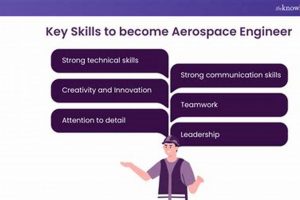
This exploration has illuminated the demanding yet potentially rewarding path of the “self taught aerospace engineer.” Success hinges upon a confluence of factors: unwavering dedication, acute resourcefulness, persistent learning, pragmatic application of knowledge, critical thinking, proficient problem-solving, and strategic networking. These elements, interwoven, dictate the individual’s capacity to acquire relevant skills, overcome inherent challenges, and ultimately contribute meaningfully to the field.
While formal academic credentials often serve as the conventional entry point, demonstrable competence, evidenced by a robust portfolio and a proven track record of successful projects, can provide a viable alternative. The future of the aerospace industry may increasingly accommodate individuals who demonstrate exceptional aptitude and ingenuity, regardless of their educational background, thereby expanding opportunities for those who pursue this challenging but potentially impactful route.