A strong foundation in specific disciplines is essential for a successful career in this complex field. These disciplines equip aspiring professionals with the theoretical knowledge and practical skills necessary to design, develop, test, and maintain aircraft, spacecraft, and related systems. Rigorous study in these areas forms the bedrock of competence and innovation in the aeronautical and astronautical domains.
Mastering these subjects provides numerous benefits. Individuals gain the analytical and problem-solving capabilities to address intricate engineering challenges. Furthermore, a thorough understanding enables contributions to technological advancements, promotes safety, and facilitates the efficient development of aerospace technologies. Historically, these knowledge areas have consistently been pivotal in driving progress within the aerospace sector, from the earliest flight experiments to contemporary space exploration endeavors.
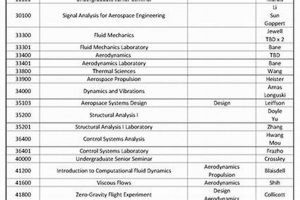
The core curriculum for individuals pursuing this engineering field typically encompasses mathematics, physics, and computer science. Furthermore, a strong emphasis is placed on specialized topics such as aerodynamics, propulsion, structural analysis, and control systems. The subsequent sections will delve deeper into these essential areas, providing specific examples and highlighting their relevance to real-world applications.
Essential Guidance for Aspiring Professionals
The following recommendations are designed to provide clarity and direction for those pursuing a career in this demanding yet rewarding engineering discipline. Diligent application of these principles can significantly enhance preparedness and optimize academic performance.
Tip 1: Prioritize a Robust Mathematical Foundation: Calculus, differential equations, and linear algebra form the bedrock of numerous aerospace engineering principles. A thorough grasp of these concepts is indispensable for analyzing complex systems and developing effective solutions.
Tip 2: Master Fundamental Physics Principles: Mechanics, thermodynamics, and electromagnetism are crucial for understanding the physical phenomena that govern aerospace systems. Focus on developing a strong intuitive understanding of these laws rather than rote memorization.
Tip 3: Cultivate Proficiency in Computer Programming: Modern aerospace engineering relies heavily on computational tools and simulation software. Expertise in programming languages such as Python or MATLAB is essential for data analysis, modeling, and control system design.
Tip 4: Develop a Deep Understanding of Aerodynamics: This branch of physics deals with the motion of air and its interaction with solid objects. A comprehensive understanding of aerodynamic principles is paramount for designing efficient and stable aircraft and spacecraft.
Tip 5: Acquire Knowledge of Propulsion Systems: Comprehend the principles underlying various propulsion technologies, including jet engines, rocket engines, and electric propulsion systems. This knowledge is essential for designing effective and efficient propulsion systems for aerospace vehicles.
Tip 6: Emphasize Structural Analysis and Design: Ensure mastery of the principles of stress, strain, and material behavior. This is crucial for designing lightweight yet robust aerospace structures capable of withstanding extreme conditions.
Tip 7: Understand Control Systems Theory: Aerospace vehicles require sophisticated control systems to maintain stability and achieve desired performance. A strong understanding of control systems theory is essential for designing and implementing effective control algorithms.
Consistently applying these guidelines will contribute significantly to a robust and comprehensive skill set, positioning individuals for success in the field. A solid foundation in these areas ensures readiness for advanced coursework and real-world engineering challenges.
The subsequent sections will explore additional aspects of preparing for a successful career in this engineering discipline, including internship opportunities and professional development.
1. Mathematics

Mathematics serves as the foundational language and analytical toolset upon which nearly all principles of aerospace engineering are built. Its inclusion is not merely ancillary but fundamentally integral to the comprehension and application of more specialized knowledge. Mathematical proficiency enables engineers to model, simulate, and predict the behavior of complex aerospace systems, from the trajectory of a spacecraft to the aerodynamic performance of an aircraft wing. A deficit in mathematical understanding directly impedes the ability to effectively address engineering challenges within the aerospace domain. For example, calculating the lift generated by an aircraft wing necessitates the application of calculus to solve fluid dynamics equations. Similarly, orbital mechanics, crucial for satellite deployment and navigation, relies heavily on differential equations and linear algebra.
The practical significance of mathematical fluency extends beyond theoretical analysis. It informs design decisions, facilitates optimization processes, and enables the development of robust and reliable aerospace technologies. Consider the design of a control system for an autonomous drone. Mathematical models are essential for representing the drone’s dynamics and for designing controllers that ensure stability and responsiveness. Without a firm grasp of linear algebra and control theory, engineers would be unable to develop effective control strategies. Another real-world example is the simulation of structural stress on an aircraft fuselage. Finite element analysis, a mathematically intensive technique, is used to predict how the structure will respond to different loads, allowing engineers to identify potential weak points and optimize the design for strength and weight.
In conclusion, mathematics is a non-negotiable prerequisite. Its importance extends beyond rote calculation, providing the framework for critical thinking, problem-solving, and innovation within the field. The challenges associated with aerospace engineering demand rigorous mathematical expertise, highlighting the need for aspiring professionals to prioritize its mastery. Furthermore, as aerospace technologies continue to evolve, the demand for engineers with advanced mathematical skills will only increase, solidifying mathematics’ position as a cornerstone of the discipline.
2. Physics

Physics constitutes a fundamental pillar within the essential knowledge base required for aerospace engineering. Its principles govern the behavior of matter and energy, providing the underlying framework for understanding the forces and phenomena encountered in the design, construction, and operation of aircraft and spacecraft. A deficiency in understanding physics translates directly into an impaired ability to analyze and solve complex engineering problems related to flight, propulsion, and structural integrity. For instance, accurately predicting the trajectory of a rocket necessitates a thorough comprehension of Newtonian mechanics, including the effects of gravity, air resistance, and thrust. Without this foundation, precise calculations become impossible, rendering mission success uncertain.
The practical significance of physics extends to numerous specific areas of aerospace engineering. Thermodynamics, for example, is essential for designing efficient and reliable propulsion systems. Understanding the laws of thermodynamics allows engineers to optimize engine performance, reduce fuel consumption, and minimize emissions. Similarly, electromagnetism is crucial for developing communication systems, navigation systems, and electronic control systems used in aircraft and spacecraft. The design of antennas for satellite communication relies heavily on the principles of electromagnetic wave propagation. Another critical application of physics is in the field of materials science. The selection of materials for aerospace structures requires a deep understanding of their mechanical properties, thermal properties, and resistance to corrosion. This ensures that the structure can withstand the extreme conditions encountered during flight, including high temperatures, high stresses, and exposure to radiation.
In summary, physics serves as an indispensable tool for aerospace engineers, enabling them to design and build safe, efficient, and reliable aerospace systems. Its principles provide the foundation for understanding the forces that act on aircraft and spacecraft, the behavior of materials under extreme conditions, and the operation of complex engineering systems. The challenges of aerospace engineering demand a thorough and nuanced understanding of physics, underscoring the importance of its inclusion in the curriculum and professional development of aspiring engineers in this field. Continual advancements in aerospace technology further necessitate ongoing study and refinement of physics-based knowledge to maintain relevance and drive innovation.
3. Aerodynamics

Aerodynamics is fundamentally intertwined with the essential subjects required for aerospace engineering. It represents a core discipline, exploring the motion of air and other gaseous fluids and their interaction with solid objects. This interaction directly influences the design and performance of aircraft, spacecraft, and related systems. The impact of aerodynamic principles is pervasive, affecting lift generation, drag reduction, stability control, and overall efficiency. Therefore, a robust understanding of aerodynamics is not merely beneficial but categorically necessary for engineers operating within the aerospace field. Neglecting this subject would render an aerospace engineer ill-equipped to design functional and safe flight vehicles.
The practical application of aerodynamic principles manifests in numerous tangible ways. For example, the shape of an aircraft wing is meticulously designed using computational fluid dynamics (CFD) simulations and wind tunnel testing to optimize lift while minimizing drag. Airfoils, specialized cross-sectional shapes, are developed based on aerodynamic theories to achieve specific performance characteristics. Similarly, the design of control surfaces such as ailerons, elevators, and rudders is directly governed by aerodynamic considerations. The effectiveness of these surfaces in maneuvering the aircraft depends on their ability to alter airflow and generate control forces. Furthermore, understanding boundary layer effects, flow separation, and turbulence is crucial for mitigating drag and ensuring smooth airflow over the aircraft’s surfaces. The development of high-speed aircraft and spacecraft necessitates expertise in compressible flow and shock wave phenomena, as these factors significantly influence aerodynamic performance at supersonic and hypersonic speeds.
In conclusion, aerodynamics serves as a critical cornerstone among the subjects vital for aerospace engineering. Its principles directly govern the design, analysis, and performance of flight vehicles. A comprehensive grasp of aerodynamics enables engineers to create efficient, stable, and safe aircraft and spacecraft, contributing directly to advancements in air travel, space exploration, and national security. The increasing demand for more efficient and sustainable aerospace systems underscores the continuing importance of aerodynamics and the necessity for aspiring aerospace engineers to prioritize its mastery.
4. Propulsion
Propulsion represents a core area of study within the essential subjects needed for aerospace engineering. It deals with the systems and technologies that generate thrust to propel aircraft and spacecraft, enabling them to overcome gravity and atmospheric drag. A thorough understanding of propulsion principles is indispensable for designing efficient, reliable, and high-performing aerospace vehicles.
- Thermodynamics and Gas Dynamics
These disciplines provide the theoretical foundation for understanding engine cycles, heat transfer, and fluid flow within propulsion systems. Knowledge of thermodynamics is critical for analyzing engine efficiency and optimizing combustion processes. Gas dynamics principles are essential for understanding the behavior of high-speed flows in nozzles and inlets. For example, the design of a supersonic jet engine relies heavily on gas dynamics to manage shock waves and minimize losses. Without a firm grasp of these areas, engineers would be unable to design effective and efficient propulsion systems.
- Combustion and Chemical Kinetics
Combustion is the process that releases energy from fuel, providing the driving force for many propulsion systems. Understanding the chemical reactions involved in combustion is crucial for optimizing fuel efficiency and minimizing emissions. Chemical kinetics deals with the rates of chemical reactions and helps engineers predict the performance of combustion chambers under various operating conditions. In rocket propulsion, for example, the selection of propellants and the design of the combustion chamber depend on a detailed understanding of chemical kinetics to achieve high thrust and specific impulse.
- Fluid Mechanics and Heat Transfer
Fluid mechanics governs the flow of gases and liquids within propulsion systems, while heat transfer describes the exchange of thermal energy. Understanding these principles is essential for designing components such as compressors, turbines, and heat exchangers. For instance, the design of turbine blades in a jet engine requires a detailed analysis of fluid flow and heat transfer to maximize efficiency and prevent overheating. Similarly, the design of cooling systems for rocket engines relies on heat transfer principles to dissipate the enormous heat generated during combustion.
- Engine Design and Performance
This area integrates the principles of thermodynamics, fluid mechanics, and combustion to design and analyze complete propulsion systems. It involves selecting appropriate engine cycles, sizing components, and predicting overall performance characteristics. Engineers must consider factors such as thrust-to-weight ratio, fuel consumption, and reliability when designing propulsion systems. For example, the design of a turbofan engine for a commercial aircraft requires careful optimization of the fan, compressor, combustor, and turbine to achieve high efficiency and low noise.
These interlinked facets highlight the multifaceted nature of propulsion as a cornerstone of aerospace engineering. Proficiency in these areas enables engineers to design and optimize propulsion systems, contributing significantly to advancements in air travel, space exploration, and defense technologies. A strong grasp of these subject areas underscores the critical importance of propulsion within the broader scope of what is needed for the advancement of aerospace engineering.
5. Structures
The study of structures forms an indispensable element within the collection of knowledge areas deemed essential for aerospace engineering. This discipline centers on the analysis and design of aerospace vehicle frameworks, ensuring their ability to withstand aerodynamic forces, gravitational loads, and other environmental stressors encountered during operation. A robust understanding of structural mechanics, materials science, and finite element analysis is thus critical for ensuring the safety, reliability, and longevity of aircraft and spacecraft. Any deficiency in this area can lead to catastrophic failures, highlighting the profound consequences of neglecting structural considerations in aerospace engineering design and implementation.
The practical significance of structural engineering principles manifests in myriad ways within the aerospace field. For example, the design of an aircraft wing requires careful consideration of the aerodynamic forces acting upon it. Engineers must perform stress analyses to ensure that the wing structure can withstand these loads without exceeding its yield strength or buckling. Similarly, the design of a spacecraft fuselage necessitates the selection of materials and structural configurations that can resist the extreme temperatures and pressures encountered during launch and reentry. Finite element analysis (FEA) is frequently employed to simulate the behavior of complex aerospace structures under various loading conditions, allowing engineers to identify potential weak points and optimize designs for weight and strength. Moreover, the understanding of composite materials is crucial, given their increasing use in modern aircraft for their high strength-to-weight ratios. Proper analysis ensures that these advanced materials are used effectively and safely.
In conclusion, structures stand as a vital component among the required subjects, directly impacting the overall integrity and performance of aerospace vehicles. A thorough grounding in structural mechanics, materials science, and related analytical techniques is essential for aerospace engineers to meet the stringent demands of this field. Addressing challenges such as weight reduction, improved durability, and resistance to extreme environments necessitates a continued emphasis on structural innovation and understanding, solidifying its place as a cornerstone of aerospace engineering education and practice.
6. Control Systems
Control systems constitute a critical and integrated domain within the spectrum of knowledge essential for aerospace engineering. These systems govern the behavior and stability of aerospace vehicles, ensuring accurate navigation, precise maneuvering, and reliable operation under diverse and often challenging conditions. Proficiency in control systems theory and implementation is thus indispensable for engineers aiming to contribute meaningfully to the design, development, and maintenance of modern aircraft and spacecraft.
- Feedback Control Systems
Feedback control systems continuously monitor the output of a system and adjust the input to maintain a desired performance. This is essential in aerospace engineering for stabilizing aircraft during flight, controlling the trajectory of a spacecraft, and regulating engine performance. For example, an autopilot system in an airplane uses feedback to maintain a constant altitude and heading, even in the presence of wind gusts. These require an intimate understanding of dynamics and mathematical modeling.
- Guidance, Navigation, and Control (GNC)
GNC systems provide the intelligence and control mechanisms required for autonomous operation of aerospace vehicles. Guidance determines the desired path, navigation estimates the vehicle’s position and orientation, and control executes the maneuvers necessary to follow the planned trajectory. Satellite positioning systems, such as GPS, provide the navigation data that GNC systems use to control the satellite’s orbit. A strong background in algorithms and sensor technology is vital.
- Embedded Systems and Real-Time Control
Aerospace control systems are typically implemented using embedded computers that must operate in real-time to ensure timely responses to changing conditions. These systems require specialized knowledge of computer architecture, programming languages, and real-time operating systems. The flight control computer in an aircraft, for instance, must process sensor data and execute control algorithms with minimal delay to maintain stability and prevent accidents. An understanding of computer science is therefore vital.
- Adaptive and Robust Control
Adaptive control systems adjust their parameters in response to changes in the environment or the system itself, while robust control systems are designed to be insensitive to uncertainties and disturbances. These advanced control techniques are crucial for dealing with the unpredictable nature of aerospace environments. For example, an adaptive control system can compensate for changes in aircraft aerodynamics caused by icing or damage. These necessitate an understanding of advanced mathematics and modeling techniques.
The multifaceted nature of control systems highlights their fundamental role in ensuring the safe, reliable, and efficient operation of aerospace vehicles. Their successful implementation requires a diverse skill set including mathematical modeling, computer programming, and a deep understanding of physical systems. As aerospace technology continues to advance, the demand for engineers with expertise in control systems will only increase, solidifying its position as a critical component within the essential subjects necessary for aerospace engineering.
Frequently Asked Questions about Essential Aerospace Engineering Subjects
The following section addresses common inquiries regarding the academic prerequisites for a successful career in aerospace engineering. Clarity on these matters is paramount for aspiring professionals seeking to navigate the complexities of this demanding field.
Question 1: Is a strong foundation in mathematics truly necessary, or can practical skills compensate for mathematical deficiencies?
A robust mathematical background is non-negotiable. Practical skills are valuable, but they cannot supplant the fundamental role of mathematical understanding in analyzing and solving complex engineering problems. Mathematics provides the analytical tools necessary to model, simulate, and optimize aerospace systems.
Question 2: How important is physics compared to other engineering disciplines when pursuing aerospace engineering?
Physics is of paramount importance. Its principles govern the fundamental laws that dictate the behavior of aerospace systems. A thorough understanding of physics is essential for comprehending aerodynamics, propulsion, structural mechanics, and other critical areas.
Question 3: Can someone with a non-traditional background, such as computer science, successfully transition into aerospace engineering?
Yes, but significant effort is required. A computer science background can provide valuable skills in areas such as software development and simulation. However, a comprehensive understanding of core aerospace engineering principles, including aerodynamics, propulsion, and structural analysis, must be acquired through further education and training.
Question 4: Is specialized knowledge in a particular area, like propulsion, more valuable than a broad understanding of all key subjects?
Both specialized knowledge and a broad understanding are valuable. Specialization allows for in-depth expertise in a specific area, while a broad understanding provides a holistic perspective and facilitates interdisciplinary collaboration. A balanced approach is often most beneficial.
Question 5: Are there specific computer programming languages that are considered essential for aerospace engineers to learn?
Yes. Languages such as Python, MATLAB, and C++ are commonly used in aerospace engineering for tasks such as data analysis, simulation, and control system design. Proficiency in at least one of these languages is highly recommended.
Question 6: To what extent do practical projects and internships contribute to the development of necessary skills and knowledge?
Practical projects and internships are invaluable. They provide hands-on experience, allowing students to apply theoretical knowledge to real-world problems and develop essential engineering skills. These experiences also offer opportunities to network with industry professionals and gain valuable insights into the aerospace field.
Mastering these subjects ensures readiness for advanced coursework and real-world engineering challenges, preparing aspiring professionals to make significant contributions to the field.
The next section will delve into the career paths and opportunities available in the domain.
Essential Foundations in Aerospace Engineering
This exploration has elucidated the fundamental subjects that underpin a successful career in aerospace engineering. The mastery of mathematics, physics, aerodynamics, propulsion, structures, and control systems is not merely desirable, but a strict prerequisite for effective participation in the field. Each discipline contributes a unique and vital perspective, collectively forming the bedrock upon which innovation and advancement are built.
Continued dedication to these core knowledge areas remains paramount. The relentless progress within the aerospace sector necessitates a commitment to lifelong learning and the pursuit of expertise. A firm grounding in these subjects will empower future generations of engineers to address emerging challenges and propel the field toward unprecedented heights.