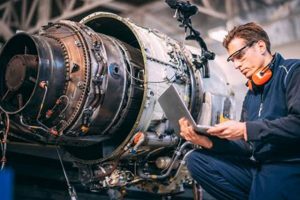
The activities undertaken by an aerospace engineer each day are highly varied and depend significantly on their specific role, industry sector, and level of experience. Daily tasks can range from theoretical calculations and simulations to hands-on work with hardware and collaboration with diverse teams. A significant portion of their time may be dedicated to designing aircraft or spacecraft components, analyzing test data, or troubleshooting existing systems. One day might involve detailed computational fluid dynamics (CFD) modeling to assess aerodynamic performance, while another could be spent in meetings discussing project milestones or reviewing design specifications.
The value of their contributions extends to advancements in air travel safety, improved fuel efficiency, and exploration beyond Earth’s atmosphere. Historically, the work of aerospace engineers has been instrumental in pushing the boundaries of human achievement, driving innovation in materials science, propulsion systems, and control mechanisms. The consequences of their designs impact society at large, influencing everything from global commerce to national defense.
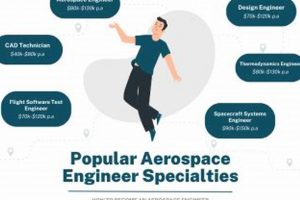
The following sections will delve into the core responsibilities and specific examples that characterize the workflows encountered in different specializations within the field. These sections will also highlight the essential skills and tools that are routinely employed to ensure successful project outcomes.
Insights into Aerospace Engineering Activities
Understanding the practicalities of aerospace engineering requires a focus on the everyday tasks. The following provides insight into aspects of that daily work and considerations for career growth.
Tip 1: Prioritize Continuous Learning: Aerospace technology evolves rapidly. Dedicate time each day or week to staying updated on the latest advancements in areas such as materials science, propulsion, and avionics. This might involve reading industry publications, attending webinars, or completing online courses.
Tip 2: Cultivate Strong Communication Skills: The profession frequently requires collaboration with multidisciplinary teams. Practice clearly conveying technical information, both verbally and in writing, to colleagues with varying backgrounds. Participate actively in meetings, present findings effectively, and document designs meticulously.
Tip 3: Master Simulation and Modeling Tools: Familiarize yourself with industry-standard software for computer-aided design (CAD), finite element analysis (FEA), and computational fluid dynamics (CFD). The ability to accurately model and simulate complex systems is crucial for efficient design and testing. Examples include Ansys, SolidWorks, and MATLAB.
Tip 4: Develop a Systems-Level Perspective: Aerospace engineering demands an understanding of how individual components interact within larger systems. When working on a specific task, consider its impact on the overall performance and reliability of the aircraft or spacecraft. This involves understanding system integration, testing, and verification processes.
Tip 5: Embrace Problem-Solving Methodologies: Encountering technical challenges is inevitable. Develop a systematic approach to problem-solving, starting with a clear definition of the issue, followed by hypothesis generation, data collection and analysis, and solution implementation. Techniques such as root cause analysis can be beneficial.
Tip 6: Seek Mentorship Opportunities: Connect with experienced aerospace engineers who can provide guidance and support. A mentor can offer valuable insights into industry best practices, career development strategies, and navigating workplace dynamics. Active participation in professional organizations can facilitate mentorship connections.
Tip 7: Maintain Meticulous Documentation: Accurate and thorough documentation is essential for ensuring traceability, facilitating communication, and complying with regulatory requirements. Properly document design decisions, test results, and any modifications made to systems. Utilize version control systems effectively.
These insights provide a glimpse into how diligence and continual improvement contribute to a successful career path. The commitment to learning, collaboration, and rigorous problem-solving are attributes that distinguish successful aerospace engineers.
The following sections provide a practical overview of daily task with examples.
1. Design Optimization

Design optimization constitutes a significant aspect of the daily tasks performed by aerospace engineers. It represents an iterative process aimed at refining aircraft, spacecraft, and related components to achieve peak performance within given constraints. These constraints invariably include factors like weight, cost, materials, aerodynamic properties, structural integrity, and manufacturing feasibility. The daily workload can therefore involve utilizing specialized software to model various design iterations, running simulations to assess their performance characteristics, and analyzing the results to identify areas for improvement.
For example, an aerospace engineer might be tasked with optimizing the wing design of a new commercial aircraft. This would necessitate employing computational fluid dynamics (CFD) software to analyze airflow patterns around different wing profiles, iteratively modifying the wing shape to minimize drag and maximize lift. Simultaneously, finite element analysis (FEA) software would be used to ensure the wing structure can withstand the aerodynamic loads experienced during flight, optimizing the internal structure to minimize weight while maintaining sufficient strength. This interdisciplinary approach is typical.
Ultimately, design optimization plays a crucial role in enhancing the safety, efficiency, and overall performance of aerospace systems. Understanding this process is critical to grasping the fundamental elements that shape an aerospace engineer’s daily work. The relentless pursuit of improved designs directly translates into enhanced operational capabilities, reduced fuel consumption, and safer air and space travel. The challenges often involve balancing competing design objectives and navigating complex trade-offs, which underscores the importance of analytical skills and a comprehensive understanding of aerospace engineering principles.
2. Data Analysis

Data analysis forms a cornerstone of an aerospace engineer’s routine activities. Its application spans various stages of design, development, testing, and operation, providing essential insights that drive decision-making and ensure the safety and performance of aerospace systems. The meticulous interpretation of data acquired from simulations, experiments, and real-world operations is essential to optimize designs, validate models, and predict behavior.
- Flight Test Analysis
Flight test analysis involves scrutinizing data collected during aircraft flight testing to evaluate performance characteristics, stability, and control. Engineers analyze parameters such as airspeed, altitude, acceleration, control surface deflections, and engine performance to verify that the aircraft meets design specifications and regulatory requirements. Deviations from expected behavior necessitate further investigation and potential design modifications. For instance, analysis of flight test data might reveal unexpected drag at high speeds, prompting engineers to refine the wing design or control system calibration.
- Structural Analysis
Aerospace engineers routinely analyze structural data obtained from both physical tests and simulations to assess the integrity and durability of aircraft and spacecraft components. This involves examining stress, strain, and vibration data to identify potential weak points and ensure that structures can withstand the loads encountered during flight or space missions. Analysis of sensor data from strain gauges attached to an aircraft wing during ground testing, for example, helps validate finite element models used to predict structural behavior under different loading conditions.
- Propulsion System Analysis
Data analysis is critical for evaluating the performance and efficiency of propulsion systems. Aerospace engineers analyze data from engine tests and simulations to assess thrust, fuel consumption, emissions, and component temperatures. This information is used to optimize engine designs, improve fuel efficiency, and ensure compliance with environmental regulations. Analysis of data from a rocket engine test, for example, may reveal combustion instabilities that require modifications to the injector design.
- Sensor Data Interpretation
Aerospace engineers often work with data from a multitude of sensors integrated into aircraft and spacecraft systems. This includes data from navigation sensors, environmental sensors, and health monitoring systems. The ability to accurately interpret this data is essential for monitoring system performance, detecting anomalies, and predicting maintenance needs. Analysis of sensor data from a satellite’s attitude control system, for example, can identify degradation in sensor performance, prompting preventative maintenance or replacement.
These facets demonstrate that data analysis is not merely a supplementary task but a core competency that directly impacts the design, validation, and operation of aerospace systems. The engineers ability to extract meaningful insights from raw data, and translate these insights into actionable recommendations, greatly influences the safety, efficiency, and overall success of aerospace endeavors.
3. Software Simulations
Software simulations are integral to the daily activities of aerospace engineers. They provide a virtual environment for modeling, analyzing, and predicting the behavior of aerospace systems, thereby enabling efficient design optimization, risk mitigation, and cost reduction. The use of simulations allows engineers to explore a wide range of design options and operating conditions without resorting to expensive and time-consuming physical prototypes. These simulations form the foundation of contemporary aerospace engineering practices.
- Computational Fluid Dynamics (CFD)
CFD simulations are routinely used to analyze airflow around aircraft and spacecraft. Engineers utilize CFD software to predict aerodynamic forces, such as lift and drag, and to optimize the shape of wings, fuselages, and control surfaces. These simulations can also be used to analyze the thermal behavior of components, predict noise generation, and evaluate the performance of propulsion systems. For example, CFD simulations can help optimize the shape of an aircraft wing to minimize drag, improving fuel efficiency and reducing operating costs.
- Finite Element Analysis (FEA)
FEA simulations are employed to analyze the structural integrity of aerospace components under various loading conditions. Engineers use FEA software to predict stress, strain, and deformation in structures, ensuring that they can withstand the forces experienced during flight or space missions. These simulations can also be used to analyze the thermal behavior of components and to predict their fatigue life. For example, FEA simulations can help optimize the design of an aircraft fuselage to minimize weight while maintaining sufficient strength and stiffness.
- System-Level Simulations
System-level simulations are used to model the behavior of entire aerospace systems, including aircraft, spacecraft, and satellites. These simulations integrate models of various subsystems, such as propulsion, control, and navigation, to predict overall system performance and to evaluate the effectiveness of different control strategies. For example, a system-level simulation can be used to evaluate the performance of an autopilot system in different flight conditions or to assess the reliability of a satellite’s power system over its operational lifetime.
- Hardware-in-the-Loop (HIL) Simulations
HIL simulations combine software models with physical hardware components to create a realistic testing environment. These simulations allow engineers to test and validate control systems and other critical components in a safe and controlled manner. For example, an HIL simulation can be used to test the flight control system of an aircraft by connecting the physical flight control computer to a simulated aircraft model, allowing engineers to evaluate its performance under various flight conditions.
These diverse applications of software simulations highlight the central role they play in the design, development, and testing of aerospace systems. By providing a virtual environment for exploration and analysis, these simulations enable aerospace engineers to optimize designs, mitigate risks, and improve the overall performance and safety of air and space vehicles, impacting virtually every aspect of an engineer’s daily work.
4. Team Collaboration

Team collaboration is an indispensable component of daily activities for aerospace engineers. The design, development, testing, and deployment of aerospace systems invariably require the integration of diverse expertise from multiple disciplines. Aerospace engineers, therefore, routinely interact with specialists in areas such as aerodynamics, propulsion, structures, avionics, materials science, manufacturing, and software engineering. The effectiveness of these interactions directly influences project timelines, budget adherence, and overall system performance.
Consider, for instance, the development of a new commercial aircraft. The aerodynamic design of the wing necessitates close collaboration between aerodynamicists, structural engineers, and manufacturing specialists. Aerodynamicists define the wing’s shape to optimize lift and minimize drag. Structural engineers ensure the wing can withstand flight loads without exceeding stress limits. Manufacturing specialists determine the feasibility of producing the wing design within budgetary and technological constraints. Regular communication, shared access to design data, and coordinated problem-solving are critical for aligning these distinct perspectives and resolving potential conflicts. A lack of effective collaboration in such a scenario could lead to design flaws, manufacturing difficulties, and ultimately, project delays and cost overruns.
In summary, team collaboration is not merely a desirable attribute, but a fundamental prerequisite for successful aerospace engineering projects. The complexities of modern aerospace systems demand integrated expertise and coordinated efforts. The ability to effectively communicate, share information, and resolve conflicts within a team environment is paramount to achieving project objectives. This understanding underscores the practical significance of fostering collaborative skills among aerospace engineers, ensuring that they are equipped to navigate the multifaceted challenges inherent in the field.
5. Testing Procedures
Testing procedures form a crucial and regular element of the duties performed by an aerospace engineer. The integrity, safety, and performance of aerospace systems are rigorously validated through a structured sequence of tests designed to expose weaknesses and confirm adherence to specifications. These tests, performed at various stages of the development lifecycle, are central to ensuring mission success.
- Component Testing
Component testing involves assessing individual parts or sub-assemblies to verify that they meet design requirements. This can include evaluating material properties, electrical characteristics, or mechanical strength. For example, a hydraulic actuator used in an aircraft’s flight control system might undergo pressure testing to ensure it can withstand operational loads. An aerospace engineer analyzes the test results to identify any deviations from specifications and recommend corrective actions, such as design modifications or material substitutions. The outcome of component testing directly informs design decisions and impacts the overall reliability of the system.
- System Integration Testing
System integration testing focuses on verifying that different subsystems function together as intended. This often involves simulating operational scenarios to assess the interaction between various components. For instance, the integration of an aircraft’s navigation system with its autopilot requires testing to ensure seamless coordination during flight. Aerospace engineers design and execute these tests, analyzing data to identify any integration issues or incompatibilities. Correcting these problems is vital to ensuring safe and efficient operation.
- Environmental Testing
Aerospace systems are subjected to a range of environmental conditions, including extreme temperatures, vibration, and vacuum. Environmental testing aims to simulate these conditions to ensure that components and systems can withstand the stresses of their operational environment. An aerospace engineer might oversee the testing of a satellite in a thermal vacuum chamber to ensure it can function reliably in space. Data from these tests informs design choices related to thermal management, material selection, and component placement. Such rigorous verification is essential for minimizing the risk of failure during flight or space missions.
- Flight Testing
Flight testing represents the culmination of the testing process for aircraft. It involves evaluating the aircraft’s performance, stability, and control in real-world flight conditions. Aerospace engineers analyze flight test data to verify that the aircraft meets design specifications and regulatory requirements. This can include assessing takeoff and landing performance, evaluating handling characteristics, and measuring fuel consumption. The insights gained from flight testing are critical for refining the design, optimizing control systems, and ensuring the safety and reliability of the aircraft.
The described testing procedures highlight a recurring theme within the daily professional life. The consistent application of rigorous testing at every phase of development is necessary in mitigating potential risks and ensuring the creation of safe and reliable aerospace assets. This emphasis reinforces the critical role that testing procedures play in the professional life of an aerospace engineer.
6. Problem solving

Problem solving is central to the daily activities of an aerospace engineer. The complexity inherent in aerospace systems means that engineers continually encounter technical challenges demanding analytical and innovative solutions. The connection is causal: the pursuit of novel aircraft and spacecraft designs invariably leads to unforeseen problems related to aerodynamics, structural integrity, propulsion, control systems, and materials. Effectively solving these problems directly contributes to project milestones and the overall success of aerospace endeavors. The consistent identification and resolution of engineering challenges is thus a defining characteristic of the profession.
Real-world examples of problem-solving situations are numerous. When designing a high-speed aircraft, an engineer may discover unexpected turbulence during CFD simulations. Addressing this requires modifying the wing design or implementing active control systems. When developing a new rocket engine, unstable combustion could necessitate redesigning the fuel injection system or altering the combustion chamber geometry. Likewise, when analyzing data from a satellite orbiting Earth, anomalies in sensor readings could lead to investigations into radiation effects or component malfunctions. In all cases, aerospace engineers must apply engineering principles, utilize simulation tools, interpret data, and collaborate with specialists to devise effective solutions. These practical applications demonstrate that technical proficiency alone is insufficient; analytical reasoning, critical thinking, and adaptability are essential for successful problem resolution.
In conclusion, the correlation between problem-solving and the daily work of an aerospace engineer is undeniable. These skills are vital for overcoming technical obstacles, improving system performance, and ensuring the safety and reliability of air and space vehicles. Addressing unforeseen problems requires a synthesis of theoretical knowledge, practical experience, and effective collaboration. The capacity to solve complex challenges is a distinguishing attribute of competent aerospace engineers, thereby underscoring its significant role in contributing to technological advancement.
7. Code Development

Code development, although perhaps not universally recognized as such, forms a significant element in the daily activities of a substantial proportion of aerospace engineers. This task varies from crafting specialized simulation tools to implementing control algorithms for aircraft or spacecraft. The causal connection between code development and aerospace engineering rests on the need for tailored solutions unavailable through off-the-shelf software. Aerospace engineers often encounter scenarios demanding custom software for data analysis, system modeling, or hardware interfacing. Therefore, code development becomes a necessary tool for addressing specific project requirements and advancing engineering capabilities.
The practical significance of code development is readily apparent in several contexts. For instance, developing flight control algorithms for unmanned aerial vehicles (UAVs) requires intricate programming to ensure stability, navigation, and autonomous operation. Similarly, the design and analysis of composite structures often necessitates writing custom finite element analysis (FEA) solvers optimized for specific material properties and loading conditions. Even in testing, code development is crucial. Engineers might create automated test scripts to streamline data acquisition, process sensor readings, and generate reports, thereby improving efficiency and reducing the risk of human error. Another example involves implementing guidance, navigation, and control (GNC) algorithms for spacecraft, where precise calculations and robust error handling are paramount for mission success. These diverse applications highlight that competence in code development extends the capabilities of aerospace engineers, allowing them to tackle complex problems and achieve project goals more effectively.
In summary, while not every aerospace engineer engages in code development daily, the ability to program and create custom software solutions is increasingly valuable. The challenges associated with developing reliable and efficient code for aerospace applications underscore the need for a solid understanding of software engineering principles and proficiency in programming languages relevant to the field, such as Python, MATLAB, or C++. This skill set enhances an engineer’s problem-solving capabilities and contributes directly to the innovation and advancement within aerospace technologies.
Frequently Asked Questions About Aerospace Engineering Activities
The following addresses common inquiries regarding the daily tasks and responsibilities of aerospace engineers. These answers aim to provide a clear understanding of the profession.
Question 1: What is the typical balance between theoretical work and hands-on activity?
The balance between theoretical work and hands-on activity varies significantly depending on the specific role, company, and project phase. Some positions are primarily focused on analysis, simulation, and design, requiring extensive theoretical knowledge and computational skills. Other roles involve more hands-on work, such as testing, prototyping, and manufacturing support. Senior engineers may spend more time in management and oversight, while junior engineers are often involved in more technical tasks. The specific blend depends on the engineer’s specialization and the requirements of their employer.
Question 2: How much time is spent on collaborative efforts with other engineers or departments?
Collaboration is a significant aspect of aerospace engineering. Most projects necessitate interdisciplinary teams. The amount of time spent collaborating varies depending on the project phase and the engineer’s role. Design engineers might spend considerable time collaborating with manufacturing engineers to ensure designs are feasible to produce. Systems engineers often coordinate between different engineering teams. Effective communication and teamwork are vital for successful project outcomes, frequently requiring daily interactions with colleagues.
Question 3: What software tools are used most frequently?
Aerospace engineers utilize a diverse array of software tools. Computer-Aided Design (CAD) software, such as CATIA or SolidWorks, is used for designing components and systems. Finite Element Analysis (FEA) software, like ANSYS or Abaqus, analyzes structural integrity. Computational Fluid Dynamics (CFD) software, such as Fluent or OpenFOAM, simulates airflow. Programming languages like MATLAB and Python are used for data analysis and algorithm development. The specific tools used depend on the engineer’s specialization and the project requirements.
Question 4: How much autonomy does an aerospace engineer typically have in their daily tasks?
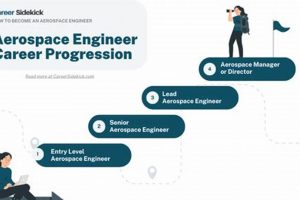
The level of autonomy varies with experience and seniority. Entry-level engineers usually work under the guidance of senior engineers, performing specific tasks with well-defined objectives. As engineers gain experience, they are given more responsibility and autonomy, taking ownership of larger portions of the design or analysis process. Senior engineers often have significant autonomy in defining project scope, selecting technical approaches, and leading teams.
Question 5: What are the opportunities for continuous professional development?
Aerospace engineering is a rapidly evolving field, making continuous professional development essential. Opportunities include attending conferences, workshops, and training courses. Many companies offer internal training programs and encourage employees to pursue advanced degrees or certifications. Staying current with the latest technologies and research is crucial for maintaining competence and advancing career prospects.
Question 6: How do regulatory requirements influence the daily tasks and responsibilities?
Regulatory requirements have a substantial impact. Aerospace systems must adhere to stringent safety and performance standards set by regulatory agencies such as the Federal Aviation Administration (FAA) or the European Aviation Safety Agency (EASA). Aerospace engineers must ensure that their designs comply with these regulations, documenting their work meticulously and participating in audits and reviews. Compliance with regulatory requirements is a primary consideration throughout the design, development, and testing processes.
These FAQs provide a general overview, demonstrating the varied activities and considerations that are routine. The specific nature of the task is shaped by various aspects.
The final summary consolidates all the sections.
Conclusion
This exploration of “what does a aerospace engineer do on a daily basis” reveals a complex and multifaceted profession. The daily tasks encompass design optimization, data analysis, software simulations, team collaboration, testing procedures, problem-solving, and code development. These activities are shaped by theoretical knowledge, practical experience, regulatory requirements, and the specific demands of each project.
The work is not only technically challenging but also fundamentally important. Continued advancements in aerospace technology will depend on the dedication and expertise of these engineers. Further investigation into specific specializations within the field and ongoing engagement with technological innovations are encouraged to deepen understanding and contribute to future advancements.