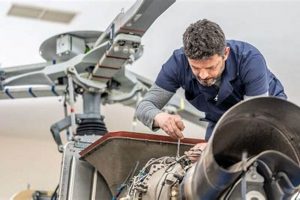
Aeronautical engineering concentrates on the design, development, and testing of aircraft that operate within Earth’s atmosphere. It addresses aspects like aerodynamics, propulsion systems, structural integrity, and control mechanisms specific to atmospheric flight. This field tackles challenges related to optimizing flight performance, enhancing fuel efficiency, and ensuring the safety and reliability of airplanes and helicopters.
The significance of this specialized engineering discipline lies in its contribution to advancements in air travel, cargo transport, and national defense. Historically, it has driven innovation in aircraft design, leading to faster, safer, and more efficient aircraft. This area of expertise is essential for maintaining the efficiency and safety of air transportation systems globally and contributing to economic growth through improved logistical capabilities. Further benefits include fostering technological advancements that can be adapted across other engineering sectors.
While the initial focus is on vehicles operating within the atmosphere, a broader perspective encompasses spacecraft and related technologies. This expansion of scope leads to consideration of the similarities and differences between the two branches, and the career paths that each offers. Understanding these distinctions is crucial for individuals considering pursuing a career in either area of engineering.
This section provides critical insights for distinguishing between aeronautical and aerospace engineering, aiding informed decision-making for academic pursuits and career paths.
Tip 1: Understand the Core Focus: Aeronautical engineering is primarily concerned with aircraft operating within Earth’s atmosphere. Aerospace engineering encompasses this, but also includes spacecraft and related technologies. Determine the primary area of interest to guide academic choices.
Tip 2: Research Curriculum Differences: University programs in each field may vary significantly. Examine course listings to identify specializations aligning with specific interests, such as propulsion systems or space vehicle design.
Tip 3: Explore Career Options: Investigate the job market for both fields. Identify roles that resonate with personal skills and career aspirations. Consider internships or research opportunities to gain practical experience in a chosen area.
Tip 4: Consider Specializations: Both fields offer specialized tracks, such as aerodynamics, structural analysis, or control systems. Select a specialization that aligns with long-term career goals and academic strengths.
Tip 5: Networking Opportunities: Engage with professionals in both aeronautical and aerospace engineering. Attend industry events, join professional organizations, and participate in online forums to expand knowledge and career opportunities.
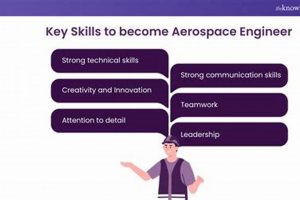
Tip 6: Evaluate Required Skills: Assess necessary skills, including mathematics, physics, and computer-aided design. Identify areas for skill enhancement to meet industry standards and improve job prospects.
Tip 7: Stay Updated on Industry Trends: Continuously monitor technological advancements in both fields, such as electric propulsion, autonomous flight, and advanced materials. Understanding emerging trends can inform future career choices.
Applying these suggestions will assist in making informed decisions regarding academic and career paths within these engineering disciplines, increasing the likelihood of professional success.
The following sections will further clarify specific aspects of the profession, offering a more comprehensive understanding.
1. Atmospheric Flight

Atmospheric flight constitutes a core domain within aeronautical engineering, while representing only a subset of aerospace engineering’s broader scope. The design and optimization of aircraft for atmospheric conditions form a central pillar of aeronautical engineering. This specialization encompasses aerodynamics, propulsion systems tailored for air-breathing engines, and structural considerations optimized for flight within the atmosphere. The dependence on atmospheric conditions is paramount, dictating design choices and operational parameters for aircraft. For example, the design of an aircraft wing is critically influenced by air density and pressure at different altitudes, factors exclusive to atmospheric flight.
Aerospace engineering, while encompassing atmospheric flight, extends its purview to include space vehicles designed for operation beyond Earth’s atmosphere. This divergence necessitates expertise in areas such as rocket propulsion, orbital mechanics, and spacecraft thermal management, which are less central to aeronautical engineering. While knowledge of atmospheric flight dynamics might inform the initial phases of space vehicle ascent, the primary engineering challenges lie in adapting to the vacuum of space and the unique demands of orbital operation. Consequently, an aerospace engineer might work on the design of both commercial airplanes (within the realm of atmospheric flight) and satellites, while an aeronautical engineer’s expertise is primarily concentrated on the former.
In summary, understanding atmospheric flight is fundamental to both aeronautical and aerospace engineering, but its relative importance differs significantly. For aeronautical engineers, it represents the primary focus; for aerospace engineers, it constitutes one aspect of a more expansive field. The practical significance of this distinction lies in the specialized knowledge and skills required for each domain. Aeronautical engineers develop expertise in optimizing flight within the atmosphere, while aerospace engineers acquire a broader skillset applicable to both atmospheric and space-based vehicles. The choice between these two engineering paths should reflect the aspiring engineer’s specific interests and career aspirations.
2. Spacecraft Design

Spacecraft design embodies a complex and specialized domain within aerospace engineering, highlighting a key distinction from aeronautical engineering. The intricacies involved in creating vehicles that operate beyond Earth’s atmosphere necessitate unique considerations and expertise not typically found within the aeronautical engineering discipline. This distinction underscores that while both fields share core engineering principles, their applications and the specific challenges they address differ significantly.
- Environmental Considerations
Spacecraft design demands meticulous attention to the harsh environment of space. This includes accounting for extreme temperature variations, vacuum conditions, and exposure to radiation. Materials selection, thermal management systems, and radiation shielding become critical design elements, differentiating spacecraft engineering from atmospheric flight vehicle development. For example, the International Space Station employs specialized coatings and thermal radiators to manage temperature fluctuations effectively. These designs require engineers trained in aerospace-specific challenges, not commonly addressed in aeronautical programs.
- Orbital Mechanics and Propulsion
A spacecraft’s trajectory and propulsion system are fundamentally different from those of an aircraft. Orbital mechanics, including concepts like Hohmann transfer orbits and gravitational assists, dictate how a spacecraft navigates through space. Furthermore, spacecraft propulsion relies on rocket engines that operate without atmospheric air, demanding distinct engineering expertise. The design of a satellite’s propulsion system, which might use chemical rockets, ion thrusters, or other advanced technologies, showcases the specialized knowledge needed in aerospace engineering, a knowledge base less pertinent in aeronautical engineering.
- Communication and Control Systems
Effective communication and control are paramount for spacecraft operations, often involving long distances and significant signal delays. Design of robust communication systems, including antennas and transceivers, is essential. Control systems must account for the absence of aerodynamic surfaces, relying instead on reaction wheels or thrusters for attitude control. The development of remote control algorithms for a Mars rover, for instance, represents a complex undertaking specific to spacecraft engineering, involving considerations not typically encountered in aeronautical applications.
- Life Support Systems
For crewed spacecraft, life support systems become critical components. These systems provide breathable air, manage waste, and regulate temperature and pressure within the spacecraft. Designing reliable and efficient life support systems presents unique challenges, requiring expertise in areas like environmental control, water recycling, and food production. The life support system on the Apollo missions, which enabled astronauts to survive for extended periods in space, demonstrates the highly specialized nature of this engineering domain, contrasting with the focus of aeronautical engineering.
These facets of spacecraft design emphasize the fundamental differences between aerospace and aeronautical engineering. While aeronautical engineering concentrates on aircraft operating within Earth’s atmosphere, aerospace engineering encompasses the complexities of spacecraft design and operation in the unique environment of space. This distinction is crucial for individuals seeking careers in the space industry, as it highlights the specific skills and knowledge required for success in this field.
3. Overlapping Principles
While aeronautical and aerospace engineering are distinct disciplines, a significant degree of overlap exists in their foundational principles. These shared principles form the bedrock upon which both fields build their specialized knowledge, contributing to the perception that the two are closely related. However, the application and extension of these principles ultimately delineate the boundaries between aeronautical and aerospace engineering.
- Fluid Mechanics
Both aeronautical and aerospace engineering heavily rely on fluid mechanics to understand the behavior of air and other fluids around moving objects. Aeronautical engineering applies fluid mechanics to optimize the aerodynamic performance of aircraft within the atmosphere. Aerospace engineering expands this application to include the analysis of fluid flows around spacecraft and rocket nozzles, often under extreme conditions. The governing equations, such as the Navier-Stokes equations, remain the same, but the boundary conditions and complexities of the flow field may differ significantly. Examples include the study of airflow over a wing (aeronautical) versus the analysis of plasma flow in a magnetohydrodynamic thruster (aerospace).
- Thermodynamics
Thermodynamics is crucial for analyzing the performance of propulsion systems, managing heat transfer in flight vehicles, and designing efficient energy systems. In aeronautical engineering, thermodynamics plays a vital role in the design and optimization of jet engines and internal combustion engines. Aerospace engineering extends this to include the design of rocket engines and thermal control systems for spacecraft operating in the vacuum of space, where heat transfer mechanisms are significantly different. The Carnot cycle, for instance, is a fundamental concept in both fields, applied to optimize engine efficiency in aircraft and to design refrigeration systems for spacecraft.
- Structural Mechanics
The design and analysis of structures capable of withstanding various loads and stresses is a cornerstone of both fields. Structural mechanics ensures the integrity of aircraft and spacecraft under flight conditions. Aeronautical engineering focuses on the structural design of wings, fuselages, and landing gear, considering aerodynamic forces and material properties. Aerospace engineering extends this to include the design of spacecraft structures that can withstand the stresses of launch, orbital maneuvers, and re-entry, as well as the extreme temperature variations in space. Finite element analysis (FEA) is a commonly used tool in both disciplines to simulate structural behavior under different loading scenarios, ensuring safety and reliability.
- Control Systems
Control systems are essential for maintaining stability and directing the movement of both aircraft and spacecraft. Aeronautical engineering applies control theory to design autopilots, flight control surfaces, and stability augmentation systems. Aerospace engineering extends this to include the design of attitude control systems for satellites, guidance systems for rockets, and autonomous navigation systems for interplanetary probes. Feedback control loops, using sensors and actuators, are a fundamental concept in both areas. For example, PID controllers are used to maintain aircraft altitude (aeronautical) and to orient a satellite in orbit (aerospace).
In conclusion, while aeronautical and aerospace engineering share these foundational principles, the scope and application differ significantly. Aeronautical engineering concentrates on the optimization of flight within the atmosphere, whereas aerospace engineering broadens to encompass flight both within and beyond the atmosphere. The mastery of these overlapping principles forms the basis for specialization in either field, highlighting that the differences lie not in the core knowledge, but in the specific problems each discipline addresses.
4. Specialized Curriculum

The divergence in the curriculum between aeronautical and aerospace engineering programs underscores the distinction between these disciplines. While both share a foundation in mathematics, physics, and basic engineering principles, the specialized coursework reflects the distinct challenges and applications unique to each field.
- Aeronautical Engineering Focus
Aeronautical engineering curricula emphasize aerodynamics, aircraft structures, propulsion systems optimized for atmospheric flight, and air traffic control. Coursework often includes aircraft design, stability and control, and the performance analysis of air-breathing engines. For instance, a course on wing design would delve into airfoil selection, lift and drag characteristics, and the impact of atmospheric conditions on flight performance. The curriculum is tailored for optimizing aircraft within Earth’s atmosphere.
- Aerospace Engineering Breadth
Aerospace engineering curricula encompass all topics within aeronautical engineering and expand to include spacecraft design, orbital mechanics, rocket propulsion, and satellite communication systems. Students learn about spacecraft attitude control, thermal management in the vacuum of space, and the challenges of interplanetary travel. For example, a course on orbital mechanics would cover Kepler’s laws, trajectory optimization, and the design of satellite constellations. This reflects the broader scope of aerospace engineering.
- Materials Science Specialization
Both curricula cover materials science, but with different emphases. Aeronautical engineering may focus on materials suitable for aircraft construction, considering factors such as weight, strength, and resistance to fatigue under atmospheric conditions. Aerospace engineering places greater emphasis on materials that can withstand the extreme temperatures, radiation, and vacuum of space. This leads to specialized courses on composite materials, high-temperature alloys, and radiation shielding, tailored to the demands of spacecraft engineering.
- Control Systems Differentiation
While both fields require a strong understanding of control systems, the application differs significantly. Aeronautical engineering focuses on flight control systems for aircraft, including autopilot design and stability augmentation. Aerospace engineering extends this to include attitude control systems for satellites, guidance and navigation systems for rockets, and autonomous control systems for spacecraft exploring distant planets. Coursework includes topics such as Kalman filtering, optimal control, and robust control techniques, tailored to the specific challenges of spaceflight.
The specialized curriculum in each field prepares students for the distinct challenges and opportunities within the aerospace industry. While some core principles overlap, the advanced coursework reflects the unique knowledge and skills required for each discipline, clarifying that aeronautical and aerospace engineering, while related, are not interchangeable in their specialized applications.
5. Career Trajectories

Career trajectories within aeronautical and aerospace engineering, while often intertwined, demonstrate that these fields, though related, are not identical in their professional outcomes and opportunities. The specific skill set and knowledge base acquired through each discipline shape the potential career paths available to graduates.
- Aeronautical Engineering Roles
Aeronautical engineers typically find employment in designing, testing, and improving aircraft. Common roles include aircraft design engineer, aerodynamics specialist, and propulsion systems engineer. These positions are often concentrated within the commercial aviation sector, government regulatory agencies (such as the FAA), and defense contractors focused on atmospheric flight vehicles. For example, an aeronautical engineer might work on optimizing the wing design of a new commercial airliner to improve fuel efficiency or developing advanced flight control systems for enhanced safety.
- Aerospace Engineering Opportunities
Aerospace engineers have a broader range of potential career paths, encompassing both aeronautical and astronautical fields. Roles extend beyond aircraft design to include spacecraft engineering, satellite systems design, and mission planning for space exploration. Aerospace engineers are employed by space agencies (such as NASA and ESA), satellite manufacturers, and companies involved in rocket propulsion and space tourism. An aerospace engineer, for instance, might be involved in designing a satellite communication system, developing a new rocket engine for space launch, or planning the trajectory for a mission to Mars.
- Skill Specialization Impact
The specialized skills acquired during academic training significantly influence career options. An aeronautical engineer’s expertise in aerodynamics and air-breathing propulsion makes them well-suited for roles involving aircraft design and performance. Conversely, an aerospace engineer’s knowledge of orbital mechanics, rocket propulsion, and spacecraft systems positions them for careers in the space sector. While both fields require strong analytical and problem-solving skills, the specific technical knowledge differentiates their respective career paths. For instance, proficiency in computational fluid dynamics (CFD) is highly valued for both, but the specific simulation techniques applied to aircraft or spacecraft differ substantially.
- Industry Sector Preferences
The industry sector an engineer chooses to work in further refines career trajectories. An aeronautical engineer might focus on the commercial aviation industry, working for aircraft manufacturers or airlines. Aerospace engineers can also work in this sector but are more likely to be involved in space-related activities, such as satellite development, launch services, or space research. Geographic location also plays a role, with certain regions specializing in specific aerospace activities. The concentration of space-related companies in areas like California or Florida reflects the specialized career opportunities available to aerospace engineers in those locations.
In summary, the career paths available to aeronautical and aerospace engineers, while sharing some common ground, ultimately diverge based on specialized knowledge, skill sets, and industry sector preferences. The distinction in career trajectories reinforces that although these fields are related, they are not interchangeable in the specific professional opportunities they provide, solidifying the understanding that aeronautical and aerospace engineering, while sharing fundamental principles, lead to distinct professional destinations.
Frequently Asked Questions
This section addresses common inquiries regarding the distinction between aeronautical and aerospace engineering, providing clarity for prospective students and professionals.
Question 1: Is aeronautical engineering the same as aerospace engineering?
No. Aeronautical engineering focuses primarily on the design, development, and operation of aircraft within Earth’s atmosphere. Aerospace engineering encompasses this, but also includes spacecraft, satellites, and other vehicles operating beyond Earth’s atmosphere.
Question 2: Which degree is better, aeronautical or aerospace engineering?
Neither is inherently “better.” The optimal choice depends on an individual’s career aspirations. Aeronautical engineering is suited for those interested in aircraft, while aerospace engineering is better for those interested in both aircraft and spacecraft.
Question 3: Can an aeronautical engineer work on spacecraft?
While possible, it is less common. An aeronautical engineer’s expertise is primarily in atmospheric flight. Transitioning to spacecraft-related roles may require additional training or experience in areas like orbital mechanics and rocket propulsion.
Question 4: What are the core differences in the curriculum of each program?
Aeronautical engineering curricula emphasize aerodynamics, aircraft structures, and air-breathing propulsion. Aerospace engineering curricula include these topics, but also incorporate spacecraft design, rocket propulsion, and orbital mechanics.
Question 5: Are there any overlapping career paths for aeronautical and aerospace engineers?
Yes. Both fields share a foundation in engineering principles, leading to some overlap in roles. For example, both may work in areas such as structural analysis or control systems, but the specific applications (aircraft vs. spacecraft) will differ.
Question 6: Is it possible to specialize in a particular area within either field?
Absolutely. Both aeronautical and aerospace engineering offer opportunities for specialization. Common areas include aerodynamics, propulsion, structural analysis, and control systems. Specialized knowledge enhances expertise and career prospects.
In conclusion, while aeronautical and aerospace engineering share foundational principles, their focus and career paths differ significantly. Understanding these distinctions aids in making informed academic and professional decisions.
The following section provides additional insights into career outlook and future trends within these engineering disciplines.
Conclusion
This exploration has clarified that aeronautical engineering is not synonymous with aerospace engineering. While both disciplines share foundational principles, aeronautical engineering concentrates on atmospheric flight, whereas aerospace engineering encompasses a broader spectrum, including spacecraft and related technologies. The distinct curricula and specialized career paths further emphasize these differences.
Ultimately, the choice between pursuing aeronautical or aerospace engineering depends on individual interests and long-term professional goals. A comprehensive understanding of the nuanced distinctions between these fields is essential for informed decision-making and successful navigation within the aerospace industry. Continued advancements in both areas will necessitate a highly skilled workforce capable of addressing complex engineering challenges, ensuring the future of air and space travel.